Loading...
Desmond Tutu vs Gitanas Nauseda
Desmond Tutu leads by 10.9 pts · 2 figures compared
…
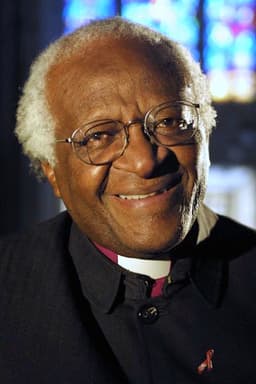
Desmond Tutu
Politician · Modern
57.4Total
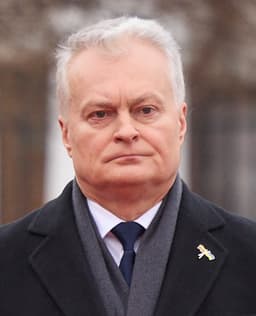
Gitanas Nauseda
Politician · Modern
46.5Total
Basic Information
Born
1931
1964
Died
—
—
Era
Modern
Modern
Nationality
South Africa
Lithuania
Occupation
Politician
Politician
Civilization
Other
Western
Score Comparison
Military (10%)
28.3
13.5
Political (20%)
53.8
68.0
Influence (20%)
75.0
51.0
Legacy (20%)
55.0
37.5
Leadership (15%)
68.0
64.0
Strategy (15%)
37.6
31.8
TOTAL
57.4
46.5
Desmond Tutu — Complete Timeline
1984 AD
Awarded the Nobel Peace PrizeCultural◆ Major
Desmond Tutu received the Nobel Peace Prize for his nonviolent opposition to apartheid in South Africa. The award recognized his leadership in the anti-apartheid movement and his role as a moral voice for reconciliation.
Nobel PrizeAnti-ApartheidPeace
Impact: globalconstructive
1986 AD
Appointed Archbishop of Cape TownPolitical Action◆ Major
Tutu became the first black Anglican Archbishop of Cape Town, the highest position in the Anglican Church of Southern Africa. This elevated his platform to advocate against apartheid and for human rights.
Church LeadershipAnti-Apartheid
Impact: nationalconstructive
1989 AD
Led the Defiance Campaign against Pass LawsPolitical Action◆ Major
Tutu led a march in Cape Town protesting the pass laws, which restricted black South Africans' movement. The protest was met with police violence, but it galvanized international opposition to apartheid.
ProtestPass LawsAnti-Apartheid
Impact: nationalconstructive
1995 AD
Chaired the Truth and Reconciliation CommissionPolitical Action
Tutu chaired the Truth and Reconciliation Commission, established by the post-apartheid government to investigate human rights abuses during apartheid. The commission promoted restorative justice and national healing.
Truth CommissionPost-ApartheidReconciliation
Impact: nationalconstructive
Gitanas Nauseda — Complete Timeline
2019 AD
Elected President of LithuaniaPolitical Action◆ Major
Nauseda won the Lithuanian presidential election as an independent candidate, defeating Ingrida
ElectionPresidentIndependent
Impact: nationalconstructive
2020 AD
Strong Stance on Belarus and RussiaPolitical Action◆ Major
Nauseda condemned the Belarusian government's crackdown on protesters after the disputed 2020 election. He supported EU sanctions against Belarus and provided support to Belarusian opposition figures.
BelarusHuman RightsForeign Policy
Impact: regionalconstructive
2022 AD
Support for Ukraine During Russian InvasionPolitical Action◆ Major
Nauseda was a vocal supporter of Ukraine after Russia's full-scale invasion. He advocated for NATO's eastern flank reinforcement and Lithuania provided military aid to Ukraine.
UkraineNATOSecurity
Impact: globalconstructive
2024 AD
Re-elected President of LithuaniaPolitical Action◆ Major
Nauseda won re-election in the 2024 Lithuanian presidential election, defeating Prime Minister Ingrida
ElectionRe-electionPresident
Impact: nationalconstructive
Expert Analysis
Origins
Desmond Tutu was born on October 7, 1931, in Klerksdorp, South Africa. His father was a teacher and his mother a domestic worker. He contracted polio as a child, which left him with a weakened right hand. Tutu trained as a teacher but after the 1953 Bantu Education Act, which enforced racial segregation in schools, he left teaching and studied theology. He was ordained as an Anglican priest in 1961. His early pastoral work in Soweto exposed him to the harsh realities of apartheid.
Gitanas Nausėda was born on May 19, 1964, in Klaipėda, Lithuania. His father was an engineer and his mother a teacher. He studied economics at Vilnius University, graduating in 1987, and later earned a doctorate in social sciences. Before entering politics, Nausėda worked as a professor at Vilnius University and as an economist at the Bank of Lithuania. He also served as an advisor to the prime minister and as chief economist at SEB Bank.
Rise to Power
Tutu rose to prominence through the church and anti-apartheid activism. In 1975, he became the first black Anglican Dean of Johannesburg. He was appointed Bishop of Lesotho in 1976, and in 1985 he became the first black Bishop of Johannesburg. His international profile soared when he won the Nobel Peace Prize in 1984 for his nonviolent opposition to apartheid. In 1986, he was elevated to Archbishop of Cape Town, the highest position in the Anglican Church of Southern Africa. He used his pulpit to mobilize domestic and international pressure against the apartheid regime.
Nausėda entered politics later in life. He ran for president in 2019 as an independent candidate, defeating Ingrida Šimonytė in the runoff with 66.5% of the vote. His campaign focused on economic issues, social welfare, and a strong stance against Russia. He took office on July 12, 2019. In 2024, he won re-election, again defeating Šimonytė with 74.2% of the vote.
Leadership & Governance
Tutu's leadership was rooted in moral authority and reconciliation. He chaired the Truth and Reconciliation Commission (TRC) from 1996 to 1998, which investigated human rights abuses during apartheid. The TRC offered amnesty in exchange for full disclosure, a process that Tutu defended as essential for national healing. He also led marches against pass laws and was a vocal critic of the apartheid government. His governance style was nonviolent and inclusive, often quoting the African concept of "ubuntu" (humanity towards others).
Nausėda's leadership is pragmatic and focused on security and economic stability. As president, he has prioritized strengthening Lithuania's defense against Russian aggression. He has been a vocal supporter of Ukraine, advocating for NATO's eastern flank reinforcement and providing military aid. Domestically, he has promoted social welfare policies, including tax reforms and increased pensions. His style is calm and technocratic, earning him high approval ratings.
Triumph & Tragedy
Tutu's greatest triumph was his role in ending apartheid and leading the TRC. The commission documented over 21,000 human rights violations and granted amnesty to 1,116 applicants. However, his failure was that the TRC did not achieve full reconciliation; many victims felt justice was not served. Additionally, Tutu's later criticism of the African National Congress government strained his relationship with former allies.
Nausėda's triumphs include his strong stance against Belarus and Russia, which enhanced Lithuania's international standing. He secured significant NATO presence in Lithuania and provided substantial aid to Ukraine. His tragedy is limited by his short tenure; his legacy is still evolving. However, he has faced criticism for not doing enough to address income inequality and for his handling of the COVID-19 pandemic.
Character & Destiny
Tutu was known for his humility, humor, and moral clarity. His faith drove his activism, and his optimistic spirit endured despite oppression. His destiny was shaped by his ability to inspire millions and his role as a moral compass. He scored 75.0 in influence and 68.0 in leadership. His character made him a global symbol of peace, but also a target of criticism from those who saw him as too conciliatory.
Nausėda is reserved, analytical, and consensus-oriented. His background as an economist influences his cautious approach. His destiny is tied to Lithuania's geopolitical situation; his leadership during the Ukraine crisis has defined his presidency. He scored 64.0 in leadership and 68.0 in political skill. His pragmatic character has made him effective but less charismatic than Tutu.
Legacy
Tutu's legacy is global. He is remembered as a key figure in the anti-apartheid movement and a champion of human rights. The TRC model has been studied and replicated in other post-conflict societies. His Nobel Peace Prize (1984) and numerous awards cement his influence. His legacy score is 55.0, reflecting lasting impact but also some controversy over the TRC's limitations.
Nausėda's legacy is more regional. He will be remembered for strengthening Lithuania's security and its role in EU and NATO. His support for Ukraine and tough stance on Belarus have earned him respect in the West. His legacy score of 37.5 is lower, partly because his presidency is ongoing and his impact is less transformative.
Conclusion
Desmond Tutu had a greater impact than Gitanas Nausėda. Tutu's total score of 57.4 exceeds Nausėda's 46.5 by 10.9 points. Tutu's influence (75.0 vs 51.0) and legacy (55.0 vs 37.5) are significantly higher. While Nausėda has been effective in his role, Tutu's moral leadership helped dismantle a system of racial oppression and inspired global human rights movements. Nausėda's achievements are important for Lithuania, but they are not on the same scale as ending apartheid. Tutu's legacy is universal; Nausėda's is national. Thus, Desmond Tutu is the more impactful figure.
Rankings
🥇
Desmond TutuLeader
Mil: 28.3Pol: 53.8Inf: 75.0
57.4
🥈
Gitanas Nauseda
Mil: 13.5Pol: 68.0Inf: 51.0
46.5
+10.9 behind
How This Comparison Works
Algorithm
Each figure is scored on 6 dimensions (0—100 scale) based on structured historical data: Military (10%), Political (20%), Influence (20%), Legacy (20%), Leadership (15%), Strategy (15%). The weighted total produces the final ranking.
Data Sources
Scores are computed from structured sub-indicators in the database. Scale factors adjust for era (Ancient ×0.85, Modern ×1.0) and civilization size (Eastern ×1.05, Other ×0.80) to account for differences in population and military scale.
Maximum 3 Figures
Comparisons are limited to 2—3 figures to ensure readability and statistical meaningfulness.
Error Margins
±5 points per dimension — Sub-scores are derived from historical records with inherent uncertainty. Two figures within 5 points on a dimension should be considered roughly equivalent in that area.
Total Score Accuracy
±3 points overall — The weighted combination of 6 dimensions produces a total score with approximately ±3 points of uncertainty. Differences of less than 3 points are not statistically significant— the figures are effectively tied.
Known Limitations
- Historical records are incomplete and uneven across civilizations
- Figures from oral-tradition societies may be underrepresented
- Occupation labels can misclassify multi-role figures
- Scores measure capability and impact, not moral character
- Quantitative scoring is a comparison tool, not absolute truth
Capability Radar
Military (10%) — Battles & Warfare
Battles
21
21
Win Rate
22
26
Expansion
28
25
Political (20%) — Governance & Reform
Reform
70
40
Diplomacy
85
55
Economy
20
50
Influence (20%) — Cultural & Global Reach
Cultural
80
20
Global
80
25
Legacy (20%) — Historical Impact
Historical
75
20
Longevity
70
15
Leadership (15%) — Power & Stability
Tenure
30
30
Stability
75
45
Strategy (15%) — Tactics & Innovation
Strategy
32
34
Tactics
36
33
Reform
38
35
Similar Comparisons
Comments & Discussion
No comments yet. Be the first to share your thoughts!