Loading...
Demetrius I of Bactria vs Pepi II
Demetrius I of Bactria leads by 14.8 pts · 2 figures compared
…
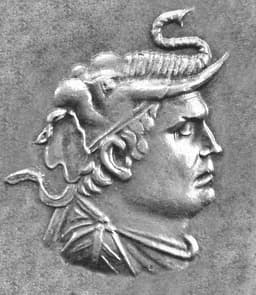
Demetrius I of Bactria
Emperor · Ancient
59.7Total
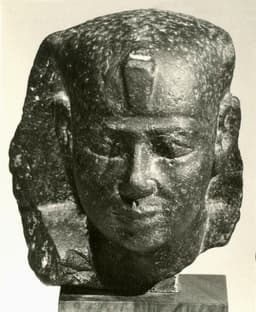
Pepi II
Emperor · Ancient
44.9Total
Basic Information
Born
-222
-2284
Died
-180
-2184
Era
Ancient
Ancient
Nationality
Greco-Bactrian Kingdom
Egypt
Occupation
Emperor
Emperor
Civilization
Eastern
Middle Eastern
Score Comparison
Military (10%)
61.7
10.2
Political (20%)
68.0
32.1
Influence (20%)
58.3
45.5
Legacy (20%)
52.0
48.3
Leadership (15%)
72.0
74.0
Strategy (15%)
50.0
45.0
TOTAL
59.7
44.9
Demetrius I of Bactria — Complete Timeline
190 BC
Invasion of IndiaWar
Demetrius I led a military campaign into the Indian subcontinent, crossing the Hindu Kush. He conquered parts of the Kabul Valley and the Punjab, establishing the Indo-Greek Kingdom.
InvasionIndiaIndo-Greek Kingdom
Impact: regional
Foundation of the Indo-Greek KingdomPolitical Action◆ Major
Demetrius I established the Indo-Greek Kingdom in the conquered Indian territories. This created a Hellenistic state that blended Greek and Indian cultures for centuries.
FoundationHellenisticIndia
Impact: regionalconstructive
185 BC
Construction of DemetriasCultural
Demetrius I founded the city of Demetrias (possibly modern-day Taxila or Sirkap) as a capital in the Indus region. The city became a center of Greco-Buddhist art and culture.
City FoundationGreco-BuddhistUrbanism
constructive
Pepi II — Complete Timeline
2284 BC
Longest Reign in HistoryPolitical Action◆ Major
Pepi II ascended the throne as a child and ruled for 94 years, the longest verified reign of any monarch in history. His reign saw the consolidation of the Old Kingdom but also the rise of provincial power that contributed to its decline.
ReignLongevityOld Kingdom
Impact: regional
2184 BC
Collapse of the Old KingdomPolitical Action
Pepi II's death triggered the collapse of the Old Kingdom, as central authority weakened and provincial nomarchs gained independence. This led to the First Intermediate Period, a time of fragmentation and civil strife.
CollapseDeclineFirst Intermediate Period
Impact: regionaldestructive
Expert Analysis
Origins
Demetrius I of Bactria (born c. 222 BCE) was the son of Euthydemus I, a Greek king who expanded the Greco-Bactrian kingdom. His early life was shaped by Hellenistic culture and the need to defend Bactria from Seleucid incursions. He likely received military training from a young age and was educated in Greek philosophy and governance. Pepi II (born c. 2284 BCE) ascended the throne of Egypt as a child of six after the death of his predecessor, Merenre I. His mother, Ankhesenpepi II, served as regent. Pepi's upbringing was steeped in the traditions of the Old Kingdom, with a focus on maintaining Ma'at (cosmic order) and the divine status of the pharaoh.
Rise to Power
Demetrius I came to power around 200 BCE after his father's death. He quickly turned his attention eastward, launching an invasion of India in 180 BCE. Crossing the Hindu Kush, he conquered parts of the Kabul Valley and Punjab, establishing the Indo-Greek Kingdom. This expansion was a turning point, as it created a Hellenistic state in India. Pepi II became pharaoh at age six (c. 2278 BCE) and ruled for 94 years, the longest reign in history. His rise was unremarkable due to his youth, but his reign saw the consolidation of power under the regency of his mother and later his own rule. Key allies included powerful nomarchs, but his long reign eventually led to the decline of central authority.
Leadership & Governance
Demetrius I's leadership style was proactive and expansionist. He founded the city of Demetrias (possibly Taxila) as a capital, blending Greek and Indian cultures. His governance score of 68.0 reflects his ability to integrate conquered territories. He likely implemented policies that promoted trade and cultural exchange along the Silk Road. Pepi II, by contrast, ruled a centralized state but his long reign saw increasing power of provincial nomarchs. His leadership score of 74.0 is based on his ability to maintain stability for decades, but his governance score of 32.1 indicates a failure to adapt to growing regional autonomy. He focused on traditional Egyptian religious practices and monumental building, but his central authority weakened over time.
Triumph & Tragedy
Demetrius I's greatest success was the invasion of India and the foundation of the Indo-Greek Kingdom, which scored 61.7 in military and 50.0 in strategy. This created a unique Hellenistic-Buddhist synthesis that lasted for centuries. His greatest failure was the lack of a lasting dynasty; after his death, the Indo-Greek Kingdom fragmented into petty states. Pepi II's triumph was his unprecedented 94-year reign, which provided stability for much of his life. However, his death triggered the collapse of the Old Kingdom, leading to the First Intermediate Period. His legacy score of 48.3 reflects this tragic end. His failure to curb the power of nomarchs resulted in the disintegration of central authority.
Character & Destiny
Demetrius I was an ambitious conqueror, driven by the desire to expand Hellenistic influence. His character is reflected in his military score of 61.7 and strategy of 50.0—he was bold but perhaps overextended. His destiny was to create a cultural bridge between Greece and India, but his kingdom did not outlast him. Pepi II's character was shaped by his long reign: he became increasingly detached from the realities of governance, relying on officials who gained independent power. His political score of 32.1 indicates poor decision-making in later years. His destiny was to be the last great pharaoh of the Old Kingdom, as his death exposed the weaknesses of the system.
Legacy
Demetrius I's legacy is the Indo-Greek Kingdom, which influenced art, religion, and trade for centuries. The Greco-Buddhist art of Gandhara is a direct result of his conquests. His influence score of 58.3 reflects this cultural impact. Pepi II's legacy is more complex: he is remembered for the longest reign, but also as the pharaoh under whom the Old Kingdom collapsed. His pyramid at Saqqara is smaller than his predecessors', symbolizing the decline. The First Intermediate Period that followed was a time of fragmentation and chaos. Demetrius's total score of 59.7 exceeds Pepi's 44.9, indicating a more balanced impact across categories.
Conclusion
Demetrius I of Bactria had a greater and more positive impact than Pepi II. While Pepi II's reign was longer, it ended in the collapse of the Old Kingdom, a net negative for Egypt. Demetrius's creation of the Indo-Greek Kingdom scored 59.7 overall, compared to Pepi's 44.9. Demetrius's scores are consistently higher in military (61.7 vs 10.2), political (68.0 vs 32.1), and strategy (50.0 vs 45.0). Pepi only exceeded in leadership (74.0 vs 72.0) and legacy (48.3 vs 52.0 narrowly). Demetrius's cultural synthesis had lasting effects, while Pepi's long reign ultimately destabilized Egypt. Therefore, Demetrius I is the more significant historical figure.
Rankings
🥇
Demetrius I of BactriaLeader
Mil: 61.7Pol: 68.0Inf: 58.3
59.7
🥈
Pepi II
Mil: 10.2Pol: 32.1Inf: 45.5
44.9
+14.8 behind
How This Comparison Works
Algorithm
Each figure is scored on 6 dimensions (0—100 scale) based on structured historical data: Military (10%), Political (20%), Influence (20%), Legacy (20%), Leadership (15%), Strategy (15%). The weighted total produces the final ranking.
Data Sources
Scores are computed from structured sub-indicators in the database. Scale factors adjust for era (Ancient ×0.85, Modern ×1.0) and civilization size (Eastern ×1.05, Other ×0.80) to account for differences in population and military scale.
Maximum 3 Figures
Comparisons are limited to 2—3 figures to ensure readability and statistical meaningfulness.
Error Margins
±5 points per dimension — Sub-scores are derived from historical records with inherent uncertainty. Two figures within 5 points on a dimension should be considered roughly equivalent in that area.
Total Score Accuracy
±3 points overall — The weighted combination of 6 dimensions produces a total score with approximately ±3 points of uncertainty. Differences of less than 3 points are not statistically significant— the figures are effectively tied.
Known Limitations
- Historical records are incomplete and uneven across civilizations
- Figures from oral-tradition societies may be underrepresented
- Occupation labels can misclassify multi-role figures
- Scores measure capability and impact, not moral character
- Quantitative scoring is a comparison tool, not absolute truth
Capability Radar
Military (10%) — Battles & Warfare
Battles
65
5
Win Rate
60
5
Expansion
70
5
Political (20%) — Governance & Reform
Reform
50
10
Diplomacy
60
10
Economy
55
10
Influence (20%) — Cultural & Global Reach
Cultural
55
15
Global
55
15
Legacy (20%) — Historical Impact
Historical
60
20
Longevity
50
90
Leadership (15%) — Power & Stability
Tenure
55
95
Stability
45
15
Strategy (15%) — Tactics & Innovation
Strategy
60
5
Tactics
55
5
Reform
50
5
Similar Comparisons
Comments & Discussion
No comments yet. Be the first to share your thoughts!