Loading...
Antigonus I Monophthalmus vs Demetrius I of Bactria
Antigonus I Monophthalmus leads by 3.7 pts · 2 figures compared
…

Antigonus I Monophthalmus
Emperor · Ancient
63.4Total
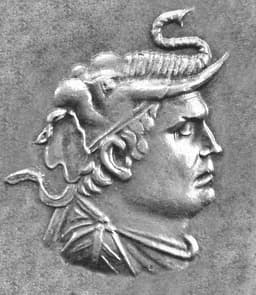
Demetrius I of Bactria
Emperor · Ancient
59.7Total
Basic Information
Born
-382
-222
Died
-301
-180
Era
Ancient
Ancient
Nationality
Macedon
Greco-Bactrian Kingdom
Occupation
Emperor
Emperor
Civilization
Western
Eastern
Score Comparison
Military (10%)
78.5
61.7
Political (20%)
55.8
68.0
Influence (20%)
62.0
58.3
Legacy (20%)
56.0
52.0
Leadership (15%)
68.0
72.0
Strategy (15%)
75.0
50.0
TOTAL
63.4
59.7
Antigonus I Monophthalmus — Complete Timeline
316 BC
Battle of GabieneWar◆ Major
Antigonus I defeated Eumenes, a former general of Alexander, at Gabiene in Persia. This victory eliminated a major rival and gave Antigonus control over the eastern satrapies, making him the most powerful of the Diadochi at that time.
DiadochiBattlePersia
Impact: regional
315 BC
Siege of TyreWar
Antigonus I besieged and captured the city of Tyre from Ptolemy I's forces. The siege demonstrated his military capabilities and expanded his control over Phoenicia and Syria, strengthening his position in the Diadochi conflicts.
DiadochiSiegePhoenicia
Impact: regional
306 BC
Proclamation as King of AsiaPolitical Action◆ Major
Antigonus I declared himself king of Asia, claiming authority over the entire former empire of Alexander. This act prompted other Diadochi to also assume royal titles, formalizing the breakup of Alexander's empire into separate Hellenistic kingdoms.
DiadochiKingshipHellenistic
Impact: regional
301 BC
Battle of IpsusWar
Antigonus I Monophthalmus commanded his army against the allied forces of Seleucus, Lysimachus, and Cassander at Ipsus. He was defeated and killed in battle, ending his ambition to reunite Alexander's empire. His death solidified the division of the empire among the other Diadochi.
DiadochiBattleAntigonid
Impact: regionaltragic
Demetrius I of Bactria — Complete Timeline
190 BC
Invasion of IndiaWar
Demetrius I led a military campaign into the Indian subcontinent, crossing the Hindu Kush. He conquered parts of the Kabul Valley and the Punjab, establishing the Indo-Greek Kingdom.
InvasionIndiaIndo-Greek Kingdom
Impact: regional
Foundation of the Indo-Greek KingdomPolitical Action◆ Major
Demetrius I established the Indo-Greek Kingdom in the conquered Indian territories. This created a Hellenistic state that blended Greek and Indian cultures for centuries.
FoundationHellenisticIndia
Impact: regionalconstructive
185 BC
Construction of DemetriasCultural
Demetrius I founded the city of Demetrias (possibly modern-day Taxila or Sirkap) as a capital in the Indus region. The city became a center of Greco-Buddhist art and culture.
City FoundationGreco-BuddhistUrbanism
constructive
Expert Analysis
Origins
Antigonus I Monophthalmus (382–301 BCE) was born into the Macedonian nobility under King Philip II. Little is known of his early life, but he served under Philip and later Alexander the Great. He was appointed governor of Phrygia in 333 BCE, a position that gave him a power base in Asia Minor. His formative experiences were shaped by the chaotic succession after Alexander's death in 323 BCE.
Demetrius I of Bactria (c. 200–180 BCE) was the son of Euthydemus I, a Greek king who seized the Bactrian throne around 230 BCE. Demetrius was raised in the Hellenistic court of Bactria, which blended Greek and Persian cultures. He likely received military training and education in Greek philosophy. His early exposure to the rich Indian borderlands influenced his later expansionist ambitions.
Rise to Power
Antigonus rose to prominence during the Wars of the Diadochi. After Alexander's death, he allied with Perdiccas, but later joined the coalition against him. In 321 BCE, he was appointed strategos of Asia by the regent Antipater. He defeated Eumenes, a rival general, at the Battle of Gabiene in 316 BCE, securing control over most of Asia Minor and Syria. By 306 BCE, he felt strong enough to declare himself king of Asia, prompting other Diadochi to follow suit.
Demetrius I ascended the Bactrian throne around 200 BCE. His father Euthydemus had secured Bactria's independence from the Seleucids. Demetrius expanded his kingdom by invading India around 180 BCE. He crossed the Hindu Kush and conquered parts of the Kabul Valley and Punjab, establishing the Indo-Greek Kingdom. This invasion marked a turning point, as it brought Hellenistic rule to the Indian subcontinent.
Leadership & Governance
Antigonus ruled his territories with a focus on military consolidation. He appointed satraps and maintained control through a network of loyal officers. His governance was pragmatic, but he faced constant rebellion from rival Diadochi. He attempted to reunify Alexander's empire under his own rule, but his authoritarian approach alienated potential allies. For example, his demand for unconditional submission from cities like Tyre in 314 BCE led to prolonged sieges.
Demetrius I adopted a more integrative style. In his Indian conquests, he blended Greek and Indian elements. He founded the city of Demetrias (likely Sirkap) as a capital, which featured Greek-style architecture alongside Indian stupas. Coins minted under his rule show a mix of Greek gods and Indian symbols, such as the elephant. This syncretism helped him gain local support, though his rule remained primarily military in nature.
Triumph & Tragedy
Antigonus's greatest success was his military campaign against Eumenes, culminating in the Battle of Gabiene (316 BCE), where he captured and executed his rival. He also held off coalition forces for years. However, his greatest failure was the Battle of Ipsus (301 BCE), where he was defeated and killed by a coalition of Seleucus, Lysimachus, and Cassander. His overreach and inability to secure lasting alliances led to his downfall.
Demetrius I's triumph was the successful invasion of India, establishing the Indo-Greek Kingdom, which lasted for centuries. He conquered significant territory and promoted cultural exchange. However, his legacy is marred by the lack of detailed records; much of his reign is reconstructed from coinage and archaeological evidence. He likely died around 180 BCE, possibly in battle, and his kingdom was divided among successors.
Character & Destiny
Antigonus was known for his ambition and strategic acumen, scoring 75.0 in strategy. He was called 'Monophthalmus' (the one-eyed) after losing an eye in battle. His determination to reunite the empire drove him, but also made him inflexible. Historians like Plutarch describe him as harsh and domineering, which contributed to his isolation among the Diadochi. His fate at Ipsus was sealed by his refusal to compromise.
Demetrius I scored 68.0 in political skill, higher than Antigonus's 55.8. He was a capable leader who understood the value of cultural integration. However, his military score (61.7) was lower, and his strategy (50.0) was less refined. He may have been more of a conqueror than a consolidator, as his kingdom fragmented after his death.
Legacy
Antigonus's legacy is that of a failed empire-builder. His defeat at Ipsus ended the last serious attempt to reunite Alexander's empire. However, his dynasty continued through his son Demetrius Poliorcetes, who ruled Macedonia. His scores reflect a strong military leader (78.5) but weaker political impact (55.8). His legacy score of 56.0 indicates his limited long-term influence.
Demetrius I's legacy is more enduring. He founded the Indo-Greek Kingdom, which fostered a unique Hellenistic-Buddhist culture that lasted until the early centuries CE. His coins and cities influenced Central Asian and Indian art. He scored 52.0 in legacy, slightly lower than Antigonus, but his impact was more culturally significant. His political score (68.0) shows his ability to govern diverse populations.
Conclusion
Antigonus I Monophthalmus scored higher overall (63.4 vs. 59.7), but his impact was narrower. He was a formidable military commander but failed politically. Demetrius I, despite lower total scores, created a lasting cultural synthesis. In terms of historical impact, Demetrius I's Indo-Greek kingdom had a more profound and enduring influence on the fusion of Greek and Eastern cultures. Therefore, Demetrius I of Bactria had a greater long-term impact than Antigonus I Monophthalmus.
Rankings
🥇
Antigonus I MonophthalmusLeader
Mil: 78.5Pol: 55.8Inf: 62.0
63.4
🥈
Demetrius I of Bactria
Mil: 61.7Pol: 68.0Inf: 58.3
59.7
+3.7 behind
How This Comparison Works
Algorithm
Each figure is scored on 6 dimensions (0—100 scale) based on structured historical data: Military (10%), Political (20%), Influence (20%), Legacy (20%), Leadership (15%), Strategy (15%). The weighted total produces the final ranking.
Data Sources
Scores are computed from structured sub-indicators in the database. Scale factors adjust for era (Ancient ×0.85, Modern ×1.0) and civilization size (Eastern ×1.05, Other ×0.80) to account for differences in population and military scale.
Maximum 3 Figures
Comparisons are limited to 2—3 figures to ensure readability and statistical meaningfulness.
Error Margins
±5 points per dimension — Sub-scores are derived from historical records with inherent uncertainty. Two figures within 5 points on a dimension should be considered roughly equivalent in that area.
Total Score Accuracy
±3 points overall — The weighted combination of 6 dimensions produces a total score with approximately ±3 points of uncertainty. Differences of less than 3 points are not statistically significant— the figures are effectively tied.
Known Limitations
- Historical records are incomplete and uneven across civilizations
- Figures from oral-tradition societies may be underrepresented
- Occupation labels can misclassify multi-role figures
- Scores measure capability and impact, not moral character
- Quantitative scoring is a comparison tool, not absolute truth
Capability Radar
Military (10%) — Battles & Warfare
Battles
85
65
Win Rate
80
60
Expansion
90
70
Political (20%) — Governance & Reform
Reform
65
50
Diplomacy
72
60
Economy
60
55
Influence (20%) — Cultural & Global Reach
Cultural
60
55
Global
70
55
Legacy (20%) — Historical Impact
Historical
75
60
Longevity
65
50
Leadership (15%) — Power & Stability
Tenure
70
55
Stability
55
45
Strategy (15%) — Tactics & Innovation
Strategy
88
60
Tactics
82
55
Reform
75
50
Similar Comparisons
Comments & Discussion
No comments yet. Be the first to share your thoughts!