Loading...
Alaric II vs Pepi II
Alaric II leads by 2.2 pts · 2 figures compared
…

Alaric II
Emperor · Ancient
47.1Total
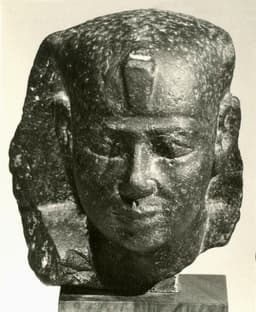
Pepi II
Emperor · Ancient
44.9Total
Basic Information
Born
458
-2284
Died
507
-2184
Era
Ancient
Ancient
Nationality
Visigothic Kingdom
Egypt
Occupation
Emperor
Emperor
Civilization
Western
Middle Eastern
Score Comparison
Military (10%)
45.0
10.2
Political (20%)
46.6
32.1
Influence (20%)
50.2
45.5
Legacy (20%)
41.7
48.3
Leadership (15%)
55.3
74.0
Strategy (15%)
43.3
45.0
TOTAL
47.1
44.9
Alaric II — Complete Timeline
484 AD
Accession as Visigothic KingPolitical Action◆ Major
Alaric II succeeded his father Euric as king of the Visigoths. He inherited a large kingdom spanning Gaul and Hispania, but faced growing pressure from the Franks under Clovis I and internal religious tensions between Arian Visigoths and Catholic Romans.
Visigothic KingdomSuccessionInheritance
Impact: regional
506 AD
Issuance of the Breviary of AlaricReform
Alaric II promulgated the Breviary of Alaric, a compilation of Roman law for his Roman subjects. This code, based on the Theodosian Code, preserved Roman legal traditions and was widely used in Visigothic Gaul and Hispania, influencing later medieval law.
Visigothic KingdomLaw CodeRoman Law
Impact: regionalconstructive
507 AD
Battle of VouilléWar
Alaric II led the Visigothic army against the Franks under Clovis I at Vouill
Visigothic KingdomBattleFrankish Expansion
Impact: regionaltragic
Pepi II — Complete Timeline
2284 BC
Longest Reign in HistoryPolitical Action◆ Major
Pepi II ascended the throne as a child and ruled for 94 years, the longest verified reign of any monarch in history. His reign saw the consolidation of the Old Kingdom but also the rise of provincial power that contributed to its decline.
ReignLongevityOld Kingdom
Impact: regional
2184 BC
Collapse of the Old KingdomPolitical Action
Pepi II's death triggered the collapse of the Old Kingdom, as central authority weakened and provincial nomarchs gained independence. This led to the First Intermediate Period, a time of fragmentation and civil strife.
CollapseDeclineFirst Intermediate Period
Impact: regionaldestructive
Expert Analysis
Origins
Alaric II (c. 458–507 AD) was the son of King Euric, who had expanded the Visigothic kingdom to its greatest extent, covering much of Gaul and Hispania. Raised in a court that blended Gothic warrior traditions with Roman administrative practices, Alaric inherited a realm that was a fusion of Germanic and Roman cultures. His name 'Alaric' means 'ruler of all', reflecting his father's ambitions. Little is recorded of his early education, but his later issuance of a legal code suggests exposure to Roman law.
Pepi II (c. 2284–2184 BC) became pharaoh of Egypt at about age six, succeeding his half-brother Merenre I. He was born into the Sixth Dynasty of the Old Kingdom, a period of strong central power. His mother, Queen Ankhesenpepi II, served as regent. The early years of his reign were marked by the influence of powerful officials like his uncle, the vizier Djau. Pepi's long life meant he ruled from childhood into extreme old age.
Rise to Power
Alaric II ascended to the Visigothic throne around 484 AD upon his father's death. He inherited a kingdom that was the dominant power in southwestern Gaul and most of Hispania. Unlike his father, who had expanded through military campaigns, Alaric faced immediate external threats: the Franks under Clovis I to the north, the Burgundians, and the Ostrogoths under Theodoric the Great. His rise was not through personal conquest but through inheritance, and he quickly had to navigate a complex diplomatic landscape.
Pepi II became pharaoh as a child after the death of Merenre I. His mother and uncle managed the state during his minority. The early part of his reign saw stability and continued trade expeditions. An inscription from his reign records a letter from Pepi to a noble named Harkhuf, showing the pharaoh's interest in a pygmy brought from Africa. This indicates that even as a child, Pepi was engaged in governance, though real power lay with his regents.
Leadership & Governance
Alaric II is best known for issuing the Breviary of Alaric (Lex Romana Visigothorum) in 506 AD. This was a compilation of Roman law intended for his Roman subjects, drawing on the Theodosian Code and other sources. It demonstrated a pragmatic approach to governance, aiming to unify his diverse realm under a clear legal framework. However, his military leadership was less successful. At the Battle of Vouillé (507 AD), Alaric led his army against the Franks. His forces were defeated, and he was killed, possibly by Clovis himself. His score of 43.3 in strategy reflects this failure.
Pepi II's reign of 94 years is the longest verified in history. His governance was initially effective, with expeditions to Nubia and Punt. However, as he aged, central authority weakened. Provincial nomarchs (governors) became increasingly independent. The king's focus on his own pyramid complex and the cult of his ka may have diverted resources. His political score of 32.1 reflects the gradual erosion of royal power during his later years.
Triumph & Tragedy
Alaric II's triumph was the Breviary of Alaric, which preserved Roman legal traditions in the West and influenced later medieval law. His tragedy was the defeat at Vouillé, which cost him his life and lost the Visigoths their Gallic territories, confining them to Hispania. His military score of 45.0 reflects this mixed record.
Pepi II's triumph was the sheer length of his reign, which provided stability for decades. However, his tragedy was the collapse of the Old Kingdom after his death. His long rule saw the rise of provincial powers that eventually fragmented Egypt into the First Intermediate Period. His leadership score of 74.0 suggests personal charisma, but his political score of 32.1 indicates poor long-term governance.
Character & Destiny
Alaric II appears as a ruler who valued law and order over military conquest. His decision to issue the Breviary shows a desire for civilized administration, but his inability to match Clovis on the battlefield doomed his kingdom. He was perhaps too trusting of Roman legalism in a world where military strength was paramount. His death at Vouillé sealed the Visigoths' fate.
Pepi II's character was shaped by his exceptionally long reign. He became a symbol of enduring rule, but his longevity may have contributed to institutional decay. As he aged, he likely became detached from daily governance, leaving power to local officials. His destiny was to be remembered as the pharaoh who presided over the end of an era.
Legacy
Alaric II's legacy is the Breviary of Alaric, which survived as a source of Roman law in the West. It influenced the legal codes of later Germanic kingdoms and was cited by scholars for centuries. His defeat at Vouillé reshaped the political map of early medieval Europe, leading to the rise of the Merovingian Franks. His legacy score is 41.7.
Pepi II's legacy is more ambiguous. He is remembered for his record reign, but also for the collapse of the Old Kingdom. His pyramid at Saqqara is smaller than those of his predecessors, reflecting declining resources. He left behind a fragmented Egypt that would not be reunited for over a century. His legacy score is 48.3, slightly higher than Alaric's.
Conclusion
Alaric II and Pepi II both presided over periods of transition, but their impacts differ. Alaric's Breviary had a lasting effect on European law, while Pepi's reign marked the end of the Old Kingdom. Alaric scores 47.1 overall, Pepi 44.9. Despite his shorter rule, Alaric's contributions to legal history give him a more tangible legacy. Pepi's record reign is impressive, but its ultimate consequence was state collapse. Therefore, Alaric II had a greater impact on the course of history, as his legal code shaped subsequent governance in medieval Europe.
Rankings
🥇
Alaric IILeader
Mil: 45.0Pol: 46.6Inf: 50.2
47.1
🥈
Pepi II
Mil: 10.2Pol: 32.1Inf: 45.5
44.9
+2.2 behind
How This Comparison Works
Algorithm
Each figure is scored on 6 dimensions (0—100 scale) based on structured historical data: Military (10%), Political (20%), Influence (20%), Legacy (20%), Leadership (15%), Strategy (15%). The weighted total produces the final ranking.
Data Sources
Scores are computed from structured sub-indicators in the database. Scale factors adjust for era (Ancient ×0.85, Modern ×1.0) and civilization size (Eastern ×1.05, Other ×0.80) to account for differences in population and military scale.
Maximum 3 Figures
Comparisons are limited to 2—3 figures to ensure readability and statistical meaningfulness.
Error Margins
±5 points per dimension — Sub-scores are derived from historical records with inherent uncertainty. Two figures within 5 points on a dimension should be considered roughly equivalent in that area.
Total Score Accuracy
±3 points overall — The weighted combination of 6 dimensions produces a total score with approximately ±3 points of uncertainty. Differences of less than 3 points are not statistically significant— the figures are effectively tied.
Known Limitations
- Historical records are incomplete and uneven across civilizations
- Figures from oral-tradition societies may be underrepresented
- Occupation labels can misclassify multi-role figures
- Scores measure capability and impact, not moral character
- Quantitative scoring is a comparison tool, not absolute truth
Capability Radar
Military (10%) — Battles & Warfare
Battles
30
5
Win Rate
25
5
Expansion
20
5
Political (20%) — Governance & Reform
Reform
60
10
Diplomacy
40
10
Economy
30
10
Influence (20%) — Cultural & Global Reach
Cultural
40
15
Global
20
15
Legacy (20%) — Historical Impact
Historical
40
20
Longevity
30
90
Leadership (15%) — Power & Stability
Tenure
40
95
Stability
30
15
Strategy (15%) — Tactics & Innovation
Strategy
30
5
Tactics
30
5
Reform
20
5
Similar Comparisons
Comments & Discussion
No comments yet. Be the first to share your thoughts!