Loading...
Deioces vs Qin Er Shi
Deioces leads by 3.9 pts · 2 figures compared
…
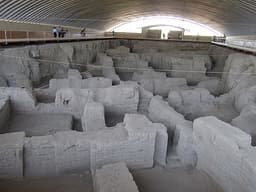
Deioces
Emperor · Ancient
48.0Total
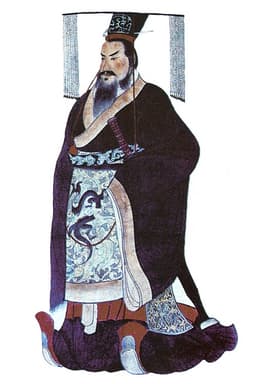
Qin Er Shi
Emperor · Ancient
44.1Total
Basic Information
Born
-700
-229
Died
-647
-207
Era
Ancient
Ancient
Nationality
Media
China
Occupation
Emperor
Emperor
Civilization
Middle Eastern
Eastern
Score Comparison
Military (10%)
50.0
20.2
Political (20%)
46.6
68.0
Influence (20%)
48.6
42.4
Legacy (20%)
43.3
35.0
Leadership (15%)
67.0
43.6
Strategy (15%)
30.3
60.0
TOTAL
48.0
44.1
Deioces — Complete Timeline
700 BC
Foundation of the Median KingdomPolitical Action
Deioces unified the Median tribes and established the first Median kingdom, with its capital at Ecbatana (modern Hamadan). He is credited with creating a centralized state, building a palace, and instituting a legal code.
FoundationState FormationMedian Empire
Impact: regionalconstructive
695 BC
Establishment of Justice SystemReform
Deioces instituted a system of justice, appointing judges and spies to enforce laws and suppress crime. This reform aimed to create order among the previously lawless Median tribes, consolidating his authority.
Legal ReformGovernanceMedian Empire
Impact: nationalconstructive
690 BC
Construction of EcbatanaCultural◆ Major
Deioces ordered the construction of the city of Ecbatana as his capital. The city was built with concentric walls, each painted a different color, and housed the royal palace and treasury, symbolizing Median power.
Urban PlanningCapital CityArchitecture
Impact: regionalconstructive
Qin Er Shi — Complete Timeline
210 BC
Accession as Second EmperorPolitical Action◆ Major
After Qin Shi Huang's death, Zhao Gao and Li Si forged a decree to force the crown prince Fusu to commit suicide and installed Huhai as Qin Er Shi. This illegitimate succession undermined the dynasty's legitimacy and placed an incompetent ruler on the throne.
SuccessionPalace IntrigueZhao Gao
Impact: nationaldestructive
209 BC
Outbreak of Dazexiang UprisingWar
Chen Sheng and Wu Guang led a rebellion of conscripted farmers at Dazexiang, sparking widespread revolts across the Qin empire. Qin Er Shi's harsh policies and heavy taxation had created widespread discontent, and the uprising quickly spread, leading to the dynasty's collapse.
RebellionQin CollapseChen Sheng
Impact: nationaldestructive
208 BC
Execution of Li SiPolitical Action◆ Major
Zhao Gao falsely accused Chancellor Li Si of treason. Qin Er Shi ordered Li Si's execution by the Five Pains method, along with his entire family. This removed the last capable administrator from the Qin court, accelerating the dynasty's decline.
ExecutionPolitical PurgeZhao Gao
Impact: nationaldestructive
207 BC
Death at the Hands of Zhao GaoPolitical Action◆ Major
Zhao Gao, fearing Qin Er Shi's anger over military defeats, staged a coup and forced the emperor to commit suicide. Zhao Gao then installed Ziying as the new king. This event marked the effective end of Qin rule, as Ziying surrendered to Liu Bang shortly after.
CoupDeathZhao Gao
Impact: nationaltragic
Expert Analysis
Origins
Deioces, born around 700 BCE, was the son of a Median tribal chief. Little is known of his early life, but he reportedly gained a reputation for just judgments, which led to his election as king. The Medes were a collection of nomadic tribes in northwestern Iran, and Deioces emerged as a unifying figure. He founded the Median kingdom with its capital at Ecbatana (modern Hamadan).
Qin Er Shi, born Huhai in 229 BCE, was the 18th son of Qin Shi Huang, the first emperor of China. His mother was a concubine, and he was not the designated heir. He was described as lazy and uneducated, preferring hunting and pleasure to governance. His rise was orchestrated by the eunuch Zhao Gao, who saw him as a puppet.
Rise to Power
Deioces rose to power through his reputation for justice. According to Herodotus, the Medes were lawless and appointed Deioces as a judge. He gained such respect that they eventually made him king. He then consolidated power, built Ecbatana with seven concentric walls, and established a centralized monarchy. His reign (c. 700–678 BCE) marked the foundation of the Median state.
Qin Er Shi's accession was a coup. After Qin Shi Huang's death in 210 BCE, Zhao Gao and Chancellor Li Si forged a decree forcing the crown prince Fusu to commit suicide and installed Huhai as emperor. He took the name Qin Er Shi (Second Emperor). His rule began with illegitimacy and dependence on Zhao Gao.
Leadership & Governance
Deioces governed as a lawgiver. He instituted a system of judges and spies to enforce laws, aiming to reduce crime and create order. His rule was autocratic but focused on justice. He built Ecbatana as a symbol of power and unity, with walls painted in gold, silver, and other colors. His governance score is 46.6, reflecting modest institutional development.
Qin Er Shi's leadership was disastrous. He continued his father's harsh policies, including forced labor and heavy taxation. He executed Li Si on false charges, eliminating competent advisors. He ignored the growing rebellions, trusting Zhao Gao, who isolated him. His political score is high (68.0) due to his position, but his leadership score (43.6) shows his failure. He scored 20.2 in military, unable to suppress uprisings.
Triumph & Tragedy
Deioces' triumph was unifying the Medes and founding a kingdom that would later become part of the Median Empire, which allied with Babylon to destroy Assyria. His tragedy is that his kingdom was eventually absorbed by the Persians under Cyrus the Great. His legacy score is 43.3, limited by the lack of written records.
Qin Er Shi's triumph is none; his reign was a series of failures. The Dazexiang Uprising in 209 BCE, led by Chen Sheng and Wu Guang, sparked widespread revolts. He failed to respond effectively, and the Qin dynasty collapsed in 207 BCE. His tragedy was his own death: Zhao Gao forced him to commit suicide after a coup. His legacy score is 35.0, as he is remembered as the emperor who lost the empire.
Character & Destiny
Deioces was prudent and just, using his reputation to gain power. His character shaped a stable foundation, but his destiny was to be a precursor to greater empires. He scored 67.0 in leadership, reflecting his ability to unite tribes.
Qin Er Shi was weak, lazy, and easily manipulated. His dependence on Zhao Gao led to his downfall. His character sealed his fate: he was a puppet who failed to act. His strategic score of 60.0 reflects the initial cunning of his accession but not his own abilities.
Legacy
Deioces is known as the first king of Media, and his capital Ecbatana remained important under subsequent empires. His unification of the Medes laid the groundwork for the later Median Empire, which played a key role in the fall of Assyria. He is remembered in Herodotus's Histories.
Qin Er Shi is a cautionary tale of misrule. His reign lasted only three years (210–207 BCE), and the Qin dynasty collapsed soon after. The Han dynasty that followed rejected Legalism and adopted Confucianism. He is often compared to his father unfavorably.
Conclusion
Deioces had a greater impact than Qin Er Shi. Despite his lower total score (48.0 vs 44.1, a gap of 3.9), Deioces founded a kingdom that endured and influenced the rise of the Persian Empire. Qin Er Shi's rule was a brief failure that ended a dynasty. Deioces' unification of the Medes was a constructive act, while Qin Er Shi's misrule was destructive. Deioces' influence score (48.6) reflects his role in ancient Near Eastern history, while Qin Er Shi's legacy is negative. Thus, Deioces is the more significant historical figure.
Rankings
🥇
DeiocesLeader
Mil: 50.0Pol: 46.6Inf: 48.6
48.0
🥈
Qin Er Shi
Mil: 20.2Pol: 68.0Inf: 42.4
44.1
+3.9 behind
How This Comparison Works
Algorithm
Each figure is scored on 6 dimensions (0—100 scale) based on structured historical data: Military (10%), Political (20%), Influence (20%), Legacy (20%), Leadership (15%), Strategy (15%). The weighted total produces the final ranking.
Data Sources
Scores are computed from structured sub-indicators in the database. Scale factors adjust for era (Ancient ×0.85, Modern ×1.0) and civilization size (Eastern ×1.05, Other ×0.80) to account for differences in population and military scale.
Maximum 3 Figures
Comparisons are limited to 2—3 figures to ensure readability and statistical meaningfulness.
Error Margins
±5 points per dimension — Sub-scores are derived from historical records with inherent uncertainty. Two figures within 5 points on a dimension should be considered roughly equivalent in that area.
Total Score Accuracy
±3 points overall — The weighted combination of 6 dimensions produces a total score with approximately ±3 points of uncertainty. Differences of less than 3 points are not statistically significant— the figures are effectively tied.
Known Limitations
- Historical records are incomplete and uneven across civilizations
- Figures from oral-tradition societies may be underrepresented
- Occupation labels can misclassify multi-role figures
- Scores measure capability and impact, not moral character
- Quantitative scoring is a comparison tool, not absolute truth
Capability Radar
Military (10%) — Battles & Warfare
Battles
10
33
Win Rate
10
37
Expansion
30
37
Political (20%) — Governance & Reform
Reform
60
0
Diplomacy
40
0
Economy
30
0
Influence (20%) — Cultural & Global Reach
Cultural
30
5
Global
20
5
Legacy (20%) — Historical Impact
Historical
40
15
Longevity
30
5
Leadership (15%) — Power & Stability
Tenure
40
3
Stability
50
0
Strategy (15%) — Tactics & Innovation
Strategy
10
41
Tactics
10
48
Reform
20
48
Similar Comparisons
Comments & Discussion
No comments yet. Be the first to share your thoughts!