Loading...
Date Masamune vs Matsudaira Katamori
Date Masamune leads by 10.5 pts · 2 figures compared
…

Date Masamune
General · Modern
67.1Total
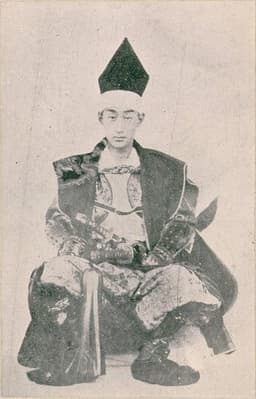
Matsudaira Katamori
General · Modern
56.6Total
Basic Information
Born
1567
1836
Died
1636
1893
Era
Modern
Modern
Nationality
Japan
Japan
Occupation
General
General
Civilization
Eastern
Eastern
Score Comparison
Military (10%)
67.3
46.7
Political (20%)
70.0
68.0
Influence (20%)
72.0
54.9
Legacy (20%)
52.0
49.2
Leadership (15%)
85.0
65.0
Strategy (15%)
61.2
60.0
TOTAL
67.1
56.6
Date Masamune — Complete Timeline
1588 AD
Battle of KoriyamaWar
Date Masamune besieged Koriyama Castle in Mutsu Province. The castle fell after a fierce battle, further expanding Masamune's territory and demonstrating his military prowess.
Sengoku PeriodSiegeMutsu
Impact: regionalconstructive
1589 AD
Battle of SuriageharaWar◆ Major
Date Masamune defeated the Ashina clan at Suriagehara in Mutsu Province. This victory allowed Masamune to expand his territory and solidify his control over the southern Tohoku region.
Sengoku PeriodBattleTohoku
Impact: regionalconstructive
1590 AD
Submission to Toyotomi HideyoshiPolitical Action◆ Major
Date Masamune submitted to Toyotomi Hideyoshi after the Siege of Odawara. He was allowed to retain his domain but was forced to cede some territory, marking a shift from independent daimyo to vassal.
Sengoku PeriodSubmissionToyotomi
Impact: national
1601 AD
Founding of SendaiPolitical Action
Date Masamune founded the city of Sendai as his new capital. He built Sendai Castle and developed the surrounding area, establishing a prosperous domain that became a major center in northern Japan.
Sengoku PeriodCity FoundingSendai
Impact: regionalconstructive
Matsudaira Katamori — Complete Timeline
1862 AD
Appointed as Kyoto ShugoshokuPolitical Action◆ Major
Matsudaira Katamori was appointed Kyoto Shugoshoku (military commissioner of Kyoto) by the Tokugawa shogunate. He was tasked with maintaining order in Kyoto, which was a hotbed of anti-shogunate activity. This position made him a key figure in the Bakumatsu period.
BakumatsuKyotoShogunate
Impact: national
1863 AD
Formation of the ShinsengumiPolitical Action◆ Major
Katamori authorized the formation of the Shinsengumi, a special police force composed of ronin, to suppress anti-shogunate elements in Kyoto. The Shinsengumi became infamous for their ruthless tactics and loyalty to the shogunate, with Kondo Isami and Hijikata Toshizo as leaders.
ShinsengumiKyotoPolice
Impact: national
1868 AD
Battle of Toba-FushimiWar◆ Major
Katamori led Aizu forces in the Battle of Toba-Fushimi, the opening battle of the Boshin War. The shogunate forces were defeated by the Imperial army, leading to the collapse of Tokugawa resistance. Katamori retreated to Aizu after the defeat.
Boshin WarBattleDefeat
Impact: nationaldestructive
Siege of Aizu-Wakamatsu CastleWar◆ Major
Imperial forces besieged Aizu-Wakamatsu Castle for a month. Katamori's forces, including the Byakkotai (White Tiger Corps), defended fiercely but were overwhelmed. The castle fell, and Katamori surrendered, ending Aizu's resistance. Many young samurai committed seppuku.
Boshin WarSiegeAizu
Impact: nationaltragic
Surrender and House ArrestPolitical Action
After the fall of Aizu-Wakamatsu Castle, Katamori formally surrendered to the Imperial forces. He was placed under house arrest and his domain was confiscated. He later lived in obscurity, but was eventually pardoned and served as a shrine priest.
SurrenderBoshin WarPardon
Impact: nationaltragic
Expert Analysis
Origins
Date Masamune (1567-1636) was born the eldest son of Date Terumune in Yonezawa Castle, Mutsu Province. His mother, Yoshihime, attempted to poison him due to his disfigurement from smallpox, which cost him his right eye. This early betrayal shaped his ruthless ambition. He studied under the Zen master Kōun and adopted a policy of aggressive expansion.
Matsudaira Katamori (1836-1893) was born in Edo as the son of Matsudaira Yoshitatsu, daimyo of Takasu. He was adopted into the Aizu Matsudaira clan and became the 9th daimyo of Aizu in 1852. His upbringing was steeped in Confucian loyalty and martial training, preparing him for the turbulent Bakumatsu period.
Rise to Power
Masamune became clan head at age 17 in 1584 and immediately faced rebellion from his uncle. He defeated the Ashina clan at the Battle of Suriagehara in 1589, expanding his territory to over 1 million koku. However, his rapid expansion drew the attention of Toyotomi Hideyoshi, to whom he submitted in 1590 after the Siege of Odawara, retaining his domain but losing some lands.
Katamori was appointed Kyoto Shugoshoku (military commissioner) in 1862 by the Tokugawa shogunate, a pivotal role in maintaining order in the imperial capital. He authorized the formation of the Shinsengumi in 1863, a police force of ronin that became infamous for suppressing anti-shogunate activists. This appointment elevated him to national prominence.
Leadership & Governance
Masamune founded Sendai in 1601, building a castle and developing the city into a prosperous economic center. He invested in trade, inviting foreign missionaries and promoting industry. His governance scored 70.0 in political acumen, balancing autonomy with loyalty to the Tokugawa shogunate. He participated in the Osaka campaigns (1614-1615) but avoided direct confrontation with the central authority.
Katamori's leadership scored 65.0, marked by his commitment to the shogunate's preservation. He implemented reforms in Aizu, strengthening its military and economy, but his rigid adherence to Tokugawa authority limited his flexibility. His political score of 68.0 reflects his effective management of Kyoto, yet his loyalty to a declining regime proved costly.
Triumph & Tragedy
Masamune's greatest triumph was founding Sendai, which grew into a major city and cultural center. He also successfully navigated the treacherous transition from the Sengoku period to the Edo period, retaining his domain. His tragedy was the loss of his eye and his mother's betrayal, which left him with a lifelong distrust. Militarily, he scored 67.3, but his strategic score of 61.2 shows he was more a survivor than a conqueror.
Katamori's triumph was his role as Kyoto Shugoshoku, where he maintained order and created the Shinsengumi. However, his tragedy was the Boshin War: his forces were defeated at the Battle of Toba-Fushimi in 1868, leading to the Siege of Aizu-Wakamatsu Castle. After a month-long siege, he surrendered, and his domain was reduced. The Byakkotai's mass suicide became a symbol of tragic loyalty. He was placed under house arrest, scoring 46.7 in military.
Character & Destiny
Masamune was known as the "One-Eyed Dragon" for his cunning and ferocity. His character was shaped by early adversity, making him pragmatic and cautious. He delayed submission to Hideyoshi until necessary and later supported Tokugawa Ieyasu. His leadership score of 85.0 reflects his ability to inspire loyalty and adapt.
Katamori was a man of principle, deeply loyal to the Tokugawa. His decision-making was constrained by his sense of duty, leading him to fight a losing war. His leadership score of 65.0 indicates competence but lack of flexibility. Historians view him as a tragic figure who upheld his obligations despite inevitable defeat.
Legacy
Masamune's legacy scores 52.0, primarily through Sendai's development and his patronage of culture. He is remembered as a symbol of resilience and ambition. The Date clan continued as a major daimyo family until the Meiji Restoration.
Katamori's legacy scores 49.2, centered on the Aizu domain's resistance and the Byakkotai legend. He is revered in Aizu as a martyr of the old order. The Meiji government initially punished him, but later pardoned him and he served as a shrine priest. His story highlights the costs of loyalty.
Conclusion
Date Masamune had greater impact historically, with a total score of 67.1 versus Katamori's 56.6. Masamune founded a city that endures, while Katamori fought for a lost cause. Masamune's adaptability allowed him to thrive, whereas Katamori's rigidity led to ruin. Though both were skilled leaders, Masamune's pragmatic survival secured a more lasting legacy.
Rankings
🥇
Date MasamuneLeader
Mil: 67.3Pol: 70.0Inf: 72.0
67.1
🥈
Matsudaira Katamori
Mil: 46.7Pol: 68.0Inf: 54.9
56.6
+10.5 behind
How This Comparison Works
Algorithm
Each figure is scored on 6 dimensions (0—100 scale) based on structured historical data: Military (10%), Political (20%), Influence (20%), Legacy (20%), Leadership (15%), Strategy (15%). The weighted total produces the final ranking.
Data Sources
Scores are computed from structured sub-indicators in the database. Scale factors adjust for era (Ancient ×0.85, Modern ×1.0) and civilization size (Eastern ×1.05, Other ×0.80) to account for differences in population and military scale.
Maximum 3 Figures
Comparisons are limited to 2—3 figures to ensure readability and statistical meaningfulness.
Error Margins
±5 points per dimension — Sub-scores are derived from historical records with inherent uncertainty. Two figures within 5 points on a dimension should be considered roughly equivalent in that area.
Total Score Accuracy
±3 points overall — The weighted combination of 6 dimensions produces a total score with approximately ±3 points of uncertainty. Differences of less than 3 points are not statistically significant— the figures are effectively tied.
Known Limitations
- Historical records are incomplete and uneven across civilizations
- Figures from oral-tradition societies may be underrepresented
- Occupation labels can misclassify multi-role figures
- Scores measure capability and impact, not moral character
- Quantitative scoring is a comparison tool, not absolute truth
Capability Radar
Military (10%) — Battles & Warfare
Battles
68
45
Win Rate
72
30
Expansion
65
10
Political (20%) — Governance & Reform
Reform
65
40
Diplomacy
72
45
Economy
68
35
Influence (20%) — Cultural & Global Reach
Cultural
60
40
Global
45
20
Legacy (20%) — Historical Impact
Historical
65
50
Longevity
55
35
Leadership (15%) — Power & Stability
Tenure
70
55
Stability
70
25
Strategy (15%) — Tactics & Innovation
Strategy
70
35
Tactics
75
40
Reform
60
50
Similar Comparisons
Comments & Discussion
No comments yet. Be the first to share your thoughts!