Loading...
Dantidurga vs Henry the Fowler
Henry the Fowler leads by 2.2 pts · 2 figures compared
…
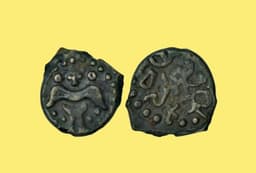
Dantidurga
Emperor · Medieval
58.7Total
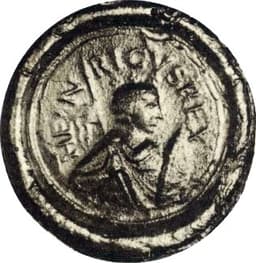
Henry the Fowler
Emperor · Medieval
60.9Total
Basic Information
Born
735
876
Died
756
936
Era
Medieval
Medieval
Nationality
India
East Francia
Occupation
Emperor
Emperor
Civilization
Indian
Western
Score Comparison
Military (10%)
67.5
70.0
Political (20%)
68.0
59.3
Influence (20%)
56.4
55.0
Legacy (20%)
50.0
52.0
Leadership (15%)
65.7
85.0
Strategy (15%)
52.5
55.0
TOTAL
58.7
60.9
Dantidurga — Complete Timeline
753 AD
Founding of the Rashtrakuta DynastyPolitical Action
Dantidurga overthrew his overlord, the Chalukya king Kirtivarman II, in a coup. He established the Rashtrakuta dynasty as the dominant power in the Deccan, with Manyakheta as his capital. This marked the beginning of a new imperial era.
Impact: regionalconstructive
754 AD
Performance of the Hiranyagarbha RitualCultural
Dantidurga performed the Hiranyagarbha (golden womb) ritual, a Vedic ceremony that symbolically rebirthed him as a Kshatriya. This legitimized his rule by claiming a higher caste status, as the Rashtrakutas were originally of humble origin.
Impact: nationalconstructive
755 AD
Conquest of MalwaWar◆ Major
Dantidurga led a military campaign into Malwa, defeating the Gurjara-Pratihara ruler Nagabhata I. He annexed the region, expanding Rashtrakuta territory northward. This victory established Rashtrakuta influence in central India.
Impact: regionaldestructive
Henry the Fowler — Complete Timeline
919 AD
Election as King of East FranciaPolitical Action
Henry the Fowler was elected King of East Francia by the Saxon and Frankish nobles at Fritzlar on May 6, 919. He was the first Saxon king, marking the transition from Carolingian to Ottonian rule. His election was contested by other dukes but he prevailed.
ElectionAccessionOttonian Dynasty
Impact: regionalconstructive
921 AD
Treaty of Bonn (921)Political Action◆ Major
Henry the Fowler signed the Treaty of Bonn with Charles the Simple of West Francia, recognizing each other's royal titles and establishing peaceful relations. This treaty ended Carolingian claims over East Francia and solidified Henry's legitimacy as an independent king.
TreatyRecognitionDiplomacy
Impact: regionalconstructive
924 AD
Nine-Year Truce with the MagyarsPolitical Action◆ Major
Henry the Fowler negotiated a nine-year truce with the Magyars, agreeing to pay tribute in exchange for a halt to their raids. He used this period to fortify towns, reorganize the army, and train cavalry. This strategic pause was crucial for his later military reforms.
TruceMagyarsMilitary Reform
Impact: regionalconstructive
929 AD
Battle of Lenzen (929)War◆ Major
Henry the Fowler's forces defeated a Slavic army at the Battle of Lenzen, securing the eastern frontier of East Francia. This victory allowed Henry to consolidate control over the Elbe region and establish the March of Brandenburg, a key step in German eastward expansion.
BattleSlavic WarsEastern Expansion
Impact: regionalconstructive
933 AD
Battle of Riade (933)War
After the truce with the Magyars expired, Henry the Fowler led a German army to victory at the Battle of Riade (near Merseburg). The defeat of the Magyar cavalry ended their raids into East Francia for a generation and established Henry's reputation as a defender of Christendom.
BattleMagyarsVictory
Impact: regionalconstructive
936 AD
Death of Henry the FowlerOther◆ Major
Henry the Fowler died on July 2, 936, at Memleben. He was succeeded by his son, Otto I, who would become Holy Roman Emperor. Henry's reign laid the foundations for the Ottonian dynasty and the medieval German kingdom.
DeathSuccessionOttonian
Impact: regional
Expert Analysis
Henry the Fowler vs Dantidurga
# The Unseen Foundations of Power
In the year 919, on a spring morning at Fritzlar, a Saxon duke named Henry knelt before the assembled nobles of East Francia and accepted a crown he had not sought. Half a continent and two centuries away, in the Deccan plateau of India, a chieftain named Dantidurga was about to commit an act of audacious betrayal—overthrowing his own overlord to found a dynasty that would reshape the subcontinent. Both men stood at the threshold of empire, yet their paths, their methods, and their legacies could hardly have been more different. What drove one to build a kingdom through patience and tribute, while the other seized power through a single, dramatic stroke? The answer lies not merely in their choices, but in the worlds that shaped them.
Origins
Henry the Fowler was born in 876 into a world of fractured loyalties and constant threat. East Francia, the eastern half of Charlemagne’s shattered empire, was a patchwork of duchies—Saxony, Bavaria, Swabia, Franconia—each ruled by proud, independent dukes. Henry’s father, Otto the Illustrious, was Duke of Saxony, but the title meant little beyond the Saxon borders. The young Henry grew up in the shadow of Viking raids from the north and Magyar horsemen from the east, a world where survival depended on fortifications, alliances, and the willingness to pay tribute when force failed. His nickname, “the Fowler,” supposedly came from his love of bird hunting, but it also hinted at a man who knew when to wait and watch.
Dantidurga, born in 735, emerged from an entirely different crucible. The Deccan was a land of ancient kingdoms and ritual hierarchies, where the Chalukyas of Badami had ruled for over two centuries. Dantidurga was a Rashtrakuta, a clan that served as Chalukya feudatories, governing a small territory in what is now Karnataka. Unlike Henry’s world of armed duchies and tribal confederations, Dantidurga’s India was structured by caste, dharma, and the sacred authority of kings. The Rashtrakutas were originally of peasant stock, and their rise required not just military might but a transformation of identity—a remaking of the soul.
Rise to Power
Henry’s ascent was a study in patience and political calculation. When the Carolingian line in East Francia faltered, the dukes gathered at Fritzlar in 919 to elect a new king. They passed over the powerful Duke of Franconia and chose Henry—not because he was the strongest, but because he was the least threatening. Henry accepted the crown but refused the traditional anointing by church officials, declaring himself only a king, not a priest-king. It was a gesture of humility that masked a shrewd understanding: he needed the support of the church, but he would not be its puppet.
Dantidurga’s rise was far more dramatic and dangerous. In 753, he turned on his suzerain, the Chalukya king Kirtivarman II, and overthrew him in a coup. This was not merely a rebellion; it was a violation of the feudal order. To legitimize his usurpation, Dantidurga performed the Hiranyagarbha ritual in 754, a Vedic ceremony in which he was symbolically reborn from a golden womb as a Kshatriya—a warrior of the ruling caste. This act was both a political necessity and a profound cultural statement: he was not just seizing power, but claiming a new identity, one that erased his peasant origins and placed him within the sacred lineage of kings.
Leadership & Governance
Henry’s governance was the art of the possible. He understood that East Francia was not a unified kingdom but a coalition of proud duchies. His strategy was to bind them through marriage, treaty, and shared threat. He signed the Treaty of Bonn in 921 with Charles the Simple of West Francia, recognizing each other’s titles and stabilizing the western frontier. But his greatest challenge was the Magyars, who had ravaged German lands for decades. In 924, Henry negotiated a nine-year truce, agreeing to pay tribute. This was not cowardice; it was a calculated pause. During those nine years, he built fortified towns, trained a new cavalry, and prepared his people for war. When the truce expired in 933, he led his army to victory at the Battle of Riade, breaking the Magyar threat for a generation.
Dantidurga’s rule was shorter and more aggressive. After founding the Rashtrakuta dynasty in 753, he immediately launched a campaign into Malwa, defeating the Gurjara-Pratihara ruler Nagabhata I in 755. He annexed the region, extending Rashtrakuta power northward. Unlike Henry, who built slowly and cautiously, Dantidurga expanded through swift, decisive conquest. His governance was less about coalition-building and more about asserting dominance through military might and ritual legitimacy. The Hiranyagarbha ceremony was not mere pageantry; it was a declaration that the Rashtrakutas were now the rightful rulers of the Deccan, sanctioned by the gods themselves.
Triumph & Tragedy
Henry’s greatest triumph was the Battle of Riade in 933, where he proved that patient preparation could overcome ferocious enemies. His greatest tragedy was perhaps that he did not live to see the full fruit of his labor. He died in 936 at Memleben, leaving his son Otto I a kingdom that was stable but still fragile. Otto would go on to become Holy Roman Emperor, but Henry never wore that crown—he had laid the foundations without seeing the cathedral.
Dantidurga’s triumph was the founding of the Rashtrakuta dynasty itself, a feat that would shape Indian history for centuries. His tragedy was his early death in 756, after only a few years of rule. He left his successors a realm that was expanding but not yet consolidated. The dynasty he founded would reach its zenith under his nephew Krishna I, but Dantidurga himself vanished from the stage almost as quickly as he had appeared.
Character & Destiny
Henry the Fowler was a man of calculation and restraint. He knew when to bow, when to wait, and when to strike. His willingness to pay tribute to the Magyars was seen by some as weakness, but it was the wisdom of a man who understood that survival sometimes requires submission. He built his kingdom not through grand gestures but through patient accumulation of trust, territory, and fortifications.
Dantidurga was a man of audacity and transformation. He did not wait for legitimacy; he seized it. He did not build slowly; he conquered quickly. His character was that of a gambler who bet everything on a single throw—and won. But his destiny was also shaped by the world he inhabited: a world where kingship was sacred, where ritual could remake identity, and where the overthrow of a lord could be justified through divine rebirth.
Legacy
Henry the Fowler is remembered as the founder of the Ottonian dynasty, the first Saxon king of East Francia, and the architect of a unified German kingdom. His legacy is one of foundations—the fortresses he built, the truces he negotiated, the son he trained. He is a figure of modest glory but immense consequence, the quiet builder behind the grand empire of Otto the Great.
Dantidurga is remembered as the founder of the Rashtrakuta dynasty, a line of kings who would rule the Deccan for over two centuries and build the magnificent Kailasa temple at Ellora. His legacy is one of transformation—the peasant who became a king, the usurper who became a dynasty. He is a figure of dramatic ambition, the spark that ignited a golden age.
Conclusion
Two men, two centuries, two worlds. Henry the Fowler built his kingdom through patience, tribute, and the slow art of coalition. Dantidurga built his through audacity, ritual, and the swift sword of conquest. One was a builder of foundations, the other a kindler of flames. Neither saw the full height of their work, but both shaped the destiny of their peoples. Their stories remind us that power is not always seized in a single stroke—sometimes it is earned in the long years of waiting, and sometimes it is claimed in a moment of glorious risk. History remembers both, for history knows that there are many roads to the throne.
Rankings
🥇
Henry the FowlerLeader
Mil: 70.0Pol: 59.3Inf: 55.0
60.9
🥈
Dantidurga
Mil: 67.5Pol: 68.0Inf: 56.4
58.7
+2.2 behind
How This Comparison Works
Algorithm
Each figure is scored on 6 dimensions (0—100 scale) based on structured historical data: Military (10%), Political (20%), Influence (20%), Legacy (20%), Leadership (15%), Strategy (15%). The weighted total produces the final ranking.
Data Sources
Scores are computed from structured sub-indicators in the database. Scale factors adjust for era (Ancient ×0.85, Modern ×1.0) and civilization size (Eastern ×1.05, Other ×0.80) to account for differences in population and military scale.
Maximum 3 Figures
Comparisons are limited to 2—3 figures to ensure readability and statistical meaningfulness.
Error Margins
±5 points per dimension — Sub-scores are derived from historical records with inherent uncertainty. Two figures within 5 points on a dimension should be considered roughly equivalent in that area.
Total Score Accuracy
±3 points overall — The weighted combination of 6 dimensions produces a total score with approximately ±3 points of uncertainty. Differences of less than 3 points are not statistically significant— the figures are effectively tied.
Known Limitations
- Historical records are incomplete and uneven across civilizations
- Figures from oral-tradition societies may be underrepresented
- Occupation labels can misclassify multi-role figures
- Scores measure capability and impact, not moral character
- Quantitative scoring is a comparison tool, not absolute truth
Capability Radar
Military (10%) — Battles & Warfare
Battles
60
55
Win Rate
65
60
Expansion
65
60
Political (20%) — Governance & Reform
Reform
45
75
Diplomacy
55
70
Economy
50
65
Influence (20%) — Cultural & Global Reach
Cultural
40
55
Global
30
40
Legacy (20%) — Historical Impact
Historical
55
65
Longevity
50
60
Leadership (15%) — Power & Stability
Tenure
40
70
Stability
45
70
Strategy (15%) — Tactics & Innovation
Strategy
60
65
Tactics
55
50
Reform
40
70
Similar Comparisons
Comments & Discussion
FowlerFixer6/16/2026
As a military historian, let's be blunt: Henry was a defensive genius, but Dantidurga was the real empire-builder. Henry's big move was building fortresses and bribing Magyars with tribute—hardly inspiring. Dantidurga, however, crushed the mighty Chalukyas at their own game in 753 CE, taking over their capital. One man played defense with walls and silver; the other played offense with steel and audacity. I know who I'd follow into battle. Dantidurga wins on aggression and impact.
年表破り6/16/2026
我作为数据怀疑论者,不得不吐槽这个比较。亨利和丹蒂杜尔加相隔两百年、半个世界,硬凑在一起简直是时空错乱。亨利统治的是松散公国联盟,丹蒂杜尔加要推翻的是成熟的遮娄其帝国。拿“领袖特质”当共同点,却完全忽视制度基础、经济条件和军事技术差异。这种比较就像拿苹果和榴莲比甜度——看似有趣,实则毫无意义。求你们了,别为了流量把历史人物当乐高随便拼。