Loading...
Dag Hammarskjold vs Prashant Bhushan
Dag Hammarskjold leads by 19.4 pts · 2 figures compared
…
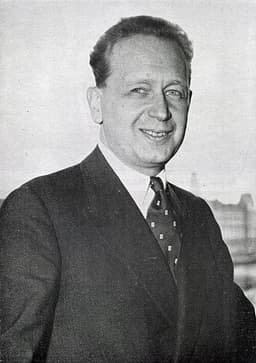
Dag Hammarskjold
Politician · Modern
60.3Total

Prashant Bhushan
Politician · Modern
40.9Total
Basic Information
Born
1905
1956
Died
1961
—
Era
Modern
Modern
Nationality
Sweden
India
Occupation
Politician
Politician
Civilization
Western
Indian
Score Comparison
Military (10%)
48.4
38.8
Political (20%)
60.0
32.2
Influence (20%)
58.3
47.9
Legacy (20%)
56.0
38.3
Leadership (15%)
79.8
31.2
Strategy (15%)
59.5
60.0
TOTAL
60.3
40.9
Dag Hammarskjold — Complete Timeline
1953 AD
Elected Secretary-General of the United NationsPolitical Action◆ Major
Dag Hammarskj
UN Secretary-GeneralLeadershipPost-War
Impact: globalconstructive
1956 AD
Established the UN Emergency ForcePolitical Action◆ Major
Hammarskjöld created the first UN peacekeeping force, the UN Emergency Force, to supervise the withdrawal of invading forces during the Suez Crisis. This established the precedent for UN peacekeeping operations.
PeacekeepingSuez CrisisUNEF
Impact: globalconstructive
1960 AD
Mediated the Congo CrisisPolitical Action◆ Major
Hammarskjöld deployed UN peacekeepers to the Congo to restore order after independence and prevent secession of Katanga. The mission faced challenges, including the death of Prime Minister Patrice Lumumba and accusations of bias.
CongoPeacekeepingDecolonization
Impact: regional
1961 AD
Killed in a plane crashOther◆ Major
Hammarskjöld died in a plane crash near Ndola, Northern Rhodesia (now Zambia), while en route to negotiate a ceasefire in the Congo. His death remains controversial, with theories of sabotage or assassination.
DeathPlane CrashCongo
Impact: globaltragic
Awarded the Nobel Peace Prize posthumouslyCultural◆ Major
Hammarskjöld was posthumously awarded the Nobel Peace Prize for his efforts to strengthen the UN and resolve international conflicts. He remains the only UN Secretary-General to receive the prize after death.
Nobel PrizePeaceUN
Impact: globalconstructive
Prashant Bhushan — Complete Timeline
2010 AD
Filed the PIL on the 2G spectrum scamPolitical Action◆ Major
Prashant Bhushan filed a public interest litigation in the Supreme Court alleging corruption in the 2G spectrum allocation. The court's investigation led to the cancellation of 122 licenses and the conviction of former Telecom Minister A. Raja.
PILCorruption2G
Impact: nationalconstructive
2014 AD
Advocated for judicial accountability and NJACPolitical Action◆ Major
Bhushan supported the National Judicial Appointments Commission (NJAC) to replace the collegium system for appointing judges. He argued for greater transparency, but the Supreme Court struck down the NJAC in 2015, upholding the collegium system.
JudiciaryReformNJAC
Impact: nationalconstructive
2020 AD
Contempt of court case for criticizing CJIPolitical Action
Bhushan faced contempt proceedings for tweets criticizing Chief Justice of India S.A. Bobde. The Supreme Court convicted him but imposed a symbolic fine of
ContemptFree SpeechJudiciary
Impact: national
Expert Analysis
Origins
**Dag Hammarskjold** was born on July 29, 1905, in Jonkoping, Sweden, into a prominent political family. His father, Hjalmar Hammarskjold, served as Prime Minister of Sweden. Dag studied law and economics at Uppsala University, earning a doctorate. He entered the Swedish civil service, working as a secretary in the Ministry of Finance before becoming chairman of the National Bank of Sweden. His diplomatic career began with his appointment as Sweden's delegate to the United Nations in 1949.
**Prashant Bhushan** was born on October 15, 1956, in Bhopal, India, into a family of lawyers and activists. His father, Shanti Bhushan, was a former Law Minister of India. Prashant studied at IIT Kanpur (B.Tech) and then law at the University of Delhi. He started his legal practice in the Supreme Court of India, focusing on public interest litigation (PIL). His early work included environmental cases and challenging government corruption.
Rise to Power
Hammarskjold's rise was rapid. In 1951, he became Sweden's deputy foreign minister. In 1953, at age 47, he was elected Secretary-General of the UN, succeeding Trygve Lie. His appointment was a compromise between Western and Eastern blocs. He quickly asserted the role of the UN in peacekeeping, notably during the Suez Crisis in 1956, where he established the UN Emergency Force (UNEF), the first peacekeeping force. This action solidified his authority and the UN's role in conflict resolution.
Bhushan rose to prominence through high-profile PILs. In 2008, he filed a case alleging corruption in the allocation of 2G spectrum licenses, which led to the Supreme Court's investigation and eventual cancellation of licenses. This brought him national attention as a crusader against corruption. He also became a vocal critic of the judiciary, advocating for the National Judicial Appointments Commission (NJAC) to replace the collegium system for appointing judges, arguing for greater transparency.
Leadership & Governance
Hammarskjold's leadership style was diplomatic and proactive. He expanded the UN's peacekeeping capacity, creating the UN Emergency Force (UNEF) in 1956 and deploying peacekeepers to the Congo in 1960. He faced challenges in the Congo Crisis, where his decision to use force to prevent secession of Katanga was controversial. His approach was based on the UN Charter's principles, but he often acted unilaterally, which drew criticism from some member states. He scored 79.8 in leadership, reflecting his ability to navigate complex international politics.
Bhushan's leadership is more as an activist than a governor. He uses legal tools to challenge government and judicial actions. His strategy score of 60.0 indicates his tactical approach. He has been involved in several landmark cases, including the 2G scam and the challenge to the National Judicial Appointments Commission. However, his confrontational style has led to contempt of court cases, most notably in 2020 when he was convicted for tweeting criticism of the Chief Justice of India. His leadership score of 31.2 reflects his limited institutional role.
Triumph & Tragedy
Hammarskjold's greatest triumph was establishing the UN as a credible peacekeeping force. His creation of UNEF set a precedent for future peace missions. He was awarded the Nobel Peace Prize posthumously in 1961. His tragedy was his death in a plane crash on September 18, 1961, while en route to negotiate a ceasefire in the Congo. The crash remains shrouded in mystery, with theories of sabotage. His death cut short a promising career and left the UN without a strong leader during a critical period.
Bhushan's triumph is the 2G spectrum case, which exposed massive corruption and led to policy changes. He has also been a consistent voice for judicial accountability. His tragedy is the contempt conviction, which damaged his reputation and highlighted the limits of activist lawyering. The symbolic fine of Re 1 imposed by the Supreme Court in 2020 was seen as a compromise, but the case underscored the tension between free speech and judicial authority.
Character & Destiny
Hammarskjold was known for his intellectual rigor and moral conviction. He was a mystic, often reflecting on ethics and diplomacy. His character shaped his destiny: his willingness to take risks led to his death, but also to his legacy as a peacemaker. He is remembered as one of the most effective UN Secretaries-General.
Bhushan is driven by a strong sense of justice and transparency. His confrontational approach has made him a polarizing figure. His character has led to both triumphs and legal troubles. He remains a prominent activist, but his influence is limited to legal circles.
Legacy
Hammarskjold's legacy is the modern UN peacekeeping system. He set standards for international civil service and conflict resolution. His scores: political 60.0, influence 58.3, legacy 56.0. He is one of only two UN Secretaries-General to win the Nobel Peace Prize (posthumously). His principles continue to guide UN operations.
Bhushan's legacy is in Indian public interest law. He has inspired a generation of lawyers to use the courts for social causes. His scores: political 32.2, influence 47.9, legacy 38.3. His impact is more national than global.
Conclusion
Dag Hammarskjold had a greater impact on global affairs. His total score of 60.3 significantly exceeds Bhushan's 40.9. While Bhushan has contributed to Indian jurisprudence, Hammarskjold's innovations in peacekeeping and his moral leadership shaped international relations. His death was a loss to the world, but his legacy endures in the UN's peacekeeping missions. Bhushan's work is important but confined to one nation's legal system. Thus, Hammarskjold's influence is broader and more enduring.
Rankings
🥇
Dag HammarskjoldLeader
Mil: 48.4Pol: 60.0Inf: 58.3
60.3
🥈
Prashant Bhushan
Mil: 38.8Pol: 32.2Inf: 47.9
40.9
+19.4 behind
How This Comparison Works
Algorithm
Each figure is scored on 6 dimensions (0—100 scale) based on structured historical data: Military (10%), Political (20%), Influence (20%), Legacy (20%), Leadership (15%), Strategy (15%). The weighted total produces the final ranking.
Data Sources
Scores are computed from structured sub-indicators in the database. Scale factors adjust for era (Ancient ×0.85, Modern ×1.0) and civilization size (Eastern ×1.05, Other ×0.80) to account for differences in population and military scale.
Maximum 3 Figures
Comparisons are limited to 2—3 figures to ensure readability and statistical meaningfulness.
Error Margins
±5 points per dimension — Sub-scores are derived from historical records with inherent uncertainty. Two figures within 5 points on a dimension should be considered roughly equivalent in that area.
Total Score Accuracy
±3 points overall — The weighted combination of 6 dimensions produces a total score with approximately ±3 points of uncertainty. Differences of less than 3 points are not statistically significant— the figures are effectively tied.
Known Limitations
- Historical records are incomplete and uneven across civilizations
- Figures from oral-tradition societies may be underrepresented
- Occupation labels can misclassify multi-role figures
- Scores measure capability and impact, not moral character
- Quantitative scoring is a comparison tool, not absolute truth
Capability Radar
Military (10%) — Battles & Warfare
Battles
30
43
Win Rate
32
45
Expansion
36
52
Political (20%) — Governance & Reform
Reform
70
40
Diplomacy
85
20
Economy
40
5
Influence (20%) — Cultural & Global Reach
Cultural
50
15
Global
70
10
Legacy (20%) — Historical Impact
Historical
65
20
Longevity
55
10
Leadership (15%) — Power & Stability
Tenure
55
10
Stability
75
5
Strategy (15%) — Tactics & Innovation
Strategy
39
53
Tactics
42
57
Reform
45
56
Similar Comparisons
Comments & Discussion
No comments yet. Be the first to share your thoughts!