Loading...
Dag Hammarskjold vs Mizuno Tadakuni
Dag Hammarskjold leads by 10.8 pts · 2 figures compared
…
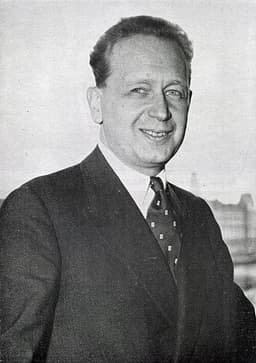
Dag Hammarskjold
Politician · Modern
60.3Total
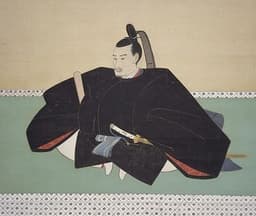
Mizuno Tadakuni
Politician · Modern
49.5Total
Basic Information
Born
1905
1794
Died
1961
1851
Era
Modern
Modern
Nationality
Sweden
Japan
Occupation
Politician
Politician
Civilization
Western
Eastern
Score Comparison
Military (10%)
48.4
28.0
Political (20%)
60.0
62.7
Influence (20%)
58.3
51.8
Legacy (20%)
56.0
43.3
Leadership (15%)
79.8
53.2
Strategy (15%)
59.5
55.4
TOTAL
60.3
49.5
Dag Hammarskjold — Complete Timeline
1953 AD
Elected Secretary-General of the United NationsPolitical Action◆ Major
Dag Hammarskj
UN Secretary-GeneralLeadershipPost-War
Impact: globalconstructive
1956 AD
Established the UN Emergency ForcePolitical Action◆ Major
Hammarskjöld created the first UN peacekeeping force, the UN Emergency Force, to supervise the withdrawal of invading forces during the Suez Crisis. This established the precedent for UN peacekeeping operations.
PeacekeepingSuez CrisisUNEF
Impact: globalconstructive
1960 AD
Mediated the Congo CrisisPolitical Action◆ Major
Hammarskjöld deployed UN peacekeepers to the Congo to restore order after independence and prevent secession of Katanga. The mission faced challenges, including the death of Prime Minister Patrice Lumumba and accusations of bias.
CongoPeacekeepingDecolonization
Impact: regional
1961 AD
Killed in a plane crashOther◆ Major
Hammarskjöld died in a plane crash near Ndola, Northern Rhodesia (now Zambia), while en route to negotiate a ceasefire in the Congo. His death remains controversial, with theories of sabotage or assassination.
DeathPlane CrashCongo
Impact: globaltragic
Awarded the Nobel Peace Prize posthumouslyCultural◆ Major
Hammarskjöld was posthumously awarded the Nobel Peace Prize for his efforts to strengthen the UN and resolve international conflicts. He remains the only UN Secretary-General to receive the prize after death.
Nobel PrizePeaceUN
Impact: globalconstructive
Mizuno Tadakuni — Complete Timeline
1839 AD
Appointment as Senior Councilor (Roju)Political Action◆ Major
Mizuno Tadakuni was appointed roju under Shogun Tokugawa Ieyoshi. He took office during a period of severe economic crisis and foreign pressure, and he launched a comprehensive reform program to address these challenges.
AppointmentRojuTokugawa Ieyoshi
Impact: nationalconstructive
1841 AD
Implementation of the Tenpo ReformsReform◆ Major
Tadakuni enacted the Tenpo Reforms, a series of austerity measures including sumptuary laws, dissolution of merchant monopolies, and forced resettlement of peasants. He also attempted to consolidate land holdings and reduce the power of wealthy merchants, but the reforms were widely unpopular and largely failed.
Tenpo ReformsAusterityEconomic failure
Impact: nationaldestructive
1842 AD
Order for the Destruction of Temples and ShrinesPolitical Action
As part of the Tenpo Reforms, Tadakuni ordered the destruction of many temples and shrines in Edo to reduce the influence of religious institutions and reclaim land. This caused widespread outrage among the populace and clergy, contributing to his downfall.
Temple destructionReligious persecutionTenpo Reforms
Impact: nationaldestructive
1843 AD
Dismissal from OfficePolitical Action◆ Major
Due to the failure of the Tenpo Reforms and growing opposition, Tadakuni was dismissed from his position as roju and forced into retirement. His reforms were reversed, and he was later placed under house arrest, marking the end of his political career.
DismissalHouse arrestReform failure
Impact: nationaltragic
Expert Analysis
Origins
Dag Hammarskjöld was born in 1905 in Jönköping, Sweden, into a prominent political family. His father, Hjalmar Hammarskjöld, served as Prime Minister of Sweden during World War I. Dag studied law and economics at Uppsala University, earning a doctorate in economics. He entered the Swedish civil service, becoming a key figure in the Ministry of Finance and later the Ministry of Foreign Affairs. His background in economics and diplomacy shaped his analytical approach to international relations.
Mizuno Tadakuni was born in 1793 in Edo, Japan, into a samurai family serving the Tokugawa shogunate. He studied Confucian classics and military arts. His early career involved administrative posts within the shogunate, where he gained experience in finance and governance. The economic decline of the late Edo period and the threat of Western powers defined his worldview.
Rise to Power
Hammarskjöld rose to prominence as a Swedish diplomat. He was appointed as Sweden's delegate to the United Nations in 1949 and later became the second Secretary-General of the UN in 1953, succeeding Trygve Lie. His election was a compromise between Western and Eastern blocs. He quickly established himself as an activist Secretary-General, expanding the role beyond administration.
Mizuno Tadakuni was appointed as a Senior Councilor (Roju) in 1839 under Shogun Tokugawa Ieyoshi. He rose during a period of severe economic crisis, including famines and inflation, coupled with increasing foreign pressure from Western powers. His appointment came as the shogunate sought strong leadership to address these challenges.
Leadership & Governance
Hammarskjöld's leadership style was proactive and diplomatic. He believed in the UN's ability to mediate conflicts and established the first UN peacekeeping force, the UN Emergency Force (UNEF), during the 1956 Suez Crisis. He deployed UN troops to the Congo in 1960 to prevent secession and maintain order. His governance approach was based on international law and moral authority, often bypassing the Security Council's gridlock. He scored 79.8 in leadership, reflecting his innovative use of the UN's executive powers.
Mizuno Tadakuni's governance was authoritarian and reformist. He enacted the Tenpo Reforms (1841-1843) to restore the shogunate's finances and social order. The reforms included sumptuary laws, dissolution of merchant monopolies, forced resettlement of peasants, and destruction of temples and shrines in Edo. His leadership style was top-down, ignoring the interests of merchants and religious institutions, which generated widespread opposition. His leadership score of 53.2 indicates mixed effectiveness.
Triumph & Tragedy
Hammarskjöld's greatest triumph was the establishment of UN peacekeeping and his mediation during the Suez Crisis, which prevented a larger war. He also successfully managed the UN response to the Congo Crisis, deploying 20,000 troops. His tragedy was his death in a plane crash in 1961 while en route to negotiate a ceasefire in Congo. The crash remains suspicious, possibly caused by sabotage. He was posthumously awarded the Nobel Peace Prize, the only UN Secretary-General to receive this honor.
Mizuno Tadakuni's triumph was his attempt to reform the Tokugawa shogunate during a period of decline. The Tenpo Reforms initially reduced prices and stabilized the economy. However, his tragedy was the failure of the reforms due to resistance from samurai, merchants, and religious groups. He was dismissed from office in 1843 and forced into retirement. His order to destroy temples alienated the Buddhist establishment, and his forced resettlement caused hardship, leading to his legacy as an unpopular reformer.
Character & Destiny
Hammarskjöld was intellectual, principled, and determined. He wrote extensively on diplomacy and leadership. His character drove him to take risks in conflict zones, ultimately leading to his death. Historians view him as a visionary who expanded the UN's role, but his independent streak sometimes clashed with powerful nations. His destiny was cut short, yet his influence on international peacekeeping endures.
Mizuno Tadakuni was conservative, rigid, and authoritarian. His Confucian beliefs emphasized austerity and hierarchy, which shaped the Tenpo Reforms. His inability to adapt to changing economic realities and his disregard for opposition led to his downfall. His character sealed his fate as a failed reformer, remembered for the unpopularity of his measures.
Legacy
Hammarskjöld's legacy is profound: he established the precedent for UN peacekeeping, which has been used in over 70 missions since. His principles of impartiality and consent remain core to peacekeeping operations. He also strengthened the Secretary-General's role as an independent mediator. His score in legacy is 56.0, reflecting his lasting impact on international relations.
Mizuno Tadakuni's legacy is mixed. The Tenpo Reforms are studied as an example of failed top-down reform in feudal Japan. They highlighted the shogunate's inability to modernize, contributing to the eventual Meiji Restoration. However, his destruction of temples and forced resettlement left a negative imprint. His legacy score of 43.3 indicates limited positive impact.
Conclusion
Dag Hammarskjöld had a greater overall impact than Mizuno Tadakuni. Hammarskjöld's creation of UN peacekeeping transformed global conflict resolution, and his scores (total 60.3, leadership 79.8) reflect his effectiveness. Mizuno Tadakuni's reforms failed due to inflexibility, and his total score of 49.5 underscores his lesser influence. While both faced challenges in times of crisis, Hammarskjöld's innovations in diplomacy and peacekeeping have had enduring positive effects, whereas Tadakuni's legacy is largely cautionary.
Rankings
🥇
Dag HammarskjoldLeader
Mil: 48.4Pol: 60.0Inf: 58.3
60.3
🥈
Mizuno Tadakuni
Mil: 28.0Pol: 62.7Inf: 51.8
49.5
+10.8 behind
How This Comparison Works
Algorithm
Each figure is scored on 6 dimensions (0—100 scale) based on structured historical data: Military (10%), Political (20%), Influence (20%), Legacy (20%), Leadership (15%), Strategy (15%). The weighted total produces the final ranking.
Data Sources
Scores are computed from structured sub-indicators in the database. Scale factors adjust for era (Ancient ×0.85, Modern ×1.0) and civilization size (Eastern ×1.05, Other ×0.80) to account for differences in population and military scale.
Maximum 3 Figures
Comparisons are limited to 2—3 figures to ensure readability and statistical meaningfulness.
Error Margins
±5 points per dimension — Sub-scores are derived from historical records with inherent uncertainty. Two figures within 5 points on a dimension should be considered roughly equivalent in that area.
Total Score Accuracy
±3 points overall — The weighted combination of 6 dimensions produces a total score with approximately ±3 points of uncertainty. Differences of less than 3 points are not statistically significant— the figures are effectively tied.
Known Limitations
- Historical records are incomplete and uneven across civilizations
- Figures from oral-tradition societies may be underrepresented
- Occupation labels can misclassify multi-role figures
- Scores measure capability and impact, not moral character
- Quantitative scoring is a comparison tool, not absolute truth
Capability Radar
Military (10%) — Battles & Warfare
Battles
30
51
Win Rate
32
54
Expansion
36
59
Political (20%) — Governance & Reform
Reform
70
65
Diplomacy
85
50
Economy
40
55
Influence (20%) — Cultural & Global Reach
Cultural
50
30
Global
70
20
Legacy (20%) — Historical Impact
Historical
65
40
Longevity
55
30
Leadership (15%) — Power & Stability
Tenure
55
60
Stability
75
40
Strategy (15%) — Tactics & Innovation
Strategy
39
63
Tactics
42
64
Reform
45
67
Similar Comparisons
Comments & Discussion
No comments yet. Be the first to share your thoughts!