Loading...
Cyrus the Great vs Fu Jian
Cyrus the Great leads by 19.5 pts · 2 figures compared
…
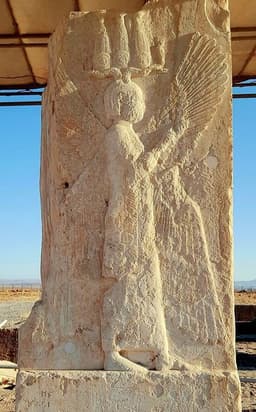
Cyrus the Great
Emperor · Ancient
83.9Total
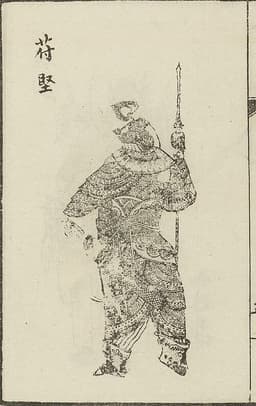
Fu Jian
Emperor · Ancient
64.4Total
Basic Information
Born
-600
338
Died
-530
385
Era
Ancient
Ancient
Nationality
Persia
China
Occupation
Emperor
Emperor
Civilization
Middle Eastern
Eastern
Score Comparison
Military (10%)
82.0
78.0
Political (20%)
85.0
72.0
Influence (20%)
85.0
59.0
Legacy (20%)
90.0
50.0
Leadership (15%)
78.0
85.0
Strategy (15%)
75.0
58.0
TOTAL
83.9
64.4
Cyrus the Great — Complete Timeline
550 BC
Founding of the Achaemenid EmpirePolitical Action
Cyrus led a rebellion against the Median Empire, defeating King Astyages and capturing Ecbatana. He then united the Persian and Median tribes, establishing the Achaemenid Empire, which became the largest empire the world had yet seen.
Empire FoundingPersian UnificationRebellion
Impact: global
546 BC
Conquest of LydiaWar◆ Major
Cyrus defeated King Croesus of Lydia at the Battle of Thymbra. The Lydian capital Sardis was captured, and Croesus was taken prisoner. This conquest brought Anatolia under Persian control and secured access to the Aegean coast.
Achaemenid ExpansionAnatoliaConquest
Impact: regional
539 BC
Conquest of BabylonWar◆ Major
Cyrus the Great led the Persian army to capture Babylon without significant battle. The city's gates were opened, and Cyrus entered peacefully. This conquest added Mesopotamia to the Achaemenid Empire and marked the end of the Neo-Babylonian Empire.
Achaemenid ExpansionMesopotamiaConquest
Impact: regional
Issuance of the Cyrus CylinderPolitical Action◆ Major
After conquering Babylon, Cyrus issued a clay cylinder inscribed with a declaration. It described his policy of restoring temples, repatriating displaced peoples, and allowing religious freedom. The cylinder is often cited as an early charter of human rights.
Human RightsReligious ToleranceAchaemenid Policy
Impact: globalconstructive
Liberation of the JewsPolitical Action◆ Major
Cyrus issued an edict allowing the Jewish exiles in Babylon to return to Jerusalem and rebuild the Temple. This event is recorded in the biblical Book of Ezra and is a key moment in Jewish history, ending the Babylonian captivity.
Jewish HistoryReligious FreedomReturn from Exile
Impact: regionalconstructive
Fu Jian — Complete Timeline
370 AD
Conquest of Former YanWar◆ Major
Fu Jian's Former Qin forces conquered the Former Yan state, annexing its territory in northern China. This victory significantly expanded Former Qin's power and territory, bringing Fu Jian closer to unifying the north.
ConquestExpansion
Impact: regionalconstructive
376 AD
Conquest of Former LiangWar◆ Major
Fu Jian's forces conquered the Former Liang state in the northwest, incorporating its territory into Former Qin. This further consolidated his control over northern China.
ConquestExpansion
Impact: regionalconstructive
Conquest of DaiWar
Fu Jian's army conquered the Dai state, a Xianbei confederation in the north. This eliminated a rival and extended Former Qin's influence into the steppe region.
ConquestExpansion
Impact: regionalconstructive
379 AD
Capture of XiangyangWar
Fu Jian's forces captured the strategic city of Xiangyang from the Eastern Jin dynasty. This victory gave Former Qin a foothold south of the Huai River, setting the stage for the invasion that led to the Battle of Fei River.
ConquestCampaign
Impact: regionalconstructive
383 AD
Battle of Fei RiverWar
Fu Jian led a massive Former Qin army against the Eastern Jin dynasty at the Fei River. The Jin forces defeated the Qin army, causing a catastrophic rout. This defeat shattered Fu Jian's unification efforts and led to the collapse of Former Qin.
BattleUnificationDefeat
Impact: regionaltragic
Expert Analysis
Cyrus the Great vs Fu Jian
# The Conqueror's Paradox: Cyrus the Great and Fu Jian
In the autumn of 539 BCE, a Persian king walked through the gates of Babylon without a fight. The city's defenders, weary of their own ruler's excesses, simply opened the way. Two thousand years later, in 383 CE, a Chinese emperor stood on the banks of the Fei River, watching his army of nearly a million men collapse into panicked retreat before a smaller enemy. One conqueror built an empire that lasted two centuries; the other saw his life's work shatter in a single afternoon. What made the difference?
Origins
Cyrus was born around 600 BCE into the Persian tribal nobility, a vassal people under the Median Empire. The Persians were hardy highlanders, skilled horsemen, and fiercely independent. Cyrus grew up in a world where the great powers—Media, Lydia, Babylon, and Egypt—had carved up the Near East, but none had managed to hold it all. His people's subjugation was fresh, and their pride raw. This was a world of empires built on fear and tribute, where the conquered paid dearly for their defeat.
Fu Jian was born in 338 CE, a prince of the Di people, a semi-nomadic tribe that had carved out a small state in northern China during the chaotic Sixteen Kingdoms period. China had been fragmented for over a century since the fall of the Western Jin dynasty. The north was a patchwork of warring kingdoms, mostly led by non-Chinese tribal rulers who adopted Chinese court culture while keeping their military traditions. Fu Jian inherited a small but growing state called Former Qin, and he was acutely aware that his people were seen as barbarians by the cultured Chinese elite of the south.
Rise to Power
Cyrus came to power through rebellion. Around 550 BCE, he led the Persian tribes in revolt against the Median king Astyages, a ruler whose cruelty had alienated his own nobles. The revolt was swift and decisive: Cyrus defeated Astyages, captured the Median capital Ecbatana, and then did something remarkable—he kept the Median nobility in their positions, adopted their administrative systems, and presented himself as the rightful successor to the Median throne. He didn't destroy his enemy's kingdom; he absorbed it.
Fu Jian's path was different. He became emperor of Former Qin in 357 CE at the age of nineteen, after a coup against his tyrannical cousin. Unlike Cyrus, Fu Jian inherited a state already on the rise, built by his uncle's military campaigns. His genius lay not in rebellion but in consolidation. He appointed a brilliant Han Chinese strategist, Wang Meng, as his prime minister, and together they transformed Former Qin from a tribal confederation into a disciplined bureaucratic state. Where Cyrus conquered through speed and persuasion, Fu Jian conquered through methodical warfare and careful administration.
Leadership & Governance
Cyrus's greatest innovation was his policy of tolerance. When he conquered Babylon in 539 BCE, he didn't destroy its temples or deport its people. Instead, he issued the Cyrus Cylinder, a clay declaration that restored local cults, returned displaced populations to their homes, and allowed the Jewish exiles to return to Jerusalem and rebuild their temple. "I am Cyrus, king of the universe," the cylinder declares, "who returned to their sacred cities the images of the gods who had been living in Babylon." This was not mere propaganda; it was a revolutionary approach to empire. Cyrus understood that loyalty bought with respect was worth more than obedience extracted through terror.
Fu Jian also tried to rule through tolerance, but his circumstances were far more difficult. The Former Qin empire was a mosaic of Chinese, Xianbei, Qiang, Di, and other peoples, each with their own languages and loyalties. Fu Jian's solution was to absorb defeated rulers into his court, give them high positions, and trust their loyalty. Where Cyrus kept local elites in place and governed through existing structures, Fu Jian uprooted them and brought them to his capital. This was a gamble that required perfect judgment of character—a judgment that would eventually fail him.
Triumph & Tragedy
Cyrus's greatest moment was the conquest of Babylon, achieved almost without bloodshed. The city's gates were opened by its own priests, tired of the impious Nabonidus. Cyrus walked in as a liberator, not a conqueror. His subsequent liberation of the Jewish exiles earned him a unique place in history: he is the only pagan ruler mentioned by name in the Hebrew Bible as a servant of God. "Thus says Cyrus king of Persia: The Lord, the God of heaven, has given me all the kingdoms of the earth," the biblical book of Ezra records. Cyrus died around 530 BCE, probably in battle against nomadic tribes on his eastern frontier, still at the height of his power.
Fu Jian's tragedy was the Battle of the Fei River in 383 CE. He had conquered nearly all of northern China and stood poised to invade the south, the last independent Chinese kingdom. His army was vast—perhaps 300,000 to 900,000 men—but it was a polyglot force of conquered peoples with little loyalty to him. The Eastern Jin army, though smaller, was united and commanded by skilled generals. When Fu Jian ordered a tactical retreat to draw the enemy into a trap, his troops panicked. A rumor spread that the army was defeated, and the retreat turned into a rout. In the chaos, Fu Jian's empire collapsed; his former subjects rebelled, and within a decade, Former Qin was destroyed.
Character & Destiny
Cyrus was a realist who understood human nature. He knew that fear creates resistance, while respect creates loyalty. His policies were not idealistic but practical: an empire that allowed its subjects to worship their own gods and keep their own laws would face fewer revolts and require fewer soldiers to hold it. His personality—generous, strategic, and patient—matched the needs of his age.
Fu Jian was an idealist who believed that loyalty could be commanded through generosity. He trusted his conquered enemies too much, giving them positions of power and military commands. When Wang Meng, his wise minister, warned him to be cautious, Fu Jian dismissed his concerns. "I treat others with sincerity, and they respond with sincerity," he said. But sincerity cannot hold an empire together when the bonds of shared interest are weak. His tragedy was that his vision of a united China was right, but his methods were wrong for the world he lived in.
Legacy
Cyrus's legacy is the model of multicultural empire that would be inherited by Alexander the Great and the Romans. His cylinder is often called the first human rights charter, and his treatment of the Jews shaped the religious imagination of the West. He is remembered not just as a conqueror but as a liberator.
Fu Jian's legacy is more ambiguous. He is remembered as a tragic figure who came closer than anyone to reuniting China, only to lose everything through a single mistake. Chinese historians have debated him for centuries: was he a great emperor undone by bad luck, or a naive ruler who ignored the realities of power? His failure taught later dynasties that tolerance must be balanced with control—a lesson that China's great unifiers, from the Sui to the Ming dynasties, would take to heart.
Conclusion
Standing at opposite ends of the ancient world, Cyrus and Fu Jian faced the same fundamental challenge: how to hold an empire of diverse peoples. Cyrus succeeded because he understood that power is most secure when it is least visible, that the best way to rule is to let people think they are ruling themselves. Fu Jian failed because he believed that generosity alone could bind men's loyalties, forgetting that in times of crisis, men return to their tribes. Their stories are not just lessons in statecraft but mirrors of human nature itself—reminders that the greatest conquerors are not those who win battles, but those who understand the hearts of the conquered.
Rankings
🥇
Cyrus the GreatLeader
Mil: 82.0Pol: 85.0Inf: 85.0
83.9
🥈
Fu Jian
Mil: 78.0Pol: 72.0Inf: 59.0
64.4
+19.5 behind
How This Comparison Works
Algorithm
Each figure is scored on 6 dimensions (0—100 scale) based on structured historical data: Military (10%), Political (20%), Influence (20%), Legacy (20%), Leadership (15%), Strategy (15%). The weighted total produces the final ranking.
Data Sources
Scores are computed from structured sub-indicators in the database. Scale factors adjust for era (Ancient ×0.85, Modern ×1.0) and civilization size (Eastern ×1.05, Other ×0.80) to account for differences in population and military scale.
Maximum 3 Figures
Comparisons are limited to 2—3 figures to ensure readability and statistical meaningfulness.
Error Margins
±5 points per dimension — Sub-scores are derived from historical records with inherent uncertainty. Two figures within 5 points on a dimension should be considered roughly equivalent in that area.
Total Score Accuracy
±3 points overall — The weighted combination of 6 dimensions produces a total score with approximately ±3 points of uncertainty. Differences of less than 3 points are not statistically significant— the figures are effectively tied.
Known Limitations
- Historical records are incomplete and uneven across civilizations
- Figures from oral-tradition societies may be underrepresented
- Occupation labels can misclassify multi-role figures
- Scores measure capability and impact, not moral character
- Quantitative scoring is a comparison tool, not absolute truth
Capability Radar
Military (10%) — Battles & Warfare
Battles
85
75
Win Rate
90
70
Expansion
92
80
Political (20%) — Governance & Reform
Reform
90
70
Diplomacy
95
60
Economy
80
65
Influence (20%) — Cultural & Global Reach
Cultural
90
50
Global
90
45
Legacy (20%) — Historical Impact
Historical
95
60
Longevity
95
40
Leadership (15%) — Power & Stability
Tenure
70
65
Stability
85
55
Strategy (15%) — Tactics & Innovation
Strategy
88
70
Tactics
80
65
Reform
75
60
Similar Comparisons
Comments & Discussion
CyrusTheStrategist6/16/2026
Classics scholar here. Cyrus walked into Babylon because he understood that power flows through persuasion as much as steel. His Cylinder inscription explicitly orders returning displaced peoples to their homelands — pure soft power. Fu Jian rode high on quotas and conscription, mustering 870,000 men who'd rather desert than die for him. That's not command, that's accounting.
数据拆弹手6/16/2026
八百七十万大军?你信吗?正经史料记载前秦总人口可能才两千万,拉出百万大军等于每两个活人就一个扛枪。这数学连草台班子都不如。FuJian的动员制在纸面上碾碎Cyrus,但Cyrus从没造假,他打下的疆域是真实战绩堆出来的,不是Excel画出来的。
ReformBeforeConquest6/16/2026
Military historian: Cyrus never over-extended — he consolidated Persia, subdued Media, then Lydia, Babylon each in sequence. Fu Jian conquered half of China in a decade and immediately invaded the Jin. That's not ambition, that's a mismanaged timeline. Cyrus spent 30 years securing his empire. Fu Jian gave himself 10. Speed kills empires.
纸上谈兵6/16/2026
Revisionist take: Fu Jian被吹成宽容,但他把俘虏的皇帝苻生剁了喂狗,这和残暴的君主有什么区别?Cyrus那套”仁慈”是建立在巴比伦人恨自己王的前提上的。Fu Jian的悲剧在于他相信胡汉融合可以速成,结果前秦亡于自己体系的背叛,而没有外敌能灭他。
铁血考据党6/16/2026
History buff:两人都是”统一者”标签,但Cyrus死后波斯帝国稳定到大流士,而Fu Jian一死前秦就碎成渣。关键不在仁慈,在继承制度。Cyrus培养了坎比西斯和巴尔迪亚两个继承人,Fu Jian把江山全压在一个符融身上,结果全盘崩。失败不是突然的,是结构的。