Loading...
This comparison has not been analyzed yet.
One-time AI generation (~1 minute). Scores and timeline are already available below.
Cyaxares vs Kharavela of Kalinga
Kharavela of Kalinga leads by 4.2 pts · 2 figures compared
…
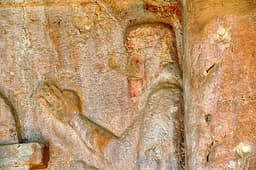
Cyaxares
Emperor · Ancient
51.9Total

Kharavela of Kalinga
Emperor · Ancient
56.1Total
Basic Information
Born
-625
-193
Died
-585
-155
Era
Ancient
Ancient
Nationality
Media
India
Occupation
Emperor
Emperor
Civilization
Middle Eastern
Indian
Score Comparison
Military (10%)
61.7
74.0
Political (20%)
68.0
45.0
Influence (20%)
52.5
57.2
Legacy (20%)
45.8
46.7
Leadership (15%)
40.0
66.0
Strategy (15%)
50.0
61.2
TOTAL
51.9
56.1
Cyaxares — Complete Timeline
615 BC
Alliance with Nabopolassar of BabylonPolitical Action◆ Major
Cyaxares formed a military alliance with Nabopolassar, king of Babylon, to jointly attack the Assyrian Empire. This coalition combined Median and Babylonian forces against the weakened Assyrian state, setting the stage for the fall of Nineveh.
AllianceAssyrian WarCoalition
Impact: regionalconstructive
612 BC
Siege and Fall of NinevehWar
Cyaxares led the Median army alongside Babylonian forces in the siege of Nineveh, the capital of the Assyrian Empire. The city was captured and destroyed after a three-month siege, resulting in the collapse of the Assyrian Empire and the rise of Median power.
SiegeAssyrian CollapseConquest
Impact: regionaldestructive
585 BC
Battle of the EclipseWar◆ Major
Cyaxares fought the Lydian king Alyattes at the Battle of the Eclipse, which was halted by a solar eclipse. The battle ended in a stalemate, leading to a peace treaty mediated by Babylonian king Nebuchadnezzar II, establishing the Halys River as the border between Media and Lydia.
BattlePeace TreatyEclipse
Impact: regional
Kharavela of Kalinga — Complete Timeline
170 BC
Conquest of MagadhaWar◆ Major
Kharavela led a military campaign against Magadha, defeating the king and forcing him to pay tribute. He brought back treasures and statues of Jain Tirthankaras that had been taken by the Nandas, restoring them to Kalinga.
ConquestMagadhaJain Restoration
Impact: regional
165 BC
Expedition to the Pandya KingdomWar◆ Major
Kharavela led a military expedition to the Pandya kingdom in southern India. He defeated the Pandya king and extracted tribute, extending Kalinga's influence into the Tamil region for the first time.
ExpeditionPandyaSouth India
Impact: regional
160 BC
Construction of the Udayagiri CavesCultural◆ Major
Kharavela patronized the excavation of the Udayagiri and Khandagiri caves near Bhubaneswar. These caves served as Jain monastic retreats and feature inscriptions detailing his reign, including the famous Hathigumpha inscription.
CavesJain ArchitectureInscriptions
Impact: regionalconstructive
155 BC
Hathigumpha InscriptionCultural◆ Major
Kharavela commissioned the Hathigumpha inscription in the Udayagiri caves. This 17-line inscription in Prakrit details his life, military campaigns, and public works, providing the primary historical source for his reign.
InscriptionHistorical RecordPrakrit
Impact: regional
This comparison has not been analyzed yet.
One-time AI generation (~1 minute). Scores and timeline are already available below.
Rankings
🥇
Kharavela of KalingaLeader
Mil: 74.0Pol: 45.0Inf: 57.2
56.1
🥈
Cyaxares
Mil: 61.7Pol: 68.0Inf: 52.5
51.9
+4.2 behind
How This Comparison Works
Algorithm
Each figure is scored on 6 dimensions (0—100 scale) based on structured historical data: Military (10%), Political (20%), Influence (20%), Legacy (20%), Leadership (15%), Strategy (15%). The weighted total produces the final ranking.
Data Sources
Scores are computed from structured sub-indicators in the database. Scale factors adjust for era (Ancient ×0.85, Modern ×1.0) and civilization size (Eastern ×1.05, Other ×0.80) to account for differences in population and military scale.
Maximum 3 Figures
Comparisons are limited to 2—3 figures to ensure readability and statistical meaningfulness.
Error Margins
±5 points per dimension — Sub-scores are derived from historical records with inherent uncertainty. Two figures within 5 points on a dimension should be considered roughly equivalent in that area.
Total Score Accuracy
±3 points overall — The weighted combination of 6 dimensions produces a total score with approximately ±3 points of uncertainty. Differences of less than 3 points are not statistically significant— the figures are effectively tied.
Known Limitations
- Historical records are incomplete and uneven across civilizations
- Figures from oral-tradition societies may be underrepresented
- Occupation labels can misclassify multi-role figures
- Scores measure capability and impact, not moral character
- Quantitative scoring is a comparison tool, not absolute truth
Capability Radar
Military (10%) — Battles & Warfare
Battles
60
75
Win Rate
70
80
Expansion
65
80
Political (20%) — Governance & Reform
Reform
50
65
Diplomacy
65
60
Economy
45
70
Influence (20%) — Cultural & Global Reach
Cultural
40
55
Global
35
30
Legacy (20%) — Historical Impact
Historical
55
50
Longevity
40
40
Leadership (15%) — Power & Stability
Tenure
60
70
Stability
55
65
Strategy (15%) — Tactics & Innovation
Strategy
65
75
Tactics
55
70
Reform
50
60
Similar Comparisons
Comments & Discussion
No comments yet. Be the first to share your thoughts!