Loading...
Cyaxares vs Julius Caesar
Julius Caesar leads by 30.9 pts · 2 figures compared
…
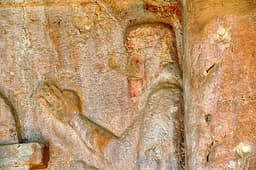
Cyaxares
Emperor · Ancient
51.9Total

Julius Caesar
General · Ancient
82.8Total
Basic Information
Born
-625
-100
Died
-585
-44
Era
Ancient
Ancient
Nationality
Media
Roman Republic
Occupation
Emperor
General
Civilization
Middle Eastern
Western
Score Comparison
Military (10%)
61.7
88.0
Political (20%)
68.0
78.0
Influence (20%)
52.5
85.0
Legacy (20%)
45.8
82.0
Leadership (15%)
40.0
80.0
Strategy (15%)
50.0
85.0
TOTAL
51.9
82.8
Cyaxares — Complete Timeline
615 BC
Alliance with Nabopolassar of BabylonPolitical Action◆ Major
Cyaxares formed a military alliance with Nabopolassar, king of Babylon, to jointly attack the Assyrian Empire. This coalition combined Median and Babylonian forces against the weakened Assyrian state, setting the stage for the fall of Nineveh.
AllianceAssyrian WarCoalition
Impact: regionalconstructive
612 BC
Siege and Fall of NinevehWar
Cyaxares led the Median army alongside Babylonian forces in the siege of Nineveh, the capital of the Assyrian Empire. The city was captured and destroyed after a three-month siege, resulting in the collapse of the Assyrian Empire and the rise of Median power.
SiegeAssyrian CollapseConquest
Impact: regionaldestructive
585 BC
Battle of the EclipseWar◆ Major
Cyaxares fought the Lydian king Alyattes at the Battle of the Eclipse, which was halted by a solar eclipse. The battle ended in a stalemate, leading to a peace treaty mediated by Babylonian king Nebuchadnezzar II, establishing the Halys River as the border between Media and Lydia.
BattlePeace TreatyEclipse
Impact: regional
Julius Caesar — Complete Timeline
58 BC
Gallic WarsWar◆ Major
Caesar, as proconsul of Gaul, launched a series of campaigns that conquered all of Gaul (modern France, Belgium, and parts of Switzerland). He fought numerous battles, including against the Helvetii, the Belgae, and the Gallic chieftain Vercingetorix. The wars brought immense wealth and a loyal army to Caesar.
Gallic WarsConquestRoman Expansion
Impact: regional
49 BC
Crossing the RubiconPolitical Action◆ Major
Caesar led Legio XIII across the Rubicon River into Italy, defying the Roman Senate's order to disband his army. This act triggered a civil war against Pompey and the Optimates, ultimately leading to Caesar's dictatorship and the end of the Roman Republic.
Roman Civil WarEnd of RepublicPower Struggle
Impact: global
48 BC
Battle of PharsalusWar◆ Major
Caesar's outnumbered army defeated the larger forces of Pompey the Great at Pharsalus in Greece. Caesar's tactical use of a reserve line to counter Pompey's cavalry charge proved decisive. Pompey fled to Egypt, where he was assassinated, leaving Caesar as the undisputed master of the Roman world.
Roman Civil WarBattleDecisive Victory
Impact: regional
44 BC
Appointment as Dictator for LifePolitical Action◆ Major
The Roman Senate appointed Caesar dictator perpetuo (dictator for life), granting him unprecedented personal power. This move concentrated military, legislative, and judicial authority in one person, effectively ending the Roman Republic's traditional system of checks and balances and alarming many senators.
DictatorshipEnd of RepublicPower Consolidation
Impact: regionaldestructive
Assassination on the Ides of MarchPolitical Action◆ Major
A group of Roman senators, led by Marcus Junius Brutus and Gaius Cassius Longinus, stabbed Caesar to death at a meeting of the Senate in the Theatre of Pompey. The assassination was intended to restore the Republic, but instead triggered another civil war that led to the rise of the Roman Empire.
AssassinationRoman PoliticsEnd of Republic
Impact: globaldestructive
Expert Analysis
cyaxares-vs-julius-caesar
# The Crossing and the Coalition
On a winter morning in 49 BCE, Julius Caesar stood at the banks of the Rubicon, a small river that marked the boundary of his legal command. He knew that crossing it with his army would mean civil war. He paused, then spoke: “The die is cast.” Two thousand years earlier, another ancient leader faced a different kind of threshold. Cyaxares, king of the Medes, stood before the walls of Nineveh, the greatest city on earth, and prepared to deliver the final blow to an empire that had terrorized the Near East for centuries. One man would become the name that defined power itself; the other would fade into the footnotes of history. Why did their fates diverge so dramatically?
Origins
Julius Caesar was born into the patrician Julian clan in 100 BCE, a time when the Roman Republic was already cracking under the weight of its own ambition. His family was ancient but not wealthy, and his childhood was shaped by the violent rivalry between populists and aristocrats. He learned early that politics in Rome was a blood sport. Cyaxares, by contrast, emerged from the misty highlands of Media around 625 BCE. His father, Phraortes, had been killed fighting the Assyrians, and the young prince inherited a kingdom that was little more than a collection of tribes living in the shadow of the world’s most brutal empire. Where Caesar was born into a sophisticated, literate civilization, Cyaxares came from a world of oral tradition, horse lords, and constant warfare. One was a product of a republic in decay; the other, of a kingdom struggling to be born.
Rise to Power
Caesar’s path was a masterclass in calculated risk. He climbed the Roman political ladder—quaestor, aedile, praetor—while accumulating massive debts and even larger ambitions. His appointment as governor of Gaul in 58 BCE gave him the army he needed. Over eight years, he conquered a territory larger than Italy, wrote his own propaganda, and built a loyal army that loved him. When the Senate ordered him to disband, he crossed the Rubicon instead. Cyaxares rose differently. He inherited a throne and immediately set about reorganizing his army, dividing it into specialized units—spearmen, archers, cavalry—rather than the tribal mobs his father had led. He also forged the key alliance of his era: in 615 BCE, he allied with Nabopolassar of Babylon, a fellow rebel against Assyrian domination. While Caesar relied on personal brilliance and legal maneuvering, Cyaxares relied on patience and partnership.
Leadership & Governance
Caesar governed as a revolutionary reformer. As dictator, he overhauled the calendar, extended citizenship to provincials, initiated public works, and centralized power in his own hands. His military genius was undeniable—his siege of Alesia in 52 BCE remains a textbook example of double-envelopment. But his political wisdom was brittle. He pardoned his enemies, only to be stabbed by them. Cyaxares governed as a unifier. He turned a loose confederation of Median tribes into a centralized kingdom, and his alliance with Babylon was the strategic masterstroke of the age. In 612 BCE, their combined forces besieged and destroyed Nineveh. The fall of that city was so total that within a generation, the Assyrian language itself vanished. Yet Cyaxares’s military scores—63.0—are far lower than Caesar’s 88.0, not because he was incompetent, but because his victories were coalition efforts rather than solo triumphs.
Triumph & Tragedy
Caesar’s greatest moment was probably his victory at Pharsalus in 48 BCE, where he defeated Pompey, his former ally and the Republic’s champion. His tragedy came on the Ides of March, 44 BCE, when sixty senators surrounded him and stabbed him twenty-three times. He died alone, bleeding at the foot of a statue of his rival. Cyaxares’s triumph was the fall of Nineveh, a moment that reshaped the ancient world. His tragedy was more subtle. After his death in 585 BCE, the Median Empire he built lasted only a few decades before being absorbed by the Persians. The Battle of the Eclipse in 585 BCE, where he fought the Lydians and the fighting stopped due to a solar eclipse, is remembered more for the omen than for Cyaxares himself.
Character & Destiny
Caesar was restless, arrogant, and brilliant. He believed in his own star, and his personality drove him to take risks that no sane man would attempt. He gambled on Gaul, on the Rubicon, on clemency—and each time, he won, until he didn’t. His character was his destiny: he could not stop reaching for more, and that reaching brought him to the Senate floor on that March morning. Cyaxares was cautious, methodical, and strategic. He did not seek personal glory; he sought security for his people. He built alliances, reformed his army, and struck only when the moment was right. His character made him a great king but not a legendary one. He lacked the charisma that turns a conqueror into a myth.
Legacy
Caesar’s legacy is everywhere. His name became a title—Kaiser, Tsar—and the Roman Empire he set in motion lasted for fifteen centuries. His writings are still read; his assassination is still debated. He is the archetype of the ambitious genius who reshapes the world and is destroyed by it. Cyaxares’s legacy is quieter but no less real. He ended the Assyrian terror, freed the peoples of the Near East, and laid the groundwork for the Persian Empire that would follow. Yet his name is known only to specialists. The difference lies not in their achievements but in their context: Caesar acted on a world stage that was already literate, self-aware, and obsessed with recording greatness. Cyaxares acted in a world that was still emerging from the shadows of prehistory.
Conclusion
In the end, these two men ask us to consider what we mean by greatness. Caesar’s story is a tragedy of ambition, a man who broke the world to remake it and was broken in turn. Cyaxares’s story is a triumph of cooperation, a king who united tribes to topple a monster and then faded into the peace he created. One became a legend; the other became a foundation. Perhaps the most important difference is not in what they did, but in what we choose to remember. The die is cast, and the eclipse passes—but history, like the sun, shines on those who stand in its light.
Rankings
🥇
Julius CaesarLeader
Mil: 88.0Pol: 78.0Inf: 85.0
82.8
🥈
Cyaxares
Mil: 61.7Pol: 68.0Inf: 52.5
51.9
+30.9 behind
How This Comparison Works
Algorithm
Each figure is scored on 6 dimensions (0—100 scale) based on structured historical data: Military (10%), Political (20%), Influence (20%), Legacy (20%), Leadership (15%), Strategy (15%). The weighted total produces the final ranking.
Data Sources
Scores are computed from structured sub-indicators in the database. Scale factors adjust for era (Ancient ×0.85, Modern ×1.0) and civilization size (Eastern ×1.05, Other ×0.80) to account for differences in population and military scale.
Maximum 3 Figures
Comparisons are limited to 2—3 figures to ensure readability and statistical meaningfulness.
Error Margins
±5 points per dimension — Sub-scores are derived from historical records with inherent uncertainty. Two figures within 5 points on a dimension should be considered roughly equivalent in that area.
Total Score Accuracy
±3 points overall — The weighted combination of 6 dimensions produces a total score with approximately ±3 points of uncertainty. Differences of less than 3 points are not statistically significant— the figures are effectively tied.
Known Limitations
- Historical records are incomplete and uneven across civilizations
- Figures from oral-tradition societies may be underrepresented
- Occupation labels can misclassify multi-role figures
- Scores measure capability and impact, not moral character
- Quantitative scoring is a comparison tool, not absolute truth
Capability Radar
Military (10%) — Battles & Warfare
Battles
60
95
Win Rate
70
92
Expansion
65
97
Political (20%) — Governance & Reform
Reform
50
90
Diplomacy
65
85
Economy
45
82
Influence (20%) — Cultural & Global Reach
Cultural
40
88
Global
35
94
Legacy (20%) — Historical Impact
Historical
55
95
Longevity
40
96
Leadership (15%) — Power & Stability
Tenure
60
75
Stability
55
60
Strategy (15%) — Tactics & Innovation
Strategy
65
94
Tactics
55
96
Reform
50
88
Similar Comparisons
Comments & Discussion
No comments yet. Be the first to share your thoughts!