Loading...
This comparison has not been analyzed yet.
One-time AI generation (~1 minute). Scores and timeline are already available below.
Cudjoe vs Francois de Guise
Francois de Guise leads by 9.9 pts · 2 figures compared
…
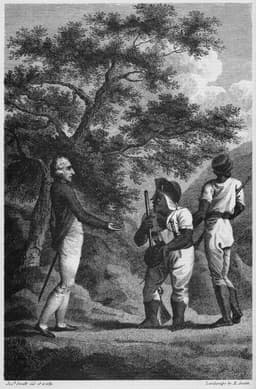
Cudjoe
General · Modern
50.5Total
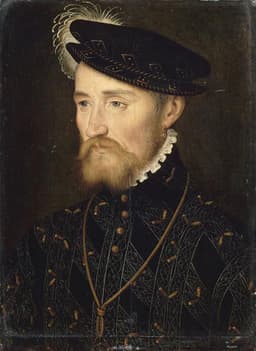
Francois de Guise
General · Modern
60.4Total
Basic Information
Born
1680
1519
Died
1764
1563
Era
Modern
Modern
Nationality
Jamaica
France
Occupation
General
General
Civilization
Other
Western
Score Comparison
Military (10%)
40.0
70.3
Political (20%)
45.1
68.0
Influence (20%)
56.4
55.0
Legacy (20%)
45.8
52.0
Leadership (15%)
65.7
70.0
Strategy (15%)
43.3
58.8
TOTAL
50.5
60.4
Cudjoe — Complete Timeline
1720 AD
Led Leeward Maroons in First Maroon WarWar◆ Major
Cudjoe emerged as the leader of the Leeward Maroons in western Jamaica during the First Maroon War against British colonial forces. He organized and commanded maroon fighters in guerrilla campaigns that disrupted British plantations and military patrols, becoming the most prominent maroon military leader.
Maroon WarLeadershipGuerrilla
Impact: regional
1739 AD
Signed Treaty with British (1739)Political Action◆ Major
Cudjoe signed a peace treaty with British colonial authorities in March 1739, ending the First Maroon War for the Leeward Maroons. The treaty granted the maroons 1,500 acres of land, self-governance, and freedom from slavery, in exchange for ceasing hostilities and agreeing to capture and return runaway slaves.
TreatyPeaceLand Grant
Impact: regional
Established Maroon Town of AccompongPolitical Action◆ Major
Following the 1739 treaty, Cudjoe established the maroon settlement of Accompong in the Cockpit Country of Jamaica. The town became the administrative and cultural center of the Leeward Maroons, maintaining autonomy and traditional practices under Cudjoe's leadership for decades.
SettlementMaroonAutonomy
Impact: regionalconstructive
Francois de Guise — Complete Timeline
1552 AD
Defense of MetzWar◆ Major
Francois de Guise successfully defended the city of Metz against the forces of Emperor Charles V. His military leadership repelled the imperial siege, securing the city for France and enhancing his reputation as a general.
SiegeHabsburg-Valois WarsMilitary
Impact: regional
1558 AD
Capture of CalaisWar◆ Major
Francois de Guise led the French army that captured Calais from the English. This victory ended 200 years of English rule in Calais and was a major triumph for France in the Italian Wars.
BattleCalaisItalian Wars
Impact: regional
1562 AD
Leadership of the Catholic LeaguePolitical Action◆ Major
Francois de Guise became the military leader of the Catholic League during the early French Wars of Religion. He led Catholic forces against the Huguenots, including the massacre of Huguenots at Wassy in 1562.
Catholic LeagueWars of ReligionMilitary
Impact: nationaldestructive
1563 AD
Assassination of Francois de GuisePolitical Action◆ Major
Francois de Guise was assassinated by a Huguenot nobleman, Jean de Poltrot, during the Siege of Orleans. His death escalated the French Wars of Religion and deepened the conflict between Catholics and Protestants.
AssassinationWars of ReligionCatholic League
Impact: nationaltragic
This comparison has not been analyzed yet.
One-time AI generation (~1 minute). Scores and timeline are already available below.
Rankings
🥇
Francois de GuiseLeader
Mil: 70.3Pol: 68.0Inf: 55.0
60.4
🥈
Cudjoe
Mil: 40.0Pol: 45.1Inf: 56.4
50.5
+9.9 behind
How This Comparison Works
Algorithm
Each figure is scored on 6 dimensions (0—100 scale) based on structured historical data: Military (10%), Political (20%), Influence (20%), Legacy (20%), Leadership (15%), Strategy (15%). The weighted total produces the final ranking.
Data Sources
Scores are computed from structured sub-indicators in the database. Scale factors adjust for era (Ancient ×0.85, Modern ×1.0) and civilization size (Eastern ×1.05, Other ×0.80) to account for differences in population and military scale.
Maximum 3 Figures
Comparisons are limited to 2—3 figures to ensure readability and statistical meaningfulness.
Error Margins
±5 points per dimension — Sub-scores are derived from historical records with inherent uncertainty. Two figures within 5 points on a dimension should be considered roughly equivalent in that area.
Total Score Accuracy
±3 points overall — The weighted combination of 6 dimensions produces a total score with approximately ±3 points of uncertainty. Differences of less than 3 points are not statistically significant— the figures are effectively tied.
Known Limitations
- Historical records are incomplete and uneven across civilizations
- Figures from oral-tradition societies may be underrepresented
- Occupation labels can misclassify multi-role figures
- Scores measure capability and impact, not moral character
- Quantitative scoring is a comparison tool, not absolute truth
Capability Radar
Military (10%) — Battles & Warfare
Battles
35
72
Win Rate
40
75
Expansion
25
60
Political (20%) — Governance & Reform
Reform
25
40
Diplomacy
50
60
Economy
20
45
Influence (20%) — Cultural & Global Reach
Cultural
30
55
Global
20
50
Legacy (20%) — Historical Impact
Historical
35
65
Longevity
30
55
Leadership (15%) — Power & Stability
Tenure
30
65
Stability
35
50
Strategy (15%) — Tactics & Innovation
Strategy
40
70
Tactics
45
78
Reform
20
55
Similar Comparisons
Comments & Discussion
No comments yet. Be the first to share your thoughts!