Loading...
Crassus vs Pyrrhus of Epirus
Pyrrhus of Epirus leads by 4.6 pts · 2 figures compared
…
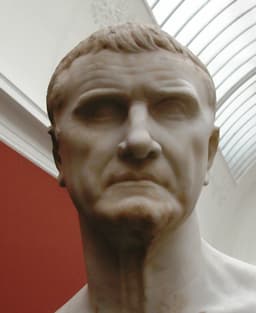
Crassus
General · Ancient
55.5Total

Pyrrhus of Epirus
General · Ancient
60.1Total
Basic Information
Born
-115
-319
Died
-53
-272
Era
Ancient
Ancient
Nationality
Roman Republic
Greece
Occupation
General
General
Civilization
Western
Western
Score Comparison
Military (10%)
65.0
72.0
Political (20%)
46.6
42.3
Influence (20%)
57.2
72.0
Legacy (20%)
50.0
55.0
Leadership (15%)
61.1
50.7
Strategy (15%)
60.0
72.0
TOTAL
55.5
60.1
Crassus — Complete Timeline
71 BC
Suppression of Spartacus's RevoltWar◆ Major
Crassus raised and commanded six legions to crush the slave rebellion led by Spartacus. After cornering and defeating the rebels in Lucania, he crucified 6,000 survivors along the Appian Way, ending the Third Servile War.
Slave RevoltSpartacusCrucifixionThird Servile War
Impact: nationaldestructive
60 BC
Formation of the First TriumviratePolitical Action
Crassus allied with Julius Caesar and Pompey the Great to form an informal political coalition known as the First Triumvirate. This alliance dominated Roman politics, advancing each member's interests against the Senate.
Political AllianceCaesarPompeySenate
Impact: global
53 BC
Battle of CarrhaeWar◆ Major
Crassus invaded Parthia without proper support and was defeated at Carrhae. His army was annihilated by Parthian cavalry, and Crassus was killed during negotiations. This disaster marked a major Roman defeat and ended the Triumvirate.
Parthian WarDefeatDeath
Impact: regionaltragic
Pyrrhus of Epirus — Complete Timeline
280 BC
Battle of HeracleaWar◆ Major
Pyrrhus defeated a Roman army at Heraclea in southern Italy. He used war elephants to break the Roman lines. The victory was costly, with heavy losses to his own forces, establishing the pattern of Pyrrhic victories.
Pyrrhic WarRoman RepublicWar Elephants
Impact: regional
279 BC
Battle of AsculumWar◆ Major
Pyrrhus again defeated the Romans at Asculum, but suffered such heavy casualties that he reportedly said 'Another such victory and we are lost.' This battle gave rise to the term 'Pyrrhic victory.'
Pyrrhic VictoryRoman RepublicCostly Battle
Impact: regional
278 BC
Invasion of SicilyWar◆ Major
Pyrrhus crossed to Sicily to aid the Greek city-states against Carthage. He captured several Carthaginian strongholds, including Eryx, and nearly drove the Carthaginians from the island. However, he failed to capture Lilybaeum.
SicilyCarthageGreek Colonies
Impact: regional
275 BC
Battle of BeneventumWar◆ Major
Pyrrhus fought his final battle in Italy against the Romans at Beneventum. The battle was indecisive, but Pyrrhus's losses forced him to abandon Italy and return to Epirus. This ended his Italian campaign.
Pyrrhic WarRoman RepublicWithdrawal
Impact: regional
272 BC
Death of Pyrrhus at ArgosWar◆ Major
Pyrrhus was killed during street fighting in Argos, Greece, while attempting to capture the city. An old woman threw a roof tile at him, stunning him, allowing an Argive soldier to kill him. His death ended his ambitions.
DeathArgosGreek Warfare
Impact: regionaltragic
Expert Analysis
Origins
Crassus, born around 115 BC into the wealthy and politically connected Licinius family, grew up in the turmoil of the Social War and the civil wars of the late Republic. His father and brother were killed by the Marians in 87 BC, forcing Crassus to flee to Spain. He returned after Sulla's victory, using his family's resources to acquire confiscated estates at low prices, building the foundation of his immense fortune. Pyrrhus of Epirus, born in 319 BC, was a member of the Molossian royal house. After his father was deposed, he was raised in exile at the court of Glaucias of Illyria. He returned to Epirus at age 12 but was soon displaced again, eventually serving under Demetrius Poliorcetes and Ptolemy I. Through military prowess and political maneuvering, he regained his throne in 297 BC.
Rise to Power
Crassus rose to prominence through financial acumen and political alliances. He became the richest man in Rome by leveraging property seizures, mining, and slave trading. His military reputation came from suppressing the Spartacus revolt in 71 BC, where he raised six legions and defeated the slave army in Lucania. He crucified 6,000 survivors along the Appian Way. He then allied with Pompey and Caesar to form the First Triumvirate in 60 BC, dominating Roman politics. Pyrrhus's rise came from his military campaigns. He secured his throne, then expanded Epirus's influence by intervening in Macedonia. In 280 BC, he was invited by the Greek city of Tarentum to lead a war against Rome. He crossed into Italy with 25,000 men and 20 war elephants, winning the Battle of Heraclea against a Roman army. His use of elephants terrified the Romans, but his losses were significant.
Leadership & Governance
Crassus's leadership was characterized by shrewd financial management and political pragmatism. He governed as a Roman magistrate, using his wealth to secure influence. As governor of Syria, he sought military glory and plunder, but his governance was marked by greed and poor strategic planning. He alienated allies and underestimated the Parthians. Pyrrhus was a charismatic and energetic commander, personally leading troops. He governed Epirus as a Hellenistic king, relying on mercenaries and allies. His leadership style was aggressive and ambitious, but he lacked patience for sustained campaigns. He often switched theaters, from Italy to Sicily to Greece, without consolidating gains. Both scored low in political acumen: Crassus 46.6, Pyrrhus 42.3, reflecting their inability to build lasting political structures.
Triumph & Tragedy
Crassus's greatest success was crushing the Spartacus revolt, which earned him a triumph and military credibility. His political success in forming the Triumvirate was also notable. However, his tragedy was the Battle of Carrhae in 53 BC, where his army of 40,000 was annihilated by Parthian cavalry. Crassus was killed during peace negotiations, a humiliating end for Rome's richest man. Pyrrhus's triumphs include victories at Heraclea (280 BC) and Asculum (279 BC), where he demonstrated tactical brilliance. His invasion of Sicily nearly drove the Carthaginians out. But his tragedies were the heavy losses in those victories—at Asculum, he lost many veterans, prompting his famous remark. He failed to secure Italy, and his final campaign in Greece ended with his death in 272 BC, struck by a roof tile thrown by an old woman in Argos.
Character & Destiny
Crassus was driven by avarice and a desire for military glory to match Pompey and Caesar. His character—calculating but overconfident—led him to invade Parthia without proper support, ignoring warnings. His destiny was sealed by his arrogance. Pyrrhus was restless and ambitious, always seeking new conquests. His character—brave but impetuous—caused him to fight costly battles and switch objectives. He lacked the strategic patience to consolidate victories. Historians assess Pyrrhus as a brilliant tactician but a flawed strategist. Crassus's military score of 65.0 reflects his success against Spartacus but failure at Carrhae; Pyrrhus scores 72.0 for his tactical prowess. Both were competent commanders undone by their own flaws.
Legacy
Crassus's legacy is mixed. He is remembered primarily for his wealth and the First Triumvirate, and his death at Carrhae marked a major Roman defeat. His suppression of Spartacus is a footnote. He scored 50.0 in legacy. Pyrrhus's legacy is more enduring; the term 'Pyrrhic victory' is still used today to describe a hollow win. His campaigns against Rome influenced later military thinking. He scores 55.0 in legacy. Pyrrhus's influence score is 72.0, significantly higher than Crassus's 57.2, reflecting his lasting impact on language and military history. Crassus's political influence was limited to his lifetime.
Conclusion
While Crassus and Pyrrhus were both ambitious generals who sought to expand their power, Pyrrhus had a greater impact on history. His tactical innovations, including the use of war elephants against Romans, and the concept of a Pyrrhic victory have endured for millennia. Crassus's wealth and political maneuvering were significant in the late Republic, but his defeat at Carrhae was a setback for Rome, not a lasting lesson. Pyrrhus's total score of 60.1 exceeds Crassus's 55.5, reflecting his superior military and strategic ratings. The data supports that Pyrrhus of Epirus, despite his tragic end, left a more profound mark on historical memory and language.
Rankings
🥇
Pyrrhus of EpirusLeader
Mil: 72.0Pol: 42.3Inf: 72.0
60.1
🥈
Crassus
Mil: 65.0Pol: 46.6Inf: 57.2
55.5
+4.6 behind
How This Comparison Works
Algorithm
Each figure is scored on 6 dimensions (0—100 scale) based on structured historical data: Military (10%), Political (20%), Influence (20%), Legacy (20%), Leadership (15%), Strategy (15%). The weighted total produces the final ranking.
Data Sources
Scores are computed from structured sub-indicators in the database. Scale factors adjust for era (Ancient ×0.85, Modern ×1.0) and civilization size (Eastern ×1.05, Other ×0.80) to account for differences in population and military scale.
Maximum 3 Figures
Comparisons are limited to 2—3 figures to ensure readability and statistical meaningfulness.
Error Margins
±5 points per dimension — Sub-scores are derived from historical records with inherent uncertainty. Two figures within 5 points on a dimension should be considered roughly equivalent in that area.
Total Score Accuracy
±3 points overall — The weighted combination of 6 dimensions produces a total score with approximately ±3 points of uncertainty. Differences of less than 3 points are not statistically significant— the figures are effectively tied.
Known Limitations
- Historical records are incomplete and uneven across civilizations
- Figures from oral-tradition societies may be underrepresented
- Occupation labels can misclassify multi-role figures
- Scores measure capability and impact, not moral character
- Quantitative scoring is a comparison tool, not absolute truth
Capability Radar
Military (10%) — Battles & Warfare
Battles
55
75
Win Rate
60
60
Expansion
30
65
Political (20%) — Governance & Reform
Reform
30
40
Diplomacy
60
60
Economy
85
45
Influence (20%) — Cultural & Global Reach
Cultural
40
70
Global
45
65
Legacy (20%) — Historical Impact
Historical
55
75
Longevity
50
80
Leadership (15%) — Power & Stability
Tenure
65
55
Stability
40
35
Strategy (15%) — Tactics & Innovation
Strategy
40
70
Tactics
45
85
Reform
10
50
Similar Comparisons
Comments & Discussion
No comments yet. Be the first to share your thoughts!