Loading...
Crassus vs Lysander
Lysander leads by 7.9 pts · 2 figures compared
…
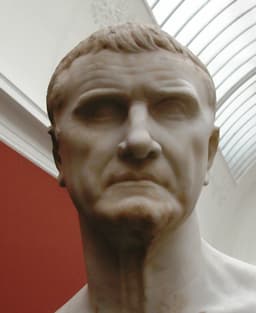
Crassus
General · Ancient
55.5Total

Lysander
General · Ancient
63.4Total
Basic Information
Born
-115
-454
Died
-53
-395
Era
Ancient
Ancient
Nationality
Roman Republic
Greece
Occupation
General
General
Civilization
Western
Western
Score Comparison
Military (10%)
65.0
75.0
Political (20%)
46.6
68.0
Influence (20%)
57.2
62.0
Legacy (20%)
50.0
52.0
Leadership (15%)
61.1
61.1
Strategy (15%)
60.0
80.6
TOTAL
55.5
63.4
Crassus — Complete Timeline
71 BC
Suppression of Spartacus's RevoltWar◆ Major
Crassus raised and commanded six legions to crush the slave rebellion led by Spartacus. After cornering and defeating the rebels in Lucania, he crucified 6,000 survivors along the Appian Way, ending the Third Servile War.
Slave RevoltSpartacusCrucifixionThird Servile War
Impact: nationaldestructive
60 BC
Formation of the First TriumviratePolitical Action
Crassus allied with Julius Caesar and Pompey the Great to form an informal political coalition known as the First Triumvirate. This alliance dominated Roman politics, advancing each member's interests against the Senate.
Political AllianceCaesarPompeySenate
Impact: global
53 BC
Battle of CarrhaeWar◆ Major
Crassus invaded Parthia without proper support and was defeated at Carrhae. His army was annihilated by Parthian cavalry, and Crassus was killed during negotiations. This disaster marked a major Roman defeat and ended the Triumvirate.
Parthian WarDefeatDeath
Impact: regionaltragic
Lysander — Complete Timeline
405 BC
Battle of AegospotamiWar
Lysander, commanding the Spartan fleet, decisively defeated the Athenian navy at Aegospotami in the Hellespont. He captured nearly the entire Athenian fleet and executed thousands of Athenian prisoners, effectively ending Athenian naval power and the Peloponnesian War.
Peloponnesian WarNaval BattleSparta
Impact: regionaldestructive
404 BC
Siege of Athens and End of the Peloponnesian WarWar
After Aegospotami, Lysander blockaded Athens by sea and forced its surrender. He imposed harsh terms: the destruction of the Long Walls, the surrender of the fleet, and the installation of the pro-Spartan oligarchy of the Thirty Tyrants, ending the Peloponnesian War.
Peloponnesian WarSiegeAthens Surrender
Impact: regionaldestructive
Installation of the Thirty TyrantsPolitical Action◆ Major
Lysander oversaw the establishment of the Thirty Tyrants, a pro-Spartan oligarchic regime in Athens. This government executed political opponents and confiscated property, leading to widespread terror until its overthrow in 403 BC.
OligarchySpartan HegemonyAthens
Impact: nationaldestructive
Lysander's DecarchiesPolitical Action◆ Major
Lysander established pro-Spartan oligarchic governments (decarchies) in many former Athenian subject cities across the Aegean and Asia Minor. These regimes were loyal to Sparta and Lysander personally, extending Spartan influence but also creating resentment.
Spartan EmpireOligarchyAegean
Impact: regional
Expert Analysis
Origins
Marcus Licinius Crassus was born around 115 BC into a wealthy and politically connected plebeian family. His father, Publius Licinius Crassus, was a consul and censor, but his death during the Marian purges forced the young Crassus into hiding. He rebuilt his fortune through property speculation, mining, and slave trading, becoming the richest man in Rome. His early life was marked by survival and acquisition.
Lysander was born around 454 BC, likely in Sparta, into a family that claimed descent from Heracles but was not among the royal houses. His father’s name is recorded as Aristoclitus, but little else is known. Lysander rose through Spartan military ranks, gaining experience in naval warfare during the Peloponnesian War.
Rise to Power
Crassus’s rise came through his role in suppressing the slave revolt led by Spartacus in 71 BC. He raised six legions at his own expense, cornered Spartacus in Lucania, and crucified 6,000 survivors along the Appian Way. This victory earned him a triumph and political influence, but he was overshadowed by Pompey, who claimed credit for ending the war.
Lysander’s rise began when he was appointed navarch (admiral) of the Spartan fleet in 407 BC. He cultivated the favor of Cyrus the Younger, the Persian prince who funded the Spartan war effort. His strategic acumen led to the decisive Battle of Aegospotami in 405 BC, where he captured nearly the entire Athenian fleet, effectively ending the Peloponnesian War.
Leadership & Governance
Crassus’s leadership was driven by wealth and personal ambition. He used his fortune to build patronage networks, lending money to senators and financing Caesar’s debts. As a politician, he allied with Caesar and Pompey in the First Triumvirate (60 BC), but his governance was reactive. He sought military glory to match his rivals, leading to the disastrous Parthian campaign.
Lysander governed conquered territories through decarchies – pro-Spartan oligarchies of ten men. In Athens, he installed the Thirty Tyrants, who executed thousands. His leadership was authoritarian and focused on Spartan hegemony. He also reformed the Spartan naval strategy, relying on Persian gold to build a fleet.
Triumph & Tragedy
Crassus’s greatest success was the suppression of Spartacus, which showcased his military organization and brutality. His tragedy was the Battle of Carrhae in 53 BC, where he led 40,000 legionaries into Parthia without cavalry support. The Parthians used horse archers and cataphracts, destroying his army. Crassus was killed during negotiations. His military score of 65.0 reflects this mixed record.
Lysander’s triumph was the defeat of Athens at Aegospotami, where his strategy scored 80.6. He blockaded Athens, forced its surrender, and dismantled its empire. His tragedy was the backlash against his decarchies; the Thirty Tyrants were overthrown after eight months, and Sparta’s allies resented his heavy-handed rule. He was killed in 395 BC at the Battle of Haliartus, fighting against Thebes.
Character & Destiny
Crassus was avaricious and ambitious, obsessed with matching Pompey’s military glory. His character led him to ignore warnings about Parthian tactics. Polybius and Plutarch describe him as generous with money but lacking strategic insight. His total score of 55.5 reflects his overreach.
Lysander was cunning, ruthless, and politically astute. He understood the importance of Persian funding and naval power. However, his arrogance and harsh governance alienated allies. His total score of 63.4 indicates a more effective commander and politician.
Legacy
Crassus’s legacy is tied to his wealth and the First Triumvirate. He set a precedent for private financing of armies, but his defeat at Carrhae exposed Roman vulnerability to Parthia. His death destabilized the Republic, contributing to the civil wars. His influence score of 57.2 reflects his short-term impact.
Lysander’s legacy is the Spartan victory in the Peloponnesian War and the establishment of Spartan hegemony. His decarchies influenced later imperial governance. However, his methods bred resentment that weakened Sparta. His influence score of 62.0 shows a lasting but controversial impact.
Conclusion
While Crassus was a wealthy and capable administrator, his military failures and political overreach limit his impact. Lysander, with higher scores in military (75.0 vs 65.0), strategy (80.6 vs 60.0), and total (63.4 vs 55.5), decisively shaped the course of Greek history. Lysander’s victory at Aegospotami ended the Peloponnesian War and shifted the balance of power in the ancient world. Crassus’s defeat at Carrhae had consequences but did not alter the trajectory of Rome’s rise. Therefore, Lysander had the greater impact.
Rankings
🥇
LysanderLeader
Mil: 75.0Pol: 68.0Inf: 62.0
63.4
🥈
Crassus
Mil: 65.0Pol: 46.6Inf: 57.2
55.5
+7.9 behind
How This Comparison Works
Algorithm
Each figure is scored on 6 dimensions (0—100 scale) based on structured historical data: Military (10%), Political (20%), Influence (20%), Legacy (20%), Leadership (15%), Strategy (15%). The weighted total produces the final ranking.
Data Sources
Scores are computed from structured sub-indicators in the database. Scale factors adjust for era (Ancient ×0.85, Modern ×1.0) and civilization size (Eastern ×1.05, Other ×0.80) to account for differences in population and military scale.
Maximum 3 Figures
Comparisons are limited to 2—3 figures to ensure readability and statistical meaningfulness.
Error Margins
±5 points per dimension — Sub-scores are derived from historical records with inherent uncertainty. Two figures within 5 points on a dimension should be considered roughly equivalent in that area.
Total Score Accuracy
±3 points overall — The weighted combination of 6 dimensions produces a total score with approximately ±3 points of uncertainty. Differences of less than 3 points are not statistically significant— the figures are effectively tied.
Known Limitations
- Historical records are incomplete and uneven across civilizations
- Figures from oral-tradition societies may be underrepresented
- Occupation labels can misclassify multi-role figures
- Scores measure capability and impact, not moral character
- Quantitative scoring is a comparison tool, not absolute truth
Capability Radar
Military (10%) — Battles & Warfare
Battles
55
75
Win Rate
60
80
Expansion
30
70
Political (20%) — Governance & Reform
Reform
30
55
Diplomacy
60
80
Economy
85
60
Influence (20%) — Cultural & Global Reach
Cultural
40
60
Global
45
60
Legacy (20%) — Historical Impact
Historical
55
75
Longevity
50
65
Leadership (15%) — Power & Stability
Tenure
65
65
Stability
40
40
Strategy (15%) — Tactics & Innovation
Strategy
40
90
Tactics
45
85
Reform
10
60
Similar Comparisons
Comments & Discussion
No comments yet. Be the first to share your thoughts!