Loading...
Lysander vs Qin Shi Huang
Qin Shi Huang leads by 21.8 pts · 2 figures compared
…

Lysander
General · Ancient
63.4Total
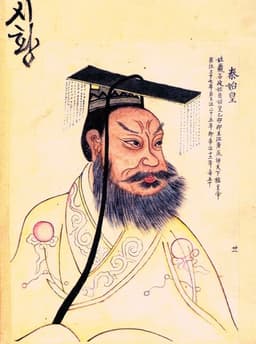
Qin Shi Huang
Emperor · Ancient
85.2Total
Basic Information
Born
-454
-259
Died
-395
-210
Era
Ancient
Ancient
Nationality
Greece
China
Occupation
General
Emperor
Civilization
Western
Eastern
Score Comparison
Military (10%)
75.0
80.0
Political (20%)
68.0
90.0
Influence (20%)
62.0
85.0
Legacy (20%)
52.0
90.0
Leadership (15%)
61.1
78.0
Strategy (15%)
80.6
82.0
TOTAL
63.4
85.2
Lysander — Complete Timeline
405 BC
Battle of AegospotamiWar
Lysander, commanding the Spartan fleet, decisively defeated the Athenian navy at Aegospotami in the Hellespont. He captured nearly the entire Athenian fleet and executed thousands of Athenian prisoners, effectively ending Athenian naval power and the Peloponnesian War.
Peloponnesian WarNaval BattleSparta
Impact: regionaldestructive
404 BC
Siege of Athens and End of the Peloponnesian WarWar
After Aegospotami, Lysander blockaded Athens by sea and forced its surrender. He imposed harsh terms: the destruction of the Long Walls, the surrender of the fleet, and the installation of the pro-Spartan oligarchy of the Thirty Tyrants, ending the Peloponnesian War.
Peloponnesian WarSiegeAthens Surrender
Impact: regionaldestructive
Installation of the Thirty TyrantsPolitical Action◆ Major
Lysander oversaw the establishment of the Thirty Tyrants, a pro-Spartan oligarchic regime in Athens. This government executed political opponents and confiscated property, leading to widespread terror until its overthrow in 403 BC.
OligarchySpartan HegemonyAthens
Impact: nationaldestructive
Lysander's DecarchiesPolitical Action◆ Major
Lysander established pro-Spartan oligarchic governments (decarchies) in many former Athenian subject cities across the Aegean and Asia Minor. These regimes were loyal to Sparta and Lysander personally, extending Spartan influence but also creating resentment.
Spartan EmpireOligarchyAegean
Impact: regional
Qin Shi Huang — Complete Timeline
246 BC
Construction of the Mausoleum and Terracotta ArmyOther◆ Major
Qin Shi Huang commissioned a vast mausoleum complex near Xi'an, guarded by thousands of life-sized terracotta soldiers, horses, and chariots. The project employed hundreds of thousands of workers and reflected his obsession with immortality and imperial power.
Impact: global
230 BC
Conquest of the Six Warring StatesWar
From 230 to 221 BCE, Ying Zheng led the Qin state in a series of campaigns that conquered the Han, Zhao, Wei, Chu, Yan, and Qi states. This unified China under a single ruler for the first time, ending the Warring States period.
Impact: global
221 BC
Standardization of Writing, Currency, and MeasurementsReform◆ Major
Qin Shi Huang ordered the standardization of Chinese script, currency, and weights and measures across the unified empire. This facilitated administration, trade, and cultural integration, laying a foundation for future dynasties.
Impact: globalconstructive
Proclamation of the Qin DynastyPolitical Action
After conquering the last independent state, Ying Zheng declared himself Shi Huangdi (First Emperor), founding the Qin Dynasty. He adopted a new title to signify his supreme authority and initiated centralized imperial rule.
Impact: global
214 BC
Initiation of the Great Wall ConstructionOther◆ Major
Qin Shi Huang ordered the connection and extension of existing northern fortifications to create a unified defensive wall against nomadic Xiongnu raids. This project involved massive conscripted labor and became the precursor to the later Great Wall.
Impact: regional
213 BC
Burning of Books and Burying of ScholarsPolitical Action◆ Major
On the advice of Li Si, Qin Shi Huang ordered the burning of historical records and philosophical texts not aligned with Legalist doctrine. He also had 460 Confucian scholars buried alive to suppress dissent and consolidate ideological control.
Impact: nationaldestructive
Expert Analysis
lysander-vs-qin-shi-huang
### The Unifier and the Destroyer
In 221 BC, a Chinese king stood before his assembled ministers and declared himself *Shi Huangdi*—the First Emperor. In 404 BC, a Spartan admiral watched the walls of Athens being torn down, stone by stone, ending a war that had consumed the Greek world for nearly three decades. Both men reshaped their worlds in a single, brutal lifetime. One built an empire that would define China for two millennia. The other broke an empire that had defined Greece—and then watched his own creation crumble within a generation. Why did one succeed where the other failed? The answer lies not in their ambition, but in the worlds they inherited and the choices they made.
### Origins
Qin Shi Huang was born Ying Zheng in 259 BC, the son of a king and a former concubine. His childhood was shadowed by intrigue: his father had been a hostage in a rival state, and the boy grew up in a court where betrayal was a daily reality. The Warring States period had torn China apart for centuries—seven kingdoms locked in a cycle of alliance and annihilation. Every ruler dreamed of unity; none had achieved it. Young Zheng learned early that mercy was a luxury for the weak.
Lysander, born around 454 BC, came from a different kind of harshness. Sparta was a warrior society where boys were taken from their families at age seven to endure starvation, beatings, and ritualized combat. But Lysander was not a full citizen—his mother was a helot, a state-owned serf. He rose through talent alone, a man who had to prove himself every day. Where Zheng inherited a throne, Lysander earned his command. That difference—inherited authority versus earned authority—would shape everything.
### Rise to Power
Ying Zheng took the throne of Qin at thirteen. For eight years, his mother and a eunuch regent ruled in his name. When he came of age, he moved with cold precision: he crushed a rebellion, executed the regent, and exiled his mother. Then he turned to the task his ancestors had pursued for generations—the conquest of the six other warring states. From 230 to 221 BC, he led his armies in a series of campaigns that swallowed Han, Zhao, Wei, Chu, Yan, and finally Qi. Each victory was methodical, each defeat of a rival state a step toward an unprecedented goal.
Lysander’s rise was more circuitous. Sparta’s navy was weak; its strength lay on land. But the Peloponnesian War against Athens demanded a fleet. In 407 BC, Lysander was appointed *navarchos*, or admiral—a rare honor for a man of his birth. He understood something his predecessors had not: to defeat Athens, you had to think like an Athenian. He cultivated Persian gold, bribed politicians, and trained his crews relentlessly. His greatest moment came in 405 BC at Aegospotami, where he caught the Athenian fleet beached and unprepared, capturing nearly 200 ships. The Athenian navy, the source of its power, was gone in a single day.
### Leadership & Governance
Qin Shi Huang ruled as an architect. After unification, he did not rest. He standardized the written script across China, so a man from the former state of Chu could read a decree from the former state of Zhao. He unified currency, weights, and measures—creating a single economic space. He ordered the construction of roads and canals, and he connected the northern fortifications into what would become the Great Wall. His method was absolute control: all histories not aligned with Qin ideology were burned; scholars who resisted were buried alive. He was not building a coalition; he was forging a machine.
Lysander governed as a conqueror. After Athens fell in 404 BC, he imposed the Thirty Tyrants—a pro-Spartan oligarchy that executed thousands of Athenian citizens. Across the Aegean, he installed *decarchies*, committees of ten loyalists to rule each former Athenian ally. But Sparta had no tradition of imperial administration. The decarchies were corrupt, brutal, and dependent on Lysander’s personal authority. When he fell from favor, they collapsed. He had broken Athens, but he had no blueprint for what came next.
### Triumph & Tragedy
Qin Shi Huang’s triumph was the creation of a unified China. His tragedy was his obsession with immortality. In his later years, he consumed mercury pills prescribed by alchemists, searched for mythical islands of the immortals, and built a mausoleum guarded by the Terracotta Army—thousands of life-sized soldiers to protect him in the afterlife. When he died in 210 BC, his empire was already fraying. His son proved incompetent, and the Qin Dynasty collapsed within four years. Yet the administrative structure—the centralized bureaucracy, the standardized writing, the unified measurements—survived. It became the skeleton of every Chinese dynasty for the next two thousand years.
Lysander’s triumph was the destruction of the Athenian Empire. His tragedy was that victory destroyed Sparta too. The influx of Persian gold and tribute corrupted Spartan simplicity. The decarchies bred resentment across Greece. Within a decade, Sparta was fighting a war against its former allies. Lysander himself died in 395 BC, killed in a skirmish at the walls of Haliartus—an inglorious end for the man who had humbled Athens. His empire of garrisons and oligarchs vanished with him.
### Character & Destiny
Qin Shi Huang was a visionary who believed in the power of systems. He thought in centuries, not years. When he standardized the axle length of carts, he was thinking about trade routes that would last for generations. When he burned books, he was trying to erase the past to create a single future. His paranoia and cruelty were real, but they served a purpose: total unity required total control.
Lysander was a tactician who believed in the power of will. He thought in campaigns, not centuries. He won the war, but he had no vision for the peace. He was brilliant at breaking things, but he could not build. When his personal influence waned, his achievements dissolved. The difference between the two men was not intelligence or courage—it was imagination. Qin Shi Huang imagined a world that did not yet exist and built it. Lysander could only destroy the world that existed.
### Legacy
Qin Shi Huang is remembered as the First Emperor. The name “China” derives from Qin. The Great Wall, the Terracotta Army, the unified script—these are his monuments. He is both a tyrant and a founder, the man who made China possible. His dynasty lasted only fifteen years, but it shaped everything that followed.
Lysander is remembered as the man who defeated Athens. But his legacy is ambiguous. The Thirty Tyrants became a byword for oppression; the decarchies were hated and short-lived. He is studied by military historians, but he left no institutions, no philosophy, no enduring structure. He is a brilliant flame that burned out, leaving only ash.
### Conclusion
Standing before the Terracotta Army today, one feels the weight of a vision made permanent. Standing before the ruins of Sparta, one feels the silence of a victory that meant nothing. Qin Shi Huang and Lysander both seized their moments with ruthless clarity. But one built a world, and the other only ended one. The difference was not in their ambition, but in what they imagined after the fighting stopped. The First Emperor imagined an empire. Lysander imagined nothing. And history, in the end, remembers the builders.
Rankings
🥇
Qin Shi HuangLeader
Mil: 80.0Pol: 90.0Inf: 85.0
85.2
🥈
Lysander
Mil: 75.0Pol: 68.0Inf: 62.0
63.4
+21.8 behind
How This Comparison Works
Algorithm
Each figure is scored on 6 dimensions (0—100 scale) based on structured historical data: Military (10%), Political (20%), Influence (20%), Legacy (20%), Leadership (15%), Strategy (15%). The weighted total produces the final ranking.
Data Sources
Scores are computed from structured sub-indicators in the database. Scale factors adjust for era (Ancient ×0.85, Modern ×1.0) and civilization size (Eastern ×1.05, Other ×0.80) to account for differences in population and military scale.
Maximum 3 Figures
Comparisons are limited to 2—3 figures to ensure readability and statistical meaningfulness.
Error Margins
±5 points per dimension — Sub-scores are derived from historical records with inherent uncertainty. Two figures within 5 points on a dimension should be considered roughly equivalent in that area.
Total Score Accuracy
±3 points overall — The weighted combination of 6 dimensions produces a total score with approximately ±3 points of uncertainty. Differences of less than 3 points are not statistically significant— the figures are effectively tied.
Known Limitations
- Historical records are incomplete and uneven across civilizations
- Figures from oral-tradition societies may be underrepresented
- Occupation labels can misclassify multi-role figures
- Scores measure capability and impact, not moral character
- Quantitative scoring is a comparison tool, not absolute truth
Capability Radar
Military (10%) — Battles & Warfare
Battles
75
85
Win Rate
80
90
Expansion
70
90
Political (20%) — Governance & Reform
Reform
55
95
Diplomacy
80
75
Economy
60
90
Influence (20%) — Cultural & Global Reach
Cultural
60
95
Global
60
85
Legacy (20%) — Historical Impact
Historical
75
95
Longevity
65
95
Leadership (15%) — Power & Stability
Tenure
65
70
Stability
40
65
Strategy (15%) — Tactics & Innovation
Strategy
90
85
Tactics
85
80
Reform
60
95
Similar Comparisons
Comments & Discussion
LysanderLoser6/17/2026
Classics scholar here: Comparing Lysander to Qin Shi Huang is like comparing a demolition contractor to an architect. Lysander tore down Athens’ walls but had zero vision for what came next—within a decade, Spartan hegemony collapsed because he couldn't build institutions. Qin crushed six kingdoms, sure, but he unified scripts, weights, and built roads that lasted centuries. Lysander’s "victory" was a temporary wrecking ball; Qin’s was a template for empire. One broke toys; the other forged stee
史海独狼6/17/2026
数据派:拿“统一”说事?别被大秦宣传洗脑了。秦始皇滥杀六国贵族超过20万,修长城征夫百万死三成,人口从三千万跌到两千万。吕山德呢?斯巴达战后人口才两万,根本没屠杀城市。比稳定?秦朝14年就亡了,斯巴达霸权还撑了30年。你们骂吕山德短视,但人家没搞焚书坑儒啊。冷酷不等于成功,效率高不等于对。
WreckingBallHater6/17/2026
Military historian with a beef: The real failure is Lysander’s strategic blindness. After Aegospotami (405 BC), he had Athens completely under his thumb—but instead of wiping out the navy permanently, he just won a battle. Qin Shi Huang disarmed every conquered state, centralized command, and crushed rebellions before they started. Lysander left Athens' fleet in ruins yet let it breathe, ensuring future conflicts. That’s amateur hour. Qin understood pacification; Lysander understood slogans.
长城守望者6/17/2026
老秦人视角:河山一统岂是沾沾自喜的“破坏”能比?战国七雄互相屠杀了三百年,秦始皇用铁腕抹平裂痕,设郡县、铸铜符、车同轨。吕山德呢?拆了雅典城墙就满足,转头扶持三十个寡头,屁用没有,十年后雅典反扑。你们觉得“破坏帝国”很酷?没建设就是废物。统一不是请客吃饭,是炼狱,赢了才有资格说话。
SpartanSkeptic6/17/2026
Revisionist critic calling BS: Everyone romanticizes Qin as the "great unifier," but let's not forget he buried Confucian scholars alive, burned philosophical texts, and terrorized his own people into submission. Lysander was ruthless, sure—installing oligarchies, executing rivals—but at least Sparta wasn't built on cultural genocide. Qin’s "success" is just longevity through repression. Call Lysander a failure, but his methods were less catastrophic for civilization than Qin’s systematic erasur