Loading...
Count Andrassy vs Silvio Berlusconi
Silvio Berlusconi leads by 0.6 pts · 2 figures compared
…
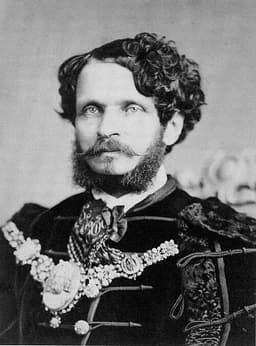
Count Andrassy
Politician · Modern
58.1Total
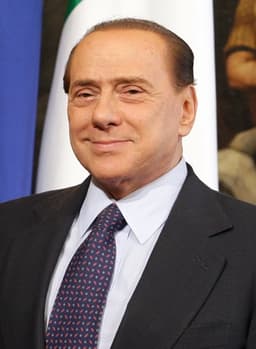
Silvio Berlusconi
Politician · Modern
58.7Total
Basic Information
Born
1823
1936
Died
1890
—
Era
Modern
Modern
Nationality
Austria
Italy
Occupation
Politician
Politician
Civilization
Western
Western
Score Comparison
Military (10%)
48.9
50.0
Political (20%)
72.0
55.0
Influence (20%)
60.0
68.0
Legacy (20%)
49.2
52.0
Leadership (15%)
72.0
68.0
Strategy (15%)
43.2
52.2
TOTAL
58.1
58.7
Count Andrassy — Complete Timeline
1871 AD
Appointment as Foreign Minister of Austria-HungaryPolitical Action◆ Major
Andrassy was appointed Foreign Minister of Austria-Hungary by Emperor Franz Joseph. He was the first Hungarian to hold this position, reflecting the dual monarchy's structure.
AppointmentForeign PolicyDual Monarchy
Impact: national
1878 AD
Congress of BerlinPolitical Action◆ Major
Andrassy represented Austria-Hungary at the Congress of Berlin, which revised the Treaty of San Stefano. He secured the right to occupy and administer Bosnia and Herzegovina, expanding Habsburg influence in the Balkans.
CongressBalkansTerritorial Expansion
Impact: regionalconstructive
1879 AD
Dual Alliance with GermanyPolitical Action
Andrassy negotiated the Dual Alliance between Austria-Hungary and Germany. This defensive treaty committed both powers to mutual support in case of a Russian attack, forming the core of the Central Powers in World War I.
AllianceGermanyCentral Powers
Impact: regionalconstructive
Resignation as Foreign MinisterPolitical Action◆ Major
Andrassy resigned as Foreign Minister after the Dual Alliance was signed. He cited health reasons and a desire to return to Hungarian politics, but his resignation also reflected tensions within the empire.
ResignationHungaryPolitics
Impact: national
Silvio Berlusconi — Complete Timeline
1978 AD
Founding of FininvestPolitical Action◆ Major
Berlusconi founded Fininvest, a holding company that acquired local television stations and later built Italy's largest private media empire. This gave him control over three national TV networks by the 1980s, shaping Italian media and politics.
Media EmpireBusiness
Impact: national
1994 AD
First Election as Prime MinisterPolitical Action◆ Major
Berlusconi won the 1994 general election as leader of the Forza Italia party, becoming Prime Minister of Italy on May 10. His coalition government collapsed after seven months due to internal conflicts and corruption investigations.
ElectionGovernment
Impact: national
2010 AD
Bunga Bunga ScandalPolitical Action◆ Major
Berlusconi faced allegations of paying for sex with an underage Moroccan dancer, Karima El Mahroug, and abusing his office to cover it up. The scandal led to multiple trials, damaging his political reputation and resulting in a conviction for tax fraud.
ScandalLegal
Impact: nationaldestructive
2011 AD
Resignation During Eurozone CrisisPolitical Action◆ Major
Berlusconi resigned as Prime Minister on November 16, 2011, amid the Eurozone debt crisis and market pressure. His government's inability to implement austerity measures led to his replacement by technocrat Mario Monti.
Economic CrisisResignation
Impact: national
2013 AD
Conviction for Tax FraudPolitical Action◆ Major
Berlusconi was convicted of tax fraud by Italy's Supreme Court on August 1, 2013, for inflating film rights prices in his Mediaset company. He was sentenced to four years in prison, commuted to community service, and banned from public office.
CorruptionLegal
Impact: nationaldestructive
Expert Analysis
Origins
Count Gyula Andrassy was born on March 8, 1823, in Oláhpatak, Kingdom of Hungary (now Slovakia), into an aristocratic Hungarian family. His father, Count Károly Andrassy, was a liberal politician. Andrassy studied law and philosophy at the University of Pest, and later traveled across Europe. His early political involvement included participation in the Hungarian Revolution of 1848, where he served as a diplomat for the revolutionary government. After the revolution's defeat, he went into exile in London and Paris, returning in 1858 after an amnesty.
Silvio Berlusconi was born on September 29, 1936, in Milan, Italy, to a middle-class family. His father Luigi was a bank employee, and his mother Rosella was a housewife. Berlusconi studied law at the University of Milan, graduating in 1961. He began his career in construction, building a successful real estate company, Edilnord, in the 1960s. His early business acumen laid the foundation for his later media empire.
Rise to Power
Andrassy's rise began after his return from exile. He was elected to the Hungarian Diet in 1861 and became a key figure in the negotiations leading to the Austro-Hungarian Compromise of 1867, which established the Dual Monarchy. He served as Hungary's first Prime Minister from 1867 to 1871, implementing economic and administrative reforms. In 1871, Emperor Franz Joseph appointed him Foreign Minister of Austria-Hungary, a position he held until 1879. His diplomatic skills were crucial in securing Austria-Hungary's influence in the Balkans.
Berlusconi's rise was through business and media. In 1978, he founded Fininvest, a holding company that acquired local television stations and later built Italy's largest private media empire, Mediaset. He also owned AC Milan football club from 1986, which boosted his public profile. In 1994, he entered politics, founding the Forza Italia party. Leveraging his media control, he won the general election in March 1994, becoming Prime Minister on May 10. His coalition collapsed later that year, but he returned to power in 2001, 2008, and briefly in 2011.
Leadership & Governance
Andrassy's leadership was characterized by pragmatic diplomacy and a commitment to the Dual Monarchy. As Foreign Minister, he pursued a policy of maintaining the status quo in the Balkans, opposing Russian expansion. His key achievement was the Dual Alliance with Germany in 1879, a defensive treaty that committed both powers to mutual support against Russia. This alliance shaped European diplomacy until World War I. Domestically, as Hungarian Prime Minister, he promoted economic development and granted more autonomy to Croatia.
Berlusconi's governance was marked by populism, media influence, and legislative changes that often benefited his business interests. He enacted tax cuts, pension reforms, and anti-immigration laws. However, his tenure was plagued by conflicts of interest, as he controlled much of Italy's television media. He faced numerous legal issues, including convictions for tax fraud and involvement in the 'Bunga Bunga' scandal. His leadership style was charismatic but polarizing.
Triumph & Tragedy
Andrassy's greatest triumph was the Dual Alliance, which stabilized Austria-Hungary's position and deterred Russian aggression. He also secured the occupation of Bosnia-Herzegovina at the Congress of Berlin in 1878, expanding Austro-Hungarian influence. His tragedy was the long-term consequences: the alliance system contributed to the outbreak of World War I. Additionally, his resignation in 1879, partly due to health, ended his diplomatic career.
Berlusconi's triumphs include building a media empire that transformed Italian television and winning four elections, making him Italy's longest-serving post-war prime minister. He also led Italy during the 2003 Iraq War as a coalition partner. His tragedies are numerous: his government's collapse during the Eurozone crisis in 2011, multiple criminal convictions, and scandals that tarnished his legacy. He scored 68.0 in influence but only 52.0 in legacy.
Character & Destiny
Andrassy was a skilled diplomat, known for his calm demeanor and strategic thinking. He was a Hungarian nationalist who nonetheless worked within the Habsburg framework. His decision to resign after the Dual Alliance reflected his sense of duty and perhaps his awareness of the limits of his influence. His character shaped a destiny of careful statecraft.
Berlusconi was charismatic and ambitious, with a flair for self-promotion. His media background made him a master of communication, but his legal troubles and conflicts of interest undermined his effectiveness. His destiny was that of a populist whose legacy is mixed between economic growth and ethical controversies.
Legacy
Andrassy's legacy is the Dual Alliance, which set the stage for the Triple Alliance and the pre-World War I alliance system. He is remembered as a statesman who strengthened Austria-Hungary's position diplomatically. His total score is 58.1, with high political (72.0) and leadership (72.0) scores.
Berlusconi's legacy is profound in Italian media and politics. He normalized the fusion of media and political power, influencing later populist leaders. However, his legacy is marred by corruption and legal issues. His total score is 58.7, slightly higher than Andrassy's, due to higher influence (68.0) and leadership (68.0).
Conclusion
While Berlusconi has a marginally higher total score (58.7 vs 58.1), Andrassy's impact on European history is more significant. The Dual Alliance directly shaped the alliances that led to World War I, affecting millions. Berlusconi's influence was largely domestic and transient. Therefore, Count Andrassy had greater historical impact.
Rankings
🥇
Silvio BerlusconiLeader
Mil: 50.0Pol: 55.0Inf: 68.0
58.7
🥈
Count Andrassy
Mil: 48.9Pol: 72.0Inf: 60.0
58.1
+0.6 behind
How This Comparison Works
Algorithm
Each figure is scored on 6 dimensions (0—100 scale) based on structured historical data: Military (10%), Political (20%), Influence (20%), Legacy (20%), Leadership (15%), Strategy (15%). The weighted total produces the final ranking.
Data Sources
Scores are computed from structured sub-indicators in the database. Scale factors adjust for era (Ancient ×0.85, Modern ×1.0) and civilization size (Eastern ×1.05, Other ×0.80) to account for differences in population and military scale.
Maximum 3 Figures
Comparisons are limited to 2—3 figures to ensure readability and statistical meaningfulness.
Error Margins
±5 points per dimension — Sub-scores are derived from historical records with inherent uncertainty. Two figures within 5 points on a dimension should be considered roughly equivalent in that area.
Total Score Accuracy
±3 points overall — The weighted combination of 6 dimensions produces a total score with approximately ±3 points of uncertainty. Differences of less than 3 points are not statistically significant— the figures are effectively tied.
Known Limitations
- Historical records are incomplete and uneven across civilizations
- Figures from oral-tradition societies may be underrepresented
- Occupation labels can misclassify multi-role figures
- Scores measure capability and impact, not moral character
- Quantitative scoring is a comparison tool, not absolute truth
Capability Radar
Military (10%) — Battles & Warfare
Battles
26
29
Win Rate
34
31
Expansion
37
33
Political (20%) — Governance & Reform
Reform
60
55
Diplomacy
75
60
Economy
55
70
Influence (20%) — Cultural & Global Reach
Cultural
40
65
Global
50
65
Legacy (20%) — Historical Impact
Historical
55
60
Longevity
40
40
Leadership (15%) — Power & Stability
Tenure
65
75
Stability
60
30
Strategy (15%) — Tactics & Innovation
Strategy
40
39
Tactics
41
41
Reform
43
42
Similar Comparisons
Comments & Discussion
No comments yet. Be the first to share your thoughts!