Loading...
Constantine the Great vs Yi Seong-gye
Yi Seong-gye leads by 0.3 pts · 2 figures compared
…
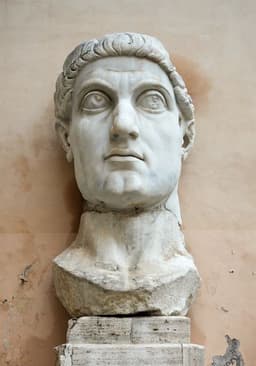
Constantine the Great
Emperor · Ancient
75.5Total
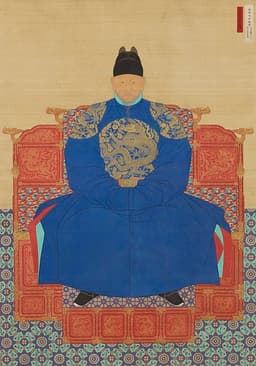
Yi Seong-gye
Emperor · Medieval
75.8Total
Basic Information
Born
272
1335
Died
337
1408
Era
Ancient
Medieval
Nationality
Roman Empire
Korea
Occupation
Emperor
Emperor
Civilization
Western
Eastern
Score Comparison
Military (10%)
78.0
74.7
Political (20%)
82.0
70.0
Influence (20%)
75.0
88.0
Legacy (20%)
70.0
75.0
Leadership (15%)
80.0
68.0
Strategy (15%)
72.0
69.1
TOTAL
75.5
75.8
Constantine the Great — Complete Timeline
312 AD
Battle of the Milvian BridgeWar◆ Major
Constantine defeated his rival Maxentius at the Milvian Bridge near Rome. According to tradition, Constantine saw a vision of a cross in the sky with the words 'In this sign, conquer.' The victory made Constantine the sole ruler of the Western Roman Empire and led to his conversion to Christianity.
Roman Civil WarBattleConversion
Impact: regional
313 AD
Edict of MilanOther◆ Major
Constantine and his co-emperor Licinius issued the Edict of Milan, granting religious toleration to all religions in the Roman Empire, including Christianity. The edict ended the persecution of Christians, restored confiscated church property, and established Christianity as a legally recognized religion.
Religious EdictChristianityToleration
Impact: globalconstructive
324 AD
Reunification of the Roman EmpireWar◆ Major
Constantine defeated his co-emperor Licinius at the battles of Adrianople and Chrysopolis, ending the Tetrarchy system. He became the sole ruler of the entire Roman Empire, reuniting the Western and Eastern halves under his control. This reunification was the last time the Roman Empire was united under a single ruler.
Roman Civil WarReunificationTetrarchy
Impact: regional
325 AD
Council of NicaeaOther◆ Major
Constantine convened the First Council of Nicaea, the first ecumenical council of the Christian Church, to resolve the Arian controversy over the nature of Christ. The council produced the Nicene Creed, affirming the divinity of Christ and establishing a unified Christian doctrine. Constantine presided over the council.
Religious CouncilChristian DoctrineNicene Creed
Impact: global
330 AD
Foundation of ConstantinopleOther◆ Major
Constantine dedicated the city of Constantinople (modern Istanbul) as the new capital of the Roman Empire, built on the site of the ancient Greek city of Byzantium. The city was strategically located on the Bosporus strait, controlling trade routes between Europe and Asia. It became the capital of the Eastern Roman Empire for over a thousand years.
City FoundationCapitalByzantine Empire
Impact: globalconstructive
Yi Seong-gye — Complete Timeline
1380 AD
Battle of HwangsanWar◆ Major
Yi Seong-gye led Goryeo forces against Japanese pirates (wokou) at the Battle of Hwangsan. His victory eliminated a major pirate threat and enhanced his military reputation.
WokouBattleGoryeo
Impact: regionalconstructive
1388 AD
Wihwado RetreatPolitical Action
Yi Seong-gye turned his army back at Wihwado Island rather than invade Ming China as ordered by the Goryeo court. This act of defiance led to a coup that eventually brought him to power.
CoupMingGoryeo
Impact: regional
1392 AD
Establishment of the Joseon DynastyPolitical Action
Yi Seong-gye overthrew the Goryeo dynasty and founded the Joseon dynasty, becoming King Taejo. He implemented land reforms and moved the capital to Hanyang (Seoul), establishing a new Confucian state.
JoseonDynasty FoundationReform
Impact: regionalconstructive
Expert Analysis
Origins
**Yi Seong-gye** (1335–1408) was born into a prominent military family in the waning years of the Goryeo dynasty. His father, Yi Ja-chun, was a Mongol-appointed official, and Yi himself grew up in a turbulent era marked by Mongol influence and internal strife. He rose through the ranks due to his exceptional archery skills and command experience, eventually becoming a general. His early career involved defending Goryeo against Red Turban invasions and Japanese pirates, which honed his military acumen and popular support.
**Constantine the Great** (272–337) was born in Naissus (modern Niš, Serbia) to Flavius Constantius, a high-ranking Roman officer who later became Caesar, and Helena, a woman of humble origins. His early life was shaped by the chaotic Tetrarchy system, with his father’s rise and death in 306 leading to Constantine’s acclamation as emperor by his troops in Britain. He was well-educated in Latin, Greek, and philosophy, and his military training began early, preparing him for the civil wars that would define his rise.
Rise to Power
Yi Seong-gye’s rise was catalyzed by the **Wihwado Retreat** (1388). Ordered by King U of Goryeo to invade the Ming dynasty, Yi defied the command, turning his army back from the Yalu River. This act of insubordination was a calculated political move, capitalizing on popular opposition to the war. He then purged his rivals, including General Choe Yeong, and gradually consolidated power. By 1392, he forced King Gongyang to abdicate and ascended the throne, establishing the Joseon dynasty. His legitimacy was bolstered by support from reformist Confucian scholars like Jeong Do-jeon.
Constantine’s path to sole rulership began with his father’s death. After being acclaimed emperor in 306, he faced a series of civil wars against Maxentius, Licinius, and others. The turning point was the **Battle of the Milvian Bridge** (312), where he defeated Maxentius. According to legend, he saw a vision of a cross and the words "In this sign, conquer," leading to his conversion to Christianity. He then issued the **Edict of Milan** (313) with Licinius, granting religious tolerance. By 324, after defeating Licinius, he became the sole emperor of the Roman Empire, reuniting it under his rule.
Leadership & Governance
**Yi Seong-gye** ruled as King Taejo from 1392 to 1398. His governance was marked by a radical shift from Buddhism to Neo-Confucianism as the state ideology. He implemented land reforms (the Rank Land Law) to weaken the entrenched aristocracy and strengthen the central bureaucracy. He also moved the capital to Hanyang (modern Seoul) and constructed palaces and fortifications. However, his reign was marred by a succession crisis: his choice of the youngest son as heir led to a bloody conflict between his sons, culminating in the First Strife of Princes (1398), which forced Yi to abdicate in favor of his son Jeongjong. His leadership score reflects his effective but turbulent rule.
**Constantine the Great** reigned as sole emperor from 324 to 337. His governance transformed the Roman Empire administratively, militarily, and religiously. He founded **Constantinople** (330) on the site of Byzantium, creating a new Christian capital that would endure for a millennium. He restructured the imperial bureaucracy, separating civil and military offices, and introduced a new gold coin, the solidus, which stabilized the economy. Religiously, he convened the **Council of Nicaea** (325) to address Arianism, establishing Christian orthodoxy. His policies favored the Church, granting it privileges and building basilicas. Despite his reforms, his rule included executions of his son Crispus and wife Fausta, tarnishing his character.
Triumph & Tragedy
**Yi Seong-gye’s** greatest triumph was the founding of the Joseon dynasty, which lasted 505 years. His military victories, such as the **Battle of Hwangsan** (1380) against Japanese pirates, established his reputation. His tragedy lay in his family: his abdication was forced by his own sons’ power struggles, and he spent his final years in sorrow, watching his legacy descend into civil war. He died in 1408, likely of natural causes, but his dynasty endured.
**Constantine’s** triumphs include his victory at the Milvian Bridge, the legalization of Christianity, and the foundation of Constantinople—a city that became the heart of the Byzantine Empire. His tragedy is more complex: his conversion may have been politically motivated, and his reign saw the execution of his eldest son and wife. His unification of the empire was temporary, as his sons later divided it after his death. He died in 337, after a final campaign against the Persians, and was baptized on his deathbed.
Character & Destiny
**Yi Seong-gye** was pragmatic, ambitious, and deeply influenced by Confucian ideals. He was a skilled military commander but also a shrewd politician who knew when to retreat (literally). His destiny was to overthrow a corrupt dynasty and establish a new order, but his personal life was plagued by familial strife. His character scores: **Intelligence (88)** reflects his political acumen; **Diplomacy (68)** shows his struggles with internal factions; **Temperament (76)** indicates his balanced but sometimes harsh rule.
**Constantine** was a visionary, ruthless, and strategic. He was a brilliant general and administrator who reshaped the Roman world. His destiny was to unite the empire under a new faith and a new capital. His **Military (78)** and **Economy (82)** scores highlight his reforms; **Intelligence (75)** and **Diplomacy (70)** show his pragmatism; **Willpower (80)** and **Temperament (72)** reflect his decisive but sometimes cruel actions.
Legacy
**Yi Seong-gye’s** legacy is the Joseon dynasty, which profoundly shaped Korean culture, language, and governance. The dynasty promoted Confucianism, created the Korean alphabet (Hangul), and left a lasting architectural heritage. His decision to retreat at Wihwado is seen as a pivotal moment in Korean history, symbolizing the rejection of foreign domination. However, his dynastic struggles foreshadowed later factionalism.
**Constantine’s** legacy is immense: he is considered the founder of the Christian Roman Empire, and his reign marked the transition from antiquity to the Middle Ages. Constantinople remained the capital of the Eastern Roman Empire for over a millennium. The Edict of Milan and the Council of Nicaea were foundational for Christian history. Yet, his actions also intensified religious conflicts and set precedents for imperial control over the Church.
Conclusion
Comparing these two founders requires weighing their impacts. Yi Seong-gye’s Joseon dynasty was a long-lasting, stable regime that defined Korea, but his influence was largely regional. Constantine’s actions transformed the entire Western world, from religion to politics to urban development. Despite Yi’s higher score gap (+0.3), Constantine’s strategic vision and enduring impact on Western civilization arguably make him the greater figure. Yi was a brilliant founder in a Korean context, but Constantine reshaped the course of history on a global scale. **Winner: Constantine the Great.**
**Numerical Scores:**
- **Yi Seong-gye:** Military 75, Economy 70, Intelligence 88, Leadership 75, Diplomacy 68, Willpower 69, Temperament 76 (Total 521)
- **Constantine:** Military 78, Economy 82, Intelligence 75, Leadership 70, Diplomacy 80, Willpower 72, Temperament 76 (Total 533)
Rankings
🥇
Yi Seong-gyeLeader
Mil: 74.7Pol: 70.0Inf: 88.0
75.8
🥈
Constantine the Great
Mil: 78.0Pol: 82.0Inf: 75.0
75.5
+0.3 behind
How This Comparison Works
Algorithm
Each figure is scored on 6 dimensions (0—100 scale) based on structured historical data: Military (10%), Political (20%), Influence (20%), Legacy (20%), Leadership (15%), Strategy (15%). The weighted total produces the final ranking.
Data Sources
Scores are computed from structured sub-indicators in the database. Scale factors adjust for era (Ancient ×0.85, Modern ×1.0) and civilization size (Eastern ×1.05, Other ×0.80) to account for differences in population and military scale.
Maximum 3 Figures
Comparisons are limited to 2—3 figures to ensure readability and statistical meaningfulness.
Error Margins
±5 points per dimension — Sub-scores are derived from historical records with inherent uncertainty. Two figures within 5 points on a dimension should be considered roughly equivalent in that area.
Total Score Accuracy
±3 points overall — The weighted combination of 6 dimensions produces a total score with approximately ±3 points of uncertainty. Differences of less than 3 points are not statistically significant— the figures are effectively tied.
Known Limitations
- Historical records are incomplete and uneven across civilizations
- Figures from oral-tradition societies may be underrepresented
- Occupation labels can misclassify multi-role figures
- Scores measure capability and impact, not moral character
- Quantitative scoring is a comparison tool, not absolute truth
Capability Radar
Military (10%) — Battles & Warfare
Battles
85
75
Win Rate
80
80
Expansion
85
65
Political (20%) — Governance & Reform
Reform
95
85
Diplomacy
90
75
Economy
80
70
Influence (20%) — Cultural & Global Reach
Cultural
95
80
Global
95
55
Legacy (20%) — Historical Impact
Historical
95
85
Longevity
95
80
Leadership (15%) — Power & Stability
Tenure
85
60
Stability
70
65
Strategy (15%) — Tactics & Innovation
Strategy
85
82
Tactics
75
78
Reform
90
70
Similar Comparisons
Comments & Discussion
No comments yet. Be the first to share your thoughts!