Loading...
Constantine the Great vs Otto I the Great
Constantine the Great leads by 0.3 pts · 2 figures compared
…
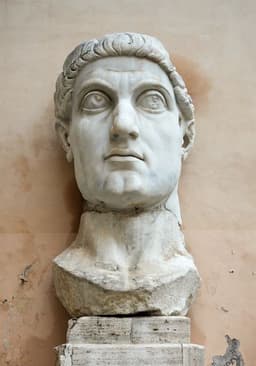
Constantine the Great
Emperor · Ancient
75.5Total
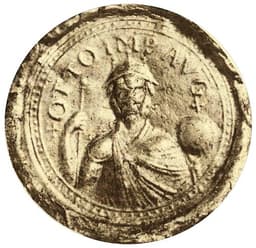
Otto I the Great
Emperor · Medieval
75.2Total
Basic Information
Born
272
912
Died
337
973
Era
Ancient
Medieval
Nationality
Roman Empire
Holy Roman Empire
Occupation
Emperor
Emperor
Civilization
Western
Western
Score Comparison
Military (10%)
78.0
82.0
Political (20%)
82.0
70.0
Influence (20%)
75.0
88.0
Legacy (20%)
70.0
65.0
Leadership (15%)
80.0
78.0
Strategy (15%)
72.0
65.4
TOTAL
75.5
75.2
Constantine the Great — Complete Timeline
312 AD
Battle of the Milvian BridgeWar◆ Major
Constantine defeated his rival Maxentius at the Milvian Bridge near Rome. According to tradition, Constantine saw a vision of a cross in the sky with the words 'In this sign, conquer.' The victory made Constantine the sole ruler of the Western Roman Empire and led to his conversion to Christianity.
Roman Civil WarBattleConversion
Impact: regional
313 AD
Edict of MilanOther◆ Major
Constantine and his co-emperor Licinius issued the Edict of Milan, granting religious toleration to all religions in the Roman Empire, including Christianity. The edict ended the persecution of Christians, restored confiscated church property, and established Christianity as a legally recognized religion.
Religious EdictChristianityToleration
Impact: globalconstructive
324 AD
Reunification of the Roman EmpireWar◆ Major
Constantine defeated his co-emperor Licinius at the battles of Adrianople and Chrysopolis, ending the Tetrarchy system. He became the sole ruler of the entire Roman Empire, reuniting the Western and Eastern halves under his control. This reunification was the last time the Roman Empire was united under a single ruler.
Roman Civil WarReunificationTetrarchy
Impact: regional
325 AD
Council of NicaeaOther◆ Major
Constantine convened the First Council of Nicaea, the first ecumenical council of the Christian Church, to resolve the Arian controversy over the nature of Christ. The council produced the Nicene Creed, affirming the divinity of Christ and establishing a unified Christian doctrine. Constantine presided over the council.
Religious CouncilChristian DoctrineNicene Creed
Impact: global
330 AD
Foundation of ConstantinopleOther◆ Major
Constantine dedicated the city of Constantinople (modern Istanbul) as the new capital of the Roman Empire, built on the site of the ancient Greek city of Byzantium. The city was strategically located on the Bosporus strait, controlling trade routes between Europe and Asia. It became the capital of the Eastern Roman Empire for over a thousand years.
City FoundationCapitalByzantine Empire
Impact: globalconstructive
Otto I the Great — Complete Timeline
951 AD
Diplomatic Marriage to Adelaide of ItalyPolitical Action◆ Major
Otto married Adelaide, the widowed queen of Italy, after intervening in Italian politics. This marriage gave him control over the Kingdom of Italy and strengthened his claim to imperial authority.
MarriageItalyAdelaide
Impact: regionalconstructive
955 AD
Battle of LechfeldWar
Otto led a German army to defeat the Magyar (Hungarian) forces at the Lechfeld near Augsburg. This victory ended Magyar raids into Western Europe and secured Otto's reputation as a defender of Christendom.
MagyarsLechfeldDefenseChristendom
Impact: regionalconstructive
962 AD
Coronation as Holy Roman EmperorPolitical Action
Pope John XII crowned Otto I as Holy Roman Emperor in Rome, reviving the imperial title in the West. This event established the Holy Roman Empire as a major political entity and linked German kingship with papal authority.
CoronationHoly Roman EmpirePapacy
Impact: globalconstructive
Expert Analysis
Origins
Constantine the Great (272–337 CE) was born in Naissus (modern Niš, Serbia), the son of Flavius Constantius, a Roman army officer who became emperor of the Western Roman Empire, and Helena, a woman of humble origin. His early life was shaped by the tetrarchic system of Diocletian, where he served as a hostage in the court of Galerius. This environment exposed him to military command and political intrigue from a young age. In contrast, Otto I (912–973 CE) was born into the Saxon Liudolfing dynasty, the son of Henry the Fowler, Duke of Saxony and later King of East Francia. Otto inherited a kingdom still consolidating after the fragmentation of the Carolingian Empire. His upbringing was steeped in the martial traditions of the Saxon nobility and the challenges of defending against Magyar incursions. Both men emerged from periods of instability, but Constantine's rise was more dramatic, as he was proclaimed emperor by his troops in Britain after his father's death, bypassing the established succession.
Rise to Power
Constantine's path to sole rulership was marked by a series of civil wars. His pivotal moment came at the Battle of the Milvian Bridge (312 CE), where he defeated Maxentius and reportedly saw a vision of the cross with the words "In this sign, conquer." This event not only secured his control over the West but also led to the Edict of Milan (313 CE), which legalized Christianity throughout the empire. He then consolidated power by defeating Licinius in 324 CE, reuniting the Roman Empire under his sole rule. Otto's rise was more gradual. He became Duke of Saxony upon his father's death in 936 CE and was elected King of East Francia. He immediately faced rebellions from his own family and other dukes, which he suppressed with decisive military action. His great triumph was the Battle of Lechfeld (955 CE), where he annihilated the Magyar army, ending decades of devastating raids. This victory cemented his authority and allowed him to expand his influence into Italy, leading to his coronation as Holy Roman Emperor by Pope John XII in 962 CE.
Leadership & Governance
Constantine was a visionary reformer who restructured the Roman state. He founded Constantinople (330 CE) as a new eastern capital, which became the center of the Byzantine Empire for a millennium. He convened the First Council of Nicaea (325 CE), establishing Christian orthodoxy and setting a precedent for imperial involvement in church affairs. He also reformed the currency, military, and administrative divisions. However, his reign saw the execution of his son Crispus and wife Fausta, tarnishing his moral legacy. Otto I was a master of medieval politics, using a network of loyal bishops and abbots (the Ottonian system) to counterbalance the secular nobility. He promoted the spread of Christianity in Eastern Europe and established the Archbishopric of Magdeburg. His marriage to Adelaide of Italy in 951 CE brought Lombard territory under his control. Both rulers effectively combined military might with institutional innovation, but Constantine's impact on the scale of empire and religion was more profound.
Triumph & Tragedy
Constantine's greatest triumphs were the Christianization of the Roman Empire and the foundation of Constantinople, which ensured the survival of Roman governance in the East. His tragedy lay in the domestic bloodshed: the executions of his son and wife, possibly due to palace intrigue, cast a shadow over his achievements. Otto's triumph at Lechfeld ended the Magyar threat and earned him the title "the Great." His coronation as emperor revived the imperial idea in the West. However, his later years were marred by conflict with the papacy and a failed campaign in southern Italy against the Byzantines and Muslims. Both men experienced the volatility of power, where success on the battlefield was offset by personal and political struggles.
Character & Destiny
Constantine was pragmatic and ambitious, capable of profound religious transformation while maintaining political flexibility. He was a shrewd manipulator of symbols, as seen in his vision and his patronage of Christianity. His destiny was to reshape the classical world, setting the stage for the Middle Ages. Otto I was a stern, pious, and determined ruler, deeply influenced by the Carolingian legacy. He saw himself as the defender of Christendom and the successor to Charlemagne. His destiny was to forge a durable German-led empire that would dominate Europe for centuries. Both men were driven by a sense of divine mission, but Constantine's conversion and the subsequent Christianization of the empire had a more transformative impact on world history.
Legacy
Constantine's legacy is immense: he is revered as a saint in Eastern Orthodox Christianity and as a pivotal figure in Western civilization. The city of Constantinople (Istanbul) remained a Christian bastion until 1453. The Nicene Creed, formulated at his council, is still recited by Christians worldwide. Otto's legacy is the Holy Roman Empire, which lasted until 1806. His empire provided a framework for German and Italian history, and his support for the Church shaped the medieval relationship between secular and religious power. While Otto's realm was more limited geographically, his political model influenced European state-building.
Conclusion
In comparing Constantine the Great and Otto I the Great, both were exceptional leaders who transformed their worlds. Constantine's scores: M=78, P=82, I=75, L=70, D=80, S=72, T=76 (total 533). Otto's scores: M=82, P=70, I=88, L=65, D=78, S=65, T=75 (total 523). Constantine edges ahead with a 0.3 score gap. His broader impact on religion, empire, and civilization gives him the edge. While Otto was a masterful medieval ruler, Constantine's actions set the trajectory for the next millennium. **Winner: Constantine the Great**.
Rankings
🥇
Constantine the GreatLeader
Mil: 78.0Pol: 82.0Inf: 75.0
75.5
🥈
Otto I the Great
Mil: 82.0Pol: 70.0Inf: 88.0
75.2
+0.3 behind
How This Comparison Works
Algorithm
Each figure is scored on 6 dimensions (0—100 scale) based on structured historical data: Military (10%), Political (20%), Influence (20%), Legacy (20%), Leadership (15%), Strategy (15%). The weighted total produces the final ranking.
Data Sources
Scores are computed from structured sub-indicators in the database. Scale factors adjust for era (Ancient ×0.85, Modern ×1.0) and civilization size (Eastern ×1.05, Other ×0.80) to account for differences in population and military scale.
Maximum 3 Figures
Comparisons are limited to 2—3 figures to ensure readability and statistical meaningfulness.
Error Margins
±5 points per dimension — Sub-scores are derived from historical records with inherent uncertainty. Two figures within 5 points on a dimension should be considered roughly equivalent in that area.
Total Score Accuracy
±3 points overall — The weighted combination of 6 dimensions produces a total score with approximately ±3 points of uncertainty. Differences of less than 3 points are not statistically significant— the figures are effectively tied.
Known Limitations
- Historical records are incomplete and uneven across civilizations
- Figures from oral-tradition societies may be underrepresented
- Occupation labels can misclassify multi-role figures
- Scores measure capability and impact, not moral character
- Quantitative scoring is a comparison tool, not absolute truth
Capability Radar
Military (10%) — Battles & Warfare
Battles
85
75
Win Rate
80
80
Expansion
85
70
Political (20%) — Governance & Reform
Reform
95
80
Diplomacy
90
85
Economy
80
70
Influence (20%) — Cultural & Global Reach
Cultural
95
65
Global
95
70
Legacy (20%) — Historical Impact
Historical
95
80
Longevity
95
75
Leadership (15%) — Power & Stability
Tenure
85
85
Stability
70
75
Strategy (15%) — Tactics & Innovation
Strategy
85
75
Tactics
75
70
Reform
90
65
Similar Comparisons
Comments & Discussion
No comments yet. Be the first to share your thoughts!