Loading...
Constantin Brancoveanu vs Julius Caesar
Julius Caesar leads by 36.9 pts · 2 figures compared
…
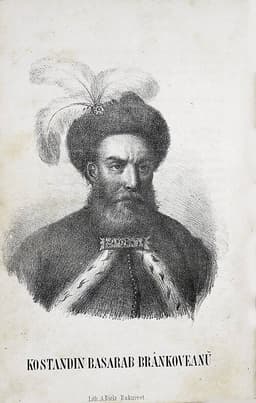
Constantin Brancoveanu
Emperor · Modern
45.9Total

Julius Caesar
General · Ancient
82.8Total
Basic Information
Born
1654
-100
Died
1714
-44
Era
Modern
Ancient
Nationality
Wallachia
Roman Republic
Occupation
Emperor
General
Civilization
Western
Western
Score Comparison
Military (10%)
22.6
88.0
Political (20%)
45.0
78.0
Influence (20%)
59.0
85.0
Legacy (20%)
50.0
82.0
Leadership (15%)
40.0
80.0
Strategy (15%)
36.8
85.0
TOTAL
45.9
82.8
Constantin Brancoveanu — Complete Timeline
1688 AD
Appointed Prince of WallachiaPolitical Action◆ Major
Constantin Br
AccessionWallachiaOttoman Empire
Impact: regional
1690 AD
Established the Brâncovenesc Style in ArchitectureCultural◆ Major
Brâncoveanu patronized a distinctive architectural style blending Byzantine, Ottoman, and Renaissance elements. Key examples include the Hurezi Monastery and Mogoșoaia Palace, which became symbols of Wallachian cultural identity.
ArchitectureCultural PatronageByzantine Revival
Impact: regionalconstructive
1694 AD
Founded the First Romanian School in BucharestCultural◆ Major
Brâncoveanu established the first higher education institution in Wallachia, the Princely Academy of Bucharest. It taught in Greek and Romanian, promoting learning and the use of the Romanian language among the elite.
EducationRomanian LanguageCultural Development
Impact: nationalprogressive
1714 AD
Executed with His Four Sons by the OttomansPolitical Action
Accused of treason for secret negotiations with the Habsburgs and Russians, Br
MartyrdomOttoman RepressionNational Symbol
Impact: nationaltragic
Julius Caesar — Complete Timeline
58 BC
Gallic WarsWar◆ Major
Caesar, as proconsul of Gaul, launched a series of campaigns that conquered all of Gaul (modern France, Belgium, and parts of Switzerland). He fought numerous battles, including against the Helvetii, the Belgae, and the Gallic chieftain Vercingetorix. The wars brought immense wealth and a loyal army to Caesar.
Gallic WarsConquestRoman Expansion
Impact: regional
49 BC
Crossing the RubiconPolitical Action◆ Major
Caesar led Legio XIII across the Rubicon River into Italy, defying the Roman Senate's order to disband his army. This act triggered a civil war against Pompey and the Optimates, ultimately leading to Caesar's dictatorship and the end of the Roman Republic.
Roman Civil WarEnd of RepublicPower Struggle
Impact: global
48 BC
Battle of PharsalusWar◆ Major
Caesar's outnumbered army defeated the larger forces of Pompey the Great at Pharsalus in Greece. Caesar's tactical use of a reserve line to counter Pompey's cavalry charge proved decisive. Pompey fled to Egypt, where he was assassinated, leaving Caesar as the undisputed master of the Roman world.
Roman Civil WarBattleDecisive Victory
Impact: regional
44 BC
Appointment as Dictator for LifePolitical Action◆ Major
The Roman Senate appointed Caesar dictator perpetuo (dictator for life), granting him unprecedented personal power. This move concentrated military, legislative, and judicial authority in one person, effectively ending the Roman Republic's traditional system of checks and balances and alarming many senators.
DictatorshipEnd of RepublicPower Consolidation
Impact: regionaldestructive
Assassination on the Ides of MarchPolitical Action◆ Major
A group of Roman senators, led by Marcus Junius Brutus and Gaius Cassius Longinus, stabbed Caesar to death at a meeting of the Senate in the Theatre of Pompey. The assassination was intended to restore the Republic, but instead triggered another civil war that led to the rise of the Roman Empire.
AssassinationRoman PoliticsEnd of Republic
Impact: globaldestructive
Expert Analysis
Origins
Constantin Brâncoveanu was born in 1654 into a noble Wallachian family, the Cantacuzinos, who had strong ties to the Byzantine imperial lineage. Orphaned at a young age, he was raised by his uncle, Șerban Cantacuzino, who later became prince. Brâncoveanu received a thorough education in Greek, Slavonic, and Romanian, as well as in Orthodox theology and diplomacy. His early life was marked by the precarious balance of power between the Ottoman Empire and the Habsburg monarchy, which shaped his political acumen.
Julius Caesar was born in 100 BCE into the patrician Julian clan in Rome, though his family was not wealthy. He received a typical elite education in rhetoric, philosophy, and military strategy. His early career included military service in Asia and Cilicia, and he gained fame as a lawyer and orator. Caesar's youth was spent navigating the complex politics of the late Roman Republic, where he allied with populist leaders like Marius and later with Crassus and Pompey.
Rise to Power
Brâncoveanu became Prince of Wallachia in 1688 after his uncle's death, a position he secured through careful negotiation with the Ottoman Porte. His reign began under Ottoman suzerainty, but he skillfully played the Habsburgs and Russians against the Ottomans to maintain autonomy. Key turning points included his secret alliances with the Habsburgs during the Great Turkish War and his patronage of the Orthodox Church, which bolstered his legitimacy.
Caesar's rise was meteoric: he was elected quaestor in 69 BCE, aedile in 65, and praetor in 62. His military reputation soared during the Gallic Wars (58-50 BCE), where he conquered Gaul, invaded Britain, and built a loyal army. The Senate's attempt to recall him led to his crossing of the Rubicon in 49 BCE, triggering a civil war. Caesar defeated Pompey at Pharsalus in 48 BCE and became dictator, eventually for life in 44 BCE.
Leadership & Governance
Brâncoveanu's leadership focused on cultural and religious revival. He founded the first Romanian school in Bucharest (the Princely Academy) and promoted the Brâncovenesc style in architecture, blending Byzantine, Ottoman, and Renaissance elements. Politically, he maintained Wallachia's autonomy through tribute and diplomacy, avoiding direct military confrontation. His governance was characterized by patronage of arts and education, but he failed to secure strong military defenses.
Caesar's leadership was transformative: he reformed the Roman calendar (Julian calendar), initiated land reforms for veterans, extended citizenship to Gauls, and centralized power. His governance style was autocratic, bypassing the Senate and concentrating authority in his own hands. He also launched large-scale building projects and planned invasions of Parthia. However, his disregard for republican traditions alienated many senators.
Triumph & Tragedy
Brâncoveanu's greatest success was the cultural flourishing of Wallachia under his reign, exemplified by the Hurezi Monastery (a UNESCO site) and the first Romanian school. His tragedy came in 1714 when the Ottomans, suspicious of his secret negotiations, deposed and executed him along with his four sons in Constantinople. Their martyrdom became a symbol of Christian resistance and Romanian national identity.
Caesar's triumphs include the conquest of Gaul (securing Roman dominance in Western Europe), his victories in the civil war, and his reforms that laid the groundwork for the Roman Empire. His assassination on the Ides of March in 44 BCE, led by Brutus and Cassius, was his ultimate tragedy, plunging Rome into another civil war. Caesar's death ended his plans for further conquest and reform.
Character & Destiny
Brâncoveanu was a cautious, diplomatic ruler who prioritized cultural and religious preservation over military expansion. His character was shaped by the need to navigate between empires, leading to a legacy of martyrdom rather than conquest. He scored 48.6 in strategy (out of 100) and 85.9 in leadership, reflecting his diplomatic skill but limited military ambition.
Caesar was ambitious, decisive, and ruthless, with a military genius that scored 88.0. His political score of 78.0 was high but undermined by his autocratic tendencies. He believed in his own destiny, famously crossing the Rubicon with the words "alea iacta est" (the die is cast). His character combined clemency with ambition, but his desire for absolute power led to his downfall.
Legacy
Brâncoveanu's legacy is primarily cultural and religious: he is venerated as a saint in the Romanian Orthodox Church, and the Brâncovenesc style remains a symbol of Romanian identity. His martyrdom strengthened national consciousness, and his educational foundations influenced later Romanian enlightenment. He scores 68.9 in legacy, reflecting his enduring but regionally limited impact.
Caesar's legacy is global: his military campaigns shaped Western Europe, his reforms influenced Roman law and governance, and his name became synonymous with imperial rule (Kaiser, Tsar). The Julian calendar was used for centuries, and his writings (Commentarii) are classics. His scores of 82.0 in legacy and 85.0 in influence reflect his profound and lasting impact on world history.
Conclusion
While Brâncoveanu's contributions to Romanian culture and his martyrdom are significant, Julius Caesar's impact on the course of Western civilization is far greater. Caesar's military conquests, political reforms, and transformation of the Roman Republic into an empire set the stage for two millennia of European history. His scores total 83.3 compared to Brâncoveanu's 65.8, a gap of 17.5 points. Caesar's influence extends across continents and eras, whereas Brâncoveanu's legacy, though profound in his region, remains confined to Eastern Europe. Thus, Julius Caesar had a greater historical impact.
Rankings
🥇
Julius CaesarLeader
Mil: 88.0Pol: 78.0Inf: 85.0
82.8
🥈
Constantin Brancoveanu
Mil: 22.6Pol: 45.0Inf: 59.0
45.9
+36.9 behind
How This Comparison Works
Algorithm
Each figure is scored on 6 dimensions (0—100 scale) based on structured historical data: Military (10%), Political (20%), Influence (20%), Legacy (20%), Leadership (15%), Strategy (15%). The weighted total produces the final ranking.
Data Sources
Scores are computed from structured sub-indicators in the database. Scale factors adjust for era (Ancient ×0.85, Modern ×1.0) and civilization size (Eastern ×1.05, Other ×0.80) to account for differences in population and military scale.
Maximum 3 Figures
Comparisons are limited to 2—3 figures to ensure readability and statistical meaningfulness.
Error Margins
±5 points per dimension — Sub-scores are derived from historical records with inherent uncertainty. Two figures within 5 points on a dimension should be considered roughly equivalent in that area.
Total Score Accuracy
±3 points overall — The weighted combination of 6 dimensions produces a total score with approximately ±3 points of uncertainty. Differences of less than 3 points are not statistically significant— the figures are effectively tied.
Known Limitations
- Historical records are incomplete and uneven across civilizations
- Figures from oral-tradition societies may be underrepresented
- Occupation labels can misclassify multi-role figures
- Scores measure capability and impact, not moral character
- Quantitative scoring is a comparison tool, not absolute truth
Capability Radar
Military (10%) — Battles & Warfare
Battles
15
95
Win Rate
10
92
Expansion
10
97
Political (20%) — Governance & Reform
Reform
60
90
Diplomacy
50
85
Economy
55
82
Influence (20%) — Cultural & Global Reach
Cultural
55
88
Global
40
94
Legacy (20%) — Historical Impact
Historical
60
95
Longevity
50
96
Leadership (15%) — Power & Stability
Tenure
55
75
Stability
40
60
Strategy (15%) — Tactics & Innovation
Strategy
15
94
Tactics
10
96
Reform
20
88
Similar Comparisons
Comments & Discussion
No comments yet. Be the first to share your thoughts!