Loading...
Confucius vs Mozi
Confucius leads by 16.3 pts · 2 figures compared
…
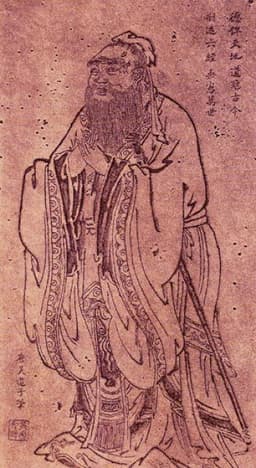
Confucius
Philosopher · Ancient
61.4Total

Mozi
Philosopher · Ancient
45.1Total
Basic Information
Born
-551
-470
Died
-479
-391
Era
Ancient
Ancient
Nationality
China
China
Occupation
Philosopher
Philosopher
Civilization
Eastern
Eastern
Score Comparison
Military (10%)
8.7
34.9
Political (20%)
35.1
33.9
Influence (20%)
95.0
55.0
Legacy (20%)
87.0
54.0
Leadership (15%)
35.4
40.9
Strategy (15%)
44.3
31.7
TOTAL
61.4
45.1
Confucius — Complete Timeline
501 BC
Appointment as Minister of Crime in LuPolitical Action
Confucius served as Minister of Crime in the state of Lu, where he implemented reforms to improve public order and justice. His tenure was short-lived due to political opposition, but it demonstrated his practical application of Confucian principles.
GovernmentReformLu
constructive
500 BC
Teaching Career in LuCultural
Confucius traveled through the state of Lu, teaching a group of disciples about ethics, ritual, and governance. He compiled and edited classical texts, including the Five Classics, and developed his philosophy centered on ren (benevolence) and li (ritual propriety).
TeachingPhilosophyConfucianism
Impact: globalconstructive
497 BC
Exile and Travels through Warring StatesPolitical Action◆ Major
After falling out of favor in Lu, Confucius went into voluntary exile, traveling to various states including Wei, Song, and Chen. He sought a ruler who would adopt his teachings, but was largely unsuccessful, spending 14 years wandering.
ExileTravelPhilosophy
Impact: regional
481 BC
Compilation of the Spring and Autumn AnnalsCultural◆ Major
Confucius is traditionally credited with compiling the Spring and Autumn Annals, a historical chronicle of the state of Lu. This work became a foundational text for Confucian historiography, emphasizing moral judgment in historical recording.
HistoriographyClassicsConfucianism
Impact: globalconstructive
479 BC
Death and Posthumous InfluenceCultural
Confucius died in Qufu, Lu, at age 72. His disciples compiled his teachings into the Analects, which later became the core text of Confucianism. Over centuries, his philosophy became the dominant ethical and political system in East Asia.
DeathLegacyConfucianism
Impact: globalconstructive
Mozi — Complete Timeline
450 BC
Founded the Mohist SchoolCultural◆ Major
Mozi established the Mohist school of philosophy, which directly challenged Confucianism. The school promoted universal love, meritocracy, and pacifism, and developed rigorous logical argumentation, attracting a large following during the Warring States period.
PhilosophyFoundingMohist School
Impact: regionalconstructive
440 BC
Developed Defensive Military StrategyOther
Mozi and his followers developed sophisticated defensive siegecraft and military strategy to protect small states from aggression. They wrote treatises on fortification and counter-siege techniques, which were later compiled in the Mozi text.
Military StrategyDefenseSiegecraft
Impact: regionalconstructive
400 BC
Compiled the Mozi TextCultural◆ Major
The core philosophical and technical writings of Mozi and his disciples were compiled into the Mozi text. This work contains the earliest known Chinese logical treatises, including discussions on geometry, optics, and mechanics, as well as ethical and political doctrines.
TextPhilosophyScience
Impact: regionalconstructive
Expert Analysis
Origins
Confucius (551–479 BCE) was born in the state of Lu (modern-day Shandong) to a minor aristocratic family. His father died when he was three, and he was raised in poverty by his mother. Despite humble beginnings, he pursued education in ritual, music, and history, becoming a self-taught scholar. His early career included roles as a bookkeeper and caretaker of livestock, but his passion for teaching and reforming society defined his path.
Mozi (c. 470–391 BCE) was likely born in the state of Lu or Song, possibly of lower artisan background. He initially studied Confucianism but rejected its emphasis on elaborate rituals and hierarchy. His formative experiences included exposure to the suffering of common people during the Warring States period, which shaped his utilitarian philosophy. Mozi's early life remains obscure, but he later became a skilled craftsman and military engineer.
Rise to Power
Confucius rose to prominence as a teacher in Lu, attracting a circle of disciples. He served as Minister of Crime in Lu around 500 BCE, implementing reforms that improved order. However, political intrigue forced him into exile, leading to a 14-year journey through states like Wei, Song, and Chen, seeking a ruler to adopt his ideals. He never gained lasting political power but returned to Lu to teach and compile texts. His death in 479 BCE marked the beginning of his posthumous rise, as his disciples spread his teachings.
Mozi founded the Mohist school around 440 BCE, directly challenging Confucianism. He organized a disciplined community of followers, including artisans and soldiers, who practiced his doctrines. Mozi traveled to various states to persuade rulers to adopt pacifism and meritocracy. He famously walked ten days to stop the state of Chu from attacking Song, demonstrating his influence through persuasion and defensive expertise. His school became a major philosophical force during the Warring States period.
Leadership & Governance
Confucius advocated for a hierarchical society based on filial piety, ritual propriety, and moral example from rulers. He believed that a virtuous king would naturally reform society. His governance emphasized education, proper conduct, and the rectification of names (ensuring roles match behavior). For example, he argued that a ruler must act as a father to his people. His approach was conservative, looking to the Zhou dynasty as a golden age.
Mozi rejected Confucian hierarchy, promoting universal love (jian ai) and impartial care for all. He argued that conflict arose from partiality and that rulers should appoint officials based on merit, not birth. Mohism advocated for frugality, opposing elaborate rituals and music as wasteful. In governance, Mozi emphasized benefit to the common people and criticized offensive warfare. His school developed defensive military tactics to protect small states, reflecting his practical approach.
Triumph & Tragedy
Confucius's greatest triumph was his enduring influence: his teachings became the foundation of Chinese education and civil service for over 2,000 years. The Analects, compiled posthumously, shaped East Asian ethics. His tragedy was his failure to secure high office during his lifetime; he died believing his mission had failed. Additionally, his emphasis on hierarchy was later used to justify rigid social stratification.
Mozi's triumph included the rapid spread of Mohism, which rivaled Confucianism for a time. His school produced advanced logic and defensive technology, including the first recorded descriptions of optical devices. However, Mohism's strict communal lifestyle and pacifist ideals proved impractical for large-scale governance. After the Qin unification, Mohism declined and nearly disappeared, overshadowed by Confucianism and Legalism. Mozi's tragedy was that his school faded into obscurity, though his ideas on meritocracy and universal love influenced later thinkers.
Character & Destiny
Confucius was resilient, idealistic, and deeply concerned with social order. He believed in the perfectibility of humans through education and ritual. His character is reflected in his perseverance despite political setbacks. Historical assessments view him as a moral philosopher whose teachings provided stability but also conservatism. He scored 95.0 in influence and 87.0 in legacy, indicating his profound long-term impact.
Mozi was pragmatic, egalitarian, and self-sacrificing. He emphasized utility and logic, often criticizing Confucians for impracticality. His character led him to champion the common person, but his uncompromising stance against war and ritual made him unpopular with elites. He scored 55.0 in influence and 54.0 in legacy, reflecting a more limited but significant footprint. His destiny was to be a counterpoint to Confucianism, preserving a critical voice in Chinese philosophy.
Legacy
Confucius's legacy is monumental: Confucianism became the state ideology of China, influencing Korea, Japan, and Vietnam. The civil service exams based on Confucian texts lasted until 1905. His ethical framework—emphasizing family loyalty, respect for elders, and social harmony—remains embedded in East Asian cultures. He scored 95.0 in influence, the highest among ancient Chinese philosophers.
Mozi's legacy is more specialized. Mohism contributed to Chinese logic, science, and military defense. His ideas on universal love and meritocracy influenced later Chinese thinkers like the Legalists and even Mao Zedong's egalitarianism. However, Mohism as a school died out by the Han dynasty. Mozi scored 55.0 in influence, but his work remains studied for its ethical and technological innovations. The Mozi text contains the earliest Chinese descriptions of geometry and optics.
Conclusion
Confucius had greater overall impact than Mozi, as evidenced by his total score of 61.4 versus Mozi's 45.1. Confucius's teachings became the backbone of Chinese civilization, shaping governance, education, and social norms for millennia. Mozi's ideas, while innovative, failed to achieve lasting institutional dominance. However, Mozi's critiques of Confucian hierarchy and his emphasis on universal love provide a valuable contrast. In the long run, Confucius's vision of a harmonious, hierarchical society proved more adaptable and enduring, securing his place as the more influential figure.
Rankings
🥇
ConfuciusLeader
Mil: 8.7Pol: 35.1Inf: 95.0
61.4
🥈
Mozi
Mil: 34.9Pol: 33.9Inf: 55.0
45.1
+16.3 behind
How This Comparison Works
Algorithm
Each figure is scored on 6 dimensions (0—100 scale) based on structured historical data: Military (10%), Political (20%), Influence (20%), Legacy (20%), Leadership (15%), Strategy (15%). The weighted total produces the final ranking.
Data Sources
Scores are computed from structured sub-indicators in the database. Scale factors adjust for era (Ancient ×0.85, Modern ×1.0) and civilization size (Eastern ×1.05, Other ×0.80) to account for differences in population and military scale.
Maximum 3 Figures
Comparisons are limited to 2—3 figures to ensure readability and statistical meaningfulness.
Error Margins
±5 points per dimension — Sub-scores are derived from historical records with inherent uncertainty. Two figures within 5 points on a dimension should be considered roughly equivalent in that area.
Total Score Accuracy
±3 points overall — The weighted combination of 6 dimensions produces a total score with approximately ±3 points of uncertainty. Differences of less than 3 points are not statistically significant— the figures are effectively tied.
Known Limitations
- Historical records are incomplete and uneven across civilizations
- Figures from oral-tradition societies may be underrepresented
- Occupation labels can misclassify multi-role figures
- Scores measure capability and impact, not moral character
- Quantitative scoring is a comparison tool, not absolute truth
Capability Radar
Military (10%) — Battles & Warfare
Battles
15
0
Win Rate
15
0
Expansion
19
0
Political (20%) — Governance & Reform
Reform
85
30
Diplomacy
70
20
Economy
40
10
Influence (20%) — Cultural & Global Reach
Cultural
95
60
Global
90
45
Legacy (20%) — Historical Impact
Historical
95
55
Longevity
95
50
Leadership (15%) — Power & Stability
Tenure
20
0
Stability
75
10
Strategy (15%) — Tactics & Innovation
Strategy
22
20
Tactics
28
15
Reform
31
10
Similar Comparisons
Comments & Discussion
No comments yet. Be the first to share your thoughts!