Loading...
Clovis I vs Napoleon Bonaparte
Napoleon Bonaparte leads by 13.8 pts · 2 figures compared
…
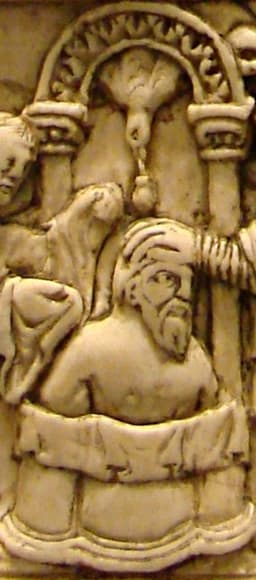
Clovis I
Emperor · Ancient
57.1Total

Napoleon Bonaparte
General · Modern
70.9Total
Basic Information
Born
466
1769
Died
511
1821
Era
Ancient
Modern
Nationality
Frankish Empire
France
Occupation
Emperor
General
Civilization
Western
Western
Score Comparison
Military (10%)
67.3
94.0
Political (20%)
45.0
72.0
Influence (20%)
55.0
40.0
Legacy (20%)
52.0
80.0
Leadership (15%)
72.0
78.0
Strategy (15%)
60.7
90.0
TOTAL
57.1
70.9
Clovis I — Complete Timeline
486 AD
Battle of SoissonsWar
Clovis defeated Syagrius, the last Roman ruler in Gaul, at Soissons. This victory ended Roman control in the region and established Clovis as the dominant power in northern Gaul, laying the foundation for the Frankish kingdom.
Frankish ExpansionRoman GaulSyagrius
Impact: regional
496 AD
Conversion to ChristianityCultural
Clovis converted to Nicene Christianity after the Battle of Tolbiac, following a vow to the Christian God. He was baptized by Bishop Remigius at Reims, becoming the first Germanic king to adopt Catholicism, which aligned him with the Gallo-Roman population and the Church.
ConversionCatholicismReimsChurch
Impact: globalconstructive
507 AD
Issuance of the Salic LawReform◆ Major
Clovis codified the Salic Law, a legal code combining Frankish customary law with Roman influences. It regulated inheritance, property, and criminal penalties, and later influenced medieval European legal systems.
Legal CodeSalic LawInheritance
Impact: regionalconstructive
Napoleon Bonaparte — Complete Timeline
1799 AD
Coup of 18 BrumaireOther◆ Major
Napoleon Bonaparte, with support from his brother Lucien and key political figures, overthrew the Directory in a bloodless coup. He established the Consulate with himself as First Consul, effectively becoming the ruler of France. This event ended the French Revolution's most unstable period.
French RevolutionCoupRise to Power
Impact: regional
1804 AD
Promulgation of the Napoleonic CodeOther◆ Major
Napoleon enacted the Civil Code of the French, known as the Napoleonic Code, a comprehensive set of laws that replaced the fragmented feudal legal systems. The code established legal equality, protected property rights, and secularized law. It became the basis for legal systems in many European and world countries.
Legal ReformNapoleonic CodeCivil Law
Impact: globalconstructive
1805 AD
Battle of AusterlitzWar◆ Major
Napoleon's Grande Arm
Napoleonic WarsBattleDecisive Victory
Impact: global
1812 AD
Invasion of RussiaWar◆ Major
Napoleon led the Grande Arm
Napoleonic WarsInvasionDisaster
Impact: globaldestructive
1815 AD
Battle of WaterlooWar◆ Major
Napoleon's French army was defeated by the combined forces of the Duke of Wellington's Anglo-Allied army and Gebhard Leberecht von Bl
Napoleonic WarsBattleFinal Defeat
Impact: globaldestructive
Expert Analysis
clovis-i-vs-napoleon-bonaparte
# The Two Founders of France
When Clovis I knelt before Bishop Remigius at Reims in 496, he was not merely accepting a new faith but reshaping the destiny of a continent. The water that dripped from his long hair onto the cathedral floor carried the weight of a world in transition—the dying embers of Rome and the first sparks of medieval Christendom. Thirteen centuries later, Napoleon Bonaparte would ride through the same city, not to kneel but to crown himself, snatching the imperial diadem from the Pope's hands and placing it on his own head. Two men, one land, two radically different visions of power. What drove them, and why did their paths diverge so dramatically?
Origins
Clovis emerged from the forests of Germania, a child of the Merovingian dynasty born into a world where Roman authority had crumbled but Roman memory lingered. His father Childeric had been a war leader, a king of the Salian Franks who carved out a small territory in what is now Belgium. Clovis inherited not an empire but a war band, a collection of warriors bound by loyalty to his person rather than to any abstract state. The year 466 placed him at the twilight of antiquity, when the great Roman edifice had collapsed into barbarian successor kingdoms, each struggling to claim legitimacy.
Napoleon Bonaparte arrived on Corsica in 1769, the same year the island passed from Genoa to France. He belonged to minor nobility, impoverished and resentful, speaking French with an Italian accent that marked him as an outsider. The French Revolution of 1789 shattered the old order, creating opportunities unimaginable under the Bourbon monarchy. Where Clovis inherited a tradition of warrior kingship, Napoleon inherited chaos—and the chance to remake everything.
Rise to Power
Clovis rose through violence and marriage. At Soissons in 486, he crushed Syagrius, the last Roman commander in Gaul, absorbing his territory and his administrative apparatus. This was not a battle for a throne but a raid that became a conquest. Clovis understood that legitimacy required more than swords; it required the blessing of the Church. His conversion to Nicene Christianity after the Battle of Tolbiac in 496 was a masterstroke. Unlike other barbarian kings who embraced Arianism, Clovis aligned himself with the orthodox faith of the Roman populace, winning their allegiance without a single additional battle.
Napoleon's ascent was more dramatic and more personal. He emerged from the siege of Toulon in 1793 as a young artillery officer whose cannons drove the British from the harbor. The Directory promoted him after he crushed a royalist uprising in Paris with "a whiff of grapeshot" in 1795, then sent him to Italy, where his lightning campaigns humiliated the Austrians. Each victory elevated him further until the coup of 18 Brumaire in 1799 placed him at the head of the French state. Clovis moved slowly, consolidating power over decades; Napoleon seized it in a single day.
Leadership & Governance
Clovis ruled as a Germanic war king, his authority personal and direct. He codified the Salic Law in 507, blending Frankish custom with Roman legal principles, but he never attempted to create a centralized bureaucracy. His kingdom remained a collection of loyalties, held together by his presence and his battlefield success. When he died, he divided his realm among his four sons—a practice that would plague the Merovingian dynasty for generations. Clovis governed through conquest and conversion, not administration.
Napoleon governed through institutional genius. The Napoleonic Code of 1804 standardized French law, sweeping away feudal privileges and establishing legal equality. He created the Bank of France, reformed education with the lycées, and built an administrative system that survives in France today. His military genius was matched by political vision: he understood that lasting power required not just victories but institutions. Yet his governance grew increasingly autocratic, his coronation as emperor in 1804 betraying the revolutionary ideals he once championed.
Triumph & Tragedy
Clovis's greatest moment came at the Battle of Vouillé in 507, where he defeated the Visigoths and extended Frankish rule to the Pyrenees. His conversion and his law code ensured that his name would echo through French history as the founder of the nation. But his tragedy was the fragility of his achievement. Without a stable succession system, his kingdom fragmented almost immediately after his death in 511, plunging into centuries of Merovingian civil war.
Napoleon's triumph was more spectacular and his fall more catastrophic. Austerlitz in 1805 remains a masterpiece of military deception, where he destroyed the combined armies of Austria and Russia. The Napoleonic Empire stretched from Spain to Poland, and his family sat on thrones across Europe. But the invasion of Russia in 1812 destroyed his Grand Army, and Waterloo in 1815 ended his ambitions forever. Where Clovis's kingdom survived him in fragments, Napoleon's empire vanished entirely, leaving only institutions and legends.
Character & Destiny
Clovis was calculating and patient, a man who used religion as a tool and understood that power required legitimacy. He killed rivals without hesitation—including members of his own family—but he never overreached. His personality matched his era: brutal but cautious, ambitious but pragmatic. He built for the long term, even if his successors could not maintain his edifice.
Napoleon was restless, brilliant, and ultimately self-destructive. His insatiable hunger for conquest drove him from victory to victory until it drove him into the Russian winter. "There is no such thing as impossible," he once declared, and he lived as though he believed it. His character was his destiny: the same ambition that lifted him from obscurity to emperor also toppled him into exile on Saint Helena.
Legacy
Clovis is remembered as the first Christian king of the Franks, the founder of a dynasty that would rule for three centuries. His baptism at Reims became the symbol of French monarchy, and later kings invoked his name to legitimize their rule. He gave France its Christian identity and its Merovingian roots, a legacy that endured until the Revolution swept it away.
Napoleon left a deeper mark on the modern world. His legal code, his administrative reforms, and his military innovations shaped Europe for two centuries. He is remembered not as a founder but as a force of nature—a man who remade the map and the laws of a continent in a single generation. His legacy is contested: liberator or tyrant, genius or madman, depending on the observer.
Conclusion
Clovis and Napoleon each founded a France, but they built with different materials. Clovis worked with the rubble of Rome, shaping it into a Christian kingdom that would endure for a thousand years. Napoleon worked with the fire of revolution, forging institutions that still govern French life. One was a king who became a saint; the other, a general who became a legend. Their differences arise from their eras and their temperaments: Clovis built for eternity, Napoleon for immortality. In the end, both succeeded—and both failed. The France they created is the France we inherit, a nation forever caught between the baptismal font and the battlefield.
Rankings
🥇
Napoleon BonaparteLeader
Mil: 94.0Pol: 72.0Inf: 40.0
70.9
🥈
Clovis I
Mil: 67.3Pol: 45.0Inf: 55.0
57.1
+13.8 behind
How This Comparison Works
Algorithm
Each figure is scored on 6 dimensions (0—100 scale) based on structured historical data: Military (10%), Political (20%), Influence (20%), Legacy (20%), Leadership (15%), Strategy (15%). The weighted total produces the final ranking.
Data Sources
Scores are computed from structured sub-indicators in the database. Scale factors adjust for era (Ancient ×0.85, Modern ×1.0) and civilization size (Eastern ×1.05, Other ×0.80) to account for differences in population and military scale.
Maximum 3 Figures
Comparisons are limited to 2—3 figures to ensure readability and statistical meaningfulness.
Error Margins
±5 points per dimension — Sub-scores are derived from historical records with inherent uncertainty. Two figures within 5 points on a dimension should be considered roughly equivalent in that area.
Total Score Accuracy
±3 points overall — The weighted combination of 6 dimensions produces a total score with approximately ±3 points of uncertainty. Differences of less than 3 points are not statistically significant— the figures are effectively tied.
Known Limitations
- Historical records are incomplete and uneven across civilizations
- Figures from oral-tradition societies may be underrepresented
- Occupation labels can misclassify multi-role figures
- Scores measure capability and impact, not moral character
- Quantitative scoring is a comparison tool, not absolute truth
Capability Radar
Military (10%) — Battles & Warfare
Battles
65
95
Win Rate
70
90
Expansion
70
95
Political (20%) — Governance & Reform
Reform
65
95
Diplomacy
75
80
Economy
55
85
Influence (20%) — Cultural & Global Reach
Cultural
70
85
Global
60
90
Legacy (20%) — Historical Impact
Historical
75
95
Longevity
70
90
Leadership (15%) — Power & Stability
Tenure
70
85
Stability
60
70
Strategy (15%) — Tactics & Innovation
Strategy
65
95
Tactics
60
98
Reform
55
92
Similar Comparisons
Comments & Discussion
Clovis' Lance6/17/2026
Clovis' conversion wasn't a pious whim; it was a power play that made Gaul governable. By backing Nicene Christianity over Arianism, he secured alliance with the Gallo-Roman bishops who ran every city. Napoleon tried the same with the Concordat of 1801—both men realized the Church was the real skeleton key to France. But Clovis knelt; Napoleon grabbed the crown. One was a tribal king playing empire, the other was an emperor playing god.
克洛维的教父6/17/2026
比较克洛维和拿破仑,就像比较一把铁剑和一门大炮——本质相同,形态迥异。克洛维靠血亲和武士团打仗,拿破仑靠征兵制和军团制碾碎欧洲。最大差别是:克洛维死后王国就分裂成碎片,因为他只建立了个人权威;拿破仑却留下了民法典和行政体系,即便滑铁卢输了,法国还是他的法国。奠基和重建,根本是两个词。