Loading...
Clovis I vs Hor-Aha
Clovis I leads by 3.2 pts · 2 figures compared
…
Clovis I
Emperor · Ancient
57.1Total

Hor-Aha
Emperor · Ancient
53.9Total
Basic Information
Born
466
-3100
Died
511
-3050
Era
Ancient
Ancient
Nationality
Frankish Empire
Early Egypt
Occupation
Emperor
Emperor
Civilization
Western
Middle Eastern
Score Comparison
Military (10%)
67.3
50.0
Political (20%)
45.0
46.6
Influence (20%)
55.0
57.2
Legacy (20%)
52.0
54.0
Leadership (15%)
72.0
65.0
Strategy (15%)
60.7
43.3
TOTAL
57.1
53.9
Clovis I — Complete Timeline
486 AD
Battle of SoissonsWar
Clovis defeated Syagrius, the last Roman ruler in Gaul, at Soissons. This victory ended Roman control in the region and established Clovis as the dominant power in northern Gaul, laying the foundation for the Frankish kingdom.
Frankish ExpansionRoman GaulSyagrius
Impact: regional
496 AD
Conversion to ChristianityCultural
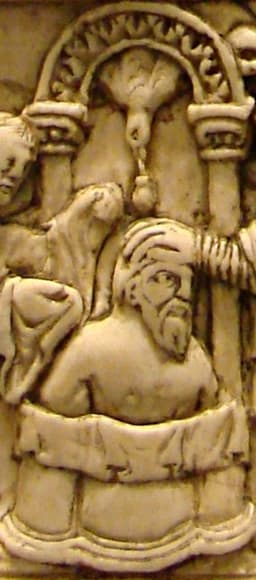
Clovis converted to Nicene Christianity after the Battle of Tolbiac, following a vow to the Christian God. He was baptized by Bishop Remigius at Reims, becoming the first Germanic king to adopt Catholicism, which aligned him with the Gallo-Roman population and the Church.
ConversionCatholicismReimsChurch
Impact: globalconstructive
507 AD
Issuance of the Salic LawReform◆ Major
Clovis codified the Salic Law, a legal code combining Frankish customary law with Roman influences. It regulated inheritance, property, and criminal penalties, and later influenced medieval European legal systems.
Legal CodeSalic LawInheritance
Impact: regionalconstructive
Hor-Aha — Complete Timeline
3100 BC
Conducted Military Campaigns in NubiaWar◆ Major
Hor-Aha led military expeditions into Nubia to secure Egypt's southern borders and access to trade routes. These campaigns established Egyptian influence over the region and secured resources like gold and ivory.
NubiaMilitary CampaignTrade
Impact: regional
Unified Upper and Lower EgyptPolitical Action
Hor-Aha, as successor to Narmer, completed the unification of Upper and Lower Egypt, establishing the First Dynasty. He founded the capital at Memphis and consolidated control over the Nile Valley, creating the first centralized state in history.
UnificationFirst DynastyMemphis
Impact: globalconstructive
Founded the City of MemphisCultural◆ Major
Hor-Aha established Memphis (Ineb Hedj) at the junction of Upper and Lower Egypt. The city became the administrative and religious center of the early dynastic period, serving as the capital for centuries.
City FoundationCapitalAdministration
Impact: regionalconstructive
Built the Tomb at Abydos (Umm el-Qa'ab)Cultural
Hor-Aha constructed a large mudbrick tomb at Abydos, part of the royal necropolis. The tomb contained grave goods and subsidiary burials, reflecting the early development of pharaonic funerary practices.
TombAbydosFunerary
Expert Analysis
Origins
Clovis I (c. 466–511 AD) was born into the Merovingian dynasty, son of King Childeric I of the Salian Franks and Queen Basina of Thuringia. He inherited the throne at age 15 upon his father's death in 481. The Franks were a Germanic tribe settled in Roman Gaul, and Clovis grew up amid the crumbling Western Roman Empire, learning warfare and diplomacy from his father's example.
Hor-Aha (c. 3100–3050 BC) was the son of Narmer, the legendary unifier of Upper and Lower Egypt. His name means "Fighting Horus," reflecting his divine association. Hor-Aha inherited a nascent unified state and was likely the second pharaoh of the First Dynasty. He established his capital at Memphis, strategically located at the apex of the Nile Delta.
Rise to Power
Clovis rose by military conquest. In 486, at age 20, he defeated Syagrius, the last Roman ruler in Gaul, at the Battle of Soissons. This victory eliminated Roman authority north of the Loire and gave Clovis control over the rich lands of northern Gaul. He then expanded eastward, defeating the Alemanni at the Battle of Tolbiac (c. 496). During this battle, Clovis vowed to convert to Christianity if victorious, which he did, being baptized by Bishop Remigius at Reims in 496. This conversion won him support from the Gallo-Roman nobility and the Catholic Church.
Hor-Aha's rise was hereditary. As Narmer's heir, he assumed control of a recently unified Egypt. He solidified unification by founding Memphis as a dual capital, symbolically linking the two lands. He conducted military campaigns into Nubia to secure the southern border and gain access to gold and trade routes. He also built a large tomb at Abydos, demonstrating his authority and ensuring his afterlife.
Leadership & Governance
Clovis ruled as a warrior king, consolidating power through conquest and alliance. He issued the Salic Law (c. 507–511), a legal code combining Frankish custom with Roman influences. It regulated inheritance, property, and criminal penalties, and notably excluded women from inheriting land, a provision that later shaped French succession. Clovis also eliminated rival Frankish kings, such as Sigibert of Cologne and Chararic, by assassination or conquest, uniting all Franks under his rule. He established Paris as his capital and his conversion to Nicene Christianity aligned him with the orthodox Church, contrasting with the Arianism of other Germanic kings.
Hor-Aha governed as a divine pharaoh, centralizing administration in Memphis. He established the "White Walls" (Memphis) as the administrative center, and his tomb at Abydos reflects early royal mortuary practices. He likely directed trade and military expeditions, but records are sparse. His reign set precedents for pharaonic rule: the dual crown, the Horus name, and the importance of Memphis. His governance score of 46.6 reflects limited evidence, while Clovis's leadership score of 72.0 indicates more documented achievements.
Triumph & Tragedy
Clovis's greatest triumph was the unification of the Franks and his conversion, which secured Church support and laid the foundation for the later Frankish Empire. His military campaigns expanded Frankish territory from the Rhine to the Pyrenees. However, his methods were brutal: he murdered relatives to eliminate rivals, creating a pattern of dynastic violence. His conversion was politically motivated, and his death in 511 led to the division of his kingdom among his four sons, causing internal strife.
Hor-Aha's triumphs include completing the unification of Egypt, founding Memphis, and establishing the First Dynasty. His military campaigns in Nubia secured resources and borders. His tomb at Abydos, with its subsidiary burials, reflects early pharaonic power. However, his legacy is overshadowed by Narmer's unification, and his reign is poorly documented. The lack of monumental inscriptions limits our knowledge. His military score of 50.0 indicates modest achievements compared to Clovis's 67.3.
Character & Destiny
Clovis was pragmatic and ruthless. He converted to Christianity for political advantage, not faith. He eliminated rivals without hesitation, yet he also patronized the Church and promoted learning. His character shaped the Merovingian dynasty's fate: his conquests created a unified kingdom, but his division of the realm sowed future discord. Historians note his strategic acumen, scoring 60.7 in strategy, but his political score of 45.0 reflects the instability his methods caused.
Hor-Aha is less known personally, but his name suggests martial prowess. As a founding pharaoh, he likely embodied the divine authority needed to maintain unity. His decision to build Memphis as a capital shows foresight, as it remained Egypt's administrative center for millennia. His legacy score of 54.0 reflects his foundational role, but his total score of 53.9 trails Clovis's 57.1.
Legacy
Clovis's legacy is profound. He is considered the founder of France (the country's name derives from the Franks). The Salic Law influenced European legal systems, and his conversion established the Catholic Church's central role in French history. The Merovingian dynasty lasted until 751, and his unification of the Franks paved the way for Charlemagne's empire. His influence score of 55.0 reflects his long-term impact.
Hor-Aha's legacy is foundational for ancient Egypt. He established the First Dynasty, which lasted for centuries. Memphis remained a capital for thousands of years. His tomb at Abydos became a prototype for royal burials. However, his individual impact is less than that of Narmer or later pharaohs like Djoser. His influence score of 57.2 is slightly higher than Clovis's, but his overall total is lower.
Conclusion
Clovis I had a greater impact than Hor-Aha. With a total score of 57.1 versus 53.9, Clovis's military conquests, legal reforms, and conversion to Christianity shaped the course of European history. Hor-Aha's role as a founding pharaoh is significant, but his achievements are less documented and less transformative. Clovis's unification of the Franks created a kingdom that evolved into modern France, while his adoption of Catholicism aligned his realm with the dominant religious force of medieval Europe. Hor-Aha completed his father's work, but Clovis initiated a new era. Therefore, Clovis I is the more influential figure.
Rankings
🥇
Clovis ILeader
Mil: 67.3Pol: 45.0Inf: 55.0
57.1
🥈
Hor-Aha
Mil: 50.0Pol: 46.6Inf: 57.2
53.9
+3.2 behind
How This Comparison Works
Algorithm
Each figure is scored on 6 dimensions (0—100 scale) based on structured historical data: Military (10%), Political (20%), Influence (20%), Legacy (20%), Leadership (15%), Strategy (15%). The weighted total produces the final ranking.
Data Sources
Scores are computed from structured sub-indicators in the database. Scale factors adjust for era (Ancient ×0.85, Modern ×1.0) and civilization size (Eastern ×1.05, Other ×0.80) to account for differences in population and military scale.
Maximum 3 Figures
Comparisons are limited to 2—3 figures to ensure readability and statistical meaningfulness.
Error Margins
±5 points per dimension — Sub-scores are derived from historical records with inherent uncertainty. Two figures within 5 points on a dimension should be considered roughly equivalent in that area.
Total Score Accuracy
±3 points overall — The weighted combination of 6 dimensions produces a total score with approximately ±3 points of uncertainty. Differences of less than 3 points are not statistically significant— the figures are effectively tied.
Known Limitations
- Historical records are incomplete and uneven across civilizations
- Figures from oral-tradition societies may be underrepresented
- Occupation labels can misclassify multi-role figures
- Scores measure capability and impact, not moral character
- Quantitative scoring is a comparison tool, not absolute truth
Capability Radar
Military (10%) — Battles & Warfare
Battles
65
40
Win Rate
70
45
Expansion
70
45
Political (20%) — Governance & Reform
Reform
65
45
Diplomacy
75
40
Economy
55
45
Influence (20%) — Cultural & Global Reach
Cultural
70
55
Global
60
50
Legacy (20%) — Historical Impact
Historical
75
60
Longevity
70
65
Leadership (15%) — Power & Stability
Tenure
70
50
Stability
60
50
Strategy (15%) — Tactics & Innovation
Strategy
65
40
Tactics
60
35
Reform
55
30
Similar Comparisons
Comments & Discussion
No comments yet. Be the first to share your thoughts!