Loading...
Cleopatra VII vs Winston Churchill
Winston Churchill leads by 24.6 pts · 2 figures compared
…
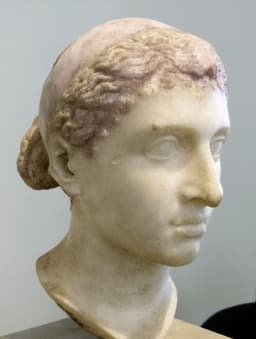
Cleopatra VII
Politician · Ancient
47.2Total
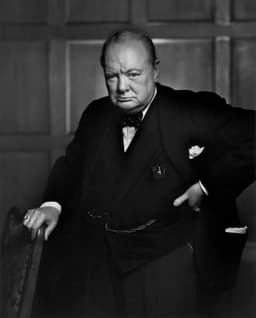
Winston Churchill
Politician · Modern
71.8Total
Basic Information
Born
-69
1874
Died
-30
1965
Era
Ancient
Modern
Nationality
Egypt
United Kingdom
Occupation
Politician
Politician
Civilization
Middle Eastern
Western
Score Comparison
Military (10%)
20.0
55.0
Political (20%)
45.0
78.0
Influence (20%)
40.0
75.0
Legacy (20%)
80.0
68.0
Leadership (15%)
40.0
82.0
Strategy (15%)
25.0
65.0
TOTAL
47.2
71.8
Cleopatra VII — Complete Timeline
48 BC
Alliance with Julius CaesarPolitical Action◆ Major
Cleopatra allied with Julius Caesar during the Roman civil war. She had herself smuggled into his palace in Alexandria rolled in a carpet. Caesar supported her claim to the throne, defeating her brother Ptolemy XIII and restoring her as co-ruler of Egypt.
Impact: regional
47 BC
Birth of CaesarionPolitical Action◆ Major
Cleopatra gave birth to Ptolemy XV Caesar (Caesarion), claiming he was Julius Caesar's son. This birth strengthened her political position and provided a potential heir to both Egypt and Rome, though Caesar never officially acknowledged him as his heir.
Impact: regional
41 BC
Alliance with Mark AntonyPolitical Action◆ Major
Cleopatra formed a political and romantic alliance with Mark Antony, a Roman triumvir. She provided him with financial and military support for his campaigns in the East. Their relationship produced three children and solidified her control over Egypt.
Impact: regional
31 BC
Battle of ActiumWar
The combined naval forces of Cleopatra and Mark Antony were decisively defeated by Octavian's fleet under Agrippa at Actium in Greece. Cleopatra fled with her ships, and Antony followed, leading to their eventual downfall and Octavian's rise as Augustus.
Impact: globaltragic
30 BC
Death of CleopatraPolitical Action
After Octavian's forces captured Alexandria, Cleopatra died by suicide, traditionally said to be from the bite of an asp. Her death ended the Ptolemaic dynasty and Egypt became a Roman province, marking the end of Hellenistic Egypt's independence.
Impact: globaltragic
Winston Churchill — Complete Timeline
1940 AD
Appointed Prime Minister of the United KingdomPolitical Action◆ Major
On May 10, 1940, Winston Churchill became Prime Minister of the United Kingdom, replacing Neville Chamberlain. His appointment came as Nazi Germany invaded France and the Low Countries, and Churchill formed a coalition government to lead Britain through World War II.
World War IILeadershipCoalition Government
Impact: globalconstructive
Delivered the 'We Shall Fight on the Beaches' SpeechOther◆ Major
On June 4, 1940, Churchill delivered a speech to the House of Commons following the evacuation of British forces from Dunkirk. He declared that Britain would fight on the beaches, landing grounds, fields, streets, and hills, and never surrender, rallying British morale during the darkest days of World War II.
World War IIOratoryMorale
Impact: nationalconstructive
1941 AD
Signed the Atlantic CharterOther◆ Major
On August 14, 1941, Churchill and U.S. President Franklin D. Roosevelt signed the Atlantic Charter aboard HMS Prince of Wales. This joint declaration outlined post-war goals including self-determination, disarmament, and free trade, and became a foundational document for the Allied war aims and the United Nations.
World War IIAllied CooperationPost-war Planning
Impact: globalconstructive
1945 AD
Attended the Yalta ConferenceOther◆ Major
In February 1945, Churchill attended the Yalta Conference with Roosevelt and Stalin to discuss the post-war reorganization of Europe. The conference agreed on the division of Germany, the establishment of the United Nations, and the fate of Eastern Europe, though Churchill later expressed regret over concessions to Stalin.
World War IIPost-war SettlementBig Three
Impact: global
1946 AD
Delivered the 'Iron Curtain' SpeechOther◆ Major
On March 5, 1946, Churchill delivered a speech at Westminster College in Fulton, Missouri, where he stated that an 'iron curtain' had descended across Europe from Stettin to Trieste. This speech is widely regarded as marking the beginning of the Cold War, as it highlighted the division between Soviet-controlled Eastern Europe and the West.
Cold WarSoviet UnionDivision of Europe
Impact: globaldestructive
1953 AD
Awarded the Nobel Prize in LiteratureOther◆ Major
In 1953, Churchill was awarded the Nobel Prize in Literature for his historical writings, particularly 'The Second World War' and 'A History of the English-Speaking Peoples'. The Nobel committee cited his mastery of historical and biographical description as well as his brilliant oratory in defending human values.
LiteratureNobel PrizeHistorical Writing
Impact: nationalconstructive
Expert Analysis
Winston Churchill vs Cleopatra VII
# The Weight of a Crown: Churchill and Cleopatra
On a May morning in 1940, as German tanks rolled across the French countryside, a heavyset man with a cigar clenched between his teeth stood before the British House of Commons and offered nothing but “blood, toil, tears and sweat.” Twenty centuries earlier, on a summer night in Alexandria, a young woman had herself rolled into a carpet and smuggled into the palace of the most powerful man in the world, gambling her kingdom on a single moment of audacity. Both were cornered by history. Both refused to surrender. Yet one became the symbol of an empire’s finest hour, while the other became the symbol of its final, tragic romance.
Origins
Winston Churchill was born into the British aristocracy in 1874, the grandson of a duke, but his childhood was marked by emotional neglect and academic failure. His father, Lord Randolph Churchill, was a brilliant but erratic politician who died of syphilis when Winston was twenty-one. His mother, an American socialite, was distant. Young Churchill found solace in military history and adventure, attending Sandhurst and serving in colonial wars in India, Sudan, and South Africa. He was shaped by the Victorian conviction that Britain was a force for civilization, and by the brutal realities of imperial warfare.
Cleopatra VII was born in 69 BCE into a dynasty that was itself a foreign imposition. The Ptolemies were Macedonian Greeks who had ruled Egypt for three centuries, speaking Greek at court while presenting themselves as pharaohs to the native population. Her childhood was a school of survival: her father, Ptolemy XII, was a weak king who bribed Rome for recognition; her older sisters murdered their rivals; and Cleopatra learned early that in the game of thrones, trust was a luxury she could not afford. She was the first Ptolemy to bother learning the Egyptian language—a small detail that revealed a strategic mind willing to bridge worlds.
Rise to Power
Churchill’s path was a long, uneven climb. He entered Parliament at twenty-six, switched parties twice, and held a string of cabinet positions—Home Secretary, First Lord of the Admiralty—but was haunted by the disaster of Gallipoli in 1915, a failed campaign that cost him his reputation. For a decade he was a political outcast, dismissed as a reckless adventurer. Yet he never stopped writing, warning, and preparing. When Hitler rose, Churchill’s voice became the one that said what others refused to hear. In 1940, at age sixty-five, he finally became Prime Minister—not because of his popularity, but because his country had run out of alternatives.
Cleopatra’s rise was swifter and more brutal. When her father died in 51 BCE, she became co-ruler with her younger brother Ptolemy XIII, who was about ten years old. Within months, her brother’s advisors drove her into exile. She was twenty-one, stripped of power, with a small army in Syria. Her gamble was to bypass Egypt entirely and appeal directly to Rome. When Julius Caesar arrived in Alexandria in 48 BCE, Cleopatra had herself smuggled into his presence. The story of the carpet is probably legend, but the audacity is historical fact. She emerged from that meeting not just alive, but allied with the most powerful man in the Mediterranean.
Leadership & Governance
Churchill governed through words. His speeches—“We shall fight on the beaches,” “This was their finest hour”—were not just rhetoric; they were acts of national creation, forging resolve from fear. He micromanaged the war effort, meeting daily with his chiefs of staff, visiting bombed cities, and insisting on impossible offensives like the invasion of North Africa. His military judgment was uneven—he championed the disastrous Gallipoli campaign in World War I and the ill-fated Greek intervention in 1941—but his political genius was absolute. He understood that democracy requires a leader who tells the truth, even when the truth is terrifying.
Cleopatra governed through alliance. She could not match Rome’s military power, so she made herself indispensable to Rome’s leaders. With Caesar, she bore a son, Caesarion, and secured Egypt’s status as a client kingdom. After Caesar’s assassination in 44 BCE, she pivoted to Mark Antony, the most powerful of the triumvirs who succeeded him. She provided him with ships, grain, and gold. In return, he recognized her as queen, expanded her territory, and publicly acknowledged their twin children. Her governance was pragmatic: she maintained Egyptian traditions, stabilized the economy, and kept the Roman legions at bay—for a time.
Triumph & Tragedy
Churchill’s triumph was the survival of Britain. In 1940, when France fell and the United States remained neutral, Britain stood alone. Churchill’s refusal to negotiate, his bulldog defiance, and his ability to inspire a nation to endure the Blitz changed the course of history. By 1945, Hitler was dead and Europe was liberated. But Churchill’s tragedy came immediately after: he was voted out of office in July 1945, even before the war had fully ended. The man who had saved his country was dismissed by his countrymen, who wanted a new world, not a return to the old.
Cleopatra’s triumph was the preservation of Egyptian independence for nearly two decades. She was the last pharaoh to rule a free Egypt, and she did so by playing the most dangerous game in the ancient world. Her tragedy was the Battle of Actium in 31 BCE, where her fleet, alongside Antony’s, was routed by Octavian’s forces. The defeat was not military annihilation—most of her ships survived—but it was psychological collapse. Antony, believing Cleopatra had betrayed him, stabbed himself. Cleopatra, trapped in her mausoleum, tried to negotiate with Octavian, but he wanted her alive only for his triumph. Rather than be paraded in chains through Rome, she chose death. The asp may be legend; the choice was real.
Character & Destiny
Churchill was a man of immense ego, relentless energy, and deep melancholy—he called his depression his “black dog.” He was romantic about empire, stubborn about strategy, and often wrong about the future (he opposed Indian independence and predicted that the atomic bomb would make war obsolete). But his character—his refusal to accept defeat, his theatrical courage, his instinct for the grand gesture—matched the moment. He was the right man for 1940, and perhaps only for 1940.
Cleopatra was intelligent, multilingual, and ruthlessly pragmatic. She was not a great beauty in the Hollywood sense; ancient coins show a woman with a strong nose and sharp chin. What she had was charisma, political cunning, and an unshakeable sense of her own sovereignty. Her tragedy was that she lived in a world where Rome’s power had become absolute. No amount of charm or strategy could stop the machine of empire. She died not because she was weak, but because the forces arrayed against her were overwhelming.
Legacy
Churchill’s legacy is monumental and contested. He is remembered as the savior of Western civilization, the voice of freedom against tyranny. But he is also remembered for his imperialist views, his role in the Bengal famine of 1943, and his belief in white supremacy. The statue that stands in Parliament Square is both a monument and a target. His legacy is not simple, and perhaps that is the point: great leaders are not saints.
Cleopatra’s legacy is a paradox. She was the last pharaoh, the end of a three-thousand-year civilization. But she became something more: a myth. Shakespeare made her a lover. Hollywood made her a seductress. The Romans made her a warning. But the historical Cleopatra was a ruler who fought, schemed, and died on her own terms. She lost her kingdom, but she never lost her throne—she chose the manner of her leaving.
Conclusion
What separates these two figures is not ability or courage. Both were brilliant, both were flawed, and both faced the abyss. The difference is context. Churchill stood at the head of a global empire at the moment of its greatest test. Cleopatra stood at the tail end of a dying dynasty, facing an empire that would absorb her world. One rode the wave of history; the other was crushed by it. Yet both remind us that leadership is not about winning—it is about choosing, in the moment of crisis, to act with everything you have. Churchill’s blood, toil, tears, and sweat. Cleopatra’s carpet, her ships, her asp. The same gamble, separated by two thousand years.
Rankings
🥇
Winston ChurchillLeader
Mil: 55.0Pol: 78.0Inf: 75.0
71.8
🥈
Cleopatra VII
Mil: 20.0Pol: 45.0Inf: 40.0
47.2
+24.6 behind
How This Comparison Works
Algorithm
Each figure is scored on 6 dimensions (0—100 scale) based on structured historical data: Military (10%), Political (20%), Influence (20%), Legacy (20%), Leadership (15%), Strategy (15%). The weighted total produces the final ranking.
Data Sources
Scores are computed from structured sub-indicators in the database. Scale factors adjust for era (Ancient ×0.85, Modern ×1.0) and civilization size (Eastern ×1.05, Other ×0.80) to account for differences in population and military scale.
Maximum 3 Figures
Comparisons are limited to 2—3 figures to ensure readability and statistical meaningfulness.
Error Margins
±5 points per dimension — Sub-scores are derived from historical records with inherent uncertainty. Two figures within 5 points on a dimension should be considered roughly equivalent in that area.
Total Score Accuracy
±3 points overall — The weighted combination of 6 dimensions produces a total score with approximately ±3 points of uncertainty. Differences of less than 3 points are not statistically significant— the figures are effectively tied.
Known Limitations
- Historical records are incomplete and uneven across civilizations
- Figures from oral-tradition societies may be underrepresented
- Occupation labels can misclassify multi-role figures
- Scores measure capability and impact, not moral character
- Quantitative scoring is a comparison tool, not absolute truth
Capability Radar
Military (10%) — Battles & Warfare
Battles
20
55
Win Rate
15
60
Expansion
10
40
Political (20%) — Governance & Reform
Reform
40
70
Diplomacy
85
85
Economy
55
60
Influence (20%) — Cultural & Global Reach
Cultural
80
85
Global
85
85
Legacy (20%) — Historical Impact
Historical
85
90
Longevity
90
80
Leadership (15%) — Power & Stability
Tenure
60
75
Stability
35
70
Strategy (15%) — Tactics & Innovation
Strategy
30
85
Tactics
25
65
Reform
10
70
Similar Comparisons
Comments & Discussion
CigarAndStylus6/16/2026
Any historian who ranks Cleopatra solely by her romances rather than her naval buildup is missing the real story. She commanded a fleet of over 200 ships at Actium, outmaneuvered Octavian diplomatically for years, and spoke nine languages while running a multicultural empire. Churchill gave great speeches; Cleopatra held together the last great Hellenistic kingdom while Rome sharpened its knives. She lost, but she fought like a pharaoh, not a lover.
将军与女王6/16/2026
拿丘吉尔和克利奥帕特拉比根本就是苹果比橘子。一个靠工业革命和日不落帝国的最后余晖撑腰,另一个面对的是罗马帝国这台碾压一切的战争机器。丘吉尔有张伯伦给他递锅,有罗斯福给他输血;克利奥帕特拉只能靠自己的脑子,一个女扮男装的希腊君主在埃及沙堆里跟罗马两巨头周旋。别美化政治现实:她输得壮烈,不是因为她不够狠,而是因为敌人太多了。
DataDungeonMaster6/16/2026
Fact: Churchill's 1940 speeches boosted morale, but Britain's survival depended on US Lend-Lease and Soviet blood—not rhetoric. Cleopatra's reign collapsed because her navy fled at Actium and her ally Antony lost his nerve. Both were brilliant self-mythologizers who rode the luck of flawed adversaries. The real difference? Churchill had the Atlantic Ocean; Cleopatra had a Mediterranean full of Roman warships. Geography, not genius, wrote these fates.
古典刀笔吏6/16/2026
比较这两人,不如说是在比较两种帝国气质的黄昏。丘吉尔代表的是不列颠的硬汉悲歌,嘴上叼着雪茄,手里捏着威士忌,把二战塑造成霍布斯式的生存之战。而克利奥帕特拉承载的是托勒密王朝的希腊化遗产,她是亚历山大的文化继承人,而非埃及本土法老。两人都精于表演,但一个面对的是纳粹闪电战,一个面对的是罗马官僚制度。历史对女人的剧本,比丘吉尔所能想象的更残酷。
RevisionistScribe6/16/2026
Let's stop pretending Churchill was a flawless savior. His Bengal famine policies killed millions, and his imperial nostalgia was a fantasy. Cleopatra, meanwhile, ruled effectively for two decades, stabilized Egypt's economy, and cultivated a court of scholars. We celebrate Churchill for embracing war; we dismiss Cleopatra for seeking peace through diplomacy and seduction. That says more about our gender biases than about historical merit. Both were ruthless pragmatists, but only one gets a stat