Loading...
Cleopatra VII vs Mahatma Gandhi
Mahatma Gandhi leads by 21.5 pts · 2 figures compared
…
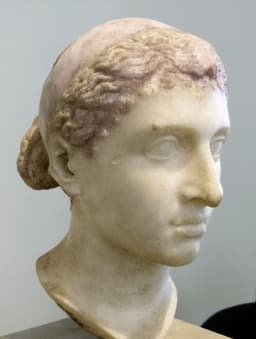
Cleopatra VII
Politician · Ancient
47.2Total
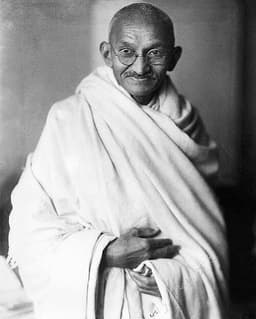
Mahatma Gandhi
Politician · Modern
68.7Total
Basic Information
Born
-69
1869
Died
-30
1948
Era
Ancient
Modern
Nationality
Egypt
India
Occupation
Politician
Politician
Civilization
Middle Eastern
Indian
Score Comparison
Military (10%)
20.0
42.3
Political (20%)
45.0
65.0
Influence (20%)
40.0
80.0
Legacy (20%)
80.0
75.0
Leadership (15%)
40.0
70.0
Strategy (15%)
25.0
55.0
TOTAL
47.2
68.7
Cleopatra VII — Complete Timeline
48 BC
Alliance with Julius CaesarPolitical Action◆ Major
Cleopatra allied with Julius Caesar during the Roman civil war. She had herself smuggled into his palace in Alexandria rolled in a carpet. Caesar supported her claim to the throne, defeating her brother Ptolemy XIII and restoring her as co-ruler of Egypt.
Impact: regional
47 BC
Birth of CaesarionPolitical Action◆ Major
Cleopatra gave birth to Ptolemy XV Caesar (Caesarion), claiming he was Julius Caesar's son. This birth strengthened her political position and provided a potential heir to both Egypt and Rome, though Caesar never officially acknowledged him as his heir.
Impact: regional
41 BC
Alliance with Mark AntonyPolitical Action◆ Major
Cleopatra formed a political and romantic alliance with Mark Antony, a Roman triumvir. She provided him with financial and military support for his campaigns in the East. Their relationship produced three children and solidified her control over Egypt.
Impact: regional
31 BC
Battle of ActiumWar
The combined naval forces of Cleopatra and Mark Antony were decisively defeated by Octavian's fleet under Agrippa at Actium in Greece. Cleopatra fled with her ships, and Antony followed, leading to their eventual downfall and Octavian's rise as Augustus.
Impact: globaltragic
30 BC
Death of CleopatraPolitical Action
After Octavian's forces captured Alexandria, Cleopatra died by suicide, traditionally said to be from the bite of an asp. Her death ended the Ptolemaic dynasty and Egypt became a Roman province, marking the end of Hellenistic Egypt's independence.
Impact: globaltragic
Mahatma Gandhi — Complete Timeline
1917 AD
Champaran SatyagrahaPolitical Action
Gandhi led his first nonviolent protest in India, supporting indigo farmers in Champaran, Bihar, against exploitative British planters. He organized a campaign of civil disobedience and negotiations, resulting in the abolition of the oppressive tinkathia system.
Civil disobedienceFarmers' rightsBritish Raj
Impact: nationalprogressive
1919 AD
Jallianwala Bagh massacre aftermathPolitical Action◆ Major
After British troops killed hundreds of unarmed civilians in Amritsar, Gandhi organized a nationwide hartal (strike) and nonviolent protests. He returned his medals and launched the Rowlatt Satyagraha, marking a shift from cooperation to non-cooperation with British rule.
ProtestBritish RajMassacre
Impact: nationaltragic
1930 AD
Salt MarchPolitical Action
Gandhi led a 240-mile march from Sabarmati to Dandi, Gujarat, to defy the British salt monopoly. Thousands joined him, making salt from seawater. This act of civil disobedience sparked mass protests across India and drew global attention to the independence movement.
Civil disobedienceSalt taxIndependence movement
Impact: globalprogressive
1942 AD
Quit India Movement launchPolitical Action◆ Major
Gandhi launched the Quit India Movement, calling for an end to British rule with the slogan 'Do or Die'. The British arrested him and other leaders, but the movement led to widespread protests and repression, accelerating the end of colonial rule.
IndependenceCivil disobedienceBritish Raj
Impact: nationalprogressive
1948 AD
AssassinationPolitical Action
Gandhi was shot and killed by Nathuram Godse, a Hindu nationalist, during a prayer meeting in New Delhi. His assassination shocked the world and led to a wave of grief and violence, but also reinforced his legacy as a martyr for nonviolence.
AssassinationMartyrdomNonviolence
Impact: globaltragic
Expert Analysis
Cleopatra VII vs Mahatma Gandhi
# The Scepter and the Spinning Wheel: Why Cleopatra Lost an Empire While Gandhi Won One
In the summer of 30 BCE, a woman in her late thirties, dressed in the finest linen of Ptolemaic royalty, pressed an asp to her breast in a sealed chamber of Alexandria’s palace. Across two millennia, in the winter of 1948, an old man in a simple cotton dhoti crumpled to the ground in New Delhi, three bullets from a revolver piercing his chest. Both deaths were suicides of a kind—one by choice, one by assassination—and both ended lives that had shaken the foundations of their worlds. Yet Cleopatra VII died as the last pharaoh of a conquered kingdom, while Mahatma Gandhi died as the father of a newly independent nation. What made the difference? The answer lies not in their ambition, which was equal, but in the nature of the power they sought and the tools they wielded.
Origins
Cleopatra was born into a world of decayed grandeur. The Ptolemaic dynasty, Greek-Macedonian rulers of Egypt since Alexander the Great’s conquest, had long lost its grip. By 69 BCE, Rome was the Mediterranean’s unquestioned superpower, and Egypt was a client kingdom—rich in grain and gold, but politically dependent. Cleopatra was educated in the court of Alexandria, fluent in nine languages, steeped in Hellenistic philosophy and Egyptian priestly traditions. She was, above all, a pragmatist who understood that survival meant playing Roman games.
Gandhi was born in 1869 in Porbandar, a small princely state on India’s western coast, into a devout Hindu family of the Vaishya merchant caste. His India was not a kingdom but a subcontinent under the British Raj, a colonial enterprise that had subdued hundreds of princely states and millions of people through the East India Company and then the Crown. Unlike Cleopatra, who inherited a throne, Gandhi inherited a tradition of religious pluralism and a law degree from London. His early years in South Africa, where he was thrown off a train for being a “colored” man, taught him that injustice was not a foreign policy problem but a daily wound.
Rise to Power
Cleopatra’s ascent was a family bloodbath. Her father had willed the throne to her and her younger brother Ptolemy XIII, but court eunuchs and Roman agents turned the siblings into rivals. By 48 BCE, Cleopatra was exiled, her brother’s faction controlling Alexandria. She gambled on Julius Caesar, the Roman dictator then entangled in his own civil war. According to the historian Plutarch, she had herself rolled into a carpet—or, more likely, a linen sack—and smuggled past guards into Caesar’s quarters. The gamble paid off: Caesar restored her to the throne, and she gave birth to Caesarion, a son she claimed was Caesar’s. Her power rested on a Roman man’s sword and a Roman man’s seed.
Gandhi’s rise was the opposite: a slow, deliberate cultivation of moral authority. After two decades in South Africa organizing the Indian community against racial discrimination, he returned to India in 1915. He did not seek office or military command. Instead, he traveled third-class across the country, listening to peasants, learning their grievances. The turning point came in 1917 at Champaran, where he led indigo farmers in a protest against British plantation owners. He used no weapons, no bribes, no palace coups—only the power of collective refusal. His weapon was Satyagraha, “truth-force,” a philosophy that turned weakness into strength by making the opponent’s brutality visible.
Leadership & Governance
Cleopatra ruled as an absolute monarch, but her monarchy was hollow. She commanded a bureaucracy of Greek officials and Egyptian priests, but her real power depended on Roman patronage. She financed Caesar’s wars, then Mark Antony’s, always hoping to tip the Roman balance in her favor. She was a brilliant administrator—she stabilized Egypt’s grain supply, reformed its currency, and maintained its temples—but her governance was a tightrope walk over a Roman abyss. When Antony lost the Battle of Actium in 31 BCE to Octavian’s fleet, her kingdom was doomed. She had bet everything on a man who was not a king but a Roman general, and Rome did not forgive.
Gandhi governed not a state but a movement. He built the Indian National Congress into a mass organization with millions of members, from lawyers to landless laborers. He did not issue decrees; he set examples. The Salt March of 1930 was a masterpiece of political theater: a 240-mile walk to the sea to make salt illegally, defying the British monopoly. Thousands joined, and the British beat them with lathis—iron-tipped bamboo sticks—on camera. Gandhi’s governance was moral suasion, not coercion. He knew that an empire could not shoot its way out of a moral crisis. His leadership was decentralized, relying on local volunteers, village councils, and the discipline of nonviolence.
Triumph & Tragedy
Cleopatra’s greatest triumph was also her greatest tragedy. At the Donations of Alexandria in 34 BCE, she and Antony crowned themselves and their children as rulers of the eastern Roman territories. It was a spectacular display of wealth and ambition—but it was a provocation Octavian could not ignore. Her tragedy was that she could not escape the logic of empire: Rome would tolerate no rival. When Octavian’s forces landed in Egypt in 30 BCE, she tried to negotiate, offering her throne in exchange for her children’s lives. Octavian refused. She died by her own hand, the last pharaoh of a 3,000-year-old civilization.
Gandhi’s greatest triumph—Indian independence in August 1947—was immediately followed by his greatest tragedy: the Partition of India into Hindu-majority India and Muslim-majority Pakistan. Millions were displaced, hundreds of thousands killed in communal violence. Gandhi, who had always insisted on Hindu-Muslim unity, was heartbroken. He fasted until rioters in Calcutta laid down their arms. But he could not stop the partition, and on January 30, 1948, a Hindu nationalist who blamed him for “appeasing” Muslims shot him dead. His triumph was a nation; his tragedy was that the nation was born bleeding.
Character & Destiny
Cleopatra was a strategist of the short term. She could charm Caesar and Antony, but she could not imagine a world beyond Roman domination. Her personality—brilliant, seductive, ruthless—was perfectly suited to court intrigue but blind to the fact that empires do not make treaties; they absorb. She thought she could use Rome; Rome used her. Her destiny was to be the last act of an ancient drama, a footnote in Roman history.
Gandhi was a strategist of the long term. He understood that British power depended not just on guns but on Indian consent. By withdrawing consent, he made the empire ungovernable. His personality—ascetic, stubborn, deeply spiritual—allowed him to embody the very values he preached. He was not a general or a king but a prophet in sandals. His destiny was to prove that moral force could defeat military force, that a man with a spinning wheel could outlast an empire with a navy.
Legacy
Cleopatra’s legacy is a seductive myth. She is remembered as a femme fatale, a queen who loved too well, a woman who died for passion. The truth is more political: she was the last gasp of Hellenistic independence against Roman hegemony. Her name sells movies and perfumes, but her real achievement—keeping Egypt independent for two decades against the most powerful empire in history—is often forgotten.
Gandhi’s legacy is a living movement. Martin Luther King Jr. borrowed his nonviolence for the American civil rights struggle. Nelson Mandela walked free from prison with Gandhi’s teachings in his heart. His face is on Indian currency, his statues in every city, but his true legacy is the idea that power does not have to come from a gun. He proved that the unarmed can win.
Conclusion
Cleopatra and Gandhi both faced empires that could crush them with a single legion or a single regiment. Cleopatra tried to outmaneuver the empire from within, using its own weapons—alliances, seduction, gold. Gandhi tried to outlast the empire from without, using the people’s own strength—patience, sacrifice, truth. One died a queen, the other a saint. But the deeper difference is this: Cleopatra fought for a throne, while Gandhi fought for a principle. Thrones can be seized; principles must be lived. And that is why, in the end, the man with the spinning wheel outlasted the queen with the asp.
Rankings
🥇
Mahatma GandhiLeader
Mil: 42.3Pol: 65.0Inf: 80.0
68.7
🥈
Cleopatra VII
Mil: 20.0Pol: 45.0Inf: 40.0
47.2
+21.5 behind
How This Comparison Works
Algorithm
Each figure is scored on 6 dimensions (0—100 scale) based on structured historical data: Military (10%), Political (20%), Influence (20%), Legacy (20%), Leadership (15%), Strategy (15%). The weighted total produces the final ranking.
Data Sources
Scores are computed from structured sub-indicators in the database. Scale factors adjust for era (Ancient ×0.85, Modern ×1.0) and civilization size (Eastern ×1.05, Other ×0.80) to account for differences in population and military scale.
Maximum 3 Figures
Comparisons are limited to 2—3 figures to ensure readability and statistical meaningfulness.
Error Margins
±5 points per dimension — Sub-scores are derived from historical records with inherent uncertainty. Two figures within 5 points on a dimension should be considered roughly equivalent in that area.
Total Score Accuracy
±3 points overall — The weighted combination of 6 dimensions produces a total score with approximately ±3 points of uncertainty. Differences of less than 3 points are not statistically significant— the figures are effectively tied.
Known Limitations
- Historical records are incomplete and uneven across civilizations
- Figures from oral-tradition societies may be underrepresented
- Occupation labels can misclassify multi-role figures
- Scores measure capability and impact, not moral character
- Quantitative scoring is a comparison tool, not absolute truth
Capability Radar
Military (10%) — Battles & Warfare
Battles
20
45
Win Rate
15
46
Expansion
10
51
Political (20%) — Governance & Reform
Reform
40
85
Diplomacy
85
80
Economy
55
40
Influence (20%) — Cultural & Global Reach
Cultural
80
85
Global
85
90
Legacy (20%) — Historical Impact
Historical
85
90
Longevity
90
85
Leadership (15%) — Power & Stability
Tenure
60
60
Stability
35
55
Strategy (15%) — Tactics & Innovation
Strategy
30
52
Tactics
25
56
Reform
10
55
Similar Comparisons
Comments & Discussion
Pharaoh's Folly6/16/2026
Cleopatra's fatal flaw wasn't loving Mark Antony—it was trusting Roman power altogether. She inherited a functional navy, Egypt's unrivaled grain wealth, and a court skilled in diplomacy. Yet she bet everything on military alliances with fading Roman factions. Gandhi understood that true leverage comes from the people, not generals. When Rome demanded submission, Cleopatra had legions; when Britain demanded obedience, Gandhi had millions. The difference isn't ambition—it's whether you build armi
星盘与纺车6/16/2026
说Cleopatra输在工具选择,太简单了。她活在公元前,帝国的游戏规则是军团决定一切,nonviolent resistance在罗马人眼里不过是软弱。Gandhi的胜利靠的不是道德优越,而是20世纪全球媒体环境和一个已经疲惫的殖民帝国。换一下时代,Cleopatra可能成为自由斗士,Gandhi在罗马广场上静坐,三天就会被钉十字架。历史比的是时机,不是工具。
Nonviolence Skeptic6/16/2026
Let's be real: Gandhi's "spinning wheel" worked only because Britain was bankrupt after WWII and already losing its colonial nerve. Cleopatra faced Augustus Caesar at the peak of Roman imperial consolidation—no amount of civil disobedience would've moved those legions. Gandhi's nonviolence was brilliant, but it was the geopolitical context, not moral superiority, that made it effective. Cleopatra's real mistake was not failing to adopt satyagraha; it was backing Antony instead of Octavian.
残卷解读者6/16/2026
别把Gandhi神化了。Cleopatra的帝国梦碎了,因为她面对的是罗马化世界的铁律——要么成为盟友,要么毁灭。而Gandhi的印度独立背后,有二战后的经济崩溃、英国红利耗尽、以及不可忽视的穆斯林分离运动。更讽刺的是,Gandhi本人最终也死在印度教徒的枪下,说明他的非暴力哲学连自己的国家都没能完全征服。Cleopatra至少死时仍然是埃及的象征,Gandhi死时印度已经分裂了。
Tactical Realist6/16/2026
The real distinction: Cleopatra fought for imperial restoration using elite alliances, while Gandhi fought for national liberation using mass mobilization. Her power pyramid was narrow—courtiers, Roman patrons, mercenary armies. His power pyramid was broad—millions of Indians with empty hands and full hearts. When the pyramid's tip is cut, an empire falls. When the base moves, a nation rises. That's not morality; that's mathematics. Cleopatra needed better strategy; Gandhi needed better odds. On