Loading...
Cleopatra VII vs George Washington
George Washington leads by 29.6 pts · 2 figures compared
…
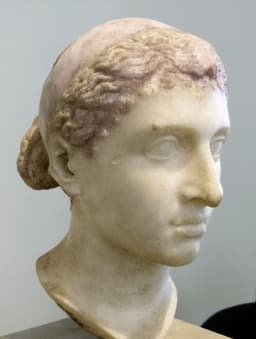
Cleopatra VII
Politician · Ancient
47.2Total
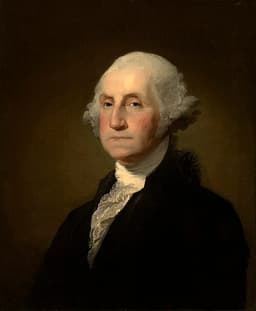
George Washington
Politician · Modern
76.8Total
Basic Information
Born
-69
1732
Died
-30
1799
Era
Ancient
Modern
Nationality
Egypt
United States
Occupation
Politician
Politician
Civilization
Middle Eastern
Western
Score Comparison
Military (10%)
20.0
75.0
Political (20%)
45.0
82.0
Influence (20%)
40.0
75.0
Legacy (20%)
80.0
80.0
Leadership (15%)
40.0
85.0
Strategy (15%)
25.0
55.0
TOTAL
47.2
76.8
Cleopatra VII — Complete Timeline
48 BC
Alliance with Julius CaesarPolitical Action◆ Major
Cleopatra allied with Julius Caesar during the Roman civil war. She had herself smuggled into his palace in Alexandria rolled in a carpet. Caesar supported her claim to the throne, defeating her brother Ptolemy XIII and restoring her as co-ruler of Egypt.
Impact: regional
47 BC
Birth of CaesarionPolitical Action◆ Major
Cleopatra gave birth to Ptolemy XV Caesar (Caesarion), claiming he was Julius Caesar's son. This birth strengthened her political position and provided a potential heir to both Egypt and Rome, though Caesar never officially acknowledged him as his heir.
Impact: regional
41 BC
Alliance with Mark AntonyPolitical Action◆ Major
Cleopatra formed a political and romantic alliance with Mark Antony, a Roman triumvir. She provided him with financial and military support for his campaigns in the East. Their relationship produced three children and solidified her control over Egypt.
Impact: regional
31 BC
Battle of ActiumWar
The combined naval forces of Cleopatra and Mark Antony were decisively defeated by Octavian's fleet under Agrippa at Actium in Greece. Cleopatra fled with her ships, and Antony followed, leading to their eventual downfall and Octavian's rise as Augustus.
Impact: globaltragic
30 BC
Death of CleopatraPolitical Action
After Octavian's forces captured Alexandria, Cleopatra died by suicide, traditionally said to be from the bite of an asp. Her death ended the Ptolemaic dynasty and Egypt became a Roman province, marking the end of Hellenistic Egypt's independence.
Impact: globaltragic
George Washington — Complete Timeline
1775 AD
Appointed Commander-in-Chief of the Continental ArmyOther◆ Major
The Second Continental Congress appointed Washington as commander-in-chief of the Continental Army on June 15, 1775. He accepted the position without pay, taking command of the forces besieging Boston at the start of the American Revolutionary War.
American RevolutionMilitary Leadership
Impact: national
1776 AD
Crossed the Delaware RiverOther◆ Major
On the night of December 25-26, 1776, Washington led 2,400 troops across the ice-choked Delaware River. The surprise attack on Hessian forces at Trenton resulted in a decisive American victory, capturing nearly 1,000 prisoners and reviving Patriot morale after a series of defeats.
American RevolutionBattleTurning Point
Impact: nationalconstructive
1787 AD
Presided over the Constitutional ConventionPolitical Action◆ Major
Washington served as president of the Constitutional Convention in Philadelphia from May to September 1787. His presence lent legitimacy to the proceedings, and he formally signed the final draft of the U.S. Constitution, though he contributed little to the debates.
ConstitutionFounding Father
Impact: national
1789 AD
Inaugurated as First President of the United StatesPolitical Action◆ Major
Washington was unanimously elected by the Electoral College and inaugurated on April 30, 1789, at Federal Hall in New York City. He established numerous executive branch precedents, including the cabinet system, the inaugural address, and the title 'Mr. President'.
PresidencyFounding Father
Impact: national
1793 AD
Issued the Proclamation of NeutralityOther◆ Major
Washington issued the Proclamation of Neutrality on April 22, 1793, declaring the United States neutral in the conflict between France and Great Britain. This decision established the precedent of American isolationism and avoided entanglement in European wars.
Foreign PolicyNeutrality
Impact: national
1796 AD
Delivered the Farewell AddressOther◆ Major
Washington published his Farewell Address on September 19, 1796, announcing his decision not to seek a third term. The address warned against political factionalism, permanent foreign alliances, and the influence of the military in government, shaping American political culture.
PresidencyLegacy
Impact: national
Expert Analysis
George Washington vs Cleopatra VII
# The General and the Queen: What Forged Their Destinies?
On a winter morning in 1776, George Washington stood on the frozen banks of the Delaware River, his ragged army shivering behind him. He was about to cross into history. Half a world away and nearly two millennia earlier, Cleopatra VII slipped through the palace gates of Alexandria, hidden inside a rolled carpet, to meet a man who would decide her fate. Both understood that survival depended on audacity. But why did one become the father of a nation, while the other became a tragic footnote to an empire? The answer lies not in their circumstances alone, but in the very different worlds that shaped them—and the impossible choices those worlds demanded.
Origins
Washington was born into the Virginia gentry in 1732, a world of tobacco plantations, enslaved labor, and British colonial order. His father died when he was eleven, leaving him without a university education but with a fierce drive to climb. He taught himself surveying, read military manuals, and absorbed the codes of honor that governed the planter class. His America was young, raw, and bursting with possibility—a place where a self-made man could still shape his own destiny.
Cleopatra was born into the twilight of a dynasty. Her family, the Ptolemies, had ruled Egypt for three centuries, but by 69 BCE, their kingdom was a client state crumbling under Roman pressure. She was raised in the opulent, murderous court of Alexandria, where siblings poisoned each other and pharaohs married their own sisters to keep power pure. Her education was impeccable—she spoke nine languages, studied philosophy, and understood the brutal calculus of diplomacy. But her Egypt was old, exhausted, and trapped between empires. Where Washington saw a frontier, Cleopatra saw a cage.
Rise to Power
Washington’s path was gradual, built on competence and character. He served as a young officer in the French and Indian War, surviving near-disaster and learning the limits of European tactics in American wilderness. He returned to Virginia, married Martha Custis, and became a wealthy planter. But when Parliament imposed taxes without representation, Washington found his cause. He was not a firebrand—he was a man who arrived at revolution reluctantly, step by step. The Continental Congress chose him to lead the army not because he wanted the job, but because he seemed steady, dignified, and trustworthy.
Cleopatra’s rise was a knife fight from the start. She was eighteen when her father died, leaving her and her ten-year-old brother Ptolemy XIII as joint rulers. Within months, her brother’s advisors drove her into exile. She raised an army in Syria, marched back to Egypt, and found herself deadlocked—until Julius Caesar arrived in Alexandria, chasing his own rival. Cleopatra knew that a woman could not win through force alone. She won through seduction of a different kind: she offered Caesar not just her body, but a strategic alliance that could stabilize Egypt. The carpet story may be legend, but the calculation was real. She gambled everything on one encounter, and won.
Leadership & Governance
Washington governed by restraint. As commander of the Continental Army, he held a force that was perpetually starving, unpaid, and mutinous. He did not inspire through charisma—he inspired through endurance. He stood with his men at Valley Forge, refused a salary, and repeatedly declined offers of dictatorial power. When his officers plotted a coup in 1783, Washington appeared before them, put on reading glasses, and said, “Gentlemen, you will permit me to put on my spectacles, for I have not only grown gray but almost blind in the service of my country.” The coup dissolved in tears. His power came from the fact that he did not want it.
Cleopatra governed through brilliance and desperation. She restored Egypt’s economy, reformed its currency, and stabilized the Nile’s flood-dependent agriculture. She was the first Ptolemy to learn the Egyptian language, and she presented herself as the living incarnation of the goddess Isis. But her kingdom was a fragile vessel floating on Roman tides. She could not build an army that could defeat Rome—she could only charm its leaders. She allied with Caesar, then with Mark Antony, and for a decade she held Egypt together through sheer political acrobatics. But alliances built on seduction are brittle. When Octavian came, there was no Washington to rally behind.
Triumph & Tragedy
Washington’s greatest moment was also his most improbable. On Christmas night 1776, he crossed the icy Delaware and surprised the Hessian garrison at Trenton, capturing nearly a thousand prisoners. It was a small victory, but it saved the Revolution from collapse. His greatest tragedy was the winter at Valley Forge, where thousands of his men died of disease and starvation while Congress could not feed them. He wrote letters begging for supplies, and the indifference of his own government broke something in him. Yet he stayed.
Cleopatra’s triumph was the birth of Caesarion in 47 BCE, a son she claimed was Caesar’s heir. For a brief moment, she imagined a dynasty that could unite Rome and Egypt. Her tragedy came at the Battle of Actium in 31 BCE, where her ships fled the engagement—whether from panic or strategy, no one knows. She returned to Alexandria, tried to negotiate with Octavian, and failed. When his soldiers entered the city, she chose death. The asp, if it existed, was a final act of control in a life where control had always been an illusion.
Character & Destiny
Washington was a man of iron self-discipline. He suppressed his temper, cultivated his dignity, and thought of the future. He wrote endlessly—letters, orders, diaries—obsessed with how he would be remembered. He knew that his choices would set precedents for centuries. That awareness made him cautious, even cold. He had no children of his own, and his marriage was more partnership than passion. He gave his life to an idea.
Cleopatra was a woman of fire and calculation. She loved Antony, but she also used him. She was brilliant, ruthless, and deeply romantic in a way that Washington would have found reckless. She lived in the present because the future was closing in. Her tragedy is that she was born too late: the age of independent kingdoms was ending, and the age of empires was beginning. She could not win because the game had already changed.
Legacy
Washington became the American Cincinnatus—the farmer who left his plow to save his country, then returned to his plow. His image is everywhere: on currency, on monuments, in the capital city that bears his name. But his true legacy is the peaceful transfer of power. When he resigned his commission in 1783, King George III said that if Washington truly gave up power, “he will be the greatest man in the world.” He did, and he was.
Cleopatra became a legend, but a distorted one. Shakespeare made her a lover, not a ruler. Hollywood made her a temptress. Her true legacy—the last pharaoh who fought to keep Egypt free—is buried under centuries of Roman propaganda and romantic fantasy. She lost, and history is written by the winners. But in the Egyptian desert, her name still means something. The temples she built still stand. And every time a woman uses intelligence and charm to survive a world built by men, Cleopatra is there.
Conclusion
Washington and Cleopatra never met, never could have met. One built a republic that would outlast him; the other died trying to preserve a kingdom that had already outlived its time. But both understood the same truth: that power is not given—it is seized, held, and then released. Washington released it voluntarily, and became immortal. Cleopatra held it until her last breath, and became a ghost. Perhaps the difference is not in their skill or courage, but in the eras that shaped them. Washington’s America was a sunrise. Cleopatra’s Egypt was a sunset. And history, as always, prefers the dawn.
Rankings
🥇
George WashingtonLeader
Mil: 75.0Pol: 82.0Inf: 75.0
76.8
🥈
Cleopatra VII
Mil: 20.0Pol: 45.0Inf: 40.0
47.2
+29.6 behind
How This Comparison Works
Algorithm
Each figure is scored on 6 dimensions (0—100 scale) based on structured historical data: Military (10%), Political (20%), Influence (20%), Legacy (20%), Leadership (15%), Strategy (15%). The weighted total produces the final ranking.
Data Sources
Scores are computed from structured sub-indicators in the database. Scale factors adjust for era (Ancient ×0.85, Modern ×1.0) and civilization size (Eastern ×1.05, Other ×0.80) to account for differences in population and military scale.
Maximum 3 Figures
Comparisons are limited to 2—3 figures to ensure readability and statistical meaningfulness.
Error Margins
±5 points per dimension — Sub-scores are derived from historical records with inherent uncertainty. Two figures within 5 points on a dimension should be considered roughly equivalent in that area.
Total Score Accuracy
±3 points overall — The weighted combination of 6 dimensions produces a total score with approximately ±3 points of uncertainty. Differences of less than 3 points are not statistically significant— the figures are effectively tied.
Known Limitations
- Historical records are incomplete and uneven across civilizations
- Figures from oral-tradition societies may be underrepresented
- Occupation labels can misclassify multi-role figures
- Scores measure capability and impact, not moral character
- Quantitative scoring is a comparison tool, not absolute truth
Capability Radar
Military (10%) — Battles & Warfare
Battles
20
75
Win Rate
15
70
Expansion
10
60
Political (20%) — Governance & Reform
Reform
40
90
Diplomacy
85
85
Economy
55
65
Influence (20%) — Cultural & Global Reach
Cultural
80
85
Global
85
85
Legacy (20%) — Historical Impact
Historical
85
95
Longevity
90
90
Leadership (15%) — Power & Stability
Tenure
60
70
Stability
35
85
Strategy (15%) — Tactics & Innovation
Strategy
30
80
Tactics
25
65
Reform
10
85
Similar Comparisons
Comments & Discussion
LordValleyForge6/16/2026
Calling this a fair comparison is an insult to Washington. He led a starving, shoeless army to victory against the world's superpower, then voluntarily gave up power—twice. Cleopatra was a brilliant diplomat, sure, but she ultimately failed. Her navy surrendered at Actium, her lover fled, and she chose snakebite over facing Rome. Washington built a nation; Cleopatra lost one. That's the difference between a founder and a footnote.
算法反讽侠6/16/2026
这个对比完全被“伟人滤镜”绑架了。你们吹华盛顿跨河偷袭是勇气,可那年圣诞夜他带的2400人里有多少是契约奴?而克里奥帕特拉面对的是罗马帝国全盛期的军力——她至少用外交拖了二十年。说她是“悲剧注脚”?你大可以去问图拉真、哈德良,哪个罗马皇帝敢说自己没欠埃及那份小麦?数据说话:克里奥帕特拉治下的埃及GDP增速远高于华盛顿的弗吉尼亚。
TogasAndTriumphs6/16/2026
As a classics scholar, I have to defend Cleopatra here. Washington's Delaware crossing was a tactical victory in a colonial rebellion. Cleopatra navigated the collapse of the Hellenistic world while ruling a multicultural empire. She spoke nine languages—Washington never mastered French. She stabilized Egypt's economy during a Mediterranean-wide famine. And let's not forget: she died fighting for her kingdom's independence. Washington died in bed, surrounded by his slaves. Context matters, peopl
历史坐标修正师6/16/2026
你们搞错了比较的坐标轴。华盛顿活在“国家可建国”的时代——启蒙运动、印刷术、邮政系统让殖民地能凝聚共识。克里奥帕特拉活在“帝国即一切”的时代——罗马的军团和行政机器碾压一切地方政权。她不是输给了个人能力,是输给了历史阶段。打个比方:你让华盛顿穿越到公元前30年,他连跟屋大维吃顿饭的资格都没有。同样的,克里奥帕特拉到了1776年,她能把大陆会议运营得像托勒密宫廷一样高效。错位的比较毫无意义。