Loading...
This comparison has not been analyzed yet.
One-time AI generation (~1 minute). Scores and timeline are already available below.
Ciriaco De Mita vs Serge Vohor
Ciriaco De Mita leads by 14.0 pts · 2 figures compared
…
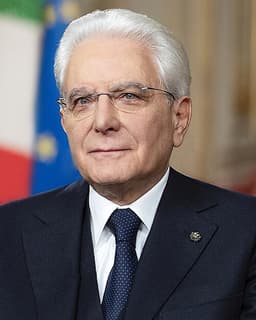
Ciriaco De Mita
Politician · Modern
55.7Total

Serge Vohor
Politician · Modern
41.7Total
Basic Information
Born
1928
1955
Died
—
—
Era
Modern
Modern
Nationality
Italy
Vanuatu
Occupation
Politician
Politician
Civilization
Western
Other
Score Comparison
Military (10%)
45.4
50.0
Political (20%)
68.0
30.8
Influence (20%)
54.1
47.1
Legacy (20%)
45.0
35.8
Leadership (15%)
68.0
48.4
Strategy (15%)
60.0
40.8
TOTAL
55.7
41.7
Ciriaco De Mita — Complete Timeline
1982 AD
Secretary of the Christian DemocracyPolitical Action◆ Major
De Mita was elected Secretary of the Christian Democracy (DC) party in 1982. He led the party through a period of internal reform, aiming to modernize its structure and reduce factionalism, but faced resistance from traditionalist wings.
Italian PoliticsChristian DemocracyParty Reform
Impact: nationalconstructive
1988 AD
Prime Minister of ItalyPolitical Action◆ Major
De Mita served as Prime Minister from April 1988 to July 1989. His government focused on economic reforms, including the reduction of public debt and the liberalization of markets, but was criticized for its slow pace and internal conflicts.
Italian PoliticsGovernmentEconomic Reform
Impact: national
1989 AD
Fall of the De Mita governmentPolitical Action◆ Major
De Mita's government fell in July 1989 after losing the support of the Socialist Party, led by Bettino Craxi. The collapse was due to personal and political rivalries, highlighting the instability of coalition governments in Italy.
Italian PoliticsCoalition CrisisGovernment Fall
Impact: nationaldestructive
1999 AD
European ParliamentPolitical Action
De Mita served as a Member of the European Parliament from 1999 to 2004. He focused on European integration and agricultural policies, representing Italy in the European People's Party group.
European PoliticsEuropean ParliamentIntegration
Impact: regional
Serge Vohor — Complete Timeline
1995 AD
First Term as Prime MinisterPolitical Action◆ Major
Serge Vohor became Prime Minister of Vanuatu for the first time, leading a coalition government. His tenure was marked by political instability and frequent changes in alliances.
Prime MinisterCoalition Government
Impact: national
2004 AD
Attempted to Establish Diplomatic Relations with TaiwanPolitical Action◆ Major
Vohor, as Prime Minister, unilaterally signed an agreement to establish diplomatic relations with Taiwan, breaking Vanuatu's One-China policy. This move was reversed after domestic and international pressure, leading to a vote of no confidence.
Foreign PolicyTaiwanPolitical Crisis
Impact: regionaldestructive
2017 AD
Convicted of CorruptionPolitical Action◆ Major
Vohor was convicted on charges of corruption related to the misuse of public funds during his time in office. He was sentenced to prison, marking a significant fall from power.
CorruptionConviction
Impact: nationaldestructive
This comparison has not been analyzed yet.
One-time AI generation (~1 minute). Scores and timeline are already available below.
Rankings
🥇
Ciriaco De MitaLeader
Mil: 45.4Pol: 68.0Inf: 54.1
55.7
🥈
Serge Vohor
Mil: 50.0Pol: 30.8Inf: 47.1
41.7
+14.0 behind
How This Comparison Works
Algorithm
Each figure is scored on 6 dimensions (0—100 scale) based on structured historical data: Military (10%), Political (20%), Influence (20%), Legacy (20%), Leadership (15%), Strategy (15%). The weighted total produces the final ranking.
Data Sources
Scores are computed from structured sub-indicators in the database. Scale factors adjust for era (Ancient ×0.85, Modern ×1.0) and civilization size (Eastern ×1.05, Other ×0.80) to account for differences in population and military scale.
Maximum 3 Figures
Comparisons are limited to 2—3 figures to ensure readability and statistical meaningfulness.
Error Margins
±5 points per dimension — Sub-scores are derived from historical records with inherent uncertainty. Two figures within 5 points on a dimension should be considered roughly equivalent in that area.
Total Score Accuracy
±3 points overall — The weighted combination of 6 dimensions produces a total score with approximately ±3 points of uncertainty. Differences of less than 3 points are not statistically significant— the figures are effectively tied.
Known Limitations
- Historical records are incomplete and uneven across civilizations
- Figures from oral-tradition societies may be underrepresented
- Occupation labels can misclassify multi-role figures
- Scores measure capability and impact, not moral character
- Quantitative scoring is a comparison tool, not absolute truth
Capability Radar
Military (10%) — Battles & Warfare
Battles
46
21
Win Rate
50
26
Expansion
52
30
Political (20%) — Governance & Reform
Reform
55
20
Diplomacy
60
25
Economy
50
15
Influence (20%) — Cultural & Global Reach
Cultural
30
10
Global
35
10
Legacy (20%) — Historical Impact
Historical
40
15
Longevity
30
10
Leadership (15%) — Power & Stability
Tenure
60
30
Stability
45
10
Strategy (15%) — Tactics & Innovation
Strategy
55
29
Tactics
57
32
Reform
61
34
Similar Comparisons
Comments & Discussion
No comments yet. Be the first to share your thoughts!