Loading...
Ciriaco De Mita vs Oginga Odinga
Ciriaco De Mita leads by 5.1 pts · 2 figures compared
…
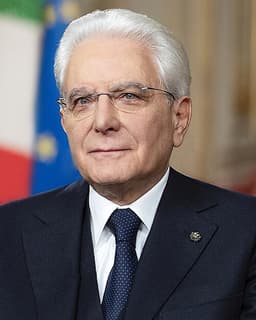
Ciriaco De Mita
Politician · Modern
55.7Total

Oginga Odinga
Politician · Modern
50.6Total
Basic Information
Born
1928
1911
Died
—
1994
Era
Modern
Modern
Nationality
Italy
Kenya
Occupation
Politician
Politician
Civilization
Western
Other
Score Comparison
Military (10%)
45.4
43.7
Political (20%)
68.0
54.7
Influence (20%)
54.1
56.4
Legacy (20%)
45.0
46.7
Leadership (15%)
68.0
51.9
Strategy (15%)
60.0
44.6
TOTAL
55.7
50.6
Ciriaco De Mita — Complete Timeline
1982 AD
Secretary of the Christian DemocracyPolitical Action◆ Major
De Mita was elected Secretary of the Christian Democracy (DC) party in 1982. He led the party through a period of internal reform, aiming to modernize its structure and reduce factionalism, but faced resistance from traditionalist wings.
Italian PoliticsChristian DemocracyParty Reform
Impact: nationalconstructive
1988 AD
Prime Minister of ItalyPolitical Action◆ Major
De Mita served as Prime Minister from April 1988 to July 1989. His government focused on economic reforms, including the reduction of public debt and the liberalization of markets, but was criticized for its slow pace and internal conflicts.
Italian PoliticsGovernmentEconomic Reform
Impact: national
1989 AD
Fall of the De Mita governmentPolitical Action◆ Major
De Mita's government fell in July 1989 after losing the support of the Socialist Party, led by Bettino Craxi. The collapse was due to personal and political rivalries, highlighting the instability of coalition governments in Italy.
Italian PoliticsCoalition CrisisGovernment Fall
Impact: nationaldestructive
1999 AD
European ParliamentPolitical Action
De Mita served as a Member of the European Parliament from 1999 to 2004. He focused on European integration and agricultural policies, representing Italy in the European People's Party group.
European PoliticsEuropean ParliamentIntegration
Impact: regional
Oginga Odinga — Complete Timeline
1963 AD
Appointment as First Vice President of KenyaPolitical Action◆ Major
Oginga Odinga was appointed as the first Vice President of independent Kenya under President Jomo Kenyatta. He was a key figure in the independence movement and represented the Luo community. His appointment was seen as a gesture of national unity, but tensions soon emerged over policy direction.
Vice PresidencyIndependenceNational Unity
Impact: nationalconstructive
1966 AD
Resignation as Vice President and Formation of KPUPolitical Action◆ Major
Oginga Odinga resigned as Vice President, citing ideological differences with Kenyatta's capitalist policies. He formed the Kenya People's Union (KPU) as a socialist opposition party. The KPU attracted support from landless peasants and radicals, challenging KANU's dominance.
ResignationOpposition PartySocialism
Impact: national
1969 AD
Detention Without TrialPolitical Action◆ Major
Oginga Odinga was arrested and detained without trial by the Kenyatta government after the KPU was banned. He was held for several years, accused of plotting to overthrow the government. His detention marked a period of political repression in Kenya and silenced opposition voices.
DetentionPolitical RepressionKPU
Impact: nationaldestructive
1991 AD
Return to Politics and Role in Multi-Party MovementPolitical Action◆ Major
Oginga Odinga returned to active politics as a leader of the Forum for the Restoration of Democracy (FORD), a coalition pushing for multi-party democracy. He ran for president in 1992 but lost to Daniel arap Moi. His efforts contributed to the end of one-party rule in Kenya in 1991.
Multi-Party DemocracyFORDPolitical Reform
Impact: nationalconstructive
Expert Analysis
Origins
Ciriaco De Mita was born on February 2, 1928, in Nusco, a small town in Campania, Italy. He came from a modest family; his father was a shoemaker. De Mita studied law at the University of Naples, graduating in 1951. He became involved in politics through the Christian Democracy (DC) party, joining its youth wing. His early career was marked by academic pursuits and local administrative roles, serving as a municipal councilor in his hometown.
Oginga Odinga was born in October 1911 in Bondo, Nyanza Province, Kenya (then British East Africa). He was the son of a prominent Luo chief. Odinga attended Maseno School and later trained as a teacher at Makerere University College in Uganda. He worked as a teacher and headmaster before entering politics. His early involvement in the Luo Thrift and Trading Corporation and the Kenya African Union (KAU) set the stage for his nationalist activism.
Rise to Power
De Mita's rise within the DC was gradual. He was first elected to the Chamber of Deputies in 1963. He held various ministerial positions, including Minister of Industry and Commerce (1973-1974) and Minister of Foreign Trade (1974-1976). His political acumen led to his election as Secretary of the Christian Democracy in 1982, a position he held until 1989. As party secretary, he pursued internal reforms to modernize the DC, reducing the influence of factions. He became Prime Minister of Italy on April 13, 1988, leading a coalition government.
Odinga's rise was tied to Kenya's independence struggle. He was a close ally of Jomo Kenyatta and was appointed the first Vice President of independent Kenya in December 1964. He also served as Minister for Home Affairs. His political influence was rooted in his Luo ethnic base and his role in the Kenya African National Union (KANU). However, his relationship with Kenyatta soured due to ideological differences over land distribution and economic policies.
Leadership & Governance
De Mita's leadership style was pragmatic and reformist. As Prime Minister, his government focused on economic austerity to reduce public debt and inflation. He pursued privatization and deregulation, aligning with broader European trends. However, his coalition government was fragile, dependent on the Socialist Party led by Bettino Craxi. De Mita's governance score of 68.0 reflects his ability to navigate complex political alliances but also his limited duration in office.
Odinga's leadership was marked by a shift from government to opposition. As Vice President, he advocated for socialist policies and land redistribution. After resigning in 1966, he formed the Kenya People's Union (KPU), advocating for a more equitable distribution of resources. His political score of 54.7 indicates his influence as a symbol of dissent, but his governance experience was cut short by detention.
Triumph & Tragedy
De Mita's greatest success was his role in modernizing the DC party, increasing its electoral appeal. His government passed budget reforms that reduced Italy's budget deficit. However, his tenure was brief; his government fell after just 15 months due to a loss of parliamentary support. This political failure scored a strategy of 60.0, as he was unable to maintain coalition cohesion.
Odinga's triumph was his role in Kenya's independence and his vocal opposition to one-party rule. He was a key figure in the multi-party movement that led to the restoration of democracy in 1991. His tragedy was his detention without trial from 1969 to 1971, followed by years of political marginalization. His influence score of 56.4 reflects his enduring impact on Kenyan politics despite these setbacks.
Character & Destiny
De Mita was known as a shrewd political operator, often described as an intellectual within the DC. He was cautious and methodical, which helped him rise through the ranks but also made him vulnerable to more aggressive rivals like Craxi. His character led to a legacy of 45.0, as his reforms were overshadowed by the subsequent Tangentopoli corruption scandals that destroyed the DC.
Odinga was a principled and outspoken leader, unafraid to challenge authority. His socialist convictions led him to break with Kenyatta, a decision that cost him power but cemented his reputation as a defender of the poor. His leadership score of 51.9 reflects his ability to inspire loyalty, though his strategic score of 44.6 indicates that his confrontational approach sometimes limited his effectiveness.
Legacy
De Mita's legacy is largely confined to Italy's political history. He is remembered as a transitional figure in the DC's decline. His economic reforms had limited long-term impact, as Italy's debt continued to grow. His influence score of 54.1 and legacy score of 45.0 reflect his modest lasting impact.
Odinga's legacy is more significant in Kenya. He is celebrated as a founding father of the nation and a champion of democracy. His son, Raila Odinga, became a prominent opposition leader, continuing the family's political dynasty. Odinga's influence score of 56.4 and legacy score of 46.7 highlight his enduring symbolic importance.
Conclusion
While Ciriaco De Mita achieved a higher total score (55.7 vs 50.6), Oginga Odinga had a greater impact on his country's political development. De Mita's reforms were short-lived and his party collapsed soon after his tenure. Odinga's advocacy for multi-party democracy and his role in Kenya's independence movement shaped the nation's trajectory. De Mita's political score of 68.0 exceeds Odinga's 54.7, but Odinga's influence (56.4) and legacy (46.7) are more enduring. In terms of historical significance, Odinga's impact on Kenyan democracy outweighs De Mita's contributions to Italian politics.
Rankings
🥇
Ciriaco De MitaLeader
Mil: 45.4Pol: 68.0Inf: 54.1
55.7
🥈
Oginga Odinga
Mil: 43.7Pol: 54.7Inf: 56.4
50.6
+5.1 behind
How This Comparison Works
Algorithm
Each figure is scored on 6 dimensions (0—100 scale) based on structured historical data: Military (10%), Political (20%), Influence (20%), Legacy (20%), Leadership (15%), Strategy (15%). The weighted total produces the final ranking.
Data Sources
Scores are computed from structured sub-indicators in the database. Scale factors adjust for era (Ancient ×0.85, Modern ×1.0) and civilization size (Eastern ×1.05, Other ×0.80) to account for differences in population and military scale.
Maximum 3 Figures
Comparisons are limited to 2—3 figures to ensure readability and statistical meaningfulness.
Error Margins
±5 points per dimension — Sub-scores are derived from historical records with inherent uncertainty. Two figures within 5 points on a dimension should be considered roughly equivalent in that area.
Total Score Accuracy
±3 points overall — The weighted combination of 6 dimensions produces a total score with approximately ±3 points of uncertainty. Differences of less than 3 points are not statistically significant— the figures are effectively tied.
Known Limitations
- Historical records are incomplete and uneven across civilizations
- Figures from oral-tradition societies may be underrepresented
- Occupation labels can misclassify multi-role figures
- Scores measure capability and impact, not moral character
- Quantitative scoring is a comparison tool, not absolute truth
Capability Radar
Military (10%) — Battles & Warfare
Battles
46
20
Win Rate
50
26
Expansion
52
27
Political (20%) — Governance & Reform
Reform
55
55
Diplomacy
60
50
Economy
50
20
Influence (20%) — Cultural & Global Reach
Cultural
30
40
Global
35
30
Legacy (20%) — Historical Impact
Historical
40
45
Longevity
30
35
Leadership (15%) — Power & Stability
Tenure
60
30
Stability
45
15
Strategy (15%) — Tactics & Innovation
Strategy
55
31
Tactics
57
32
Reform
61
36
Similar Comparisons
Comments & Discussion
No comments yet. Be the first to share your thoughts!