Loading...
Chulalongkorn vs Kalakaua
Chulalongkorn leads by 11.9 pts · 2 figures compared
…
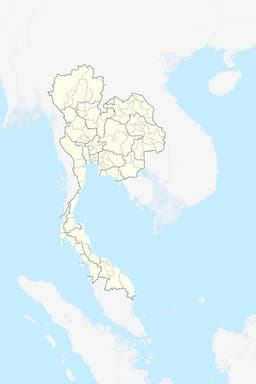
Chulalongkorn
Emperor · Modern
63.7Total
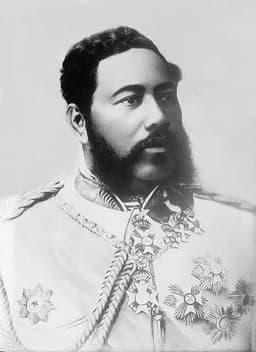
Kalakaua
Emperor · Modern
51.8Total
Basic Information
Born
1853
1836
Died
1910
1891
Era
Modern
Modern
Nationality
Thailand
Hawaii
Occupation
Emperor
Emperor
Civilization
Eastern
Other
Score Comparison
Military (10%)
21.2
13.3
Political (20%)
78.0
72.0
Influence (20%)
72.0
61.0
Legacy (20%)
55.0
49.2
Leadership (15%)
80.7
53.2
Strategy (15%)
60.0
41.6
TOTAL
63.7
51.8
Chulalongkorn — Complete Timeline
1892 AD
Established modern administrative system (Thesaphiban)Reform◆ Major
Chulalongkorn reorganized Siam's provincial administration into a centralized system called Thesaphiban, replacing traditional semi-autonomous lords with appointed governors. This strengthened central control and modernized governance.
Administrative ReformCentralizationModernization
Impact: nationalconstructive
Created the Ministry of EducationReform◆ Major
Chulalongkorn established the Ministry of Education to oversee a national school system, replacing traditional temple-based education. This laid the foundation for modern secular education in Siam.
Education ReformModernizationState Building
Impact: nationalprogressive
1893 AD
Negotiated treaties to preserve Siamese independencePolitical Action◆ Major
Following the Franco-Siamese crisis, Chulalongkorn ceded Laos to France to avoid war. He later negotiated treaties with Britain and France that preserved Siam's independence by ceding peripheral territories.
DiplomacyTerritorial LossIndependence
Impact: regional
Introduced the first railway in SiamInvention
Chulalongkorn inaugurated the first railway line in Siam, connecting Bangkok to Ayutthaya. This began the expansion of a national railway network that facilitated trade and administrative control.
InfrastructureRailwayModernization
Impact: nationalconstructive
1905 AD
Abolished slavery in SiamReform◆ Major
King Chulalongkorn issued a decree abolishing slavery in Siam, freeing all slaves gradually over time. This reform ended centuries of bondage and aligned Siam with modern international norms.
Slavery AbolitionSocial ReformModernization
Impact: nationalprogressive
Kalakaua — Complete Timeline
1874 AD
Elected King of HawaiiPolitical Action◆ Major
David Kalākaua was elected king by the Hawaiian legislature after the death of King Lunalilo. His election sparked a riot by supporters of Queen Emma, which was suppressed by American and British troops.
ElectionMonarchy
Impact: national
1875 AD
Signed the Reciprocity Treaty of 1875Political Action◆ Major
Kalākaua signed a reciprocity treaty with the United States that eliminated tariffs on Hawaiian sugar and other products. In exchange, the US gained exclusive rights to use Pearl Harbor as a naval base, increasing American influence.
TradePearl Harbor
Impact: national
1881 AD
Circumnavigated the GlobeOther◆ Major
Kalākaua became the first monarch to circumnavigate the globe, traveling to the United States, Europe, and Asia. He sought to strengthen diplomatic ties, promote Hawaiian culture, and recruit immigrants to work on sugar plantations.
DiplomacyTravel
Impact: globalconstructive
1882 AD
Built ʻIolani PalaceCultural◆ Major
Kalākaua completed the construction of ʻIolani Palace in Honolulu, the only royal palace in the United States. The palace was equipped with modern amenities like electricity and telephones, symbolizing Hawaiian modernization.
ArchitectureRoyal palace
Impact: nationalconstructive
1887 AD
Forced to Sign the Bayonet ConstitutionPolitical Action◆ Major
Kalākaua was forced by a group of American and European businessmen, backed by the Honolulu Rifles militia, to sign a new constitution. The Bayonet Constitution stripped the monarchy of power, gave voting rights only to wealthy landowners, and favored foreign interests.
ConstitutionCoup
Impact: nationaldestructive
1891 AD
Died in San FranciscoOther◆ Major
Kalākaua died in San Francisco while on a diplomatic trip to the United States. His death was attributed to Bright's disease (kidney failure). He was the last reigning king of Hawaii.
DeathDiplomacy
Impact: nationaltragic
Expert Analysis
Origins
King Chulalongkorn (Rama V) was born in 1853 in Bangkok, Siam, as the son of King Mongkut (Rama IV). He was educated by Western tutors, including Anna Leonowens, and learned English, science, and modern governance. His early exposure to Western ideas shaped his vision for reform. Chulalongkorn ascended the throne at age 15 in 1868, with regent Somdet Chaophraya Sri Suriwongse guiding the kingdom until he came of age.
King David Kalākaua was born in 1836 in Honolulu, Hawaii, to a high-ranking aliʻi (noble) family. He was educated at the Royal School, where he learned English and Hawaiian culture. Kalākaua was elected king in 1874 after the death of King Lunalilo, defeating Queen Emma. His election sparked a riot, which was suppressed with the help of British and American troops.
Rise to Power
Chulalongkorn assumed full power in 1873 at age 20. His first major reform was the abolition of slavery, which he had advocated since his youth. He gradually phased out slavery through legislation, freeing over 200,000 slaves by 1905. This earned him loyalty from commoners and weakened the power of traditional nobles. He also centralized the administration by appointing educated princes as governors, replacing hereditary lords.
Kalākaua rose to power through election, but his reign was immediately challenged. He appointed a cabinet that included American businessmen, and in 1875 signed the Reciprocity Treaty, which boosted Hawaii's sugar economy. To counter American influence, he sought alliances with other powers, including Japan and Britain. He also promoted Hawaiian culture, reviving hula and the Hawaiian language.
Leadership & Governance
Chulalongkorn's leadership was autocratic but reformist. He established the Thesaphiban system, dividing Siam into provinces with centrally appointed commissioners. He created a modern bureaucracy, a national education system, and a legal code. He also built railways, telegraph lines, and a postal service. His governance scored 78.0 in political acumen, reflecting his ability to navigate colonial pressures.
Kalākaua's leadership was more symbolic and cultural. He built ʻIolani Palace, a symbol of Hawaiian sovereignty, and held grand coronation ceremonies. However, his governance was hampered by the Bayonet Constitution of 1887, which stripped the monarchy of power and gave voting rights to wealthy foreigners. His political score was 72.0, but his leadership score was only 53.2 due to his inability to resist the coup.
Triumph & Tragedy
Chulalongkorn's greatest triumph was preserving Siamese independence through diplomatic maneuvering. He ceded Laos to France in 1893 and parts of Malaya to Britain, but avoided colonization. He also modernized Siam without triggering a revolution. His tragedy was the loss of traditional authority and the erosion of some cultural practices.
Kalākaua's triumphs include the Reciprocity Treaty, which brought economic prosperity, and his global tour to strengthen diplomacy. His tragedy was the Bayonet Constitution, which he was forced to sign under armed threat. This weakened the monarchy and paved the way for the annexation of Hawaii by the United States in 1898.
Character & Destiny
Chulalongkorn was pragmatic and patient. He traveled incognito to observe foreign systems and implemented reforms gradually. He was known for his humility and dedication to his people. His character allowed Siam to survive as a buffer state between British Burma and French Indochina.
Kalākaua was flamboyant and visionary, but also extravagant. He spent heavily on ceremonies and the palace, incurring debt. His desire for a pan-Polynesian confederation was unrealistic. His character led to both cultural revival and political vulnerability.
Legacy
Chulalongkorn's legacy is Siam's independence and modernization. He is revered as the father of modern Thailand, with his image on banknotes. His reforms created a centralized state that lasted. His influence score is 72.0, reflecting his lasting impact on Thai society.
Kalākaua's legacy is the revival of Hawaiian culture and the 'Merrie Monarch' festival. He is remembered as a symbol of Hawaiian sovereignty, but his political failures led to the loss of independence. His influence score is 61.0.
Conclusion
Chulalongkorn had greater impact with a total score of 63.7 versus Kalakaua's 51.8. Chulalongkorn successfully preserved his nation's independence and modernized it, while Kalakaua's efforts to preserve Hawaiian sovereignty ultimately failed. Chulalongkorn's strategic diplomacy and gradual reforms proved more effective than Kalakaua's flamboyant but less practical approach. The data supports that Chulalongkorn's leadership and strategy scores (80.7 and 60.0) were superior to Kalakaua's (53.2 and 41.6), leading to a lasting legacy.
Rankings
🥇
ChulalongkornLeader
Mil: 21.2Pol: 78.0Inf: 72.0
63.7
🥈
Kalakaua
Mil: 13.3Pol: 72.0Inf: 61.0
51.8
+11.9 behind
How This Comparison Works
Algorithm
Each figure is scored on 6 dimensions (0—100 scale) based on structured historical data: Military (10%), Political (20%), Influence (20%), Legacy (20%), Leadership (15%), Strategy (15%). The weighted total produces the final ranking.
Data Sources
Scores are computed from structured sub-indicators in the database. Scale factors adjust for era (Ancient ×0.85, Modern ×1.0) and civilization size (Eastern ×1.05, Other ×0.80) to account for differences in population and military scale.
Maximum 3 Figures
Comparisons are limited to 2—3 figures to ensure readability and statistical meaningfulness.
Error Margins
±5 points per dimension — Sub-scores are derived from historical records with inherent uncertainty. Two figures within 5 points on a dimension should be considered roughly equivalent in that area.
Total Score Accuracy
±3 points overall — The weighted combination of 6 dimensions produces a total score with approximately ±3 points of uncertainty. Differences of less than 3 points are not statistically significant— the figures are effectively tied.
Known Limitations
- Historical records are incomplete and uneven across civilizations
- Figures from oral-tradition societies may be underrepresented
- Occupation labels can misclassify multi-role figures
- Scores measure capability and impact, not moral character
- Quantitative scoring is a comparison tool, not absolute truth
Capability Radar
Military (10%) — Battles & Warfare
Battles
10
8
Win Rate
10
9
Expansion
10
9
Political (20%) — Governance & Reform
Reform
90
55
Diplomacy
95
65
Economy
80
50
Influence (20%) — Cultural & Global Reach
Cultural
70
60
Global
65
45
Legacy (20%) — Historical Impact
Historical
75
55
Longevity
70
50
Leadership (15%) — Power & Stability
Tenure
85
60
Stability
85
40
Strategy (15%) — Tactics & Innovation
Strategy
20
15
Tactics
15
15
Reform
60
21
Similar Comparisons
Comments & Discussion
No comments yet. Be the first to share your thoughts!