Loading...
Christian VIII of Denmark vs Reza Shah Pahlavi
Reza Shah Pahlavi leads by 20.5 pts · 2 figures compared
…

Christian VIII of Denmark
Emperor · Modern
43.1Total
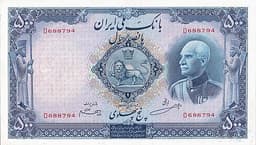
Reza Shah Pahlavi
Emperor · Modern
63.6Total
Basic Information
Born
1786
1878
Died
1848
1944
Era
Modern
Modern
Nationality
Denmark
Iran
Occupation
Emperor
Emperor
Civilization
Western
Middle Eastern
Score Comparison
Military (10%)
48.9
50.0
Political (20%)
39.4
72.0
Influence (20%)
46.3
72.0
Legacy (20%)
36.7
52.0
Leadership (15%)
45.0
72.0
Strategy (15%)
47.7
60.0
TOTAL
43.1
63.6
Christian VIII of Denmark — Complete Timeline
1839 AD
Accession and Liberal ReformsPolitical Action◆ Major
Christian VIII ascended the throne and introduced liberal reforms, including freedom of the press and a consultative assembly. His policies aimed to modernize Denmark and address growing demands for constitutional government.
ReformLiberalismConstitution
Impact: nationalprogressive
1840 AD
Support for the Arts and SciencesCultural
Christian VIII was a patron of the arts and sciences, supporting figures like Hans Christian Andersen and the sculptor Bertel Thorvaldsen. His patronage contributed to the Danish Golden Age of culture.
PatronageArtsGolden Age
Impact: nationalconstructive
1848 AD
First Schleswig WarWar◆ Major
Christian VIII faced the outbreak of the First Schleswig War, a rebellion by German-speaking duchies against Danish rule. The war began just before his death and continued under his successor, Frederick VII.
WarSchleswigRebellion
Impact: regional
Drafting of the June ConstitutionPolitical Action◆ Major
Christian VIII initiated the drafting of a new constitution, which would establish a constitutional monarchy. He died before its completion, but his work paved the way for the Danish Constitution of 1849.
ConstitutionReformDemocracy
Impact: nationalprogressive
Reza Shah Pahlavi — Complete Timeline
1921 AD
1921 Persian coup d'étatPolitical Action◆ Major
Reza Khan, a Cossack Brigade officer, led a coup that overthrew the Qajar government. He became Minister of War and later Prime Minister, using the military to consolidate power and suppress regional rebellions.
CoupQajarMilitary
Impact: national
1926 AD
Coronation as Reza Shah PahlaviPolitical Action◆ Major
Reza Khan crowned himself Reza Shah Pahlavi, founding the Pahlavi dynasty. He replaced the Qajar dynasty and began a program of rapid modernization, centralization, and secularization of Iran.
CoronationDynastyModernization
Impact: national
1938 AD
Trans-Iranian Railway completionOther◆ Major
Reza Shah oversaw the completion of the Trans-Iranian Railway, connecting the Caspian Sea to the Persian Gulf. The project was a major infrastructure achievement, facilitating trade and military transport, but was built with forced labor.
InfrastructureModernizationRailway
Impact: nationalconstructive
1941 AD
Forced abdication by Allied powersPolitical Action
Britain and the Soviet Union invaded Iran to secure oil fields and supply routes. Reza Shah refused to expel German nationals, leading to his forced abdication in favor of his son Mohammad Reza Pahlavi. He was exiled to South Africa.
World War IIInvasionExile
Impact: nationaltragic
Expert Analysis
Origins
Christian VIII of Denmark was born on September 18, 1786, in Copenhagen, into the House of Oldenburg. He was the son of Crown Prince Frederick (later Frederick VI) and Princess Sophia Frederica of Mecklenburg-Schwerin. Educated in the classics and law, he developed liberal sympathies early. His reign began in 1839 after the death of his father, inheriting a kingdom under pressure from nationalist movements. His upbringing in an absolute monarchy shaped his cautious approach to reform.
Reza Shah Pahlavi was born on March 15, 1878, in Alasht, a village in Mazandaran, Iran, to a modest military family. His father, Abbas Ali Khan, died when Reza was young. He joined the Persian Cossack Brigade as a teenager, rising through ranks due to his discipline. With no formal education, he learned military tactics and leadership on the job. His background in a fractured Qajar Iran drove his desire for centralization and modernization.
Rise to Power
Christian VIII ascended the Danish throne on December 3, 1839, after his father's death. His reign began with promises of reform, but he faced immediate challenges from liberal nationalists. He initially granted freedom of the press in 1840 and established consultative assemblies in 1841, hoping to appease demands. However, his inability to resolve the Schleswig-Holstein question escalated tensions, leading to the First Schleswig War in 1848, which broke out just before his death.
Reza Shah's rise was through military coup. On February 21, 1921, Reza Khan led the Persian Cossack Brigade into Tehran, overthrowing the Qajar government. He became Minister of War under Prime Minister Zia ol Din Tabatabaee, then Prime Minister himself in 1923. Using the military to suppress rebellions, he forced the last Qajar shah, Ahmad Shah, into exile. On December 15, 1925, the Constituent Assembly proclaimed him Shah, founding the Pahlavi dynasty. His political score of 72.0 reflects his effective consolidation of power.
Leadership & Governance
Christian VIII governed as an absolute monarch with liberal leanings. His reforms were incremental: freedom of the press (1840), consultative assemblies (1841), and support for arts. However, he resisted full constitutionalism, fearing loss of royal power. His leadership score of 45.0 indicates moderate effectiveness. In contrast, Reza Shah ruled with authoritarian centralization. He abolished capitulations, established a modern judiciary, and mandated Western dress. His political score of 72.0 aligns with his forceful reforms, including the Trans-Iranian Railway (completed 1938) that connected north to south. While Christian liberalized gently, Reza Shah forcibly modernized, often suppressing dissent.
Triumph & Tragedy
Christian VIII's triumph was his patronage of culture, supporting Hans Christian Andersen and sculptor Bertel Thorvaldsen, enriching Danish national identity. His tragedy was his inability to resolve the Schleswig-Holstein crisis; the First Schleswig War erupted in 1848, and he died in January 1848 before seeing its outcome. His draft constitution was completed posthumously, but his caution prevented earlier stabilization.
Reza Shah's triumph was the rapid modernization of Iran: the Trans-Iranian Railway, expansion of education, and creation of a centralized state. His tragedy was his forced abdication in 1941 after Anglo-Soviet invasion. His refusal to expel German nationals led to occupation; he died in exile in 1944. His military score of 50.0 reflects his inability to defend national sovereignty.
Character & Destiny
Christian VIII was described as intelligent but indecisive, torn between liberal ideals and absolutist upbringing. His character led to half-measures that satisfied neither conservatives nor liberals. Reza Shah was determined and ruthless, using military force to achieve goals. His authoritarianism created enemies among tribal leaders and clergy. Both men were shaped by their eras: Christian by the 1848 revolutions, Reza by the interwar drive for modernization. Their scores: Christian total 43.1, Reza total 63.6.
Legacy
Christian VIII's legacy is the June Constitution of 1849, signed by his son Frederick VII, establishing Denmark as a constitutional monarchy. His cultural patronage endured. Reza Shah's legacy is the Pahlavi dynasty and Iran's modernization framework. The Trans-Iranian Railway remains vital. However, his autocratic methods contributed to the 1979 revolution. His influence score of 72.0 reflects lasting impact on Iranian state-building.
Conclusion
Reza Shah Pahlavi had greater impact, with a total score of 63.6 versus Christian VIII's 43.1. Reza Shah fundamentally transformed Iran's political structure and infrastructure, while Christian VIII's reforms were incomplete and limited. Despite his forced abdication, Reza Shah's centralization and modernization shaped Iran for decades. Christian VIII's liberal intentions were overshadowed by his inability to act decisively. Thus, Reza Shah's legacy is more substantial, though both faced tragic ends.
Rankings
🥇
Reza Shah PahlaviLeader
Mil: 50.0Pol: 72.0Inf: 72.0
63.6
🥈
Christian VIII of Denmark
Mil: 48.9Pol: 39.4Inf: 46.3
43.1
+20.5 behind
How This Comparison Works
Algorithm
Each figure is scored on 6 dimensions (0—100 scale) based on structured historical data: Military (10%), Political (20%), Influence (20%), Legacy (20%), Leadership (15%), Strategy (15%). The weighted total produces the final ranking.
Data Sources
Scores are computed from structured sub-indicators in the database. Scale factors adjust for era (Ancient ×0.85, Modern ×1.0) and civilization size (Eastern ×1.05, Other ×0.80) to account for differences in population and military scale.
Maximum 3 Figures
Comparisons are limited to 2—3 figures to ensure readability and statistical meaningfulness.
Error Margins
±5 points per dimension — Sub-scores are derived from historical records with inherent uncertainty. Two figures within 5 points on a dimension should be considered roughly equivalent in that area.
Total Score Accuracy
±3 points overall — The weighted combination of 6 dimensions produces a total score with approximately ±3 points of uncertainty. Differences of less than 3 points are not statistically significant— the figures are effectively tied.
Known Limitations
- Historical records are incomplete and uneven across civilizations
- Figures from oral-tradition societies may be underrepresented
- Occupation labels can misclassify multi-role figures
- Scores measure capability and impact, not moral character
- Quantitative scoring is a comparison tool, not absolute truth
Capability Radar
Military (10%) — Battles & Warfare
Battles
25
20
Win Rate
24
30
Expansion
28
15
Political (20%) — Governance & Reform
Reform
40
85
Diplomacy
30
55
Economy
20
70
Influence (20%) — Cultural & Global Reach
Cultural
15
60
Global
10
55
Legacy (20%) — Historical Impact
Historical
20
65
Longevity
10
55
Leadership (15%) — Power & Stability
Tenure
10
60
Stability
25
50
Strategy (15%) — Tactics & Innovation
Strategy
31
40
Tactics
35
25
Reform
40
75
Similar Comparisons
Comments & Discussion
No comments yet. Be the first to share your thoughts!