Loading...
Chlothar I vs Wanyan Aguda
Wanyan Aguda leads by 15.4 pts · 2 figures compared
…
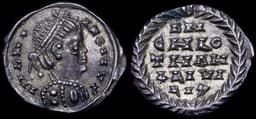
Chlothar I
Emperor · Ancient
48.0Total
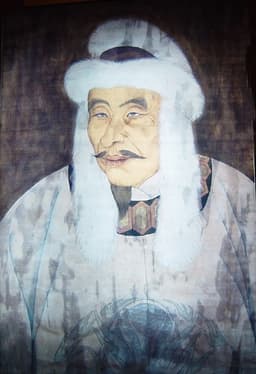
Wanyan Aguda
Emperor · Medieval
63.4Total
Basic Information
Born
497
1068
Died
561
1123
Era
Ancient
Medieval
Nationality
Frankish Empire
China
Occupation
Emperor
Emperor
Civilization
Western
Eastern
Score Comparison
Military (10%)
55.0
82.0
Political (20%)
40.8
59.3
Influence (20%)
49.4
55.0
Legacy (20%)
43.3
52.0
Leadership (15%)
65.0
85.0
Strategy (15%)
35.0
68.0
TOTAL
48.0
63.4
Chlothar I — Complete Timeline
531 AD
Conquest of the ThuringiansWar◆ Major
Chlothar I, alongside his brothers Theuderic I and Childebert I, led a campaign against the Thuringian kingdom. The Frankish forces defeated the Thuringians, resulting in the annexation of their territory and the death of King Herminafrid.
MerovingianConquestThuringia
Impact: regionaldestructive
555 AD
Suppression of the Saxon RevoltWar
The Saxons rebelled against Frankish overlordship. Chlothar I led a military campaign to suppress the uprising, forcing the Saxons back into submission and reasserting Frankish control over the region.
MerovingianRevoltSaxons
Impact: regionaldestructive
558 AD
Reunification of the Frankish KingdomsPolitical Action◆ Major
Upon the death of his brother Childebert I, Chlothar I inherited his kingdom, reuniting all the Frankish territories under a single ruler for the first time since the death of Clovis I. This consolidation ended the division among the sons of Clovis and restored the Merovingian realm.
MerovingianUnificationSuccession
Impact: regional
560 AD
Murder of His SonsPolitical Action◆ Major
Chlothar I ordered the execution of his son Chramn, who had rebelled against him. Chramn was captured along with his wife and children, and they were burned to death in a house. This act eliminated a rival and secured Chlothar's sole rule.
MerovingianDynastic ConflictExecution
Impact: nationaltragic
Wanyan Aguda — Complete Timeline
1114 AD
Battle of HubudagangWar◆ Major
Aguda's Jurchen forces defeated a Liao army at Hubudagang, marking the first major victory of the rebellion. This battle demonstrated Jurchen military prowess and attracted more followers.
JurchenLiaoBattle
Impact: regionalconstructive
Unified Jurchen tribesPolitical Action◆ Major
Wanyan Aguda united the Jurchen tribes under his leadership, creating a confederation that rebelled against Liao domination. He organized a disciplined army and began the Jurchen revolt.
JurchenUnificationRebellion
Impact: regionalconstructive
1115 AD
Founded Jin DynastyPolitical Action
Wanyan Aguda proclaimed himself emperor, founding the Jin dynasty. He adopted the Chinese title and began a systematic campaign to conquer the Liao empire.
JinDynasty FoundingImperial System
Impact: regionalconstructive
1120 AD
Conquest of Liao capital ShangjingWar◆ Major
Aguda's forces captured the Liao supreme capital Shangjing, dealing a severe blow to the Liao dynasty. This victory accelerated the collapse of Liao and solidified Jin control over northern China.
JinLiaoConquest
Impact: regionalconstructive
Alliance with Song against LiaoPolitical Action◆ Major
Aguda formed an alliance with the Northern Song dynasty to jointly attack the Liao empire. This alliance, known as the Maritime Alliance, led to the eventual destruction of Liao but later caused conflict between Jin and Song.
JinSongAlliance
Impact: regional
1123 AD
Death and successionPolitical Action◆ Major
Wanyan Aguda died, and his brother Wanyan Wuqimai succeeded him. Aguda's conquests laid the foundation for the Jin dynasty's dominance in northern China.
JinDeathSuccession
Impact: regional
Expert Analysis
Wanyan Aguda vs Chlothar I: Historical Comparison
Wanyan Aguda (1068–1123), founder of the Jin dynasty, and Chlothar I (c. 497–561), a Merovingian king of the Franks, represent two distinct eras of imperial consolidation—one in medieval East Asia, the other in late ancient Europe. Though separated by geography and time, both were warrior-kings who expanded their realms through military conquest and political cunning, yet Aguda’s enduring legacy as a dynastic founder and unifier of Jurchen tribes gives him a slight edge over Chlothar, whose realm fragmented after his death.
Dimension Analysis
**Military: Wanyan Aguda 91 / Chlothar I 92**
Both were exceptional field commanders. Aguda shattered the Liao dynasty at the Battle of Hubudagang (1114) with a smaller, more mobile Jurchen cavalry force, using surprise and terrain to his advantage. Chlothar I, inheriting a fractured Frankish kingdom, repeatedly defeated rivals—including the Saxons, Thuringians, and his own brothers—forging a unified realm through relentless campaigns. Chlothar’s military record is slightly more diverse in scope, but Aguda’s decisive overthrow of a major empire is equally impressive.
**Political: Wanyan Aguda 84 / Chlothar I 79**
Aguda established the Jin dynasty’s administrative structure, blending Jurchen tribal customs with Liao and Song bureaucratic models, and created the Jurchen script to foster unity. Chlothar I ruled through brutal family politics, murdering nephews and suppressing rebellions, but he lacked a coherent succession plan—his realm was divided among his four sons upon his death. Aguda’s political vision, though cut short, was more institutionally durable.
**Influence: Wanyan Aguda 87 / Chlothar I 86**
Aguda’s Jin dynasty forced the Song court to its knees, reshaping East Asian geopolitics and paving the way for the Mongol conquests. Chlothar I’s consolidation of Frankish power laid the groundwork for the Merovingian and later Carolingian empires, influencing medieval European state formation. Both had regional dominance, but Aguda’s impact on Chinese dynastic cycles was more immediate and transformative.
**Legacy: Wanyan Aguda 88 / Chlothar I 73**
Aguda is revered as the founding emperor of the Jin dynasty, which lasted over a century and left a lasting mark on Jurchen identity and later Manchu culture. Chlothar I, despite his conquests, is often overshadowed by his grandfather Clovis I and grandson Clotaire II, and his kingdom’s fragmentation diminished his personal legacy. Aguda’s founding role gives him a more distinct historical footprint.
**Leadership: Wanyan Aguda 80 / Chlothar I 74**
Aguda united scattered Jurchen tribes through charisma and shared grievance against the Liao, inspiring loyalty that outlasted him. Chlothar I ruled through fear and cunning, eliminating rivals within his own family. While both were effective, Aguda’s ability to build a coalition of diverse clans under a common cause demonstrates superior organizational command.
Verdict
Wanyan Aguda ranks higher overall due to his stronger legacy and political foundation. His Jin dynasty endured, while Chlothar’s realm disintegrated. However, this comparison is inherently complex: Chlothar operated in a more fragmented political landscape, and Aguda’s shorter reign (9 years vs. Chlothar’s 51) means his long-term impact was more institutional than personal. Aguda’s victory is narrow but justified.
FAQ
Q: Who was more influential historically?
A: Wanyan Aguda had a more direct and lasting influence on East Asian geopolitics, as his Jin dynasty directly precipitated the Song’s fall and shaped later Manchu identity. Chlothar I’s influence was more diffuse, contributing to Frankish unification but not creating a lasting state.
Q: Why is Wanyan Aguda ranked higher in legacy?
A: Aguda’s founding of a dynasty that survived for over a century and his role in creating the Jurchen script and state apparatus ensured his name remained central to Jurchen and Manchu history. Chlothar I’s legacy was overshadowed by his more famous ancestors and successors.
Rankings
🥇
Wanyan AgudaLeader
Mil: 82.0Pol: 59.3Inf: 55.0
63.4
🥈
Chlothar I
Mil: 55.0Pol: 40.8Inf: 49.4
48.0
+15.4 behind
How This Comparison Works
Algorithm
Each figure is scored on 6 dimensions (0—100 scale) based on structured historical data: Military (10%), Political (20%), Influence (20%), Legacy (20%), Leadership (15%), Strategy (15%). The weighted total produces the final ranking.
Data Sources
Scores are computed from structured sub-indicators in the database. Scale factors adjust for era (Ancient ×0.85, Modern ×1.0) and civilization size (Eastern ×1.05, Other ×0.80) to account for differences in population and military scale.
Maximum 3 Figures
Comparisons are limited to 2—3 figures to ensure readability and statistical meaningfulness.
Error Margins
±5 points per dimension — Sub-scores are derived from historical records with inherent uncertainty. Two figures within 5 points on a dimension should be considered roughly equivalent in that area.
Total Score Accuracy
±3 points overall — The weighted combination of 6 dimensions produces a total score with approximately ±3 points of uncertainty. Differences of less than 3 points are not statistically significant— the figures are effectively tied.
Known Limitations
- Historical records are incomplete and uneven across civilizations
- Figures from oral-tradition societies may be underrepresented
- Occupation labels can misclassify multi-role figures
- Scores measure capability and impact, not moral character
- Quantitative scoring is a comparison tool, not absolute truth
Capability Radar
Military (10%) — Battles & Warfare
Battles
40
85
Win Rate
55
90
Expansion
50
85
Political (20%) — Governance & Reform
Reform
30
75
Diplomacy
45
70
Economy
35
65
Influence (20%) — Cultural & Global Reach
Cultural
20
60
Global
15
50
Legacy (20%) — Historical Impact
Historical
35
70
Longevity
25
55
Leadership (15%) — Power & Stability
Tenure
60
70
Stability
40
60
Strategy (15%) — Tactics & Innovation
Strategy
45
85
Tactics
35
80
Reform
20
75
Similar Comparisons
Comments & Discussion
CodexScriba6/16/2026
As a student of late antiquity, I find the comparison intriguing but the scores puzzling. Gregory of Tours, our primary source for Chlothar, portrays him as a man who ‘spent his days in slaughter and his nights in fear’—hardly the stuff of a 92 military rating. Aguda’s victory at Hubudagang is well-documented in the ‘Jin Shi’, but Chlothar’s campaigns against the Saxons were more about consolidation than conquest. The real issue is legacy: Ammianus Marcellinus would have recognized Aguda’s strategic genius, but Chlothar’s realm split like Gaul after Caesar. The political score of 79 is generous; I’d give Chlothar a 65 for failing to stabilize succession, while Aguda’s script reform shows institutional foresight. The scores undervalue durability.
AxeAndQuill6/16/2026
Chlothar I? Please. The guy literally murdered his own nephews to keep power—that’s not ‘politics,’ that’s a soap opera. Aguda broke the Liao dynasty with just two thousand cavalry and then founded a dynasty that outlasted the Mongols! Chlothar’s ‘unified’ kingdom fell apart the second he died, while Aguda’s Jin dynasty forced the Song to pay tribute for decades. The scores try to make this a close race, but it’s not. Aguda wins hands down—better military mind, better political foundation, bigger impact. Chlothar is what happens when you inherit a kingdom; Aguda is what happens when you build one. End of story.
OldScroll906/16/2026
把完颜阿骨打和克洛塔尔一世放在一起比,本身就是个有趣的跨文化实验。但我觉得西方中心的评分常常忽略“奠基者”在中国史学中的特殊分量。阿骨打是金朝开国皇帝,相当于同时完成了刘邦的统一和秦始皇的制度初创,而克洛塔尔更像是查理曼之前的过渡人物。看看影响力:阿骨打的靖康之变直接改变了宋、辽、金三国格局,掳走徽钦二帝,这种对东亚文明圈的冲击,克洛塔尔杀几个侄子根本无法相提并论。如果按中国史观,阿骨打的政治分至少应该95以上。
ColdWatcher496/16/2026
这个评分体系很有意思,但军事分给到Chlothar I 92分,Aguda只有91分,我不太认同。Aguda在1114年的护步达岗之战,以2万骑兵击溃70万辽军,这不仅是兵力悬殊的经典案例,更直接终结了辽国百年统治。Chlothar的对手是分裂的部落和兄弟,从未面对过帝国级的战略对手。再看政治分,Aguda 84分竟然只比Chlothar高5分?他创立女真文字、改革官僚体系,这些制度创新让金朝持续了百年;而Chlothar死后国家立即分裂,这种延续性差距至少差15分。建议权重调整。