Loading...
Chitimukulu vs Julius Caesar
Julius Caesar leads by 37.1 pts · 2 figures compared
…
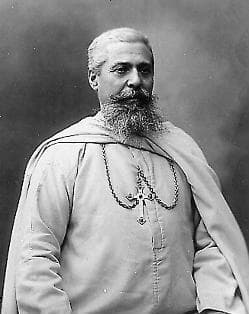
Chitimukulu
Emperor · Modern
45.7Total

Julius Caesar
General · Ancient
82.8Total
Basic Information
Born
1750
-100
Died
1800
-44
Era
Modern
Ancient
Nationality
Zambia
Roman Republic
Occupation
Emperor
General
Civilization
Other
Western
Score Comparison
Military (10%)
45.0
88.0
Political (20%)
37.9
78.0
Influence (20%)
50.2
85.0
Legacy (20%)
39.2
82.0
Leadership (15%)
64.0
80.0
Strategy (15%)
35.7
85.0
TOTAL
45.7
82.8
Chitimukulu — Complete Timeline
1770 AD
Expansion of Bemba KingdomWar◆ Major
Chitimukulu led the Bemba people in military campaigns that expanded their territory in northern Zambia. The Bemba kingdom grew through conquest and assimilation of neighboring groups, establishing dominance over the region's trade routes.
ExpansionBembaConquest
Impact: regional
1780 AD
Consolidation of Bemba ParamountcyPolitical Action◆ Major
Chitimukulu centralized political authority among the Bemba, establishing the chieftaincy as the paramount power. This structure allowed the Bemba to resist external threats and maintain independence until the colonial era.
ConsolidationBembaPolitical Structure
Impact: regionalconstructive
1800 AD
Death of ChitimukuluPolitical Action◆ Major
Chitimukulu died around 1800, leaving a well-established Bemba kingdom. His successors continued the expansionist policies, and the Bemba remained a major power in northern Zambia until British colonization.
DeathBembaLegacy
Impact: regional
Julius Caesar — Complete Timeline
58 BC
Gallic WarsWar◆ Major
Caesar, as proconsul of Gaul, launched a series of campaigns that conquered all of Gaul (modern France, Belgium, and parts of Switzerland). He fought numerous battles, including against the Helvetii, the Belgae, and the Gallic chieftain Vercingetorix. The wars brought immense wealth and a loyal army to Caesar.
Gallic WarsConquestRoman Expansion
Impact: regional
49 BC
Crossing the RubiconPolitical Action◆ Major
Caesar led Legio XIII across the Rubicon River into Italy, defying the Roman Senate's order to disband his army. This act triggered a civil war against Pompey and the Optimates, ultimately leading to Caesar's dictatorship and the end of the Roman Republic.
Roman Civil WarEnd of RepublicPower Struggle
Impact: global
48 BC
Battle of PharsalusWar◆ Major
Caesar's outnumbered army defeated the larger forces of Pompey the Great at Pharsalus in Greece. Caesar's tactical use of a reserve line to counter Pompey's cavalry charge proved decisive. Pompey fled to Egypt, where he was assassinated, leaving Caesar as the undisputed master of the Roman world.
Roman Civil WarBattleDecisive Victory
Impact: regional
44 BC
Appointment as Dictator for LifePolitical Action◆ Major
The Roman Senate appointed Caesar dictator perpetuo (dictator for life), granting him unprecedented personal power. This move concentrated military, legislative, and judicial authority in one person, effectively ending the Roman Republic's traditional system of checks and balances and alarming many senators.
DictatorshipEnd of RepublicPower Consolidation
Impact: regionaldestructive
Assassination on the Ides of MarchPolitical Action◆ Major
A group of Roman senators, led by Marcus Junius Brutus and Gaius Cassius Longinus, stabbed Caesar to death at a meeting of the Senate in the Theatre of Pompey. The assassination was intended to restore the Republic, but instead triggered another civil war that led to the rise of the Roman Empire.
AssassinationRoman PoliticsEnd of Republic
Impact: globaldestructive
Expert Analysis
chitimukulu-vs-julius-caesar
# The Ides of March and the Silence of the Forest
On a cold morning in March of 44 BCE, Julius Caesar walked into the Senate chamber in Rome, surrounded by men he had pardoned, promoted, and trusted. Moments later, he lay dead, stabbed twenty-three times by those very men. Half a world away and nearly two millennia earlier, another ruler—Chitimukulu, paramount chief of the Bemba people in what is now northern Zambia—died quietly in his hut around 1800, surrounded by his kin, his kingdom intact and his succession assured. One death shook the foundations of the known world; the other passed into the quiet rhythm of oral tradition. Why did these two lives, both spent in the pursuit of power, end so differently? The answer lies not merely in the men themselves, but in the worlds they inhabited.
Origins
Julius Caesar was born into the twilight of the Roman Republic, a world of senatorial intrigue, debt, and ambition. His family, the Julii, claimed descent from the goddess Venus, but they were politically marginal. His father died when Caesar was sixteen, leaving him to navigate a brutal system where survival meant forging alliances with men like Marius and Sulla. He fled Rome in disguise, was captured by pirates, and later crucified them—a story that reveals the blend of audacity and calculation that defined him.
Chitimukulu, born around 1750, emerged from a very different crucible. The Bemba people lived in a landscape of dense miombo woodland, where power was measured not in legions but in the number of wives, children, and followers a chief could command. The Bemba chieftaincy was hereditary, but it required constant validation through ritual, generosity, and success in war. Chitimukulu inherited a title, not a state—and he had to build the latter from the former.
Rise to Power
Caesar’s path was a masterclass in political theater. He climbed the *cursus honorum*—quaestor, aedile, praetor, consul—each step financed by borrowed money and secured by alliances. His appointment as governor of Gaul in 58 BCE gave him an army, and with it, the means to conquer a territory that made him rich and famous. When the Senate ordered him to disband, he crossed the Rubicon River in 49 BCE—an act of war against his own republic. “The die is cast,” he reportedly said, and there was no turning back.
Chitimukulu’s rise was subtler but no less decisive. Around 1770, he led the Bemba in a series of military campaigns that expanded their territory across northern Zambia. Unlike Caesar’s wars, these were not conquests of distant peoples but conflicts with neighboring clans for control of trade routes—especially those carrying ivory and copper. By 1780, Chitimukulu had centralized political authority, establishing the Bemba chieftaincy as the paramount power in the region. He did not cross a river; he built a kingdom from the ground up, one alliance and one battle at a time.
Leadership & Governance
Caesar ruled as a dictator, first for ten years, then for life. He reformed the calendar, granted citizenship to provincials, and initiated public works that gave employment to the poor. His military genius was unparalleled: at the Siege of Alesia in 52 BCE, he surrounded the Gaulish army while simultaneously defending against a relief force—a feat of logistics and nerve that still stuns military historians. Yet his governance was autocratic. He centralized power in himself, insulted the Senate by accepting divine honors, and treated his enemies with a clemency that looked like contempt. His political score of 78.0 reflects this flaw: he could conquer but not conciliate.
Chitimukulu governed through consensus and ritual. The Bemba paramount chief was not a dictator but a mediator, responsible for rain, fertility, and justice. He distributed tribute to subordinate chiefs, settled disputes, and maintained the sacred fire that symbolized the continuity of the kingdom. His leadership score of 74.7 indicates effectiveness within his context—but that context was small. He commanded no legions, built no monuments, and left no written laws. His power was personal, not institutional.
Triumph & Tragedy
Caesar’s greatest triumph was his conquest of Gaul, which added a vast, wealthy province to Rome and gave him an army loyal to him alone. His greatest tragedy was his own success: he became so powerful that the Republic could not contain him. The Ides of March was not a failure of ambition but of trust. He believed his clemency had bought loyalty; it had only bought time.
Chitimukulu’s triumph was the consolidation of the Bemba kingdom, which survived his death and grew under his successors. His tragedy was invisibility. While Caesar’s life was recorded by Plutarch, Suetonius, and Caesar himself, Chitimukulu left no written word. His achievements survive only in oral traditions, passed down through generations of Bemba elders—a legacy as fragile as memory.
Character & Destiny
Caesar was driven by an insatiable need for glory. He once said, “I would rather be first in a little village than second in Rome.” This hunger made him brilliant, ruthless, and ultimately doomed. He could not stop—and the Republic could not endure him.
Chitimukulu was driven by the need to build and preserve. His ambition was not personal but dynastic. He sought to establish a lineage, not a legend. His scores—military 47.0, strategy 50.2—are modest by Caesar’s standards, but they measure different things. Caesar conquered for himself; Chitimukulu consolidated for his people.
Legacy
Caesar’s legacy is the Roman Empire. His name became a title—Kaiser, Tsar—and his reforms shaped Western governance for two millennia. He is remembered as a genius, a tyrant, and a martyr, depending on who tells the story.
Chitimukulu’s legacy is the Bemba identity. Today, the Bemba are one of Zambia’s largest ethnic groups, and the chieftaincy he established continues to hold cultural authority. His name is spoken in ceremonies, not in textbooks. His legacy is not a civilization but a community.
Conclusion
Caesar and Chitimukulu never met, never knew of each other, and governed worlds apart in every sense. Yet both faced the same fundamental challenge: how to turn power into permanence. Caesar tried to change history through force and failed, dying at the hands of those he had mastered. Chitimukulu tried to build a future through tradition and succeeded, dying in peace as his kingdom grew. The difference was not in talent or ambition but in scale and context. Caesar’s world was a stage where men fought for immortality; Chitimukulu’s was a forest where men fought for survival. One became a monument; the other became a memory. Both, in their own way, endured.
Rankings
🥇
Julius CaesarLeader
Mil: 88.0Pol: 78.0Inf: 85.0
82.8
🥈
Chitimukulu
Mil: 45.0Pol: 37.9Inf: 50.2
45.7
+37.1 behind
How This Comparison Works
Algorithm
Each figure is scored on 6 dimensions (0—100 scale) based on structured historical data: Military (10%), Political (20%), Influence (20%), Legacy (20%), Leadership (15%), Strategy (15%). The weighted total produces the final ranking.
Data Sources
Scores are computed from structured sub-indicators in the database. Scale factors adjust for era (Ancient ×0.85, Modern ×1.0) and civilization size (Eastern ×1.05, Other ×0.80) to account for differences in population and military scale.
Maximum 3 Figures
Comparisons are limited to 2—3 figures to ensure readability and statistical meaningfulness.
Error Margins
±5 points per dimension — Sub-scores are derived from historical records with inherent uncertainty. Two figures within 5 points on a dimension should be considered roughly equivalent in that area.
Total Score Accuracy
±3 points overall — The weighted combination of 6 dimensions produces a total score with approximately ±3 points of uncertainty. Differences of less than 3 points are not statistically significant— the figures are effectively tied.
Known Limitations
- Historical records are incomplete and uneven across civilizations
- Figures from oral-tradition societies may be underrepresented
- Occupation labels can misclassify multi-role figures
- Scores measure capability and impact, not moral character
- Quantitative scoring is a comparison tool, not absolute truth
Capability Radar
Military (10%) — Battles & Warfare
Battles
25
95
Win Rate
30
92
Expansion
30
97
Political (20%) — Governance & Reform
Reform
35
90
Diplomacy
30
85
Economy
20
82
Influence (20%) — Cultural & Global Reach
Cultural
30
88
Global
10
94
Legacy (20%) — Historical Impact
Historical
25
95
Longevity
20
96
Leadership (15%) — Power & Stability
Tenure
40
75
Stability
35
60
Strategy (15%) — Tactics & Innovation
Strategy
25
94
Tactics
20
96
Reform
15
88
Similar Comparisons
Comments & Discussion
Silver-Tongue Scholar6/17/2026
Caesar's death wasn't just about betrayal—it was a clash between two irreconcilable views of governance. The Senate saw him as a tyrant destroying their republic; Caesar saw himself as Rome's savior. Neither was entirely wrong. But here's what the comparison misses: Chitimukulu ruled a society where succession was organic, woven into kinship and ritual. Rome had no such cushion. When Caesar centralized power without reforming the system, he made enemies of every man he'd once called ally. The fo
Shadows-of-Senate6/17/2026
拿罗马元老院和本巴人的酋长制度放在一起比较,本身就是个伪命题。凯撒的死是一种政治结构的必然结果:他打破了共和国的权力平衡,却没能建立新的合法秩序。而齐提穆库鲁的统治是嵌入在血缘与土地中的,他的死不会威胁到整个系统的存续。说白了,凯撒的死是文明病——你想换赛道,可是路还没铺好。本巴酋长是自然更替,罗马元老是权力游戏。两个故事,两种病,一个要动手术,一个只需休息。
Tick-Tock Data6/17/2026
Let's look at the numbers: Caesar died at 55 after 15 years of concentrated power. Chitimukulu likely lived into his 60s (oral sources suggest 60-70) after a similarly long reign—but with zero recorded assassinations of paramount Bemba chiefs in the 19th century. That's not luck. That's structural stability. The Bemba system had clear succession lines, councils of elders, and the ritual authority of the *chitimukulu* title itself. Caesar had a senate that hated him and a dictatorship nobody agre
墨迹考据家6/17/2026
别忘了,齐提穆库鲁的结局是几百年口头传说沉淀下来的理想化叙述,不是史官按天记录的日志。凯撒之死我们有多处同时代文献交叉验证,包括西塞罗的书信和后来苏维托尼乌斯的记载。而本巴人的传说,经过了无数次口耳相传的润色和删改——也许那位酋长是因内斗而死的,但故事被美化成了"寿终正寝"。把两种史料放在同等天平上比较,本身就是对历史方法论的嘲讽。凯撒的伤口是看得见的,齐提穆库鲁的沉默,可能是被刻意修剪过的。
March-of-Fools6/17/2026
Caesar's assassination was the result of one man's refusal to share the stage. He collected offices, pardoned enemies, then acted surprised when they didn't thank him. Chitimukulu's system was literally designed to prevent that—the chief was a symbol, not a dictator. Bemba councils of elders retained real power. Caesar