Loading...
Chithira Thirunal vs Julius Caesar
Julius Caesar leads by 25.3 pts · 2 figures compared
…
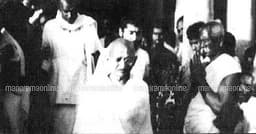
Chithira Thirunal
Emperor · Modern
57.5Total

Julius Caesar
General · Ancient
82.8Total
Basic Information
Born
1912
-100
Died
1991
-44
Era
Modern
Ancient
Nationality
India
Roman Republic
Occupation
Emperor
General
Civilization
Indian
Western
Score Comparison
Military (10%)
44.3
88.0
Political (20%)
59.3
78.0
Influence (20%)
57.2
85.0
Legacy (20%)
47.5
82.0
Leadership (15%)
79.8
80.0
Strategy (15%)
60.0
85.0
TOTAL
57.5
82.8
Chithira Thirunal — Complete Timeline
1930 AD
Abolition of the Devadasi systemReform◆ Major
Chithira Thirunal abolished the Devadasi system in Travancore, which had involved the dedication of young girls to temples for ritualistic and often exploitative purposes. This reform was part of broader social legislation aimed at ending feudal practices and improving the status of women in the kingdom.
Social ReformWomen's RightsDevadasi
Impact: regionalprogressive
1936 AD
Temple Entry ProclamationReform
Chithira Thirunal issued the Temple Entry Proclamation, opening all government-controlled temples in Travancore to Hindus of all castes, including Dalits. This landmark reform abolished caste-based restrictions on temple entry, making Travancore the first princely state in India to do so. The proclamation was a major victory for the social reform movement.
Social ReformCaste DiscriminationTemple Entry
Impact: regionalprogressive
1937 AD
Establishment of the University of TravancoreReform◆ Major
Chithira Thirunal established the University of Travancore (now University of Kerala) in Thiruvananthapuram. The university was modeled on the University of Madras and offered courses in arts, sciences, and law. This institution became a center of higher education in the region, promoting research and learning.
Higher EducationUniversityThiruvananthapuram
Impact: regionalconstructive
1949 AD
Integration of Travancore into the Indian UnionPolitical Action◆ Major
Chithira Thirunal signed the Instrument of Accession, merging Travancore with the Indian Union. Initially hesitant, he agreed after negotiations with Sardar Patel. The merger ended the princely state's sovereignty and led to the formation of Travancore-Cochin, later part of Kerala state. He was allowed to retain his title and privy purse.
Indian IndependencePrincely StatesMerger
Impact: regional
Julius Caesar — Complete Timeline
58 BC
Gallic WarsWar◆ Major
Caesar, as proconsul of Gaul, launched a series of campaigns that conquered all of Gaul (modern France, Belgium, and parts of Switzerland). He fought numerous battles, including against the Helvetii, the Belgae, and the Gallic chieftain Vercingetorix. The wars brought immense wealth and a loyal army to Caesar.
Gallic WarsConquestRoman Expansion
Impact: regional
49 BC
Crossing the RubiconPolitical Action◆ Major
Caesar led Legio XIII across the Rubicon River into Italy, defying the Roman Senate's order to disband his army. This act triggered a civil war against Pompey and the Optimates, ultimately leading to Caesar's dictatorship and the end of the Roman Republic.
Roman Civil WarEnd of RepublicPower Struggle
Impact: global
48 BC
Battle of PharsalusWar◆ Major
Caesar's outnumbered army defeated the larger forces of Pompey the Great at Pharsalus in Greece. Caesar's tactical use of a reserve line to counter Pompey's cavalry charge proved decisive. Pompey fled to Egypt, where he was assassinated, leaving Caesar as the undisputed master of the Roman world.
Roman Civil WarBattleDecisive Victory
Impact: regional
44 BC
Appointment as Dictator for LifePolitical Action◆ Major
The Roman Senate appointed Caesar dictator perpetuo (dictator for life), granting him unprecedented personal power. This move concentrated military, legislative, and judicial authority in one person, effectively ending the Roman Republic's traditional system of checks and balances and alarming many senators.
DictatorshipEnd of RepublicPower Consolidation
Impact: regionaldestructive
Assassination on the Ides of MarchPolitical Action◆ Major
A group of Roman senators, led by Marcus Junius Brutus and Gaius Cassius Longinus, stabbed Caesar to death at a meeting of the Senate in the Theatre of Pompey. The assassination was intended to restore the Republic, but instead triggered another civil war that led to the rise of the Roman Empire.
AssassinationRoman PoliticsEnd of Republic
Impact: globaldestructive
Expert Analysis
chithira-thirunal-vs-julius-caesar
### The Crossing and the Proclamation
In January of 49 BCE, a Roman general stood on the banks of a small river in northern Italy. The Rubicon was a boundary, a line not to be crossed by a commander with his army. On one side lay the legal authority of the Senate; on the other, civil war and the potential for supreme power. Julius Caesar did not hesitate. "The die is cast," he is said to have declared, and he rode into history.
Nearly two thousand years later, in the summer of 1936, a young maharaja in the southern Indian kingdom of Travancore faced a different kind of boundary. It was not a river, but an invisible wall of caste that had stood for centuries, barring the lowest-born Hindus from the temples of the gods. Chithira Thirunal Balarama Varma, a shy 24-year-old ruler, chose to tear that wall down. He issued the Temple Entry Proclamation, granting all Hindus, regardless of birth, the right to worship in the kingdom's temples.
One man crossed a line to seize power; the other erased a line to grant freedom. Their worlds, separated by centuries and continents, could not have been more different. Yet both were rulers in times of profound transition, and their choices—shaped by their eras, their characters, and their ambitions—reveal the starkly different paths to influence and legacy.
### Origins
Julius Caesar was born into the chaos of the late Roman Republic, a world of bitter class struggle, rampant corruption, and civil wars. His patrician family was ancient but politically marginalized. From his youth, he was driven by a ferocious ambition, a need to restore his family's honor and surpass his rivals. He learned that in Rome, glory and power were won on the battlefield, in the forum, and through the favor of the people.
Chithira Thirunal was born in 1912, into the twilight of princely India, a world of ceremonial grandeur under the watchful eye of the British Raj. His family, the Travancore royal house, was one of the wealthiest and most progressive in India. His education was a careful blend of English and Indian traditions, designed to produce a ruler who could navigate the modern world while preserving tradition. Unlike Caesar, he was not forged in the fires of war, but in the quiet corridors of palace administration and the rising tide of social reform.
### Rise to Power
Caesar’s rise was a masterclass in strategic ambition. He climbed the Roman political ladder—the *cursus honorum*—with relentless calculation, building a network of allies, incurring massive debts, and aligning himself with the powerful generals Pompey and Crassus. His true power base, however, was forged in the Gallic Wars (58–50 BCE). Over eight years, he conquered a vast territory, amassed an army fanatically loyal to him, and accumulated immense wealth. He became a hero in Rome, a threat to his rivals, and a man too powerful to be controlled by the old system.
Chithira Thirunal’s ascent was quieter, a matter of birth rather than conquest. He became Maharaja in 1931 at the age of 19, inheriting a prosperous and well-administered kingdom. His path was not one of military campaigns but of navigating the pressures of British suzerainty, a powerful Diwan (prime minister), and a society in the grip of social and anti-colonial ferment. His greatest turning point was not a battle, but the decision to issue the Temple Entry Proclamation, a reform championed by figures like Gandhi and his own Diwan, Sir C. P. Ramaswami Iyer.
### Leadership & Governance
Caesar governed as a conqueror and a reformer. As dictator, he centralized power, reformed the calendar, initiated vast public works, extended Roman citizenship to provinces, and began to dismantle the corrupt oligarchy of the Senate. His leadership was brilliant, decisive, and utterly ruthless. He was a military genius who understood that mercy could be a political weapon, pardoning many of his former enemies. Yet his power was built on the sword, and his rule was a personal autocracy that made the old Republic obsolete.
Chithira Thirunal governed as a reformer and a constitutional monarch. His leadership was less about personal power and more about using his traditional authority to modernize his state. The Temple Entry Proclamation was a revolutionary act, breaking a millennia-old religious taboo. He also abolished the Devadasi system in 1930, which had exploited young girls in the name of religion, and established the University of Travancore in 1937. His strategy was one of progressive accommodation: to reform the kingdom from within, to align with the Indian independence movement, and to secure a dignified future for his people and his dynasty.
### Triumph & Tragedy
Caesar’s triumph was absolute: he defeated his rivals, was named dictator for life, and stood as the undisputed master of the Roman world. His tragedy came on the Ides of March, 44 BCE, when a conspiracy of senators, many of whom he had pardoned, stabbed him to death in the Senate chamber. His triumph was incomplete; he had destroyed the old order but failed to build a stable new one, plunging Rome into another generation of civil war.
Chithira Thirunal’s triumph was the Temple Entry Proclamation, an act of moral courage that shattered caste barriers and inspired reform across India. His tragedy was the end of his world. In 1949, under immense pressure from the new Indian government, he signed the Instrument of Accession, merging Travancore into the Indian Union. He lost his sovereignty, his kingdom, and most of his wealth. He became a titular "Rajpramukh" and later a private citizen, a king without a throne.
### Character & Destiny
Caesar was driven by an unquenchable thirst for glory. He believed in his own genius and destiny. His character was bold, calculating, and charismatic, but also arrogant and dismissive of the old rules. This very character that built his empire also sealed his fate. He saw the conspiracy against him and chose to walk into the Senate unarmed, a final act of contempt for his enemies.
Chithira Thirunal was a reluctant ruler, described as shy and introverted. He was a man of duty rather than ambition. His character was cautious, devout, and reform-minded. His destiny was to be the last of his line, to preside over the graceful sunset of a thousand-year-old monarchy. He chose to sign away his power not because he was weak, but because he understood that the era of kings was over, and the welfare of his people lay in a democratic, united India.
### Legacy
Caesar’s legacy is the Roman Empire. His name became synonymous with imperial power—Kaiser and Tsar. He transformed the course of Western history, but his legacy is also one of destruction and the death of a republic. He is remembered as a military titan, a brilliant politician, and a tragic figure.
Chithira Thirunal’s legacy is one of peaceful transition and social justice. He is remembered as a modernizer, a reformer, and a king who gave up his throne for his people. The Temple Entry Proclamation is celebrated as a landmark in India's social history. His legacy is not an empire, but a more just society. He is a symbol of how traditional authority can be used to empower the powerless.
### The Two Paths
One man crossed a river to conquer the world. The other opened a temple door to free the soul of a society. Julius Caesar’s story is a thunderclap, a tale of ambition, war, and a dramatic fall. Chithira Thirunal’s story is a slow dawn, a quiet revolution of reform and sacrifice. Both were rulers of their time. One sought to remake the world in his own image; the other sought to give his world a better shape. The general’s path led to an empire of iron and blood. The maharaja’s path led to a legacy of ink and light. Which is the greater power? History, in its impartial way, leaves that question for each of us to answer.
Rankings
🥇
Julius CaesarLeader
Mil: 88.0Pol: 78.0Inf: 85.0
82.8
🥈
Chithira Thirunal
Mil: 44.3Pol: 59.3Inf: 57.2
57.5
+25.3 behind
How This Comparison Works
Algorithm
Each figure is scored on 6 dimensions (0—100 scale) based on structured historical data: Military (10%), Political (20%), Influence (20%), Legacy (20%), Leadership (15%), Strategy (15%). The weighted total produces the final ranking.
Data Sources
Scores are computed from structured sub-indicators in the database. Scale factors adjust for era (Ancient ×0.85, Modern ×1.0) and civilization size (Eastern ×1.05, Other ×0.80) to account for differences in population and military scale.
Maximum 3 Figures
Comparisons are limited to 2—3 figures to ensure readability and statistical meaningfulness.
Error Margins
±5 points per dimension — Sub-scores are derived from historical records with inherent uncertainty. Two figures within 5 points on a dimension should be considered roughly equivalent in that area.
Total Score Accuracy
±3 points overall — The weighted combination of 6 dimensions produces a total score with approximately ±3 points of uncertainty. Differences of less than 3 points are not statistically significant— the figures are effectively tied.
Known Limitations
- Historical records are incomplete and uneven across civilizations
- Figures from oral-tradition societies may be underrepresented
- Occupation labels can misclassify multi-role figures
- Scores measure capability and impact, not moral character
- Quantitative scoring is a comparison tool, not absolute truth
Capability Radar
Military (10%) — Battles & Warfare
Battles
28
95
Win Rate
31
92
Expansion
38
97
Political (20%) — Governance & Reform
Reform
75
90
Diplomacy
65
85
Economy
55
82
Influence (20%) — Cultural & Global Reach
Cultural
50
88
Global
35
94
Legacy (20%) — Historical Impact
Historical
55
95
Longevity
40
96
Leadership (15%) — Power & Stability
Tenure
60
75
Stability
70
60
Strategy (15%) — Tactics & Innovation
Strategy
39
94
Tactics
44
96
Reform
42
88
Similar Comparisons
Comments & Discussion
No comments yet. Be the first to share your thoughts!