Loading...
This comparison has not been analyzed yet.
One-time AI generation (~1 minute). Scores and timeline are already available below.
Chiang Wei-kuo vs Kriangsak Chamanan
Kriangsak Chamanan leads by 13.1 pts · 2 figures compared
…
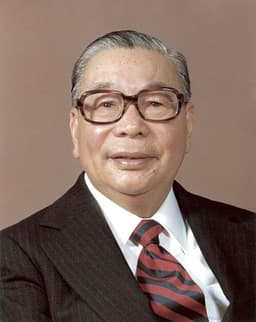
Chiang Wei-kuo
General · Modern
39.2Total
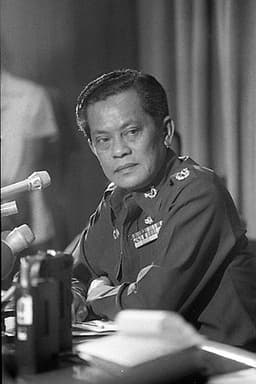
Kriangsak Chamanan
General · Modern
52.3Total
Basic Information
Born
1916
1917
Died
1997
2003
Era
Modern
Modern
Nationality
China
Thailand
Occupation
General
General
Civilization
Eastern
Eastern
Score Comparison
Military (10%)
25.9
25.9
Political (20%)
27.9
72.0
Influence (20%)
48.6
54.9
Legacy (20%)
39.2
46.7
Leadership (15%)
40.4
70.0
Strategy (15%)
43.7
30.3
TOTAL
39.2
52.3
Chiang Wei-kuo — Complete Timeline
1937 AD
Training in the WehrmachtOther
Chiang Wei-kuo, adopted son of Chiang Kai-shek, underwent military training in Nazi Germany's Wehrmacht. This experience shaped his military thinking and connections, though he did not see combat in Europe.
Military TrainingGermanyROC
Impact: national
1945 AD
Command of ROC Armored ForcesWar◆ Major
Chiang Wei-kuo commanded the Republic of China's armored forces during the Chinese Civil War. He led tank units in campaigns against the Communist forces, but was unable to prevent the ROC's retreat to Taiwan.
Chinese Civil WarArmored ForcesROC
Impact: national
1975 AD
Retirement from Active ServicePolitical Action
After the death of his father Chiang Kai-shek, Chiang Wei-kuo retired from active military service. He held ceremonial roles but never achieved the political power of his father or half-brother Chiang Ching-kuo.
RetirementChiang FamilyROC
Impact: national
Kriangsak Chamanan — Complete Timeline
1977 AD
Became Prime Minister of ThailandPolitical Action◆ Major
General Kriangsak Chamanan was appointed Prime Minister after a military coup ousted the civilian government. He led a transitional administration that restored parliamentary democracy and held elections in 1979.
Prime MinisterMilitary RuleDemocracy Transition
Impact: nationalconstructive
1978 AD
Guided the 1978 ConstitutionReform◆ Major
Kriangsak Chamanan oversaw the drafting and promulgation of a new constitution that established a bicameral legislature and paved the way for democratic elections. The constitution remained in effect until 1991.
ConstitutionDemocracyLegal Reform
Impact: nationalconstructive
1979 AD
Held the 1979 General ElectionPolitical Action◆ Major
Under Kriangsak Chamanan's leadership, Thailand held its first general election in three years. The election restored civilian rule, though the military retained significant influence through the appointed Senate.
ElectionDemocracyCivilian Rule
Impact: nationalconstructive
1980 AD
Resigned as Prime MinisterPolitical Action◆ Major
Kriangsak Chamanan resigned as Prime Minister after losing a parliamentary vote of confidence. His resignation allowed for a peaceful transition of power to Prem Tinsulanonda, marking a rare voluntary exit by a military leader.
ResignationPolitical TransitionDemocracy
Impact: national
This comparison has not been analyzed yet.
One-time AI generation (~1 minute). Scores and timeline are already available below.
Rankings
🥇
Kriangsak ChamananLeader
Mil: 25.9Pol: 72.0Inf: 54.9
52.3
🥈
Chiang Wei-kuo
Mil: 25.9Pol: 27.9Inf: 48.6
39.2
+13.1 behind
How This Comparison Works
Algorithm
Each figure is scored on 6 dimensions (0—100 scale) based on structured historical data: Military (10%), Political (20%), Influence (20%), Legacy (20%), Leadership (15%), Strategy (15%). The weighted total produces the final ranking.
Data Sources
Scores are computed from structured sub-indicators in the database. Scale factors adjust for era (Ancient ×0.85, Modern ×1.0) and civilization size (Eastern ×1.05, Other ×0.80) to account for differences in population and military scale.
Maximum 3 Figures
Comparisons are limited to 2—3 figures to ensure readability and statistical meaningfulness.
Error Margins
±5 points per dimension — Sub-scores are derived from historical records with inherent uncertainty. Two figures within 5 points on a dimension should be considered roughly equivalent in that area.
Total Score Accuracy
±3 points overall — The weighted combination of 6 dimensions produces a total score with approximately ±3 points of uncertainty. Differences of less than 3 points are not statistically significant— the figures are effectively tied.
Known Limitations
- Historical records are incomplete and uneven across civilizations
- Figures from oral-tradition societies may be underrepresented
- Occupation labels can misclassify multi-role figures
- Scores measure capability and impact, not moral character
- Quantitative scoring is a comparison tool, not absolute truth
Capability Radar
Military (10%) — Battles & Warfare
Battles
15
10
Win Rate
10
10
Expansion
5
10
Political (20%) — Governance & Reform
Reform
10
60
Diplomacy
15
55
Economy
10
40
Influence (20%) — Cultural & Global Reach
Cultural
10
30
Global
10
30
Legacy (20%) — Historical Impact
Historical
15
40
Longevity
10
30
Leadership (15%) — Power & Stability
Tenure
20
50
Stability
15
45
Strategy (15%) — Tactics & Innovation
Strategy
20
10
Tactics
25
10
Reform
10
20
Similar Comparisons
Comments & Discussion
No comments yet. Be the first to share your thoughts!