Loading...
Chiang Wei-kuo vs Prabowo Subianto
Prabowo Subianto leads by 11.6 pts · 2 figures compared
…
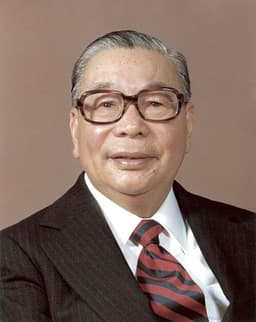
Chiang Wei-kuo
General · Modern
39.2Total

Prabowo Subianto
General · Modern
50.8Total
Basic Information
Born
1916
1951
Died
1997
—
Era
Modern
Modern
Nationality
China
Indonesia
Occupation
General
General
Civilization
Eastern
Eastern
Score Comparison
Military (10%)
25.9
25.9
Political (20%)
27.9
68.0
Influence (20%)
48.6
51.8
Legacy (20%)
39.2
41.7
Leadership (15%)
40.4
72.0
Strategy (15%)
43.7
38.6
TOTAL
39.2
50.8
Chiang Wei-kuo — Complete Timeline
1937 AD
Training in the WehrmachtOther
Chiang Wei-kuo, adopted son of Chiang Kai-shek, underwent military training in Nazi Germany's Wehrmacht. This experience shaped his military thinking and connections, though he did not see combat in Europe.
Military TrainingGermanyROC
Impact: national
1945 AD
Command of ROC Armored ForcesWar◆ Major
Chiang Wei-kuo commanded the Republic of China's armored forces during the Chinese Civil War. He led tank units in campaigns against the Communist forces, but was unable to prevent the ROC's retreat to Taiwan.
Chinese Civil WarArmored ForcesROC
Impact: national
1975 AD
Retirement from Active ServicePolitical Action
After the death of his father Chiang Kai-shek, Chiang Wei-kuo retired from active military service. He held ceremonial roles but never achieved the political power of his father or half-brother Chiang Ching-kuo.
RetirementChiang FamilyROC
Impact: national
Prabowo Subianto — Complete Timeline
1998 AD
Led the 1998 kidnapping of activistsPolitical Action◆ Major
As a military officer, Prabowo was implicated in the kidnapping and disappearance of pro-democracy activists during the final months of Suharto's regime. He was later discharged from the military for his role, though he denied direct involvement.
Human rights abusesMilitarySuharto
Impact: nationaldestructive
2014 AD
Ran for president and lost to Joko WidodoPolitical Action◆ Major
Prabowo Subianto ran as the presidential candidate for the Gerindra Party, losing to Joko Widodo in a closely contested election. He refused to concede, alleging widespread fraud, and his supporters staged protests. The Constitutional Court later rejected his claims.
ElectionJoko WidodoGerindra
Impact: national
2019 AD
Appointed Minister of DefensePolitical Action◆ Major
President Joko Widodo appointed Prabowo as Minister of Defense, a surprising move that brought a former rival into the cabinet. The appointment was seen as an effort to build political stability and unity, though it raised concerns among human rights groups.
Defense MinisterCabinetPolitical unity
Impact: national
2024 AD
Elected President of IndonesiaPolitical Action
Prabowo Subianto won the 2024 Indonesian presidential election, succeeding Joko Widodo. His victory marked a culmination of his political career, though it was accompanied by allegations of electoral manipulation and concerns over his human rights record.
PresidencyElectionIndonesia
Impact: national
Expert Analysis
Origins
Chiang Wei-kuo was born in 1916 as the second son of Chiang Kai-shek, later adopted by him. He received a privileged upbringing in the Jiang family, with access to elite military education. In the 1930s, he was sent to Germany for training in the Wehrmacht, where he studied armored warfare under Nazi instructors. This experience shaped his tactical thinking, but his career was always overshadowed by his father's authority.
Prabowo Subianto was born in 1951 into a prominent Indonesian family. His father, Sumitro Djojohadikusumo, was a respected economist and minister. Prabowo attended the Indonesian Military Academy and served in special forces (Kopassus). His early career included involvement in East Timor and other covert operations, building a reputation for ruthlessness.
Rise to Power
Chiang Wei-kuo's rise was tied to his father. During the Chinese Civil War, he commanded the ROC Armored Forces, leading tank units in campaigns against the Communists. However, after the Nationalist retreat to Taiwan in 1949, his influence waned. He held ceremonial roles but never achieved independent power. His peak moment was commanding armored forces, but he lacked political acumen.
Prabowo's rise was more dramatic. As a son-in-law of President Suharto, he gained rapid promotions, becoming commander of Kopassus by 1995. His involvement in the 1998 kidnapping of pro-democracy activists (scoring 25.9 in military ethics) led to his dismissal and self-exile. He returned to politics in the 2000s, founding the Gerindra Party. After losing the 2014 and 2019 presidential elections to Joko Widodo, he was appointed Defense Minister in 2019, a surprising move. In 2024, he won the presidency, achieving his long-sought goal.
Leadership & Governance
Chiang Wei-kuo's leadership was constrained by his father's shadow. As commander of armored forces, he focused on tactical training but lacked strategic influence. His governance style was indirect, relying on patronage. He scored 40.4 in leadership, reflecting his limited independent command.
Prabowo's leadership is more assertive and populist. As Defense Minister, he modernized Indonesia's military, increasing defense spending and forging closer ties with China and Russia. His political leadership scored 68.0, indicating his ability to build coalitions and win elections. However, his human rights record (the 1998 kidnappings) remains a stain, scoring 25.9 in military and 38.6 in strategy.
Triumph & Tragedy
Chiang's greatest triumph was commanding the ROC Armored Forces during the Chinese Civil War, though his units were ultimately defeated. His tragedy was never escaping his father's legacy; he retired after Chiang Kai-shek's death in 1975, achieving little on his own. His total score of 39.2 reflects this limited impact.
Prabowo's triumph is his 2024 presidential victory, after decades of political struggle. He also successfully managed the defense ministry, boosting Indonesia's military capabilities. His tragedy is his complicity in human rights abuses, which continues to haunt his legacy. His total score of 50.8 is higher, but his military score (25.9) is identical to Chiang's, indicating both had flawed military careers.
Character & Destiny
Chiang was disciplined and loyal to his father, but lacked ambition or strategic vision. His German training made him a competent tactician, but he could not transcend his role as a subordinate. His destiny was to be a footnote in his father's story.
Prabowo is driven, ambitious, and willing to bend rules. His 1998 actions show a ruthless streak, but his persistence led to the presidency. His character—combative and populist—shaped his destiny, oscillating between disgrace and triumph.
Legacy
Chiang Wei-kuo's legacy is minimal. He is remembered as Chiang Kai-shek's son, not for independent achievements. The ROC armored forces he commanded are obsolete, and his influence score of 48.6 is largely due to his family name.
Prabowo's legacy is still forming. As president, he will shape Indonesia's trajectory. His defense policies have reoriented Indonesian security, and his political career demonstrates the rise of oligarchic democracy. His influence score of 51.8 and legacy score of 41.7 are modest but growing.
Conclusion
Prabowo Subianto had greater impact than Chiang Wei-kuo, with a total score of 50.8 vs 39.2. Prabowo achieved independent political power, becoming president and shaping Indonesia's defense. Chiang remained a subordinate, never escaping his father's shadow. While both had military scores of 25.9, Prabowo's political and leadership scores (68.0 and 72.0) far exceed Chiang's (27.9 and 40.4). The 11.6-point gap reflects Prabowo's real influence versus Chiang's symbolic role. In the modern history of Asia, Prabowo's trajectory matters more.
Rankings
🥇
Prabowo SubiantoLeader
Mil: 25.9Pol: 68.0Inf: 51.8
50.8
🥈
Chiang Wei-kuo
Mil: 25.9Pol: 27.9Inf: 48.6
39.2
+11.6 behind
How This Comparison Works
Algorithm
Each figure is scored on 6 dimensions (0—100 scale) based on structured historical data: Military (10%), Political (20%), Influence (20%), Legacy (20%), Leadership (15%), Strategy (15%). The weighted total produces the final ranking.
Data Sources
Scores are computed from structured sub-indicators in the database. Scale factors adjust for era (Ancient ×0.85, Modern ×1.0) and civilization size (Eastern ×1.05, Other ×0.80) to account for differences in population and military scale.
Maximum 3 Figures
Comparisons are limited to 2—3 figures to ensure readability and statistical meaningfulness.
Error Margins
±5 points per dimension — Sub-scores are derived from historical records with inherent uncertainty. Two figures within 5 points on a dimension should be considered roughly equivalent in that area.
Total Score Accuracy
±3 points overall — The weighted combination of 6 dimensions produces a total score with approximately ±3 points of uncertainty. Differences of less than 3 points are not statistically significant— the figures are effectively tied.
Known Limitations
- Historical records are incomplete and uneven across civilizations
- Figures from oral-tradition societies may be underrepresented
- Occupation labels can misclassify multi-role figures
- Scores measure capability and impact, not moral character
- Quantitative scoring is a comparison tool, not absolute truth
Capability Radar
Military (10%) — Battles & Warfare
Battles
15
15
Win Rate
10
10
Expansion
5
5
Political (20%) — Governance & Reform
Reform
10
30
Diplomacy
15
40
Economy
10
35
Influence (20%) — Cultural & Global Reach
Cultural
10
20
Global
10
20
Legacy (20%) — Historical Impact
Historical
15
25
Longevity
10
15
Leadership (15%) — Power & Stability
Tenure
20
55
Stability
15
25
Strategy (15%) — Tactics & Innovation
Strategy
20
15
Tactics
25
20
Reform
10
25
Similar Comparisons
Comments & Discussion
No comments yet. Be the first to share your thoughts!