Loading...
Henri Guisan vs Kriangsak Chamanan
Henri Guisan leads by 6.0 pts · 2 figures compared
…

Henri Guisan
General · Modern
58.3Total
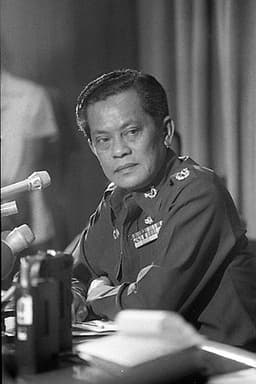
Kriangsak Chamanan
General · Modern
52.3Total
Basic Information
Born
1874
1917
Died
1960
2003
Era
Modern
Modern
Nationality
Switzerland
Thailand
Occupation
General
General
Civilization
Western
Eastern
Score Comparison
Military (10%)
22.6
25.9
Political (20%)
68.0
72.0
Influence (20%)
56.4
54.9
Legacy (20%)
56.0
46.7
Leadership (15%)
77.2
70.0
Strategy (15%)
61.2
30.3
TOTAL
58.3
52.3
Henri Guisan — Complete Timeline
1939 AD
Appointment as General of the Swiss ArmyPolitical Action◆ Major
Guisan was appointed General of the Swiss Armed Forces at the outbreak of World War II, a position only held during wartime. He was tasked with defending Swiss neutrality against potential invasion by Nazi Germany.
World War IIMilitaryNeutrality
Impact: national
1940 AD
Implementation of the National Redoubt StrategyWar◆ Major
Guisan ordered the construction of fortifications in the Swiss Alps, concentrating the army in the mountainous 'Reduit'. This strategy aimed to make invasion costly and deter Germany, while sacrificing the industrial heartland.
Military StrategyFortificationWorld War II
Impact: national
Rütli Report SpeechPolitical Action◆ Major
Guisan delivered the R
Military StrategyWorld War IIDefense
Impact: national
1945 AD
Demobilization of the Swiss ArmyPolitical Action◆ Major
After the end of World War II, Guisan oversaw the demobilization of the Swiss army. He stepped down as General, returning the country to a peacetime posture, having successfully maintained Swiss neutrality.
DemobilizationWorld War IINeutrality
Impact: nationalconstructive
Kriangsak Chamanan — Complete Timeline
1977 AD
Became Prime Minister of ThailandPolitical Action◆ Major
General Kriangsak Chamanan was appointed Prime Minister after a military coup ousted the civilian government. He led a transitional administration that restored parliamentary democracy and held elections in 1979.
Prime MinisterMilitary RuleDemocracy Transition
Impact: nationalconstructive
1978 AD
Guided the 1978 ConstitutionReform◆ Major
Kriangsak Chamanan oversaw the drafting and promulgation of a new constitution that established a bicameral legislature and paved the way for democratic elections. The constitution remained in effect until 1991.
ConstitutionDemocracyLegal Reform
Impact: nationalconstructive
1979 AD
Held the 1979 General ElectionPolitical Action◆ Major
Under Kriangsak Chamanan's leadership, Thailand held its first general election in three years. The election restored civilian rule, though the military retained significant influence through the appointed Senate.
ElectionDemocracyCivilian Rule
Impact: nationalconstructive
1980 AD
Resigned as Prime MinisterPolitical Action◆ Major
Kriangsak Chamanan resigned as Prime Minister after losing a parliamentary vote of confidence. His resignation allowed for a peaceful transition of power to Prem Tinsulanonda, marking a rare voluntary exit by a military leader.
ResignationPolitical TransitionDemocracy
Impact: national
Expert Analysis
Origins
Henri Guisan was born on October 21, 1874, in Mézières, Switzerland, into a Protestant family of modest means. His father was a physician. Guisan studied medicine briefly before switching to law at the University of Lausanne, but his military career began early: he joined the Swiss Army as a volunteer in 1894. By 1914, he had risen to colonel, commanding a brigade. His formative experiences included service in World War I, where Switzerland remained neutral but mobilized its forces. Guisan's background was purely Swiss, without foreign influences, shaping his deep commitment to national defense.
Kriangsak Chamanan was born on December 17, 1917, in Samut Sakhon, Thailand, into a military family. He attended the Chulachomklao Royal Military Academy and later the Command and General Staff College in the United States. He served in the Korean War as part of the Thai contingent. His early career included roles in the Royal Thai Army's Special Forces. Kriangsak's exposure to American military tactics and Cold War politics influenced his later political stance. He was a product of Thailand's military elite, shaped by the country's frequent coups and shifting alliances.
Rise to Power
Guisan's rise was steady and institutional. In 1939, with the outbreak of World War II, the Swiss Federal Assembly appointed him General of the Swiss Armed Forces—a position only created during wartime. This appointment was unanimous, reflecting his reputation as a capable and apolitical officer. His key turning point was the Rütli Report on July 25, 1940, where he addressed 700 officers, outlining the National Redoubt strategy. This speech solidified his leadership and unified the army behind a defensive plan.
Kriangsak's ascent was more turbulent. He became Prime Minister on November 11, 1977, after a military coup led by General Chalard Hiranyasiri, which was then taken over by Kriangsak. He was initially seen as a temporary leader. He consolidated power by balancing factions within the military and securing royal approval. His turning point came with the 1978 constitution, which he championed as a path to democracy. He called elections in 1979 but remained as Prime Minister after the military-backed party won. His power was challenged by economic troubles and internal dissent, leading to his resignation in 1980 after losing a confidence vote.
Leadership & Governance
Guisan's leadership was defensive and unifying. He focused on maintaining Swiss neutrality through credible deterrence. His National Redoubt strategy concentrated forces in the Alps, abandoning the plains to invaders, making conquest costly. He maintained civilian control, reporting to the Federal Council. He scored 77.2 in leadership and 61.2 in strategy. He avoided political involvement, strictly adhering to military roles. His governance was minimalist: he did not seek political power but ensured the army's readiness.
Kriangsak's leadership was transitional and political. He aimed to steer Thailand from military rule to democracy. He oversaw the 1978 constitution, which created an elected lower house but kept an appointed Senate. He allowed political parties and held elections in 1979. However, his government faced economic crises, including inflation and oil price shocks. He scored 72.0 in political and 70.0 in leadership. He struggled with maintaining military support while implementing reforms. He resigned peacefully, a rare event in Thai politics, scoring 30.3 in strategy, reflecting his reactive rather than proactive approach.
Triumph & Tragedy
Guisan's greatest success was keeping Switzerland out of World War II through deterrence. The National Redoubt strategy convinced the Axis that invasion would be too costly. After the war, he demobilized the army smoothly, returning Switzerland to peace. His failure was the lack of a more robust humanitarian stance: Switzerland's policy of turning away Jewish refugees was criticized. Guisan did not publicly oppose this, focusing narrowly on military defense. His legacy is mixed: he saved his country but did not challenge its moral compromises.
Kriangsak's triumph was guiding Thailand's transition to democracy. The 1978 constitution and 1979 elections laid the groundwork for civilian rule. He resigned after losing a vote of confidence, setting a precedent for peaceful transfer of power. His tragedy was economic mismanagement: inflation reached 15% and growth stalled. He also failed to fully democratize; the military retained veto power through the Senate. His resignation was forced, not voluntary, leaving unfinished reforms.
Character & Destiny
Guisan was methodical, cautious, and deeply patriotic. He avoided political intrigue, focusing on his military mandate. His character—stoic and determined—shaped Switzerland's survival. He believed in strict neutrality and civilian control. His destiny was to be the guardian of Swiss independence, but his narrow focus meant he did not address broader moral issues. Historians view him as a symbol of Swiss resilience.
Kriangsak was pragmatic and willing to compromise. He was a transitional figure, not a visionary. His character was shaped by military hierarchy and Cold War realities. He sought to balance democratic reforms with military interests, leading to half-measures. His destiny was to open the door to democracy but not walk through it. He is remembered as a stepping stone, not a reformer.
Legacy
Guisan's legacy is the National Redoubt strategy, which became a symbol of Swiss defense. He is commemorated with statues and a national holiday (Rütli Report anniversary). His influence on Swiss military doctrine persisted through the Cold War. He scored 56.4 in influence and 56.0 in legacy. However, his legacy is limited to Switzerland, with little global impact.
Kriangsak's legacy is the 1978 constitution, which lasted until 1991. He is credited with starting Thailand's democratic transition, though it was incomplete. His peaceful resignation set a precedent. He scored 54.9 in influence and 46.7 in legacy. His impact is regional, within Thai political history.
Conclusion
Henri Guisan had a greater impact than Kriangsak Chamanan, with a total score of 58.3 against 52.3. Guisan's leadership preserved Swiss neutrality in a global conflict, a feat with enduring national significance. Kriangsak's democratic transition was important but flawed and short-lived. Guisan's strategy was coherent and effective; Kriangsak's reforms were partial. While both were transitional figures, Guisan's role in preventing invasion and maintaining stability in a war-torn continent outweighs Kriangsak's domestic political changes. Guisan's legacy is more concrete and lasting. Therefore, Henri Guisan stands as the more impactful leader.
Rankings
🥇
Henri GuisanLeader
Mil: 22.6Pol: 68.0Inf: 56.4
58.3
🥈
Kriangsak Chamanan
Mil: 25.9Pol: 72.0Inf: 54.9
52.3
+6.0 behind
How This Comparison Works
Algorithm
Each figure is scored on 6 dimensions (0—100 scale) based on structured historical data: Military (10%), Political (20%), Influence (20%), Legacy (20%), Leadership (15%), Strategy (15%). The weighted total produces the final ranking.
Data Sources
Scores are computed from structured sub-indicators in the database. Scale factors adjust for era (Ancient ×0.85, Modern ×1.0) and civilization size (Eastern ×1.05, Other ×0.80) to account for differences in population and military scale.
Maximum 3 Figures
Comparisons are limited to 2—3 figures to ensure readability and statistical meaningfulness.
Error Margins
±5 points per dimension — Sub-scores are derived from historical records with inherent uncertainty. Two figures within 5 points on a dimension should be considered roughly equivalent in that area.
Total Score Accuracy
±3 points overall — The weighted combination of 6 dimensions produces a total score with approximately ±3 points of uncertainty. Differences of less than 3 points are not statistically significant— the figures are effectively tied.
Known Limitations
- Historical records are incomplete and uneven across civilizations
- Figures from oral-tradition societies may be underrepresented
- Occupation labels can misclassify multi-role figures
- Scores measure capability and impact, not moral character
- Quantitative scoring is a comparison tool, not absolute truth
Capability Radar
Military (10%) — Battles & Warfare
Battles
10
10
Win Rate
10
10
Expansion
5
10
Political (20%) — Governance & Reform
Reform
50
60
Diplomacy
65
55
Economy
30
40
Influence (20%) — Cultural & Global Reach
Cultural
40
30
Global
30
30
Legacy (20%) — Historical Impact
Historical
60
40
Longevity
50
30
Leadership (15%) — Power & Stability
Tenure
55
50
Stability
80
45
Strategy (15%) — Tactics & Innovation
Strategy
75
10
Tactics
60
10
Reform
70
20
Similar Comparisons
Comments & Discussion
No comments yet. Be the first to share your thoughts!