Loading...
Chen Yun vs Napoleon Bonaparte
Napoleon Bonaparte leads by 15.7 pts · 2 figures compared
…
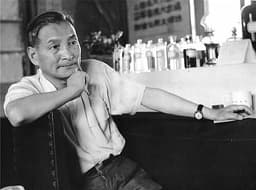
Chen Yun
Politician · Modern
55.2Total

Napoleon Bonaparte
General · Modern
70.9Total
Basic Information
Born
1905
1769
Died
1995
1821
Era
Modern
Modern
Nationality
China
France
Occupation
Politician
General
Civilization
Eastern
Western
Score Comparison
Military (10%)
11.7
94.0
Political (20%)
70.3
72.0
Influence (20%)
62.0
40.0
Legacy (20%)
55.0
80.0
Leadership (15%)
78.0
78.0
Strategy (15%)
25.6
90.0
TOTAL
55.2
70.9
Chen Yun — Complete Timeline
1925 AD
Joined the Chinese Communist PartyPolitical Action◆ Major
Chen Yun joined the Chinese Communist Party during the May Thirtieth Movement. He began his career as a labor organizer in Shanghai, rising through the ranks of the party's underground apparatus.
CCP MembershipLabor MovementShanghai
Impact: nationalconstructive
1961 AD
Led economic reconstruction after the Great Leap ForwardReform◆ Major
Chen Yun was appointed to lead economic recovery efforts after the disastrous Great Leap Forward. He implemented policies that reduced central planning, allowed private plots, and stabilized the economy, saving millions from famine.
Economic ReformGreat Leap ForwardFamine Relief
Impact: nationalconstructive
1966 AD
Purged during the Cultural RevolutionPolitical Action◆ Major
Chen Yun was purged from his leadership positions during the Cultural Revolution, accused of being a capitalist roader. He was sent to work in a factory in Jiangxi, but survived the period without being killed.
Cultural RevolutionPurgeEconomic Planning
Impact: nationaldestructive
1978 AD
Advocated for market reforms under Deng XiaopingReform◆ Major
Chen Yun supported Deng Xiaoping's economic reforms, advocating for a 'birdcage economy' that combined state planning with market mechanisms. He helped design the Special Economic Zones and agricultural decollectivization.
Deng XiaopingEconomic ReformMarket Economy
Impact: nationalconstructive
1987 AD
Served as Chairman of the Central Advisory CommissionPolitical Action
Chen Yun became Chairman of the Central Advisory Commission, a body of retired senior leaders. He used this position to influence economic policy, often cautioning against excessive market liberalization.
Advisory CommissionEconomic PolicyElder Statesman
Impact: national
Napoleon Bonaparte — Complete Timeline
1799 AD
Coup of 18 BrumaireOther◆ Major
Napoleon Bonaparte, with support from his brother Lucien and key political figures, overthrew the Directory in a bloodless coup. He established the Consulate with himself as First Consul, effectively becoming the ruler of France. This event ended the French Revolution's most unstable period.
French RevolutionCoupRise to Power
Impact: regional
1804 AD
Promulgation of the Napoleonic CodeOther◆ Major
Napoleon enacted the Civil Code of the French, known as the Napoleonic Code, a comprehensive set of laws that replaced the fragmented feudal legal systems. The code established legal equality, protected property rights, and secularized law. It became the basis for legal systems in many European and world countries.
Legal ReformNapoleonic CodeCivil Law
Impact: globalconstructive
1805 AD
Battle of AusterlitzWar◆ Major
Napoleon's Grande Arm
Napoleonic WarsBattleDecisive Victory
Impact: global
1812 AD
Invasion of RussiaWar◆ Major
Napoleon led the Grande Arm
Napoleonic WarsInvasionDisaster
Impact: globaldestructive
1815 AD
Battle of WaterlooWar◆ Major
Napoleon's French army was defeated by the combined forces of the Duke of Wellington's Anglo-Allied army and Gebhard Leberecht von Bl
Napoleonic WarsBattleFinal Defeat
Impact: globaldestructive
Expert Analysis
chen-yun-vs-napoleon-bonaparte
# The Conqueror and the Planner: Napoleon and Chen Yun
In the spring of 1815, Napoleon Bonaparte stood on a hill overlooking the fields of Waterloo, his Grande Armée arrayed in perfect order, ready to crush the allied forces that dared oppose him. One hundred and sixty-three years later, in the winter of 1978, Chen Yun sat in a modest office in Beijing, drafting economic policies that would lift hundreds of millions from poverty. Both men wielded immense power, yet their worlds could not have been more different. One conquered nations with cannon and cavalry; the other reshaped a nation with spreadsheets and quotas. What drove these two figures to such divergent paths, and why did one end in exile while the other died in honored retirement?
Origins
Napoleon was born in 1769 on the Mediterranean island of Corsica, a territory only recently annexed by France. His family belonged to the minor nobility, but they were poor and spoke Italian-accented French. From childhood, Napoleon carried the resentment of a provincial outsider. He devoured military history and classical philosophy, dreaming of glory on a grand scale. The French Revolution, which erupted when he was twenty, shattered the old order and opened doors that would have remained closed under the monarchy. A young artillery officer with talent and ambition could rise faster than ever before.
Chen Yun was born in 1905 in a small village near Shanghai, into a family of impoverished farmers. His father died when he was four, and his mother worked as a servant. He received only a few years of formal schooling before becoming an apprentice in a bookstore. There, he encountered Marxist texts and labor union pamphlets. The chaos of warlord-era China, the exploitation of workers, and the humiliation of foreign domination shaped his worldview. While Napoleon dreamed of personal glory, Chen Yun dreamed of collective liberation.
Rise to Power
Napoleon’s ascent was meteoric. At twenty-four, he captured the port of Toulon from British forces, earning promotion to brigadier general. At twenty-six, he suppressed a royalist uprising in Paris with a "whiff of grapeshot." At twenty-seven, he took command of the Italian campaign and won a series of stunning victories against the Austrians, his military score of 94.0 reflecting a genius for maneuver, speed, and psychological warfare. He knew how to inspire soldiers and terrify enemies. The Directory, France’s corrupt governing body, sent him to Egypt to keep him away from Paris, but he returned in 1799, seized power in a coup, and made himself First Consul. By 1804, he crowned himself Emperor.
Chen Yun’s rise was slower, more deliberate. He joined the Chinese Communist Party in 1925 during the May Thirtieth Movement, working as a labor organizer in Shanghai. He survived the purges of the 1930s and became a key economic administrator in Yan’an, the Communists’ wartime base. Unlike Napoleon, Chen Yun did not seek personal power. He was a technician of governance, known for his caution and his insistence on "seeking truth from facts." By the 1950s, he was one of the principal architects of China’s planned economy, a man who understood steel production figures and grain harvests as intimately as Napoleon understood troop formations.
Leadership & Governance
Napoleon ruled through charisma, fear, and relentless energy. He personally led his armies into battle, often at great personal risk, and demanded absolute loyalty. His political score of 75.0 reflects a mixed record: he centralized the state, created the Napoleonic Code that standardized law across Europe, and established the Bank of France. But he also silenced dissent, censored the press, and placed his brothers on thrones. His governance was a paradox—modernizing and tyrannical, enlightened and autocratic.
Chen Yun governed through consensus, patience, and institutional knowledge. After the catastrophic Great Leap Forward (1958–1961), which caused a massive famine, Chen Yun was appointed in 1961 to lead economic reconstruction. He reversed Mao’s radical policies, restored private plots for farmers, and prioritized light industry over heavy industry. Unlike Napoleon, who commanded from the front, Chen Yun worked behind the scenes, writing memos and building coalitions. His leadership score of 78.4 reflects a quiet but effective style. He was purged during the Cultural Revolution in 1966, accused of being a "capitalist roader," but he survived, biding his time. In 1978, he emerged as a key supporter of Deng Xiaoping’s market reforms, advocating for a "birdcage economy"—state planning as a framework, but with room for market forces to fly.
Triumph & Tragedy
Napoleon’s greatest triumph was the Battle of Austerlitz in 1805, where he destroyed the combined armies of Russia and Austria, cementing his control over Europe. His greatest tragedy was the invasion of Russia in 1812. He marched 600,000 men into the vastness of winter and returned with fewer than 100,000. His strategic score of 93.0 could not compensate for his hubris. Exiled to Elba, he escaped in 1815, rallied France, and met his final defeat at Waterloo. He died in 1821 on the remote island of Saint Helena, a prisoner of the British.
Chen Yun’s greatest triumph was the economic recovery after the Great Leap Forward, when his pragmatic policies saved millions of lives. His greatest tragedy was the Cultural Revolution, which saw him stripped of power, humiliated, and forced into obscurity for a decade. Unlike Napoleon, Chen Yun lived to see his vindication. He returned to influence in the late 1970s and helped guide China’s transition from a command economy to a market-oriented one. He died in 1995 at the age of ninety, respected as a "wise elder" of the Party.
Character & Destiny
Napoleon was driven by an insatiable hunger for glory. "I am not a man," he once said, "I am a thing—a force." His personality—brilliant, arrogant, restless—propelled him to dizzying heights but also to catastrophic overreach. He could not stop, because stopping meant admitting limits, and limits were unacceptable.
Chen Yun was driven by a sense of duty and a deep distrust of ideological extremism. "We must not be impatient for quick results," he often warned. His personality—pragmatic, cautious, self-effacing—allowed him to survive where bolder figures perished. He understood that history had its own pace, and that the planner must adapt to reality, not the other way around.
Legacy
Napoleon’s legacy is a contradiction. He spread the ideals of the French Revolution—equality before the law, secular governance, meritocracy—across Europe, yet he also revived slavery in the French colonies and built an empire of conquest. His military innovations influenced warfare for a century. His Napoleonic Code remains the basis of civil law in many countries. He is remembered as a titan, a demon, and a genius.
Chen Yun’s legacy is quieter but no less profound. He helped lay the foundations for China’s economic miracle. His insistence on balancing state planning with market forces, his emphasis on stability over speed, and his willingness to learn from mistakes shaped the policies that lifted millions from poverty. He is remembered in China as a model of the "good Communist"—loyal, honest, and effective.
Conclusion
Napoleon and Chen Yun stand at opposite ends of the spectrum of power. One conquered the world and lost it; the other built a system that outlasted him. One lived by the sword; the other lived by the ledger. Yet both were products of their times—Napoleon of a revolutionary era that rewarded audacity, Chen Yun of a revolutionary era that demanded survival. In the end, the conqueror’s glory fades into legend, while the planner’s work quietly shapes the lives of billions. Perhaps the lesson is not that one path is better, but that history has room for both the lightning bolt and the steady rain.
Rankings
🥇
Napoleon BonaparteLeader
Mil: 94.0Pol: 72.0Inf: 40.0
70.9
🥈
Chen Yun
Mil: 11.7Pol: 70.3Inf: 62.0
55.2
+15.7 behind
How This Comparison Works
Algorithm
Each figure is scored on 6 dimensions (0—100 scale) based on structured historical data: Military (10%), Political (20%), Influence (20%), Legacy (20%), Leadership (15%), Strategy (15%). The weighted total produces the final ranking.
Data Sources
Scores are computed from structured sub-indicators in the database. Scale factors adjust for era (Ancient ×0.85, Modern ×1.0) and civilization size (Eastern ×1.05, Other ×0.80) to account for differences in population and military scale.
Maximum 3 Figures
Comparisons are limited to 2—3 figures to ensure readability and statistical meaningfulness.
Error Margins
±5 points per dimension — Sub-scores are derived from historical records with inherent uncertainty. Two figures within 5 points on a dimension should be considered roughly equivalent in that area.
Total Score Accuracy
±3 points overall — The weighted combination of 6 dimensions produces a total score with approximately ±3 points of uncertainty. Differences of less than 3 points are not statistically significant— the figures are effectively tied.
Known Limitations
- Historical records are incomplete and uneven across civilizations
- Figures from oral-tradition societies may be underrepresented
- Occupation labels can misclassify multi-role figures
- Scores measure capability and impact, not moral character
- Quantitative scoring is a comparison tool, not absolute truth
Capability Radar
Military (10%) — Battles & Warfare
Battles
16
95
Win Rate
17
90
Expansion
20
95
Political (20%) — Governance & Reform
Reform
80
95
Diplomacy
70
80
Economy
90
85
Influence (20%) — Cultural & Global Reach
Cultural
40
85
Global
60
90
Legacy (20%) — Historical Impact
Historical
75
95
Longevity
65
90
Leadership (15%) — Power & Stability
Tenure
75
85
Stability
85
70
Strategy (15%) — Tactics & Innovation
Strategy
26
95
Tactics
27
98
Reform
28
92
Similar Comparisons
Comments & Discussion
Napoleon-Whisperer6/17/2026
Napoleon didn’t just lose at Waterloo—he lost because he ignored his own principles. He split his army before the battle, trusted a subordinate who failed him, and attacked ground he hadn't scouted. Chen Yun would have spotted that planning failure immediately. In 1915, military theorists were already writing about logistics and intel. Napoleon acted like a gambler, not a general. Chen Yun built China’s Five-Year Plans with surgical precision. One died in style, the other died in dignity. I pref
数字铁算盘6/17/2026
拿数据说话:拿破仑打了60多场战役,但法国在1815年GDP暴跌,而陈云的经济政策让中国1978-1988年GDP平均增长9%。别跟我谈什么滑铁卢的悲壮,悲壮不能当饭吃。拿破仑是战术天才,战略白痴;陈云是算盘响了,万里江山动了。你选浪漫,我选吃饱。
Legionnaire's Ghost6/17/2026
You revisionists romanticize the spreadsheet. Napoleon faced five armies simultaneously in 1814 and damn near won. Chen Yun never had to command a cavalry charge at midnight in a blizzard. One man remade Europe in a decade; the other tweaked grain quotas. Give me the man who painted his battles on the map, not the one who colored inside the lines.
历史侦探6/17/2026
拿破仑那个时代的人写回忆录,都说他记忆力惊人,能记住每个军官的名字。但陈云同样厉害——文革后他坐牢出来,脑子里装着整个中国经济的数据,不用笔记本。两人都是掌控信息的高手,但拿破仑的信息拼的是生死,陈云的信息拼的是温饱。战略家和实干家,没法比,但都值得记住。