Loading...
Chen Yun vs Joe Biden
Chen Yun leads by 0.2 pts · 2 figures compared
…
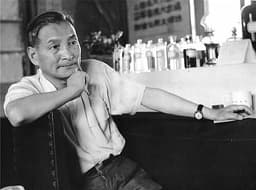
Chen Yun
Politician · Modern
55.2Total

Joe Biden
Politician · Modern
55.0Total
Basic Information
Born
1905
1942
Died
1995
—
Era
Modern
Modern
Nationality
China
United States
Occupation
Politician
Politician
Civilization
Eastern
Western
Score Comparison
Military (10%)
11.7
49.3
Political (20%)
70.3
62.7
Influence (20%)
62.0
61.0
Legacy (20%)
55.0
45.8
Leadership (15%)
78.0
66.0
Strategy (15%)
25.6
41.0
TOTAL
55.2
55.0
Chen Yun — Complete Timeline
1925 AD
Joined the Chinese Communist PartyPolitical Action◆ Major
Chen Yun joined the Chinese Communist Party during the May Thirtieth Movement. He began his career as a labor organizer in Shanghai, rising through the ranks of the party's underground apparatus.
CCP MembershipLabor MovementShanghai
Impact: nationalconstructive
1961 AD
Led economic reconstruction after the Great Leap ForwardReform◆ Major
Chen Yun was appointed to lead economic recovery efforts after the disastrous Great Leap Forward. He implemented policies that reduced central planning, allowed private plots, and stabilized the economy, saving millions from famine.
Economic ReformGreat Leap ForwardFamine Relief
Impact: nationalconstructive
1966 AD
Purged during the Cultural RevolutionPolitical Action◆ Major
Chen Yun was purged from his leadership positions during the Cultural Revolution, accused of being a capitalist roader. He was sent to work in a factory in Jiangxi, but survived the period without being killed.
Cultural RevolutionPurgeEconomic Planning
Impact: nationaldestructive
1978 AD
Advocated for market reforms under Deng XiaopingReform◆ Major
Chen Yun supported Deng Xiaoping's economic reforms, advocating for a 'birdcage economy' that combined state planning with market mechanisms. He helped design the Special Economic Zones and agricultural decollectivization.
Deng XiaopingEconomic ReformMarket Economy
Impact: nationalconstructive
1987 AD
Served as Chairman of the Central Advisory CommissionPolitical Action
Chen Yun became Chairman of the Central Advisory Commission, a body of retired senior leaders. He used this position to influence economic policy, often cautioning against excessive market liberalization.
Advisory CommissionEconomic PolicyElder Statesman
Impact: national
Joe Biden — Complete Timeline
2020 AD
Election as President of the United StatesPolitical Action◆ Major
Biden won the 2020 presidential election against incumbent Donald Trump, receiving over 81 million votes, the most ever for a presidential candidate. His victory was certified after the January 6 Capitol attack, and he was inaugurated on January 20, 2021.
Presidential ElectionDemocratic Party
Impact: global
2021 AD
Withdrawal of U.S. Troops from AfghanistanWar
Biden completed the withdrawal of U.S. troops from Afghanistan, ending the 20-year war. The withdrawal was chaotic, with the Taliban rapidly taking control of the country. The fall of Kabul led to a humanitarian crisis and widespread criticism of the administration's planning.
Afghanistan WarMilitary Withdrawal
Impact: globaltragic
Signing of the American Rescue Plan ActPolitical Action◆ Major
Biden signed the American Rescue Plan Act, a $1.9 trillion economic stimulus package to address the COVID-19 pandemic and its economic impact. The act included direct payments to individuals, expanded unemployment benefits, and funding for vaccine distribution.
COVID-19 PandemicEconomic Stimulus
Impact: nationalconstructive
Expert Analysis
Origins
Chen Yun was born in 1905 into a poor peasant family in Qingpu, Jiangsu province. Orphaned at a young age, he worked as a printer's apprentice in Shanghai, where he joined the Chinese Communist Party in 1925 during the May Thirtieth Movement. His early career as a labor organizer gave him firsthand experience of urban workers' struggles. In contrast, Joe Biden was born in 1942 in Scranton, Pennsylvania, to a middle-class Catholic family. He studied at the University of Delaware and Syracuse Law School, entering politics as a New Castle County councilman in 1970. Biden's formative years were shaped by the civil rights movement and the Vietnam War, but he lacked the revolutionary upheaval that defined Chen Yun's youth.
Rise to Power
Chen Yun rose through the CCP's organizational and economic ranks. By the 1940s, he was a key figure in the party's financial and economic work in Yan'an, becoming a member of the Politburo in 1945. His expertise in economic planning led him to become one of the architects of China's first five-year plan. However, his influence waned during the Great Leap Forward, but after its failure, Mao Zedong appointed him in 1961 to lead economic recovery, where he implemented pragmatic policies that reduced central planning. Biden's rise was slower: elected to the U.S. Senate in 1972 at age 30, he served 36 years, chairing the Judiciary and Foreign Relations Committees. He became Vice President under Barack Obama in 2009, and after two failed presidential bids, won the presidency in 2020 against Donald Trump, receiving over 81 million votes.
Leadership & Governance
Chen Yun's leadership was characterized by cautious, pragmatic economic management. He advocated for a "birdcage economy"—state planning as the cage, market forces as the bird—balancing reform with stability. His governance style was technocratic and consensus-building, often clashing with more radical reformers. For example, he opposed rapid price liberalization in the 1980s, warning of inflation. Biden's leadership is more activist and crisis-driven. He signed the $1.9 trillion American Rescue Plan, pushed for infrastructure investment, and expanded social programs. However, his governance faced criticism for the chaotic Afghanistan withdrawal in 2021, where the Taliban retook power within weeks. Chen Yun scored 78.0 in leadership, while Biden scored 66.0, reflecting Chen Yun's longer tenure in shaping economic policy.
Triumph & Tragedy
Chen Yun's greatest triumph was stabilizing China's economy after the Great Leap Forward, restoring agricultural and industrial production. He also played a key role in Deng Xiaoping's market reforms, ensuring they did not spiral into chaos. His tragedy was being purged during the Cultural Revolution (1966-1976), forced to work in a factory, and later sidelined as Deng's reforms accelerated. Biden's triumph includes passing landmark legislation like the American Rescue Plan and the Inflation Reduction Act, as well as restoring international alliances. His tragedy is the chaotic Afghanistan withdrawal, which damaged U.S. credibility, and his failure to prevent high inflation. Chen Yun's political score of 70.3 and influence of 62.0 edge Biden's 62.7 and 61.0, but both faced significant setbacks.
Character & Destiny
Chen Yun was known for his meticulous, data-driven approach—earning the nickname "the man who never made a mistake" among colleagues. He was cautious, often warning against haste, and his character led him to survive political storms while remaining influential. Biden is characterized as empathetic and institutionalist, but impulsive in crisis. His decision to withdraw from Afghanistan was based on a prior agreement, but execution was flawed. Chen Yun's strategy score of 25.6 is low, reflecting his limited role in military affairs, while Biden's 41.0 reflects his foreign policy experience. Yet both men's destinies were shaped by their ability to navigate their respective systems: Chen Yun as a pragmatic communist, Biden as a deal-making democrat.
Legacy
Chen Yun's legacy is as the architect of China's market-oriented reforms within a socialist framework. His "birdcage economy" concept influenced China's gradualist approach, which lifted hundreds of millions from poverty. He is remembered as a stabilizing force in the CCP. Biden's legacy is still forming, but he will be noted for his domestic legislative achievements and restoring U.S. global engagement after Trump. However, the Afghanistan withdrawal and inflation may overshadow his tenure. Chen Yun's legacy score of 55.0 is higher than Biden's 45.8, reflecting his longer-lasting impact on China's economic model.
Conclusion
Chen Yun had a greater impact than Joe Biden. While both scored similarly overall (55.2 vs 55.0), Chen Yun's role in shaping the economic system of the world's most populous nation for decades gives him an edge. His pragmatic reforms survived his tenure and continue to influence China's mixed economy. Biden's achievements are significant but more reactive to immediate crises, and his long-term legacy is uncertain. Chen Yun's leadership score of 78.0 and political acumen of 70.3 surpass Biden's 66.0 and 62.7, cementing his position as the more consequential figure in historical terms.
Rankings
🥇
Chen YunLeader
Mil: 11.7Pol: 70.3Inf: 62.0
55.2
🥈
Joe Biden
Mil: 49.3Pol: 62.7Inf: 61.0
55.0
+0.2 behind
How This Comparison Works
Algorithm
Each figure is scored on 6 dimensions (0—100 scale) based on structured historical data: Military (10%), Political (20%), Influence (20%), Legacy (20%), Leadership (15%), Strategy (15%). The weighted total produces the final ranking.
Data Sources
Scores are computed from structured sub-indicators in the database. Scale factors adjust for era (Ancient ×0.85, Modern ×1.0) and civilization size (Eastern ×1.05, Other ×0.80) to account for differences in population and military scale.
Maximum 3 Figures
Comparisons are limited to 2—3 figures to ensure readability and statistical meaningfulness.
Error Margins
±5 points per dimension — Sub-scores are derived from historical records with inherent uncertainty. Two figures within 5 points on a dimension should be considered roughly equivalent in that area.
Total Score Accuracy
±3 points overall — The weighted combination of 6 dimensions produces a total score with approximately ±3 points of uncertainty. Differences of less than 3 points are not statistically significant— the figures are effectively tied.
Known Limitations
- Historical records are incomplete and uneven across civilizations
- Figures from oral-tradition societies may be underrepresented
- Occupation labels can misclassify multi-role figures
- Scores measure capability and impact, not moral character
- Quantitative scoring is a comparison tool, not absolute truth
Capability Radar
Military (10%) — Battles & Warfare
Battles
16
31
Win Rate
17
33
Expansion
20
33
Political (20%) — Governance & Reform
Reform
80
55
Diplomacy
70
65
Economy
90
50
Influence (20%) — Cultural & Global Reach
Cultural
40
40
Global
60
55
Legacy (20%) — Historical Impact
Historical
75
45
Longevity
65
30
Leadership (15%) — Power & Stability
Tenure
75
70
Stability
85
45
Strategy (15%) — Tactics & Innovation
Strategy
26
37
Tactics
27
40
Reform
28
41
Similar Comparisons
Comments & Discussion
No comments yet. Be the first to share your thoughts!