Loading...
Charles XV of Sweden vs Guru Hargobind
Guru Hargobind leads by 14.2 pts · 2 figures compared
…
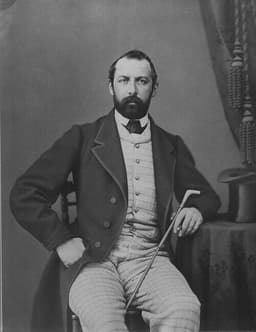
Charles XV of Sweden
Emperor · Modern
43.0Total

Guru Hargobind
Emperor · Modern
57.2Total
Basic Information
Born
1826
1595
Died
1872
1644
Era
Modern
Modern
Nationality
Sweden
India
Occupation
Emperor
Emperor
Civilization
Western
Indian
Score Comparison
Military (10%)
48.3
40.0
Political (20%)
30.8
68.0
Influence (20%)
49.4
61.0
Legacy (20%)
35.8
58.0
Leadership (15%)
43.6
53.2
Strategy (15%)
57.0
52.5
TOTAL
43.0
57.2
Charles XV of Sweden — Complete Timeline
1859 AD
Accession to the thronePolitical Action◆ Major
Charles XV became King of Sweden and Norway upon the death of his father, Oscar I. His reign began during a period of political reform and growing Scandinavian nationalism.
SuccessionMonarchy
Impact: national
1860 AD
Artistic patronage and paintingCultural
Charles XV was an accomplished painter and patron of the arts. He produced several landscape paintings and supported artists, contributing to the cultural life of Sweden during his reign.
ArtPatronageCulture
Impact: nationalconstructive
1866 AD
Parliamentary reform of 1866Reform◆ Major
Charles XV supported the reform that replaced the four-estate Riksdag with a bicameral parliament. This modernized Sweden's political system, increasing the influence of the middle class and reducing aristocratic power.
Political ReformParliamentModernization
Impact: nationalprogressive
Guru Hargobind — Complete Timeline
1606 AD
Militarized the Sikh CommunityReform◆ Major
Guru Hargobind adopted the symbols of sovereignty, wearing two swords (Miri and Piri) representing temporal and spiritual authority. He built the Akal Takht and began training Sikhs in warfare, transforming them into a martial community.
MilitarizationSikhismAkal Takht
Impact: globalconstructive
Appointed Sixth Sikh GuruPolitical Action
Guru Arjan Dev appointed Hargobind as his successor, making him the sixth Sikh Guru. This occurred shortly before Arjan's martyrdom, and Hargobind inherited a community under Mughal persecution.
SikhismGuru SuccessionLeadership
Impact: globalconstructive
1612 AD
Released 52 Hindu Kings from Gwalior FortPolitical Action◆ Major
Guru Hargobind secured the release of 52 Hindu princes imprisoned by Emperor Jahangir at Gwalior Fort. He refused to leave without them, and they were freed together, earning him the title 'Bandi Chhor' (Liberator).
ReleasePrisonersGwalior
Impact: regionalconstructive
1628 AD
Battle of Amritsar (1628)War◆ Major
Guru Hargobind's forces repelled a Mughal attack near Amritsar. This was the first major armed conflict between Sikhs and the Mughal Empire, establishing Sikh military resistance.
BattleMughal ConflictSikh Resistance
Impact: regional
1635 AD
Battle of Kartarpur (1635)War◆ Major
Guru Hargobind's forces defeated a Mughal army at Kartarpur. This victory solidified Sikh military strength and demonstrated the effectiveness of his martial policies.
BattleMughal ConflictSikh Victory
Impact: regional
Expert Analysis
Origins
Charles XV, born in 1826, was the eldest son of King Oscar I of Sweden and Josephine of Leuchtenberg. He was educated in a liberal environment, exposed to both military training and the arts. His early life prepared him for a constitutional monarchy, where he would navigate political reforms. In contrast, Guru Hargobind was born in 1595 in Wadali, Punjab, to Guru Arjan Dev and Mata Ganga. From a young age, he was immersed in Sikh spirituality and the persecution faced by his father under Mughal rule. His upbringing emphasized both spiritual discipline and martial training, as his father foresaw the need for armed resistance.
Rise to Power
Charles XV ascended the throne in 1859 upon his father's death, inheriting a kingdom undergoing industrialization and political change. His rise was smooth, backed by the Swedish nobility and a growing middle class. He actively supported the parliamentary reform of 1866, which replaced the four-estate Riksdag with a bicameral system, modernizing Sweden's governance. Guru Hargobind became the sixth Sikh Guru in 1606 at age 11, following the martyrdom of his father, Guru Arjan Dev, by Mughal Emperor Jahangir. He immediately adopted the symbol of Miri and Piri (temporal and spiritual authority), militarizing the Sikh community. He built the Akal Takht (Throne of the Timeless) in Amritsar as a center of political power, directly challenging Mughal supremacy.
Leadership & Governance
Charles XV was a constitutional monarch who wielded limited political power but used his influence to support liberal reforms. He was known for his patronage of the arts, painting landscapes, and supporting cultural institutions. His leadership style was collaborative, working with parliament to pass reforms, but he lacked decisive political authority. He scored 30.8 in political skill, reflecting his constrained role. Guru Hargobind, on the other hand, was a theocratic leader who combined spiritual guidance with military command. He established a standing army, fortified Sikh centers, and engaged in direct conflict with Mughal forces. His political score of 68.0 reflects his ability to mobilize a community and challenge an empire. He governed through a decentralized system of masands (deputies) but maintained central authority.
Triumph & Tragedy
Charles XV's greatest success was the 1866 parliamentary reform, which laid the foundation for modern Swedish democracy. He also fostered cultural growth, with his paintings and support for artists contributing to Sweden's romantic nationalist movement. However, his reign saw economic struggles and a failed attempt to unify Scandinavia during the Dano-Prussian War (1864), where Sweden remained neutral, damaging his reputation. His legacy is mixed: he is remembered as a popular but ineffective ruler, with a total score of 43.0. Guru Hargobind's triumphs include the release of 52 Hindu kings from Gwalior Fort in 1619, a major diplomatic and humanitarian achievement, and victories at the Battles of Amritsar (1628) and Kartarpur (1635), which established Sikh military prowess. His tragedy lies in the continued persecution of Sikhs after his death, and his militarization set the stage for future conflicts. He scored 58.0 in legacy, reflecting his enduring impact.
Character & Destiny
Charles XV was a cultured, affable monarch who preferred art to war. His personality shaped his reign as a period of peaceful transition, but his lack of assertiveness prevented him from achieving greater political influence. He scored 43.6 in leadership, indicating a moderate command. Guru Hargobind was a warrior-saint, combining spiritual depth with tactical acumen. His character was forged by his father's martyrdom, leading him to prioritize defense of the Sikh community. His decision-making was strategic, as seen in his use of symbolism (two swords) and fortifications. His leadership score of 53.2 reflects his effectiveness in rallying his people against a powerful empire.
Legacy
Charles XV's legacy is tied to Sweden's constitutional evolution and cultural flowering. The bicameral parliament he championed lasted until 1970, and his artistic works remain in Swedish museums. However, his overall impact is modest, with an influence score of 49.4. Guru Hargobind's legacy is profound within Sikhism: he institutionalized the concept of temporal authority, leading to the Sikh political entity that would later challenge the Mughals and British. His militarization laid the groundwork for the Khalsa under Guru Gobind Singh. His influence score of 61.0 reflects his enduring role as a founder of Sikh militancy and sovereignty.
Conclusion
While Charles XV contributed to Swedish modernization and culture, his impact was limited by constitutional constraints and a short reign. Guru Hargobind fundamentally transformed Sikhism from a pacifist faith into a militant community capable of resisting empire. His political and legacy scores (68.0 and 58.0) far exceed Charles XV's (30.8 and 35.8). The total score gap of 14.2 points underscores Hargobind's greater historical significance. Therefore, Guru Hargobind had a greater impact, as he reshaped religious and political structures that influenced centuries of South Asian history.
Rankings
🥇
Guru HargobindLeader
Mil: 40.0Pol: 68.0Inf: 61.0
57.2
🥈
Charles XV of Sweden
Mil: 48.3Pol: 30.8Inf: 49.4
43.0
+14.2 behind
How This Comparison Works
Algorithm
Each figure is scored on 6 dimensions (0—100 scale) based on structured historical data: Military (10%), Political (20%), Influence (20%), Legacy (20%), Leadership (15%), Strategy (15%). The weighted total produces the final ranking.
Data Sources
Scores are computed from structured sub-indicators in the database. Scale factors adjust for era (Ancient ×0.85, Modern ×1.0) and civilization size (Eastern ×1.05, Other ×0.80) to account for differences in population and military scale.
Maximum 3 Figures
Comparisons are limited to 2—3 figures to ensure readability and statistical meaningfulness.
Error Margins
±5 points per dimension — Sub-scores are derived from historical records with inherent uncertainty. Two figures within 5 points on a dimension should be considered roughly equivalent in that area.
Total Score Accuracy
±3 points overall — The weighted combination of 6 dimensions produces a total score with approximately ±3 points of uncertainty. Differences of less than 3 points are not statistically significant— the figures are effectively tied.
Known Limitations
- Historical records are incomplete and uneven across civilizations
- Figures from oral-tradition societies may be underrepresented
- Occupation labels can misclassify multi-role figures
- Scores measure capability and impact, not moral character
- Quantitative scoring is a comparison tool, not absolute truth
Capability Radar
Military (10%) — Battles & Warfare
Battles
22
45
Win Rate
28
50
Expansion
29
40
Political (20%) — Governance & Reform
Reform
25
60
Diplomacy
20
50
Economy
15
30
Influence (20%) — Cultural & Global Reach
Cultural
30
60
Global
5
45
Legacy (20%) — Historical Impact
Historical
15
65
Longevity
10
70
Leadership (15%) — Power & Stability
Tenure
13
55
Stability
20
45
Strategy (15%) — Tactics & Innovation
Strategy
32
50
Tactics
38
55
Reform
41
65
Similar Comparisons
Comments & Discussion
No comments yet. Be the first to share your thoughts!