Loading...
Charles XV of Sweden vs Feodor III
Feodor III leads by 7.1 pts · 2 figures compared
…
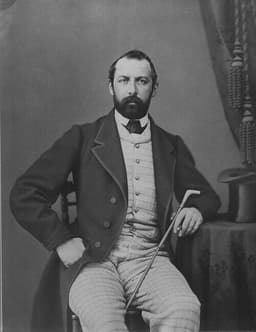
Charles XV of Sweden
Emperor · Modern
43.0Total

Feodor III
Emperor · Modern
50.1Total
Basic Information
Born
1826
1661
Died
1872
1682
Era
Modern
Modern
Nationality
Sweden
Russia
Occupation
Emperor
Emperor
Civilization
Western
Western
Score Comparison
Military (10%)
48.3
43.3
Political (20%)
30.8
68.0
Influence (20%)
49.4
51.8
Legacy (20%)
35.8
43.3
Leadership (15%)
43.6
62.2
Strategy (15%)
57.0
25.0
TOTAL
43.0
50.1
Charles XV of Sweden — Complete Timeline
1859 AD
Accession to the thronePolitical Action◆ Major
Charles XV became King of Sweden and Norway upon the death of his father, Oscar I. His reign began during a period of political reform and growing Scandinavian nationalism.
SuccessionMonarchy
Impact: national
1860 AD
Artistic patronage and paintingCultural
Charles XV was an accomplished painter and patron of the arts. He produced several landscape paintings and supported artists, contributing to the cultural life of Sweden during his reign.
ArtPatronageCulture
Impact: nationalconstructive
1866 AD
Parliamentary reform of 1866Reform◆ Major
Charles XV supported the reform that replaced the four-estate Riksdag with a bicameral parliament. This modernized Sweden's political system, increasing the influence of the middle class and reducing aristocratic power.
Political ReformParliamentModernization
Impact: nationalprogressive
Feodor III — Complete Timeline
1676 AD
Russo-Turkish War (1676–1681)War◆ Major
Feodor III continued the war with the Ottoman Empire over control of Ukraine. The conflict ended with the Treaty of Bakhchisarai in 1681, which established the Dnieper River as the border between Russia and the Ottoman Empire, ceding left-bank Ukraine to Russia.
Russo-Turkish WarTreatyTerritorial Change
Impact: regional
1680 AD
Introduction of Western Dress and Customs at CourtCultural
Feodor III encouraged the adoption of Western European fashions, including shaving beards and wearing Polish-style clothing, at the Russian court. This was an early step in the Westernization of Russian elite culture, later expanded by Peter the Great.
WesternizationCourt CultureFashion
Impact: nationalconstructive
1682 AD
Abolition of MestnichestvoReform◆ Major
Feodor III abolished the system of mestnichestvo, which determined noble rank and appointments based on ancestry rather than merit. This reform aimed to modernize the Russian state and military by allowing promotion based on ability, reducing the power of the old boyar aristocracy.
Administrative ReformNobilityModernization
Impact: nationalconstructive
Establishment of the Slavic Greek Latin AcademyCultural◆ Major
Feodor III approved the founding of the Slavic Greek Latin Academy in Moscow, the first higher education institution in Russia. It was intended to train officials and clergy in Greek, Latin, and Slavic languages, promoting learning and reducing the influence of foreign scholars.
EducationAcademyCultural Reform
Impact: nationalconstructive
Expert Analysis
Origins
Charles XV of Sweden was born on May 3, 1826, in Stockholm, the eldest son of King Oscar I and Queen Josephine of Leuchtenberg. He was raised in a royal household that valued education and the arts, receiving a thorough grounding in history, politics, and languages. His father, Oscar I, was a liberal reformer, which influenced Charles's later political views. Charles also developed a passion for painting and music, becoming an accomplished landscape artist.
Feodor III of Russia was born on June 9, 1661, in Moscow, the son of Tsar Alexei Mikhailovich and Maria Miloslavskaya. He was raised in the traditional Russian court, but his education was influenced by Western ideas, partly through the teachings of Simeon Polotsky, a Belarusian monk who introduced him to Latin and Polish culture. Feodor was physically frail, suffering from scurvy and other ailments, which shaped his short life and reign.
Rise to Power
Charles XV ascended the throne on July 8, 1859, upon the death of his father, Oscar I. His accession came during a period of political ferment in Sweden, with calls for parliamentary reform and increased democratization. Charles was initially popular due to his charismatic personality and artistic inclinations, but his political influence was limited by the existing constitution. He quickly became a supporter of reform, working with liberal politicians to modernize the Riksdag.
Feodor III became Tsar of Russia on January 29, 1676, after the death of his father, Alexei Mikhailovich. He was only 14 years old and initially under the influence of his mother's family, the Miloslavskys. However, Feodor soon asserted his independence, surrounding himself with capable advisors like Vasily Golitsyn. His rise was marked by a desire to centralize power and modernize the state, despite his poor health.
Leadership & Governance
Charles XV's leadership style was characterized by his support for constitutional reform and cultural patronage. His most significant achievement was the Parliamentary Reform of 1866, which replaced the four-estate Riksdag (nobility, clergy, burghers, peasants) with a bicameral parliament. This reform increased representation and modernized Sweden's political system, moving it toward a more democratic structure. Charles also used his artistic talents to promote Swedish culture, painting landscapes and supporting artists like Johan Fredrik Höckert. However, his political score of 30.8 reflects his limited direct power; he was a constitutional monarch who largely followed the advice of his ministers.
Feodor III, in contrast, pursued top-down reforms. His most important act was the abolition of mestnichestvo in 1682, a system that determined noble rank and appointments based on ancestry rather than merit. This reform broke the power of the old aristocracy and allowed for more efficient administration. Feodor also established the Slavic Greek Latin Academy in 1687, the first higher education institution in Russia, which trained future bureaucrats and clergy. He encouraged Western dress and customs at court, foreshadowing Peter the Great's later reforms. Feodor's political score of 68.0 reflects his more active role in governance, though his reign was cut short by his death at age 20.
Triumph & Tragedy
Charles XV's greatest triumph was the parliamentary reform of 1866, which laid the foundation for Sweden's modern democratic system. He also successfully navigated Sweden's neutrality during the Second Schleswig War (1864) and the Franco-Prussian War (1870-1871), avoiding conflict. However, his reign was marred by economic difficulties and a failed attempt to reform the military. His personal life was tragic: his only son, Prince Carl Oscar, died in infancy, leaving no direct heir. The throne passed to his brother, Oscar II, in 1872.
Feodor III's triumph was the abolition of mestnichestvo, which weakened the entrenched nobility and paved the way for administrative modernization. He also ended the Russo-Turkish War (1676-1681) with the Treaty of Bakhchisarai, securing a 20-year truce. However, his reforms were cut short by his early death on May 7, 1682, at age 20. His death led to a power struggle between his half-brothers Ivan V and Peter I, with the latter eventually becoming Peter the Great. Feodor's fragile health limited his ability to implement lasting change.
Character & Destiny
Charles XV was known for his affable and artistic nature, earning the nickname "the Painter King." He was popular among his subjects but lacked the political ruthlessness to push through more ambitious reforms. His character, more suited to cultural pursuits than hard politics, meant that his legacy is tied to the parliamentary reform he supported rather than his own initiatives. His leadership score of 43.6 reflects his moderate effectiveness.
Feodor III was intelligent and determined despite his physical frailty. He was influenced by Western ideas and sought to modernize Russia, but his short reign and poor health prevented him from achieving more. His character was marked by a reformist zeal that anticipated Peter the Great, but his destiny was to be a transitional figure. His leadership score of 62.2 indicates a stronger hand in governance.
Legacy
Charles XV's legacy is primarily the parliamentary reform of 1866, which endured until 1970 and is considered a cornerstone of Swedish democracy. He also contributed to Sweden's cultural heritage through his paintings and patronage. However, his overall scores (total 43.0) reflect his limited direct impact; he is remembered more as a popular figure than a transformative ruler.
Feodor III's legacy is more substantial in terms of systemic change. The abolition of mestnichestvo removed a major obstacle to meritocratic governance, and his educational initiatives laid the groundwork for Russia's intellectual development. His scores (total 50.1) are higher, particularly in political (68.0) and leadership (62.2). However, his reforms were often overshadowed by Peter the Great's later transformations.
Conclusion
Feodor III had a greater impact than Charles XV, as reflected in his higher total score of 50.1 versus Charles's 43.0. While Charles's parliamentary reform was significant, it was part of a broader trend in Sweden. Feodor's abolition of mestnichestvo was a bold break with tradition that directly enabled the rise of a more modern state. His establishment of the first Russian university also had lasting educational effects. Despite his short reign, Feodor's reforms were more fundamental and far-reaching, making him the more consequential ruler.
Rankings
🥇
Feodor IIILeader
Mil: 43.3Pol: 68.0Inf: 51.8
50.1
🥈
Charles XV of Sweden
Mil: 48.3Pol: 30.8Inf: 49.4
43.0
+7.1 behind
How This Comparison Works
Algorithm
Each figure is scored on 6 dimensions (0—100 scale) based on structured historical data: Military (10%), Political (20%), Influence (20%), Legacy (20%), Leadership (15%), Strategy (15%). The weighted total produces the final ranking.
Data Sources
Scores are computed from structured sub-indicators in the database. Scale factors adjust for era (Ancient ×0.85, Modern ×1.0) and civilization size (Eastern ×1.05, Other ×0.80) to account for differences in population and military scale.
Maximum 3 Figures
Comparisons are limited to 2—3 figures to ensure readability and statistical meaningfulness.
Error Margins
±5 points per dimension — Sub-scores are derived from historical records with inherent uncertainty. Two figures within 5 points on a dimension should be considered roughly equivalent in that area.
Total Score Accuracy
±3 points overall — The weighted combination of 6 dimensions produces a total score with approximately ±3 points of uncertainty. Differences of less than 3 points are not statistically significant— the figures are effectively tied.
Known Limitations
- Historical records are incomplete and uneven across civilizations
- Figures from oral-tradition societies may be underrepresented
- Occupation labels can misclassify multi-role figures
- Scores measure capability and impact, not moral character
- Quantitative scoring is a comparison tool, not absolute truth
Capability Radar
Military (10%) — Battles & Warfare
Battles
22
5
Win Rate
28
5
Expansion
29
5
Political (20%) — Governance & Reform
Reform
25
70
Diplomacy
20
40
Economy
15
50
Influence (20%) — Cultural & Global Reach
Cultural
30
30
Global
5
20
Legacy (20%) — Historical Impact
Historical
15
40
Longevity
10
30
Leadership (15%) — Power & Stability
Tenure
13
20
Stability
20
40
Strategy (15%) — Tactics & Innovation
Strategy
32
10
Tactics
38
10
Reform
41
30
Similar Comparisons
Comments & Discussion
No comments yet. Be the first to share your thoughts!