Loading...
This comparison has not been analyzed yet.
One-time AI generation (~1 minute). Scores and timeline are already available below.
Charles XV of Sweden vs Juliana of the Netherlands
Juliana of the Netherlands leads by 12.2 pts · 2 figures compared
…
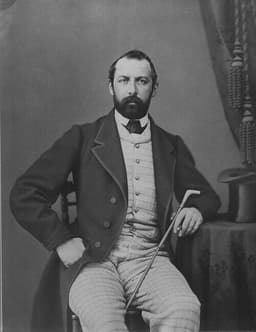
Charles XV of Sweden
Emperor · Modern
43.0Total
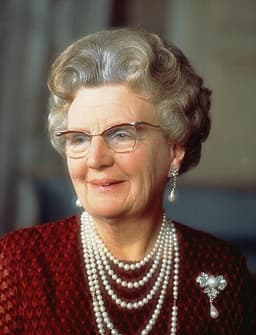
Juliana of the Netherlands
Emperor · Modern
55.2Total
Basic Information
Born
1826
1909
Died
1872
2004
Era
Modern
Modern
Nationality
Sweden
Netherlands
Occupation
Emperor
Emperor
Civilization
Western
Western
Score Comparison
Military (10%)
48.3
43.2
Political (20%)
30.8
62.7
Influence (20%)
49.4
57.2
Legacy (20%)
35.8
45.8
Leadership (15%)
43.6
72.0
Strategy (15%)
57.0
49.2
TOTAL
43.0
55.2
Charles XV of Sweden — Complete Timeline
1859 AD
Accession to the thronePolitical Action◆ Major
Charles XV became King of Sweden and Norway upon the death of his father, Oscar I. His reign began during a period of political reform and growing Scandinavian nationalism.
SuccessionMonarchy
Impact: national
1860 AD
Artistic patronage and paintingCultural
Charles XV was an accomplished painter and patron of the arts. He produced several landscape paintings and supported artists, contributing to the cultural life of Sweden during his reign.
ArtPatronageCulture
Impact: nationalconstructive
1866 AD
Parliamentary reform of 1866Reform◆ Major
Charles XV supported the reform that replaced the four-estate Riksdag with a bicameral parliament. This modernized Sweden's political system, increasing the influence of the middle class and reducing aristocratic power.
Political ReformParliamentModernization
Impact: nationalprogressive
Juliana of the Netherlands — Complete Timeline
1948 AD
Accession as Queen JulianaPolitical Action◆ Major
Juliana became queen of the Netherlands upon her mother Wilhelmina's abdication. Her accession was celebrated as a new era, with Juliana known for her more informal and approachable style.
AccessionMonarchyModernization
Impact: nationalconstructive
1949 AD
Indonesian IndependencePolitical Action
Juliana presided over the transfer of sovereignty to Indonesia on December 27, 1949, ending Dutch colonial rule. The decision followed years of conflict and international pressure, marking the end of the Dutch East Indies.
DecolonizationIndonesiaIndependence
Impact: global
1956 AD
Greet Hofmans AffairOther◆ Major
A spiritual healer, Greet Hofmans, gained influence over Juliana, causing a constitutional crisis. The affair led to a government commission that forced Hofmans' removal and strained the royal family's relations with the government.
CrisisScandalMonarchy
Impact: nationaltragic
1975 AD
Suriname IndependencePolitical Action◆ Major
Juliana signed the law granting independence to Suriname on November 25, 1975. The peaceful transition ended Dutch colonial presence in South America, though it led to economic challenges for the new nation.
DecolonizationSurinameIndependence
Impact: regional
1980 AD
Abdication in Favor of BeatrixPolitical Action◆ Major
Juliana abdicated the throne on April 30, 1980, in favor of her daughter Beatrix. The abdication was part of a Dutch tradition of voluntary retirement, allowing a smooth transition to the next generation.
AbdicationSuccessionMonarchy
Impact: national
This comparison has not been analyzed yet.
One-time AI generation (~1 minute). Scores and timeline are already available below.
Rankings
🥇
Juliana of the NetherlandsLeader
Mil: 43.2Pol: 62.7Inf: 57.2
55.2
🥈
Charles XV of Sweden
Mil: 48.3Pol: 30.8Inf: 49.4
43.0
+12.2 behind
How This Comparison Works
Algorithm
Each figure is scored on 6 dimensions (0—100 scale) based on structured historical data: Military (10%), Political (20%), Influence (20%), Legacy (20%), Leadership (15%), Strategy (15%). The weighted total produces the final ranking.
Data Sources
Scores are computed from structured sub-indicators in the database. Scale factors adjust for era (Ancient ×0.85, Modern ×1.0) and civilization size (Eastern ×1.05, Other ×0.80) to account for differences in population and military scale.
Maximum 3 Figures
Comparisons are limited to 2—3 figures to ensure readability and statistical meaningfulness.
Error Margins
±5 points per dimension — Sub-scores are derived from historical records with inherent uncertainty. Two figures within 5 points on a dimension should be considered roughly equivalent in that area.
Total Score Accuracy
±3 points overall — The weighted combination of 6 dimensions produces a total score with approximately ±3 points of uncertainty. Differences of less than 3 points are not statistically significant— the figures are effectively tied.
Known Limitations
- Historical records are incomplete and uneven across civilizations
- Figures from oral-tradition societies may be underrepresented
- Occupation labels can misclassify multi-role figures
- Scores measure capability and impact, not moral character
- Quantitative scoring is a comparison tool, not absolute truth
Capability Radar
Military (10%) — Battles & Warfare
Battles
22
27
Win Rate
28
28
Expansion
29
31
Political (20%) — Governance & Reform
Reform
25
55
Diplomacy
20
65
Economy
15
50
Influence (20%) — Cultural & Global Reach
Cultural
30
40
Global
5
45
Legacy (20%) — Historical Impact
Historical
15
45
Longevity
10
40
Leadership (15%) — Power & Stability
Tenure
13
60
Stability
20
60
Strategy (15%) — Tactics & Innovation
Strategy
32
34
Tactics
38
35
Reform
41
37
Similar Comparisons
Comments & Discussion
No comments yet. Be the first to share your thoughts!