Loading...
Charles XIII of Sweden vs Tongzhi Emperor
Tongzhi Emperor leads by 6.0 pts · 2 figures compared
…

Charles XIII of Sweden
Emperor · Modern
41.5Total
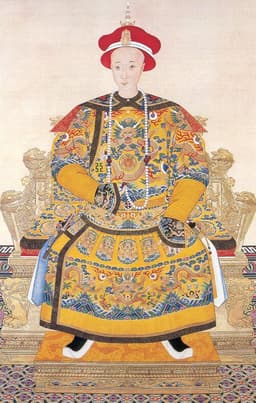
Tongzhi Emperor
Emperor · Modern
47.5Total
Basic Information
Born
1748
1856
Died
1818
1875
Era
Modern
Modern
Nationality
Sweden
China
Occupation
Emperor
Emperor
Civilization
Western
Eastern
Score Comparison
Military (10%)
21.2
12.1
Political (20%)
37.9
68.0
Influence (20%)
47.1
60.0
Legacy (20%)
36.7
40.8
Leadership (15%)
55.3
33.6
Strategy (15%)
45.0
59.0
TOTAL
41.5
47.5
Charles XIII of Sweden — Complete Timeline
1809 AD
Loss of Finland to RussiaWar
Charles XIII, as regent and later king, oversaw the conclusion of the Finnish War against Russia. The Treaty of Fredrikshamn ceded Finland to Russia, ending centuries of Swedish rule over the region.
Finnish WarTerritorial LossRussia
Impact: regionaldestructive
Coronation of Charles XIIIPolitical Action◆ Major
Charles XIII was crowned King of Sweden after the deposition of Gustav IV Adolf. His coronation followed the adoption of the 1809 constitution, which established a balance of power between the king and the Riksdag.
CoronationConstitutionSuccession
Impact: national
1810 AD
Adoption of Jean-Baptiste Bernadotte as Crown PrincePolitical Action
Charles XIII, having no legitimate heirs, adopted the French Marshal Jean-Baptiste Bernadotte as his successor. Bernadotte became Crown Prince Charles John and effectively ruled Sweden, founding the Bernadotte dynasty.
SuccessionBernadotteDynasty
Impact: nationalconstructive
1814 AD
Union with NorwayPolitical Action◆ Major
Charles XIII, under the influence of Crown Prince Charles John, accepted the Treaty of Kiel and the Convention of Moss, which forced Norway into a personal union with Sweden. Charles XIII became King of Norway as Charles II.
UnionNorwayTreaty of Kiel
Impact: regionalconstructive
1818 AD
Death of Charles XIIIOther
Charles XIII died in Stockholm at age 69. His death ended the Holstein-Gottorp dynasty's rule in Sweden, as he was succeeded by his adopted son, Charles XIV John (Bernadotte).
DeathSuccession
Impact: national
Tongzhi Emperor — Complete Timeline
1861 AD
Accession to the Qing thronePolitical Action◆ Major
Tongzhi became Emperor of China at age 5 after the death of his father, Xianfeng. A regency was established under Empress Dowagers Cixi and Ci'an.
SuccessionQing Dynasty
Impact: national
1862 AD
Tongzhi RestorationReform◆ Major
A period of conservative reform began, aiming to modernize China's military and economy while preserving Confucian values. The Self-Strengthening Movement was initiated, but progress was limited.
ReformSelf-Strengthening
Impact: nationalconstructive
1864 AD
End of the Taiping RebellionWar
Qing forces, led by generals like Zeng Guofan, captured Nanjing and crushed the Taiping Rebellion. The victory restored Qing control but left the empire devastated.
Civil WarTaiping Rebellion
Impact: globalconstructive
1875 AD
Death from smallpoxOther◆ Major
Tongzhi died at age 18 from smallpox. His death without an heir led to a succession crisis, with his cousin Guangxu being chosen as the next emperor.
DeathSmallpox
Impact: nationaltragic
Expert Analysis
Origins
Charles XIII of Sweden was born on October 7, 1748, in Stockholm, the second son of King Adolf Frederick and Queen Louisa Ulrika. He was raised in the royal court but was not initially expected to rule. His education focused on military affairs, and he served as a naval commander during the Russo-Swedish War (1788–1790). Charles had a limited formal education compared to European standards, but he gained practical experience in governance as regent for his mentally ill brother, Gustav III.
The Tongzhi Emperor, born Zaichun on April 27, 1856, in Beijing, was the only surviving son of the Xianfeng Emperor. His early life was marked by the turmoil of the Second Opium War and the ongoing Taiping Rebellion. Raised in the Forbidden City, he received a traditional Confucian education from tutors selected by his mother, Empress Dowager Cixi. His upbringing was sheltered and controlled, with little exposure to the outside world.
Rise to Power
Charles XIII ascended to the Swedish throne on June 6, 1809, following the deposition of his nephew, Gustav IV Adolf. The coup was driven by military officers frustrated with the loss of Finland and the king's erratic leadership. Charles's accession was conditional on accepting a new constitution that limited royal power, shifting Sweden to a parliamentary system. His coronation in 1809 was a turning point, but his reign was effectively guided by the Riksdag and later by his adopted heir.
Tongzhi became emperor at age five after his father's death on August 22, 1861. A regency was established, led by his mother, Empress Dowager Cixi, and Empress Dowager Ci'an. The regents controlled the government, and Tongzhi was a figurehead. His formal ascension was marked by the continuation of the Self-Strengthening Movement, a series of reforms aimed at modernizing China's military and industry while preserving Confucian values. The Tongzhi Restoration was a period of cautious change, but real power remained with the dowagers.
Leadership & Governance
Charles XIII's leadership was constrained by the 1809 constitution, which shifted power to the Riksdag and Council of State. He was a weak ruler, often deferring to his advisors, particularly Crown Prince Charles John (formerly Jean-Baptiste Bernadotte). Charles's governance score of 37.9 reflects his limited influence. He presided over the loss of Finland in 1809 (Treaty of Fredrikshamn) and the forced union with Norway in 1814, which was largely orchestrated by his heir. His military score of 21.2 indicates his lack of strategic success.
Tongzhi Emperor's leadership was nominal; he never ruled independently. The Tongzhi Restoration was driven by regional officials like Zeng Guofan and Li Hongzhang, not the emperor. His political score of 68.0 reflects the stability of the Qing bureaucracy rather than his personal ability. The regency under Cixi was conservative, and reforms were limited. Tongzhi's military score of 12.1 is low because he had no direct involvement in military campaigns, though the Taiping Rebellion was crushed during his reign.
Triumph & Tragedy
Charles XIII's greatest achievement was the peaceful adoption of a new constitution and the transition to the Bernadotte dynasty, which stabilized Sweden after a period of crisis. However, his reign was marred by the loss of Finland, a territory held for centuries. The union with Norway was a temporary success but later dissolved peacefully in 1905.
Tongzhi's reign saw the suppression of the Taiping Rebellion (1864), which saved the Qing dynasty from collapse. The Tongzhi Restoration also saw limited modernization, such as the establishment of the Jiangnan Arsenal. However, his early death from smallpox at age 18 left the throne to Guangxu, another child emperor, perpetuating the regency system. The failure to implement deeper reforms contributed to China's decline.
Character & Destiny
Charles XIII was known for his indecisiveness and lack of ambition. He was overshadowed by his adopted son, Charles John, who effectively ruled. His character earned him a leadership score of 55.3, but his strategic score of 45.0 shows he was not a visionary. He died on February 5, 1818, ending the Holstein-Gottorp line.
Tongzhi was a figurehead, but his early death was a tragedy for China. He reportedly contracted smallpox after attempting to assert independence from Cixi. His death without an heir led to a succession crisis. His leadership score of 33.6 reflects his lack of actual power, while his influence score of 60.0 acknowledges his symbolic role.
Legacy
Charles XIII's legacy is mixed. He is remembered as the last king of the Holstein-Gottorp dynasty and the founder of the Bernadotte line. The 1809 constitution remained in effect until 1974. His total score of 41.5 reflects his limited impact.
Tongzhi's legacy is tied to the Tongzhi Restoration, a brief period of reform that failed to modernize China sufficiently. He is often seen as a tragic figure whose death ended reform hopes. His total score of 47.5 is higher due to China's global significance.
Conclusion
Tongzhi Emperor had a greater impact than Charles XIII, scoring 47.5 to 41.5. Despite his short reign, the Tongzhi Restoration represented a pivotal moment in China's modernization, while Charles XIII's reign was largely reactive and overshadowed by others. The Qing dynasty's size and historical importance amplify Tongzhi's influence, but both rulers were ultimately constrained by circumstances beyond their control.
Rankings
🥇
Tongzhi EmperorLeader
Mil: 12.1Pol: 68.0Inf: 60.0
47.5
🥈
Charles XIII of Sweden
Mil: 21.2Pol: 37.9Inf: 47.1
41.5
+6.0 behind
How This Comparison Works
Algorithm
Each figure is scored on 6 dimensions (0—100 scale) based on structured historical data: Military (10%), Political (20%), Influence (20%), Legacy (20%), Leadership (15%), Strategy (15%). The weighted total produces the final ranking.
Data Sources
Scores are computed from structured sub-indicators in the database. Scale factors adjust for era (Ancient ×0.85, Modern ×1.0) and civilization size (Eastern ×1.05, Other ×0.80) to account for differences in population and military scale.
Maximum 3 Figures
Comparisons are limited to 2—3 figures to ensure readability and statistical meaningfulness.
Error Margins
±5 points per dimension — Sub-scores are derived from historical records with inherent uncertainty. Two figures within 5 points on a dimension should be considered roughly equivalent in that area.
Total Score Accuracy
±3 points overall — The weighted combination of 6 dimensions produces a total score with approximately ±3 points of uncertainty. Differences of less than 3 points are not statistically significant— the figures are effectively tied.
Known Limitations
- Historical records are incomplete and uneven across civilizations
- Figures from oral-tradition societies may be underrepresented
- Occupation labels can misclassify multi-role figures
- Scores measure capability and impact, not moral character
- Quantitative scoring is a comparison tool, not absolute truth
Capability Radar
Military (10%) — Battles & Warfare
Battles
10
40
Win Rate
10
41
Expansion
10
49
Political (20%) — Governance & Reform
Reform
20
0
Diplomacy
30
0
Economy
20
0
Influence (20%) — Cultural & Global Reach
Cultural
10
0
Global
10
0
Legacy (20%) — Historical Impact
Historical
20
5
Longevity
10
0
Leadership (15%) — Power & Stability
Tenure
30
5
Stability
20
5
Strategy (15%) — Tactics & Innovation
Strategy
10
51
Tactics
10
52
Reform
10
55
Similar Comparisons
Comments & Discussion
No comments yet. Be the first to share your thoughts!