Loading...
Charles XIII of Sweden vs Jiaqing Emperor
Jiaqing Emperor leads by 5.0 pts · 2 figures compared
…

Charles XIII of Sweden
Emperor · Modern
41.5Total
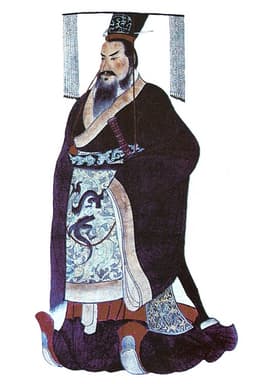
Jiaqing Emperor
Emperor · Modern
46.5Total
Basic Information
Born
1748
1760
Died
1818
1820
Era
Modern
Modern
Nationality
Sweden
China
Occupation
Emperor
Emperor
Civilization
Western
Eastern
Score Comparison
Military (10%)
21.2
35.0
Political (20%)
37.9
39.4
Influence (20%)
47.1
51.0
Legacy (20%)
36.7
40.8
Leadership (15%)
55.3
64.0
Strategy (15%)
45.0
45.0
TOTAL
41.5
46.5
Charles XIII of Sweden — Complete Timeline
1809 AD
Loss of Finland to RussiaWar
Charles XIII, as regent and later king, oversaw the conclusion of the Finnish War against Russia. The Treaty of Fredrikshamn ceded Finland to Russia, ending centuries of Swedish rule over the region.
Finnish WarTerritorial LossRussia
Impact: regionaldestructive
Coronation of Charles XIIIPolitical Action◆ Major
Charles XIII was crowned King of Sweden after the deposition of Gustav IV Adolf. His coronation followed the adoption of the 1809 constitution, which established a balance of power between the king and the Riksdag.
CoronationConstitutionSuccession
Impact: national
1810 AD
Adoption of Jean-Baptiste Bernadotte as Crown PrincePolitical Action
Charles XIII, having no legitimate heirs, adopted the French Marshal Jean-Baptiste Bernadotte as his successor. Bernadotte became Crown Prince Charles John and effectively ruled Sweden, founding the Bernadotte dynasty.
SuccessionBernadotteDynasty
Impact: nationalconstructive
1814 AD
Union with NorwayPolitical Action◆ Major
Charles XIII, under the influence of Crown Prince Charles John, accepted the Treaty of Kiel and the Convention of Moss, which forced Norway into a personal union with Sweden. Charles XIII became King of Norway as Charles II.
UnionNorwayTreaty of Kiel
Impact: regionalconstructive
1818 AD
Death of Charles XIIIOther
Charles XIII died in Stockholm at age 69. His death ended the Holstein-Gottorp dynasty's rule in Sweden, as he was succeeded by his adopted son, Charles XIV John (Bernadotte).
DeathSuccession
Impact: national
Jiaqing Emperor — Complete Timeline
1795 AD
Suppression of the Miao RebellionWar◆ Major
Jiaqing's forces suppressed a major Miao rebellion in Guizhou and Hunan provinces. The campaign was brutal and costly, but restored Qing control over the region, though it highlighted ethnic tensions.
Miao rebellionEthnic conflictMilitary campaign
Impact: regionaldestructive
1796 AD
White Lotus RebellionWar◆ Major
The White Lotus Rebellion erupted in central China, lasting until 1804. Jiaqing's government struggled to suppress the rebellion due to corruption and inefficiency, draining the Qing treasury and exposing military weakness.
RebellionWhite LotusQing decline
Impact: nationaldestructive
1799 AD
Execution of HeshenPolitical Action◆ Major
Upon taking full power after his father Qianlong's death, Jiaqing ordered the arrest and execution of the corrupt grand councilor Heshen. Heshen's vast wealth was confiscated, temporarily replenishing the imperial treasury.
Anti-corruptionHeshenPolitical purge
Impact: nationalconstructive
1800 AD
Fiscal crisis and tax reformsReform◆ Major
Jiaqing attempted to address the fiscal crisis caused by the White Lotus Rebellion and corruption. He implemented tax reforms, reduced court spending, and tried to curb official embezzlement, but with limited success.
Fiscal reformTax policyEconomic crisis
Impact: nationalconstructive
1805 AD
Decline of the Qing militaryOther◆ Major
The Qing military's inability to quickly suppress the White Lotus Rebellion revealed its decline. The Eight Banners and Green Standard armies were poorly trained and equipped, forcing the use of local militias.
Military declineEight BannersQing weakness
Impact: nationaldestructive
Expert Analysis
Origins
Charles XIII of Sweden was born in 1748, the second son of King Adolf Frederick and Louisa Ulrika of Prussia. He belonged to the Holstein-Gottorp dynasty. His early years were marked by political instability, as Sweden's Age of Liberty saw power shift to the Riksdag. Charles received a military education but was not groomed for kingship. His brother Gustav III seized power in a coup in 1772, and Charles served as a naval commander during the Russo-Swedish War (1788–1790). Despite his position, he had limited political influence.
Jiaqing Emperor, born Yongyan in 1760, was the 15th son of the Qianlong Emperor. His mother was Empress Xiaoyichun, a Han Chinese woman of the Wei clan. As a child, he received a rigorous Confucian education and was known for his diligence. In 1773, he was secretly designated as heir, but Qianlong remained on the throne until his death in 1796. Jiaqing spent his early years in the shadow of his father's long reign and the powerful grand councilor Heshen.
Rise to Power
Charles XIII's path to power was indirect. After the assassination of Gustav III in 1792, Charles served as regent for his nephew Gustav IV Adolf. During this regency, he was influenced by the noble opposition, leading to a period of reaction against Gustav III's reforms. However, Gustav IV Adolf assumed power in 1796 and pursued an anti-Napoleonic policy that led to disaster. In 1809, a coup deposed Gustav IV Adolf, and Charles was elected king by the Riksdag. He accepted a new constitution that limited royal power, shifting authority to the Riksdag.
Jiaqing's rise was also shaped by a coup-like maneuver. Upon Qianlong's death in 1799, Jiaqing immediately ordered the arrest of Heshen, the corrupt grand councilor who had dominated the court. Heshen was forced to commit suicide, and his vast wealth was confiscated. This move signaled Jiaqing's determination to assert control and reform the bureaucracy. However, he faced entrenched corruption and a deteriorating fiscal situation.
Leadership & Governance
Charles XIII, with a leadership score of 55.3, was a weak ruler. His reign was dominated by the powerful Crown Prince Charles John (Bernadotte), who effectively governed Sweden after 1810. Charles XIII's major act was adopting Bernadotte, a decision that secured a successor but marginalized his own authority. Under Bernadotte's influence, Sweden joined the Sixth Coalition against Napoleon in 1813 and forced Norway into a union in 1814. Charles XIII had little role in these events; his governance was passive and reactive.
Jiaqing, with a leadership score of 64.0, was more active but ultimately constrained. He attempted to curb corruption by executing Heshen and reducing court spending. He also implemented tax reforms to address fiscal crises. However, his efforts were undermined by the White Lotus Rebellion (1796–1804), which exposed the decay of the Qing military and bureaucracy. Jiaqing's governance was characterized by a struggle to restore central control, but he lacked the resources and capable officials to effect lasting change. His political score of 39.4 reflects his limited success in institutional reform.
Triumph & Tragedy
Charles XIII's greatest triumph was overseeing the peaceful transfer of power to the Bernadotte dynasty, which ensured stability. His greatest tragedy was the loss of Finland to Russia in 1809, a catastrophic defeat that ended Sweden's status as a major power. The Treaty of Fredrikshamn ceded Finland, reducing Sweden's territory by a third. Charles XIII's military score of 21.2 reflects this failure.
Jiaqing's triumph was the execution of Heshen, which temporarily boosted his popularity and recovered some state funds. He also suppressed the Miao Rebellion (1795–1806) and the White Lotus Rebellion, though at great cost. His tragedy was the systemic decline of the Qing dynasty: the White Lotus Rebellion lasted nine years, drained the treasury, and revealed the military's incompetence. The Qing military score of 35.0 underscores its deterioration. Jiaqing's fiscal crisis and inability to reverse corruption set the stage for later rebellions.
Character & Destiny
Charles XIII was described as indecisive and dependent on advisors. His character—cautious and unambitious—led him to accept a constitutional monarchy that reduced his power. He was a figurehead, and his destiny was to be overshadowed by Bernadotte. Historical assessments view him as a transitional king who lacked the vision to lead Sweden through crisis.
Jiaqing was diligent and frugal, but his rigid Confucian mindset hindered adaptation. He trusted traditional methods and failed to modernize the Qing state. His character—determined yet limited—led to a reign of modest reforms that could not arrest decline. Historians see him as a well-meaning but ineffective emperor who inherited a decaying system.
Legacy
Charles XIII's legacy is mixed. His adoption of Bernadotte created a dynasty that still reigns in Sweden. The 1809 constitution, though later replaced, laid foundations for Swedish democracy. However, his reign marked Sweden's decline as a great power. His influence score of 47.1 reflects his indirect impact through Bernadotte.
Jiaqing's legacy is one of missed opportunities. His attempts to reform were insufficient to halt the Qing decline. The White Lotus Rebellion weakened the dynasty, and his reign saw the beginning of the 'century of humiliation.' His influence score of 51.0 is slightly higher than Charles's, but his legacy is largely negative, as he failed to address the roots of corruption and military weakness.
Conclusion
Based on total scores, Jiaqing Emperor (46.5) outperforms Charles XIII (41.5) by 5.0 points. Jiaqing demonstrated greater leadership (64.0 vs 55.3) and military capability (35.0 vs 21.2), despite facing a more complex challenge. Charles XIII's passive reign and catastrophic loss of Finland make him the weaker monarch. Jiaqing's efforts, though insufficient, show a more active attempt to govern. Therefore, Jiaqing Emperor had a greater impact, even if both ultimately failed to reverse decline.
Rankings
🥇
Jiaqing EmperorLeader
Mil: 35.0Pol: 39.4Inf: 51.0
46.5
🥈
Charles XIII of Sweden
Mil: 21.2Pol: 37.9Inf: 47.1
41.5
+5.0 behind
How This Comparison Works
Algorithm
Each figure is scored on 6 dimensions (0—100 scale) based on structured historical data: Military (10%), Political (20%), Influence (20%), Legacy (20%), Leadership (15%), Strategy (15%). The weighted total produces the final ranking.
Data Sources
Scores are computed from structured sub-indicators in the database. Scale factors adjust for era (Ancient ×0.85, Modern ×1.0) and civilization size (Eastern ×1.05, Other ×0.80) to account for differences in population and military scale.
Maximum 3 Figures
Comparisons are limited to 2—3 figures to ensure readability and statistical meaningfulness.
Error Margins
±5 points per dimension — Sub-scores are derived from historical records with inherent uncertainty. Two figures within 5 points on a dimension should be considered roughly equivalent in that area.
Total Score Accuracy
±3 points overall — The weighted combination of 6 dimensions produces a total score with approximately ±3 points of uncertainty. Differences of less than 3 points are not statistically significant— the figures are effectively tied.
Known Limitations
- Historical records are incomplete and uneven across civilizations
- Figures from oral-tradition societies may be underrepresented
- Occupation labels can misclassify multi-role figures
- Scores measure capability and impact, not moral character
- Quantitative scoring is a comparison tool, not absolute truth
Capability Radar
Military (10%) — Battles & Warfare
Battles
10
40
Win Rate
10
30
Expansion
10
10
Political (20%) — Governance & Reform
Reform
20
25
Diplomacy
30
30
Economy
20
20
Influence (20%) — Cultural & Global Reach
Cultural
10
30
Global
10
15
Legacy (20%) — Historical Impact
Historical
20
35
Longevity
10
20
Leadership (15%) — Power & Stability
Tenure
30
60
Stability
20
15
Strategy (15%) — Tactics & Innovation
Strategy
10
30
Tactics
10
35
Reform
10
20
Similar Comparisons
Comments & Discussion
No comments yet. Be the first to share your thoughts!