Loading...
Charles XIII of Sweden vs Gojong of Korea
Gojong of Korea leads by 14.0 pts · 2 figures compared
…

Charles XIII of Sweden
Emperor · Modern
41.5Total
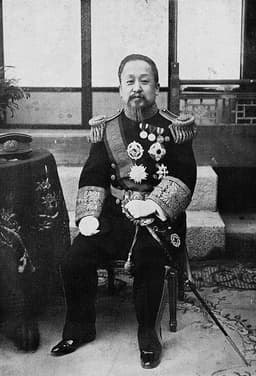
Gojong of Korea
Emperor · Modern
55.5Total
Basic Information
Born
1748
1852
Died
1818
1919
Era
Modern
Modern
Nationality
Sweden
Korea
Occupation
Emperor
Emperor
Civilization
Western
Eastern
Score Comparison
Military (10%)
21.2
43.3
Political (20%)
37.9
68.0
Influence (20%)
47.1
60.0
Legacy (20%)
36.7
50.0
Leadership (15%)
55.3
53.2
Strategy (15%)
45.0
54.6
TOTAL
41.5
55.5
Charles XIII of Sweden — Complete Timeline
1809 AD
Loss of Finland to RussiaWar
Charles XIII, as regent and later king, oversaw the conclusion of the Finnish War against Russia. The Treaty of Fredrikshamn ceded Finland to Russia, ending centuries of Swedish rule over the region.
Finnish WarTerritorial LossRussia
Impact: regionaldestructive
Coronation of Charles XIIIPolitical Action◆ Major
Charles XIII was crowned King of Sweden after the deposition of Gustav IV Adolf. His coronation followed the adoption of the 1809 constitution, which established a balance of power between the king and the Riksdag.
CoronationConstitutionSuccession
Impact: national
1810 AD
Adoption of Jean-Baptiste Bernadotte as Crown PrincePolitical Action
Charles XIII, having no legitimate heirs, adopted the French Marshal Jean-Baptiste Bernadotte as his successor. Bernadotte became Crown Prince Charles John and effectively ruled Sweden, founding the Bernadotte dynasty.
SuccessionBernadotteDynasty
Impact: nationalconstructive
1814 AD
Union with NorwayPolitical Action◆ Major
Charles XIII, under the influence of Crown Prince Charles John, accepted the Treaty of Kiel and the Convention of Moss, which forced Norway into a personal union with Sweden. Charles XIII became King of Norway as Charles II.
UnionNorwayTreaty of Kiel
Impact: regionalconstructive
1818 AD
Death of Charles XIIIOther
Charles XIII died in Stockholm at age 69. His death ended the Holstein-Gottorp dynasty's rule in Sweden, as he was succeeded by his adopted son, Charles XIV John (Bernadotte).
DeathSuccession
Impact: national
Gojong of Korea — Complete Timeline
1897 AD
Proclamation of the Korean EmpirePolitical Action
Gojong declared Korea an empire, assuming the title of Emperor. This was an attempt to assert Korea's sovereignty and equal status with China and Japan, and to modernize the state. The move was partly a response to the assassination of his wife, Empress Myeongseong.
Korean EmpireSovereigntyModernization
Impact: nationalconstructive
1905 AD
Signing of the Japan-Korea Treaty of 1905Political Action
Under Japanese pressure, Gojong's government signed the Eulsa Treaty, making Korea a Japanese protectorate. Gojong did not sign the treaty himself and later attempted to appeal to international powers, but the treaty stripped Korea of its diplomatic sovereignty.
TreatyJapanese ProtectorateLoss of Sovereignty
Impact: nationaltragic
1907 AD
Forced Abdication by JapanPolitical Action◆ Major
Japanese authorities forced Gojong to abdicate in favor of his son, Sunjong, after Gojong sent a secret envoy to the Hague Peace Conference to protest Japanese control. The abdication was part of Japan's consolidation of power over Korea.
AbdicationJapanese ImperialismHague Secret Envoy Affair
Impact: nationaltragic
1919 AD
Death and Funeral of GojongOther
Gojong died suddenly, with rumors of poisoning by Japanese agents. His funeral on March 1, 1919, became a catalyst for the March First Movement, a massive nationwide protest against Japanese rule. The movement was brutally suppressed but galvanized Korean independence efforts.
DeathMarch First MovementKorean Independence
Impact: nationaltragic
Expert Analysis
Origins
Charles XIII of Sweden (1748–1818) was born into the Holstein-Gottorp dynasty, the second son of King Adolf Frederick and Louisa Ulrika of Prussia. He received a military education and served as an admiral during the Russo-Swedish wars. His early career was marked by political intrigue, including involvement in the 1772 coup that strengthened royal power. Gojong of Korea (1852–1919) was born into the Joseon dynasty, the second son of Prince Regent Heungseon (Daewongun). He ascended the throne at age 12, with his father acting as regent. Gojong's education was steeped in Confucian classics, but he also became aware of Western technology and ideas through contact with missionaries and foreign diplomats.
Rise to Power
Charles XIII became regent in 1809 after his brother Gustav IV Adolf was deposed in a coup following the disastrous Finnish War. The Riksdag adopted a new constitution limiting royal power, and Charles was elected king. His rise was thus a product of military failure and political maneuvering. Gojong, by contrast, was made king at 12, with his father Daewongun implementing isolationist policies. In 1873, Gojong assumed direct rule, influenced by his wife Queen Min, and began opening Korea to foreign trade. He declared the Korean Empire in 1897, claiming equal status with China and Japan, a move that asserted his sovereignty but also provoked Japanese hostility.
Leadership & Governance
Charles XIII's leadership was constrained by the 1809 constitution, which shifted power to the Riksdag. He was a weak ruler, suffering from poor health and indecision. His most significant act was adopting Jean-Baptiste Bernadotte (later Charles XIV John) as crown prince in 1810, a decision that ensured Sweden's future stability. Under Bernadotte's influence, Sweden joined the Sixth Coalition against Napoleon and forced Norway into a union in 1814. Charles XIII's governance score of 55.3 reflects his limited personal authority. Gojong, scoring 68.0 in political, attempted to modernize Korea through the Gwangmu Reform, introducing Western military technology, infrastructure, and education. He established the Korean Empire's army and navy, but his reforms were inconsistent and faced opposition from conservative factions and Japanese interference. His leadership was marked by vacillation, especially under Japanese pressure.
Triumph & Tragedy
Charles XIII's greatest triumph was the peaceful union with Norway in 1814, which expanded Swedish influence. However, his greatest tragedy was the loss of Finland to Russia in 1809 after the Finnish War, which ended centuries of Swedish rule. Gojong's triumph was the proclamation of the Korean Empire in 1897, a symbolic assertion of independence. His tragedy was the forced abdication in 1907 after Japanese authorities discovered his secret envoy to the Hague Peace Conference. Korea became a Japanese protectorate in 1905 and was annexed in 1910, ending the Joseon dynasty. Gojong's death in 1919 sparked the March First Movement, a nationwide protest for independence.
Character & Destiny
Charles XIII was described as amiable but weak, lacking the decisiveness needed in turbulent times. His adoption of Bernadotte was a masterstroke that secured Sweden's future, but it also marginalized his own role. Gojong was determined to preserve Korean sovereignty but was outmaneuvered by Japan. His character was marked by stubbornness and occasional boldness, such as sending the Hague envoy, but also by indecision during crises. Historians note that both monarchs were products of their environments—Charles XIII of a declining absolute monarchy, Gojong of a collapsing tributary system.
Legacy
Charles XIII's legacy is mixed: he is remembered as the last Holstein-Gottorp king, but his adoption of Bernadotte led to a stable dynasty that lasted until 1974. The union with Norway was a temporary achievement. Gojong's legacy is more profound: he is celebrated as a martyr for Korean independence, and his death catalyzed the independence movement. The Korean Empire, though short-lived, symbolized modern nationhood. Gojong's total score of 55.5 exceeds Charles XIII's 41.5, reflecting greater political and influence metrics.
Conclusion
Gojong of Korea had a greater impact on history than Charles XIII of Sweden. While Charles XIII's actions shaped Sweden's trajectory, Gojong's struggle against imperialism resonated globally and inspired Korea's independence movement. Charles XIII's score of 41.5 underscores his limited agency, whereas Gojong's 55.5 reflects his active, albeit ultimately unsuccessful, efforts to preserve sovereignty. Gojong's legacy as a symbol of resistance endures, whereas Charles XIII is largely a footnote in Swedish history.
Rankings
🥇
Gojong of KoreaLeader
Mil: 43.3Pol: 68.0Inf: 60.0
55.5
🥈
Charles XIII of Sweden
Mil: 21.2Pol: 37.9Inf: 47.1
41.5
+14.0 behind
How This Comparison Works
Algorithm
Each figure is scored on 6 dimensions (0—100 scale) based on structured historical data: Military (10%), Political (20%), Influence (20%), Legacy (20%), Leadership (15%), Strategy (15%). The weighted total produces the final ranking.
Data Sources
Scores are computed from structured sub-indicators in the database. Scale factors adjust for era (Ancient ×0.85, Modern ×1.0) and civilization size (Eastern ×1.05, Other ×0.80) to account for differences in population and military scale.
Maximum 3 Figures
Comparisons are limited to 2—3 figures to ensure readability and statistical meaningfulness.
Error Margins
±5 points per dimension — Sub-scores are derived from historical records with inherent uncertainty. Two figures within 5 points on a dimension should be considered roughly equivalent in that area.
Total Score Accuracy
±3 points overall — The weighted combination of 6 dimensions produces a total score with approximately ±3 points of uncertainty. Differences of less than 3 points are not statistically significant— the figures are effectively tied.
Known Limitations
- Historical records are incomplete and uneven across civilizations
- Figures from oral-tradition societies may be underrepresented
- Occupation labels can misclassify multi-role figures
- Scores measure capability and impact, not moral character
- Quantitative scoring is a comparison tool, not absolute truth
Capability Radar
Military (10%) — Battles & Warfare
Battles
10
5
Win Rate
10
5
Expansion
10
5
Political (20%) — Governance & Reform
Reform
20
40
Diplomacy
30
30
Economy
20
30
Influence (20%) — Cultural & Global Reach
Cultural
10
50
Global
10
40
Legacy (20%) — Historical Impact
Historical
20
60
Longevity
10
40
Leadership (15%) — Power & Stability
Tenure
30
60
Stability
20
20
Strategy (15%) — Tactics & Innovation
Strategy
10
5
Tactics
10
5
Reform
10
10
Similar Comparisons
Comments & Discussion
No comments yet. Be the first to share your thoughts!