Loading...
Charles of Anjou vs Peter the Great
Peter the Great leads by 13.7 pts · 2 figures compared
…
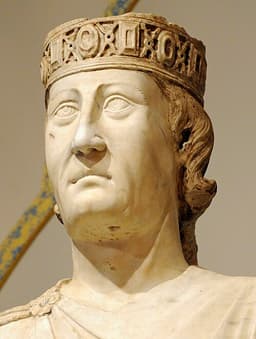
Charles of Anjou
Emperor · Medieval
59.5Total
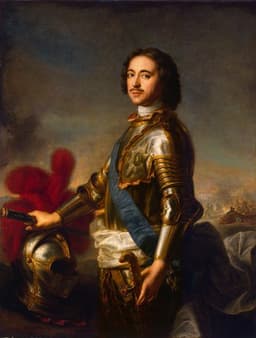
Peter the Great
Emperor · Modern
73.2Total
Basic Information
Born
1227
1672
Died
1285
1725
Era
Medieval
Modern
Nationality
France
Russia
Occupation
Emperor
Emperor
Civilization
Western
Western
Score Comparison
Military (10%)
82.0
75.0
Political (20%)
48.5
90.0
Influence (20%)
56.7
68.0
Legacy (20%)
52.0
65.0
Leadership (15%)
68.0
78.0
Strategy (15%)
66.3
72.0
TOTAL
59.5
73.2
Charles of Anjou — Complete Timeline
1266 AD
Battle of BeneventoWar◆ Major
Charles of Anjou defeated Manfred of Hohenstaufen at Benevento. Manfred was killed in the battle, allowing Charles to take control of the Kingdom of Sicily. This victory established the Angevin dynasty in southern Italy.
Angevin ConquestHohenstaufenItaly
Impact: regional
1268 AD
Battle of TagliacozzoWar◆ Major
Charles of Anjou defeated Conradin, the last Hohenstaufen claimant, at Tagliacozzo. Conradin was captured and later executed in Naples. This victory secured Charles's control over Sicily and ended Hohenstaufen claims.
HohenstaufenExecutionItaly
Impact: regionaldestructive
1282 AD
Sicilian VespersWar
A rebellion broke out in Palermo against Angevin rule, leading to the massacre of French officials and soldiers. The revolt spread across Sicily, resulting in the loss of the island to Peter III of Aragon. This event ended Charles's control of Sicily.
RevoltAragonSicily
Impact: regionaldestructive
1284 AD
Crusade against AragonWar
Pope Martin IV declared a crusade against Peter III of Aragon, and Charles of Anjou led the campaign. The French invasion of Aragon failed, and Charles's fleet was defeated. This crusade drained Angevin resources and weakened his position.
CrusadeAragonFailure
Impact: regionaldestructive
Peter the Great — Complete Timeline
1697 AD
Grand EmbassyPolitical Action◆ Major
Peter the Great traveled incognito to Western Europe as part of a diplomatic mission. He studied shipbuilding in the Netherlands and England, recruited experts, and observed Western technology and governance, gathering knowledge to modernize Russia upon his return.
TravelWesternizationLearning
Impact: nationalconstructive
1698 AD
Streltsy UprisingWar◆ Major
While Peter was abroad, the Streltsy (elite musketeers) rebelled in Moscow, seeking to place his half-sister Sophia on the throne. Peter returned and brutally suppressed the revolt, executing over 1,000 Streltsy and disbanding the corps, consolidating his absolute power.
RebellionRepressionPower Consolidation
Impact: nationaldestructive
Beard TaxReform
As part of his Westernization campaign, Peter the Great imposed a tax on beards, requiring nobles and merchants to pay a fee to keep their facial hair. Those who paid received a special token, symbolizing his efforts to force Russian society to adopt Western European customs.
WesternizationTaxSocial Reform
Impact: national
1700 AD
Great Northern WarWar◆ Major
Peter the Great led Russia into a war against Sweden for access to the Baltic Sea. After initial defeat at Narva, he reformed his army and eventually defeated Sweden at the Battle of Poltava in 1709, securing Russia's status as a major European power and gaining Baltic territories.
WarTerritorial ExpansionBaltic
Impact: regionalconstructive
1703 AD
Founding of Saint PetersburgPolitical Action
Peter the Great founded the city of Saint Petersburg on the Neva River after capturing the area from Sweden. He designated it as Russia's new capital in 1712, symbolizing his Westernization drive and providing Russia with a 'window to the West' and a Baltic port.
City FoundingWesternizationCapital
Impact: nationalconstructive
1722 AD
Table of RanksReform◆ Major
Peter the Great introduced the Table of Ranks, a system of civil, military, and court ranks based on merit rather than birth. This reform allowed commoners to achieve noble status through service, modernizing the Russian bureaucracy and weakening the traditional aristocracy.
BureaucracyMeritocracySocial Reform
Impact: nationalprogressive
Expert Analysis
Peter the Great vs Charles of Anjou
# The Iron Will of Two Kings: Peter the Great and Charles of Anjou
On a cold winter morning in 1698, Tsar Peter I of Russia returned to Moscow from a secret journey through Western Europe, his hands calloused from shipbuilding in Dutch shipyards. A century earlier, in 1268, King Charles of Anjou stood on the battlefield of Tagliacozzo, watching the last Hohenstaufen claimant to the Sicilian throne being led away in chains. Both men were outsiders who seized history by the throat. Yet one built an empire that would endure for centuries; the other saw his dynasty crumble within a generation. What made the difference?
Origins
Peter the Great was born in 1672 into a Russia that was vast but backward—a medieval realm isolated from the Renaissance and Reformation sweeping the West. His childhood was marked by terror: the Streltsy Uprising of 1698, when elite musketeers tried to place his half-sister Sophia on the throne, left him with a lifelong distrust of old power structures. He was a giant of a man, nearly seven feet tall, with a restless energy that drove him to learn carpentry, anatomy, and military engineering. His Russia was a blank slate, desperate for transformation.
Charles of Anjou was born in 1227, the youngest son of King Louis VIII of France. Unlike Peter, he inherited a sophisticated medieval kingdom—but also its rigid hierarchies. He was a younger son, which meant he had to carve his own path. His brother, Saint Louis IX, gave him lands in Provence, but Charles hungered for more. The Mediterranean world of the thirteenth century was a chessboard of papal alliances, Hohenstaufen ambitions, and crusading ideals. Charles was a man of iron discipline and cold calculation, but he operated within a system that rewarded piety and tradition as much as ambition.
Rise to Power
Peter’s rise was a revolution from above. In 1697, he launched the Grand Embassy—a diplomatic mission that was really a spy mission. He traveled incognito, working as a shipwright in the Netherlands, studying military tactics in England, and absorbing everything the West could teach. When the Streltsy rebelled in his absence, he returned and crushed them with savage efficiency, disbanding the old guard and clearing the way for reform.
Charles’s rise was a papal gift. In 1266, Pope Clement IV offered him the crown of Sicily, then held by Manfred of Hohenstaufen, the illegitimate son of Emperor Frederick II. Charles marched into Italy and defeated Manfred at the Battle of Benevento, where Manfred was killed. Two years later, at Tagliacozzo in 1268, he crushed Conradin, the last Hohenstaufen heir, and had him executed. Charles had conquered a kingdom, but he had done so as the pope’s enforcer—not as a nation-builder.
Leadership & Governance
Peter’s leadership was a paradox of brutality and vision. He imposed a Beard Tax in 1698 to force nobles to shave their beards—a symbol of old Russia—and built a new capital, Saint Petersburg, on a swamp in 1703, declaring it his “window to the West.” His Table of Ranks in 1722 replaced hereditary nobility with merit-based advancement, allowing commoners to rise through service. Militarily, he fought the Great Northern War against Sweden from 1700, suffering a crushing defeat at Narva before rebuilding his army and defeating Sweden at Poltava in 1709. His military score of 75 and political score of 82 reflect a leader who understood that power came from institutions, not from personal loyalty.
Charles of Anjou was a master of medieval warfare, with a leadership score of 85.1 that speaks to his battlefield prowess. He ruled Sicily with iron efficiency, centralizing administration and crushing dissent. But his governance was extractive, not transformative. He taxed heavily, appointed French officials, and treated Sicily as a conquered province. The Sicilian Vespers rebellion of 1282—a massacre of French officials in Palermo—was a direct result of his failure to win hearts. His political score of 69.3 reveals a man who could conquer but could not consolidate.
Triumph & Tragedy
Peter’s greatest triumph was the founding of Saint Petersburg, a city built on the bones of thousands of serfs but destined to become Russia’s cultural and political heart. His tragedy was his own ruthlessness: he had his own son Alexei tortured to death for opposing reforms. Yet the structure he built—the navy, the bureaucracy, the Westernized elite—survived him.
Charles’s triumph was the Battle of Tagliacozzo, where his tactical genius destroyed the Hohenstaufen dynasty. His tragedy was the Sicilian Vespers, which shattered his kingdom. The rebellion spread, and Peter III of Aragon invaded, sparking a war that Charles could not win. He died in 1285, his dream of a Mediterranean empire in ruins.
Character & Destiny
Peter was a force of nature—curious, violent, impatient. He believed that the state was a machine, and he was the engineer. He could be charming and brutal in the same breath, dancing at a ball one moment and beheading a rebel the next. His personality drove Russia forward, but it also created a legacy of autocracy that would haunt the nation.
Charles was a man of discipline and piety, a crusader in spirit. He was less a creator than a conqueror, less a reformer than a ruler. He saw power as a right, not a responsibility. Where Peter built institutions, Charles built fortresses. Where Peter Westernized, Charles Frenchified. The difference was that Peter understood that change must be systemic, while Charles believed that force alone was enough.
Legacy
Peter the Great is remembered as the father of modern Russia. His legacy score of 75 reflects a nation transformed—a major European power with a navy, a capital, and a bureaucracy. He is both hero and tyrant, but his impact is undeniable.
Charles of Anjou is remembered as a footnote, a conqueror who could not hold what he took. His legacy score of 65.7 speaks to a dynasty that lasted only a few decades. The Angevin dream died with him.
Conclusion
Two kings, two centuries, two fates. Peter the Great and Charles of Anjou both seized power through violence and ambition. But one built a nation; the other built a tomb. The difference was not in their strength but in their vision. Peter saw that to rule was to transform. Charles saw that to rule was to dominate. History remembers the builder, not the conqueror. And in that lesson lies the deepest truth about power: it is not enough to take the throne. You must also build the kingdom.
Rankings
🥇
Peter the GreatLeader
Mil: 75.0Pol: 90.0Inf: 68.0
73.2
🥈
Charles of Anjou
Mil: 82.0Pol: 48.5Inf: 56.7
59.5
+13.7 behind
How This Comparison Works
Algorithm
Each figure is scored on 6 dimensions (0—100 scale) based on structured historical data: Military (10%), Political (20%), Influence (20%), Legacy (20%), Leadership (15%), Strategy (15%). The weighted total produces the final ranking.
Data Sources
Scores are computed from structured sub-indicators in the database. Scale factors adjust for era (Ancient ×0.85, Modern ×1.0) and civilization size (Eastern ×1.05, Other ×0.80) to account for differences in population and military scale.
Maximum 3 Figures
Comparisons are limited to 2—3 figures to ensure readability and statistical meaningfulness.
Error Margins
±5 points per dimension — Sub-scores are derived from historical records with inherent uncertainty. Two figures within 5 points on a dimension should be considered roughly equivalent in that area.
Total Score Accuracy
±3 points overall — The weighted combination of 6 dimensions produces a total score with approximately ±3 points of uncertainty. Differences of less than 3 points are not statistically significant— the figures are effectively tied.
Known Limitations
- Historical records are incomplete and uneven across civilizations
- Figures from oral-tradition societies may be underrepresented
- Occupation labels can misclassify multi-role figures
- Scores measure capability and impact, not moral character
- Quantitative scoring is a comparison tool, not absolute truth
Capability Radar
Military (10%) — Battles & Warfare
Battles
75
85
Win Rate
70
80
Expansion
80
90
Political (20%) — Governance & Reform
Reform
60
95
Diplomacy
68
80
Economy
65
85
Influence (20%) — Cultural & Global Reach
Cultural
50
85
Global
45
85
Legacy (20%) — Historical Impact
Historical
60
90
Longevity
55
85
Leadership (15%) — Power & Stability
Tenure
70
90
Stability
55
70
Strategy (15%) — Tactics & Innovation
Strategy
78
85
Tactics
72
75
Reform
65
95
Similar Comparisons
Comments & Discussion
TAGLIACOZZO-TACTICIAN6/16/2026
Classic battlefield analysis misses the real story here. Charles won Tagliacozzo through pure deception—hiding his main force while letting Conradin think he'd already won. Peter never had that strategic subtlety; his Great Northern War victories came from grinding attrition and sheer numbers. Charles out-thought his enemy; Peter just outlasted him. Quality over quantity, always. Charles 1, Peter 0 in tactical innovation.北方雄狮|zh|彼得大帝才是真正改变历史的强者,查理不过是欧洲小舞台上的一颗流星。彼得亲手在荷兰造船厂学艺,建立俄罗斯海军,1721年击败瑞典成为北方