Loading...
Charles of Anjou vs Kublai Khan
Kublai Khan leads by 14.8 pts · 2 figures compared
…
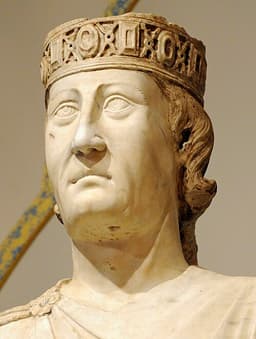
Charles of Anjou
Emperor · Medieval
59.5Total
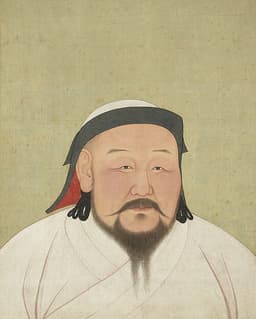
Kublai Khan
Emperor · Medieval
74.3Total
Basic Information
Born
1227
1215
Died
1285
1294
Era
Medieval
Medieval
Nationality
France
Mongolia
Occupation
Emperor
Emperor
Civilization
Western
Eastern
Score Comparison
Military (10%)
82.0
77.5
Political (20%)
48.5
79.2
Influence (20%)
56.7
75.0
Legacy (20%)
52.0
70.0
Leadership (15%)
68.0
72.0
Strategy (15%)
66.3
76.0
TOTAL
59.5
74.3
Charles of Anjou — Complete Timeline
1266 AD
Battle of BeneventoWar◆ Major
Charles of Anjou defeated Manfred of Hohenstaufen at Benevento. Manfred was killed in the battle, allowing Charles to take control of the Kingdom of Sicily. This victory established the Angevin dynasty in southern Italy.
Angevin ConquestHohenstaufenItaly
Impact: regional
1268 AD
Battle of TagliacozzoWar◆ Major
Charles of Anjou defeated Conradin, the last Hohenstaufen claimant, at Tagliacozzo. Conradin was captured and later executed in Naples. This victory secured Charles's control over Sicily and ended Hohenstaufen claims.
HohenstaufenExecutionItaly
Impact: regionaldestructive
1282 AD
Sicilian VespersWar
A rebellion broke out in Palermo against Angevin rule, leading to the massacre of French officials and soldiers. The revolt spread across Sicily, resulting in the loss of the island to Peter III of Aragon. This event ended Charles's control of Sicily.
RevoltAragonSicily
Impact: regionaldestructive
1284 AD
Crusade against AragonWar
Pope Martin IV declared a crusade against Peter III of Aragon, and Charles of Anjou led the campaign. The French invasion of Aragon failed, and Charles's fleet was defeated. This crusade drained Angevin resources and weakened his position.
CrusadeAragonFailure
Impact: regionaldestructive
Kublai Khan — Complete Timeline
1260 AD
Adoption of Tibetan Buddhism as State ReligionCultural◆ Major
Kublai Khan appointed the Tibetan lama Drog
Tibetan BuddhismReligionMongol-Tibet Relations
Impact: regional
1271 AD
Proclamation of the Yuan DynastyPolitical Action◆ Major
Kublai Khan officially proclaimed the Yuan dynasty, adopting a Chinese-style dynastic name. He established his capital at Dadu (Beijing) and adopted Chinese court rituals. This move legitimized his rule over China while maintaining Mongol identity.
Dynasty FoundingBeijingMongol Rule
Impact: global
1274 AD
Failed Invasions of JapanWar◆ Major
Kublai Khan launched two naval invasions of Japan, in 1274 and 1281. Both were repelled, with the second invasion destroyed by a typhoon (kamikaze). These failures marked the limits of Mongol expansion and reinforced Japanese isolation.
Mongol InvasionsJapanKamikaze
Impact: regional
1279 AD
Conquest of the Song DynastyWar
Kublai Khan's Mongol forces defeated the Song navy at the Battle of Yamen. The last Song emperor drowned, ending the Song dynasty. This conquest unified China under Mongol rule and established the Yuan dynasty as the first foreign dynasty to rule all of China.
Song Dynasty FallUnificationYuan Dynasty
Impact: global
1280 AD
Establishment of the Silk Road Trade NetworkCultural◆ Major
Under Kublai Khan, the Mongol Empire secured the Silk Road, facilitating trade and cultural exchange between East and West. Marco Polo visited his court. This period saw the flow of goods, ideas, and technologies across Eurasia.
Silk RoadTradeCultural Exchange
Impact: globalconstructive
Expert Analysis
Kublai Khan vs Charles of Anjou
### The Emperor and the Adventurer: Kublai Khan and Charles of Anjou
In the winter of 1271, two men, born just a decade apart, were reshaping the medieval world from opposite ends of Eurasia. On one side, Kublai Khan, grandson of Genghis, stood in his new capital of Dadu—modern Beijing—and proclaimed the Yuan Dynasty, a name that meant "origin" in Chinese. On the other, Charles of Anjou, a French prince with a hunger for dominion, sat in his Sicilian palace at Palermo, having crushed his Hohenstaufen rivals five years earlier. One ruled an empire that stretched from Korea to Hungary; the other, a kingdom that barely encompassed southern Italy and Sicily. Yet both believed they were destined for greatness. Why did one build a dynasty that would rule China for a century, while the other saw his Mediterranean dream shatter in a single night of rebellion? The answer lies not in their resources, but in their characters—and the worlds that shaped them.
### Origins
Kublai Khan was born in 1215, a grandson of Genghis Khan, into a nomadic world of horsemen and felt tents. The Mongol Empire was a machine of conquest, but it was also a crucible of adaptation. Kublai grew up watching his uncles and father conquer northern China, learning that the secret to ruling a sedentary civilization was not to destroy it, but to absorb it. He was tutored by Confucian scholars and Buddhist monks, a blend that would define his reign. His era was one of unprecedented mobility: the Silk Road was already being stitched together by Mongol arrows, and Kublai understood that power came from controlling both the steppe and the sown.
Charles of Anjou, born in 1227, was the youngest son of King Louis VIII of France. In the rigid hierarchy of medieval Europe, younger sons had to carve their own fortunes. Charles was a man of the Latin West, raised on crusading zeal and feudal honor. His older brother, Louis IX, was a saint-king who led crusades to Egypt and Tunis; Charles inherited a different legacy—ambition without piety. His world was fragmented: the Holy Roman Empire was in chaos, the papacy was fighting the Hohenstaufen dynasty, and Sicily was a prize coveted by every power in the Mediterranean. While Kublai was taught to synthesize cultures, Charles was taught to conquer them.
### Rise to Power
Kublai’s path to power was a slow, deliberate climb. In 1251, his brother Möngke became Great Khan, and Kublai was given the task of administering the conquered territories of northern China. He proved a capable governor, building irrigation systems, reducing taxes, and winning the loyalty of Chinese officials. But his rise was not without conflict—rival Mongol princes accused him of becoming too Chinese. In 1260, after Möngke’s death, Kublai seized the title of Great Khan in a disputed election, fighting a civil war against his brother Ariq Böke. He won, but the Mongol Empire would never again be unified. Kublai chose to focus on China, not the steppe.
Charles’s rise was faster and more violent. In 1266, Pope Clement IV, desperate to destroy the Hohenstaufen grip on Italy, offered Charles the crown of Sicily. Charles marched south with French knights and papal blessing. At the Battle of Benevento, he faced Manfred of Hohenstaufen. The battle was a slaughter: Manfred was killed, and Charles took the kingdom. Two years later, at Tagliacozzo, he crushed Conradin, the last Hohenstaufen heir, and executed the sixteen-year-old in a public square. Charles had won his kingdom by the sword, but he had also made enemies.
### Leadership & Governance
Kublai Khan governed like a Chinese emperor, not a Mongol warlord. He adopted a Chinese-style dynastic name, moved his capital to Dadu, and built a bureaucracy staffed by Confucian scholars. He also embraced Tibetan Buddhism, appointing the lama Drogön Chögyal Phagpa as his imperial preceptor in 1260, making it the state religion. Yet he never abandoned his Mongol roots: he kept the steppe cavalry, maintained a divided society (with Mongols at the top), and allowed foreign merchants like Marco Polo to thrive. His greatest achievement was the conquest of the Song Dynasty in 1279, after a decades-long campaign that culminated in the Battle of Yamen, where the last Song emperor drowned. He then secured the Silk Road, creating a trade network that linked China to Persia and Europe. But his governance had a dark side: his failed invasions of Japan in 1274 and 1281, where typhoons—the "divine wind"—destroyed his fleets, drained the treasury and sowed resentment.
Charles of Anjou ruled like a feudal lord, extracting wealth from his kingdom to fund his ambitions. He built a powerful fleet and a centralized administration, but he also imposed heavy taxes on the Sicilian nobility and clergy. His strategy was aggressive: he aimed to dominate the Mediterranean, challenge the Byzantine Empire, and even launch a crusade against Constantinople. But his governance was brittle. He relied on French officials and soldiers, alienating the local population. His military prowess was real—he was a skilled tactician, as shown at Benevento and Tagliacozzo—but his political wisdom was lacking. He saw his kingdom as a base for expansion, not a community to nurture.
### Triumph & Tragedy
Kublai’s greatest triumph was the unification of China under the Yuan Dynasty. For the first time in three centuries, the entire country was ruled by a single power. He also opened the Silk Road, allowing goods, ideas, and technologies to flow between East and West. But his tragedy was the invasions of Japan. The first invasion in 1274 was repelled; the second in 1281 was a catastrophe, with a typhoon destroying hundreds of ships and thousands of men. The cost was immense, and it marked the beginning of the Yuan’s decline.
Charles’s greatest triumph was his swift conquest of Sicily and the destruction of the Hohenstaufen threat. He became the most powerful ruler in Italy, a king who could challenge popes and emperors. But his tragedy came in 1282, on Easter Monday, when the Sicilian Vespers erupted in Palermo. A rebellion, sparked by a French soldier’s insult to a local woman, turned into a massacre of French officials and troops. The revolt spread across the island, and Peter III of Aragon invaded, claiming the throne for his wife. Charles spent his final years trying to reconquer Sicily, but he died in 1285, his kingdom divided and his dream in ruins.
### Character & Destiny
Kublai Khan was pragmatic and adaptive. He understood that to rule China, he had to become Chinese, but he never lost his Mongol edge. His decisions were driven by a desire for order and stability—he wanted to be remembered as a great emperor, not just a conqueror. Charles of Anjou was ambitious and relentless, but also inflexible. He saw the world in terms of enemies to be crushed and lands to be seized. His personality—proud, vengeful, and impatient—made him a brilliant conqueror but a poor ruler. He could win battles, but he could not win hearts.
### Legacy
Kublai Khan is remembered as a unifier and a patron of culture. His Yuan Dynasty lasted until 1368, and his legacy includes the restoration of the Grand Canal, the promotion of trade, and the introduction of Tibetan Buddhism to Mongolia and China. Marco Polo’s tales of his court inspired generations of European explorers. Charles of Anjou is remembered as a tyrant and a failure. His dynasty in Naples survived for centuries, but his name is forever linked to the Sicilian Vespers, a rebellion that became a symbol of resistance against foreign rule. In Italy, he is a villain; in France, a footnote.
### Conclusion
The difference between Kublai Khan and Charles of Anjou is not one of scale, but of vision. Kublai saw empire as a garden to be cultivated; Charles saw it as a fortress to be stormed. One understood that power must be shared to be sustained; the other believed it must be hoarded to be enjoyed. In the end, the Mongol emperor built a dynasty that outlasted him, while the French prince left only a memory of violence and a kingdom in ashes. Their stories remind us that history’s greatest rulers are not those who conquer the most, but those who know how to keep what they have won.
Rankings
🥇
Kublai KhanLeader
Mil: 77.5Pol: 79.2Inf: 75.0
74.3
🥈
Charles of Anjou
Mil: 82.0Pol: 48.5Inf: 56.7
59.5
+14.8 behind
How This Comparison Works
Algorithm
Each figure is scored on 6 dimensions (0—100 scale) based on structured historical data: Military (10%), Political (20%), Influence (20%), Legacy (20%), Leadership (15%), Strategy (15%). The weighted total produces the final ranking.
Data Sources
Scores are computed from structured sub-indicators in the database. Scale factors adjust for era (Ancient ×0.85, Modern ×1.0) and civilization size (Eastern ×1.05, Other ×0.80) to account for differences in population and military scale.
Maximum 3 Figures
Comparisons are limited to 2—3 figures to ensure readability and statistical meaningfulness.
Error Margins
±5 points per dimension — Sub-scores are derived from historical records with inherent uncertainty. Two figures within 5 points on a dimension should be considered roughly equivalent in that area.
Total Score Accuracy
±3 points overall — The weighted combination of 6 dimensions produces a total score with approximately ±3 points of uncertainty. Differences of less than 3 points are not statistically significant— the figures are effectively tied.
Known Limitations
- Historical records are incomplete and uneven across civilizations
- Figures from oral-tradition societies may be underrepresented
- Occupation labels can misclassify multi-role figures
- Scores measure capability and impact, not moral character
- Quantitative scoring is a comparison tool, not absolute truth
Capability Radar
Military (10%) — Battles & Warfare
Battles
75
95
Win Rate
70
90
Expansion
80
95
Political (20%) — Governance & Reform
Reform
60
88
Diplomacy
68
85
Economy
65
90
Influence (20%) — Cultural & Global Reach
Cultural
50
85
Global
45
85
Legacy (20%) — Historical Impact
Historical
60
90
Longevity
55
80
Leadership (15%) — Power & Stability
Tenure
70
90
Stability
55
80
Strategy (15%) — Tactics & Innovation
Strategy
78
92
Tactics
72
85
Reform
65
88
Similar Comparisons
Comments & Discussion
SteppeOverlord6/16/2026
Let's be real: Kublai inherited the best military logistics in pre-modern history, and his failure to take Japan or Java shows he wasn't some master strategist—he just had a bigger sandbox than Charles. I’d take Charles’s disciplined Angevin knights at Tagliacozzo over Mongol horse archers any day; Charles won a decisive victory without needing the whole known world behind him. Size isn’t skill.
数据拆解师6/16/2026
别吹蒙古骑兵神话了。元朝从来没建立过覆盖全境的人口普查体系,而安茹的查理在西西里搞的《王国内务调查录》是欧洲最早的系统化税收档案之一。你拿草原部落那套管中国?纯粹靠运气和汉人官僚续命。拿数据说话——元朝九十年垮台,安茹王朝在意大利根基撑了三百年。谁更会治国?查理。
SagaSpectacles6/16/2026
Both were ambitious, but only one had the vision to see empire as cultural fusion. Kublai built a capital (Dadu) from scratch—planned with feng shui, Buddhist stupas, and hydraulic engineering. Charles just moved into Palermo’s Norman palace and added French tapestries. Kublai patronized Marco Polo; Charles locked his Muslim and Jewish scholars out. The Khan’s legacy is a global Silk Road; Charles’s is the night of the Sicilian Vespers. Emperor vs. prince.
经典批判家6/16/2026
史书上写忽必烈是“元始天尊”,查理是“残暴征服者”,但你看清楚:忽必烈为了巩固权力杀了无数南宋平民,屠城襄阳后活埋战俘;查理绞杀康拉丁时好歹给了个公开审判,虽然是个死刑表演。别拿“文明融合”给蒙古人洗白,他们两个都是中世纪标准的暴君,只不过一个用儒袍遮住血迹,一个戴着教皇的戒指砍人。
NOMAD_NERD6/16/2026
Honestly? Charles of Anjou had the better story. Kublai sat on a pre-built war machine; Charles built his kingdom from nothing, a younger son of Louis VIII clawing his way into Italy. He beat Manfred at Benevento and Conradin at Tagliacozzo—two separate Hohenstaufen armies—with superior tactics, not just numbers. The Sicilian Vespers was a popular revolt, yes, but Charles forged a Mediterranean power before it. Kublai had history on his side; Charles had grit.