Loading...
Charles de Gaulle vs Charles of Anjou
Charles de Gaulle leads by 8.7 pts · 2 figures compared
…
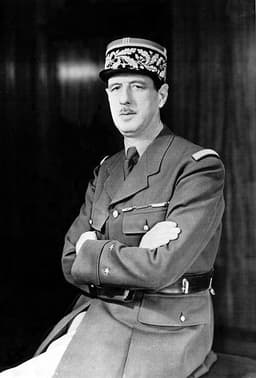
Charles de Gaulle
Politician · Modern
68.2Total
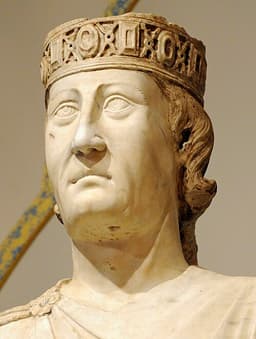
Charles of Anjou
Emperor · Medieval
59.5Total
Basic Information
Born
1890
1227
Died
1970
1285
Era
Modern
Medieval
Nationality
France
France
Occupation
Politician
Emperor
Civilization
Western
Western
Score Comparison
Military (10%)
55.0
82.0
Political (20%)
75.0
48.5
Influence (20%)
65.0
56.7
Legacy (20%)
68.0
52.0
Leadership (15%)
78.0
68.0
Strategy (15%)
65.0
66.3
TOTAL
68.2
59.5
Charles de Gaulle — Complete Timeline
1940 AD
Appeal of 18 June 1940Political Action
From London, de Gaulle broadcast a radio appeal urging French resistance against Nazi occupation. He called on French soldiers and citizens to continue the fight, founding the Free French Forces and becoming the symbol of French defiance.
World War IIResistanceLeadership
Impact: nationalconstructive
1958 AD
Founding of the Fifth RepublicPolitical Action
De Gaulle returned to power during the Algerian crisis and oversaw the drafting of a new constitution. The Fifth Republic established a strong executive presidency, replacing the unstable parliamentary system of the Fourth Republic.
ConstitutionGovernment ReformPolitical System
Impact: nationalconstructive
1962 AD
End of the Algerian WarPolitical Action◆ Major
De Gaulle negotiated the
DecolonizationPeace TreatyAlgeria
Impact: regionalconstructive
1968 AD
May 1968 CrisisPolitical Action◆ Major
Mass student protests and general strikes paralyzed France, challenging de Gaulle's government. De Gaulle briefly fled to Germany, then returned to dissolve the National Assembly and call elections, which his party won, but his authority was weakened.
ProtestPolitical CrisisSocial Unrest
Impact: nationaldestructive
1969 AD
Resignation as PresidentPolitical Action
De Gaulle resigned after losing a referendum on regional reform and Senate restructuring. The defeat marked the end of his political career, as he withdrew from public life and died the following year.
ResignationPolitical DefeatReferendum
Impact: nationaltragic
Charles of Anjou — Complete Timeline
1266 AD
Battle of BeneventoWar◆ Major
Charles of Anjou defeated Manfred of Hohenstaufen at Benevento. Manfred was killed in the battle, allowing Charles to take control of the Kingdom of Sicily. This victory established the Angevin dynasty in southern Italy.
Angevin ConquestHohenstaufenItaly
Impact: regional
1268 AD
Battle of TagliacozzoWar◆ Major
Charles of Anjou defeated Conradin, the last Hohenstaufen claimant, at Tagliacozzo. Conradin was captured and later executed in Naples. This victory secured Charles's control over Sicily and ended Hohenstaufen claims.
HohenstaufenExecutionItaly
Impact: regionaldestructive
1282 AD
Sicilian VespersWar
A rebellion broke out in Palermo against Angevin rule, leading to the massacre of French officials and soldiers. The revolt spread across Sicily, resulting in the loss of the island to Peter III of Aragon. This event ended Charles's control of Sicily.
RevoltAragonSicily
Impact: regionaldestructive
1284 AD
Crusade against AragonWar
Pope Martin IV declared a crusade against Peter III of Aragon, and Charles of Anjou led the campaign. The French invasion of Aragon failed, and Charles's fleet was defeated. This crusade drained Angevin resources and weakened his position.
CrusadeAragonFailure
Impact: regionaldestructive
Expert Analysis
Charles de Gaulle vs Charles of Anjou
# The Two Charles: France's Generals of Destiny
In the spring of 1940, a tall, awkward French brigadier general stood before a BBC microphone in London, his voice trembling slightly as he called on his countrymen to resist. Nearly seven centuries earlier, another French prince had crossed the Alps with a different kind of army, determined to carve a kingdom from the ruins of empire. Both men bore the name Charles. Both believed themselves instruments of destiny. But where one rebuilt a nation from ashes, the other built a throne that collapsed beneath him. The difference between them is not merely a matter of centuries—it is a lesson in the nature of power itself.
Origins
Charles de Gaulle was born in 1890 into a Catholic, patriotic family in Lille, northern France. His father taught philosophy and history; his mother wept at France's defeat in the Franco-Prussian War. Young Charles absorbed a sense of national humiliation that would define his life. He was bookish, aloof, and convinced of his own greatness—a trait that made him difficult but also visionary. The France he inherited was a republic fractured by political instability, scarred by the Great War, and haunted by the specter of German resurgence.
Charles of Anjou, born in 1227, was the youngest son of King Louis VIII of France. He was a prince of the blood, but in the medieval world, younger sons received swords, not crowns. His brother, King Louis IX (Saint Louis), granted him the county of Anjou, but Charles burned with ambition for more. The Mediterranean world of the 13th century was a chessboard of popes, emperors, and rival dynasties—a world where a bold man could seize a kingdom if he had the nerve. Charles had nerve in abundance.
Both men were shaped by their eras. De Gaulle's France was a modern republic struggling with the trauma of defeat and the burden of empire. Charles of Anjou's France was a feudal monarchy reaching outward, its knights hungry for glory and land. The tools available to each man—radio broadcasts for de Gaulle, papal bulls and mercenary armies for Charles—reflected their times. But the raw material of ambition was the same.
Rise to Power
De Gaulle's path was improbable. A junior officer with unorthodox views on tank warfare, he was virtually unknown when France fell in June 1940. While Marshal Pétain sued for peace, de Gaulle fled to London and, on June 18, delivered his famous radio appeal. It was a desperate gamble. He had no army, no territory, no legitimacy—only his voice and his conviction. Winston Churchill recognized his ferocious will and backed him, but for years de Gaulle was a general without troops, a government in exile sustained by sheer obstinacy. His turning point came not on a battlefield but at a desk: in 1958, when the Algerian crisis brought France to the brink of civil war, the nation turned to him. He returned to power, wrote a new constitution, and became the first president of the Fifth Republic.
Charles of Anjou's rise was swifter and bloodier. In 1266, Pope Clement IV, desperate to destroy the Hohenstaufen dynasty that threatened papal power, offered Charles the kingdom of Sicily. Charles marched his army into Italy and met Manfred of Hohenstaufen at Benevento. The battle was brutal; Manfred was killed, and Charles took the crown. Two years later, when Conradin, the last Hohenstaufen heir, tried to reclaim his inheritance, Charles crushed him at Tagliacozzo and had the sixteen-year-old executed in the marketplace of Naples. It was a ruthless act that secured his throne—and planted the seeds of his ruin.
De Gaulle rose through moral authority and political crisis. Charles rose through violence and papal favor. Both seized opportunity, but de Gaulle's legitimacy came from the consent of the French people; Charles's came from the sword.
Leadership & Governance
As president, de Gaulle governed with a combination of grandeur and pragmatism. He restored French prestige by standing up to America and Britain, withdrew from NATO's military command, and pursued an independent nuclear deterrent. Yet he also ended the Algerian War—a conflict that had torn France apart—by negotiating independence for Algeria, despite facing assassination attempts from French extremists. His domestic reforms strengthened the presidency and stabilized the republic. He was aloof, paternalistic, and often infuriating, but he gave France a sense of purpose.
Charles of Anjou ruled Sicily with efficiency and ambition. He built a powerful navy, reformed the administration, and made Naples a center of culture and learning. But his rule was harsh: heavy taxes, French officials, and a disdain for local customs alienated the Sicilian nobility and commoners alike. He saw Sicily not as a homeland but as a base for further conquest—a stepping stone to the Byzantine Empire and even Jerusalem. His governance was competent but brittle, built on force rather than loyalty.
De Gaulle understood that leadership required consent, not just control. Charles understood only control. The difference became fatal.
Triumph & Tragedy
De Gaulle's greatest triumph was the Fifth Republic itself—a constitution that gave France stability for decades. His greatest tragedy was the May 1968 crisis, when student protests and a general strike paralyzed France. De Gaulle, bewildered by the revolt of a generation he did not understand, briefly fled to Germany. He returned, called elections, and won, but his authority was permanently diminished. He resigned in 1969 after losing a referendum on minor reforms—a surprisingly anticlimactic end for a man who had faced down Hitler, Churchill, and the Algerian rebels.
Charles of Anjou's triumph was the conquest of Sicily and the destruction of the Hohenstaufen. His tragedy was the Sicilian Vespers of 1282, when a spontaneous uprising in Palermo massacred his French officials and soldiers. The revolt spread, and Peter III of Aragon invaded, stripping Charles of the island he had won at such cost. He spent his final years trying to reconquer Sicily, even leading a disastrous crusade against Aragon, and died in 1285 with his dream of a Mediterranean empire shattered.
Character & Destiny
De Gaulle's character was a paradox: arrogant yet selfless, rigid yet adaptable. He once wrote, "Greatness is a road leading toward the unknown." He believed France needed a certain idea of itself to survive, and he became the embodiment of that idea. His destiny was to restore national honor at a moment when honor seemed lost.
Charles of Anjou's character was simpler: ambitious, efficient, and ruthless. He was a brilliant organizer and a ferocious warrior, but he lacked the ability to inspire loyalty beyond fear. His destiny was to build an empire on sand—impressive, but doomed to crumble at the first tremor of rebellion.
Legacy
De Gaulle is remembered as the savior of French honor, the founder of the Fifth Republic, and the architect of modern France. His legacy is institutional and enduring: the presidency, the constitution, and a certain idea of French independence that still shapes policy today.
Charles of Anjou is remembered as a conqueror who overreached. His Angevin dynasty ruled Naples for generations, but the Sicilian Vespers became a byword for the limits of foreign rule. Dante placed him in Purgatory; historians debate whether he was a visionary or a tyrant.
Conclusion
Two generals, two centuries, two Frances. De Gaulle understood that power without legitimacy is a house of cards. Charles of Anjou believed that power alone was enough. One rebuilt a nation; the other lost a kingdom. Their stories remind us that the greatest leaders are not those who conquer, but those who persuade—and that the sword, however sharp, cannot replace the trust of the people. In the end, the two Charles met the same fate: both were humbled by forces they could not control. But one left behind a republic that still stands, while the other left only a memory of ambition turned to ash.
Rankings
🥇
Charles de GaulleLeader
Mil: 55.0Pol: 75.0Inf: 65.0
68.2
🥈
Charles of Anjou
Mil: 82.0Pol: 48.5Inf: 56.7
59.5
+8.7 behind
How This Comparison Works
Algorithm
Each figure is scored on 6 dimensions (0—100 scale) based on structured historical data: Military (10%), Political (20%), Influence (20%), Legacy (20%), Leadership (15%), Strategy (15%). The weighted total produces the final ranking.
Data Sources
Scores are computed from structured sub-indicators in the database. Scale factors adjust for era (Ancient ×0.85, Modern ×1.0) and civilization size (Eastern ×1.05, Other ×0.80) to account for differences in population and military scale.
Maximum 3 Figures
Comparisons are limited to 2—3 figures to ensure readability and statistical meaningfulness.
Error Margins
±5 points per dimension — Sub-scores are derived from historical records with inherent uncertainty. Two figures within 5 points on a dimension should be considered roughly equivalent in that area.
Total Score Accuracy
±3 points overall — The weighted combination of 6 dimensions produces a total score with approximately ±3 points of uncertainty. Differences of less than 3 points are not statistically significant— the figures are effectively tied.
Known Limitations
- Historical records are incomplete and uneven across civilizations
- Figures from oral-tradition societies may be underrepresented
- Occupation labels can misclassify multi-role figures
- Scores measure capability and impact, not moral character
- Quantitative scoring is a comparison tool, not absolute truth
Capability Radar
Military (10%) — Battles & Warfare
Battles
60
75
Win Rate
55
70
Expansion
20
80
Political (20%) — Governance & Reform
Reform
95
60
Diplomacy
90
68
Economy
70
65
Influence (20%) — Cultural & Global Reach
Cultural
70
50
Global
80
45
Legacy (20%) — Historical Impact
Historical
85
60
Longevity
75
55
Leadership (15%) — Power & Stability
Tenure
85
70
Stability
75
55
Strategy (15%) — Tactics & Innovation
Strategy
85
78
Tactics
70
72
Reform
80
65
Similar Comparisons
Comments & Discussion
No comments yet. Be the first to share your thoughts!