Loading...
Charles of Anjou vs Pachacuti
Pachacuti leads by 9.9 pts · 2 figures compared
…
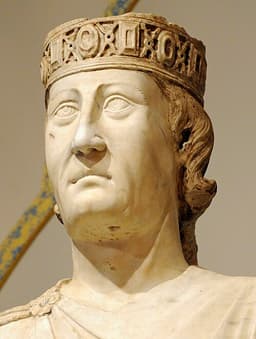
Charles of Anjou
Emperor · Medieval
59.5Total
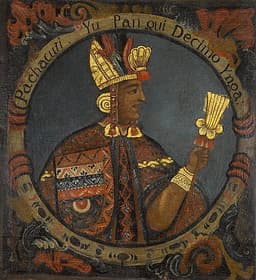
Pachacuti
Emperor · Medieval
69.4Total
Basic Information
Born
1227
1418
Died
1285
1472
Era
Medieval
Medieval
Nationality
France
Inca Empire
Occupation
Emperor
Emperor
Civilization
Western
Other
Score Comparison
Military (10%)
82.0
78.5
Political (20%)
48.5
58.1
Influence (20%)
56.7
65.0
Legacy (20%)
52.0
72.0
Leadership (15%)
68.0
78.0
Strategy (15%)
66.3
69.2
TOTAL
59.5
69.4
Charles of Anjou — Complete Timeline
1266 AD
Battle of BeneventoWar◆ Major
Charles of Anjou defeated Manfred of Hohenstaufen at Benevento. Manfred was killed in the battle, allowing Charles to take control of the Kingdom of Sicily. This victory established the Angevin dynasty in southern Italy.
Angevin ConquestHohenstaufenItaly
Impact: regional
1268 AD
Battle of TagliacozzoWar◆ Major
Charles of Anjou defeated Conradin, the last Hohenstaufen claimant, at Tagliacozzo. Conradin was captured and later executed in Naples. This victory secured Charles's control over Sicily and ended Hohenstaufen claims.
HohenstaufenExecutionItaly
Impact: regionaldestructive
1282 AD
Sicilian VespersWar
A rebellion broke out in Palermo against Angevin rule, leading to the massacre of French officials and soldiers. The revolt spread across Sicily, resulting in the loss of the island to Peter III of Aragon. This event ended Charles's control of Sicily.
RevoltAragonSicily
Impact: regionaldestructive
1284 AD
Crusade against AragonWar
Pope Martin IV declared a crusade against Peter III of Aragon, and Charles of Anjou led the campaign. The French invasion of Aragon failed, and Charles's fleet was defeated. This crusade drained Angevin resources and weakened his position.
CrusadeAragonFailure
Impact: regionaldestructive
Pachacuti — Complete Timeline
1438 AD
Conquest of the Chanka KingdomWar
Pachacuti led the Inca army to defeat the Chanka, a powerful rival, in a decisive battle near Cusco. This victory secured his position as Sapa Inca and initiated a period of rapid expansion, transforming the Inca from a small kingdom into a vast empire.
ConquestInca ExpansionChanka
Impact: regional
1440 AD
Reconstruction of CuscoCultural◆ Major
Pachacuti rebuilt Cusco as the imperial capital, designing it in the shape of a puma and constructing massive stone structures like Sacsayhuam
Urban PlanningArchitectureInca Empire
Impact: regionalconstructive
1450 AD
Initiation of Machu Picchu's ConstructionCultural◆ Major
Pachacuti ordered the construction of Machu Picchu, a royal estate and ceremonial site high in the Andes. The complex featured sophisticated dry-stone masonry and terraced agriculture, serving as a symbol of Inca engineering and a retreat for the emperor.
ArchitectureRoyal EstateInca Engineering
Impact: regionalconstructive
Expert Analysis
Pachacuti vs Charles of Anjou
### The Mountain and the Sea: How Pachacuti and Charles of Anjou Forged Their Empires
In the thin air of the Andes, a general turned emperor stood atop a newly conquered peak, surveying a realm that would stretch two thousand miles. In the humid heat of the Mediterranean, a French prince watched his fleet burn in the harbor of Palermo, his dream of a universal Christian kingdom crumbling with the smoke. Pachacuti and Charles of Anjou—two medieval empire-builders, separated by oceans and cultures, yet linked by a common ambition that drove them to reshape the world. One built a mountain civilization so resilient that its stones still defy explanation; the other seized a throne by the sword, only to see it slip through his fingers. Their stories ask a haunting question: what separates the architects of eternal empires from the builders of sandcastles?
### Origins
Pachacuti was born in 1418 into a world of narrow valleys and constant threat. The Inca were then a minor kingdom in the Cusco region, surrounded by powerful neighbors like the Chanka. His name, which means "he who shakes the earth," was not his birthright—it was a title earned through action. The son of the Sapa Inca Viracocha, he was not the favored heir, but the ninth son, a position that bred either resentment or resilience. His upbringing was steeped in the practical mysticism of the Andes, where mountains were gods and the earth demanded blood and labor.
Charles of Anjou, born in 1227, entered a world of courtly intrigue and papal politics. He was the youngest son of King Louis VIII of France, a prince of the Capetian dynasty, raised in the shadow of his sainted brother, King Louis IX. His inheritance was not a kingdom but a claim—to Provence, through marriage, and to a crusading destiny. Where Pachacuti learned to read the land, Charles learned to read the Vatican’s letters. His era was one of crusades, heresy, and the bitter struggle between the Papacy and the Holy Roman Empire.
### Rise to Power
Pachacuti’s ascent was forged in fire. In 1438, the Chanka kingdom launched a massive assault on Cusco. The Inca king and his designated heir fled, abandoning the city. According to Inca tradition, it was the young prince, then known as Cusi Yupanqui, who rallied the remaining warriors and led a desperate defense. In the decisive battle near Cusco, he turned the tide, slaughtering the Chanka army and capturing their leader. The victory was so complete that he returned to Cusco not as a prince, but as the new Sapa Inca, forcing his father into retirement. This was no palace coup—it was a revolution of merit.
Charles of Anjou’s rise was a slow, patient game of chess. He had already secured Provence through marriage, but his eyes were on the glittering prize of Sicily. The Papacy, locked in a mortal struggle with the Hohenstaufen dynasty, needed a champion. In 1266, Pope Clement IV offered Charles the crown of Sicily, a kingdom that included Naples and the rich island itself. Charles marched an army across the Alps into Italy. At the Battle of Benevento, he faced Manfred of Hohenstaufen. The battle was brutal and decisive; Manfred was killed, and Charles took the throne. His path was paved not by desperate valor, but by papal bulls and French gold.
### Leadership & Governance
Pachacuti’s genius lay in his ability to organize. After his victory, he did not simply plunder—he rebuilt. In 1440, he began the reconstruction of Cusco, designing the capital in the shape of a sacred puma, with massive stone walls fitted so precisely that a blade of grass could not pass between them. He created the *mitma* system, relocating conquered peoples to break resistance and spread Inca culture. He established a network of roads, storehouses, and administrators that could feed an army across a continent. His military strategy was one of overwhelming force, then generous integration: the conquered elite were often brought to Cusco, taught Quechua, and given honors. Pachacuti ruled with a leadership score of 84.5, a reflection of his ability to command both armies and loyalty.
Charles of Anjou was a different kind of ruler. His leadership score of 85.1 was equally high, but it was a colder, more calculating force. He was a brilliant organizer of armies and a master of logistics, as shown at Tagliacozzo in 1268, where he defeated the last Hohenstaufen claimant, the teenage Conradin. After the battle, Charles ordered the boy’s public execution in Naples—a brutal act that shocked Europe and secured his throne. He built a centralized administration, imposed heavy taxes to fund his wars, and filled key positions with French and Provencal officials. He was efficient, but he never sought to integrate his subjects. To the Sicilians, he was a foreign tyrant.
### Triumph & Tragedy
Pachacuti’s greatest triumphs were also his most enduring. In 1450, he ordered the construction of Machu Picchu, a royal estate carved into a mountain ridge. It was not a fortress but a sacred retreat, a place where the emperor could commune with the gods. His empire expanded from modern Ecuador to Chile, encompassing millions of people. His tragedy was personal: he outlived his chosen heir, and his later years were marked by succession disputes. Yet even in decline, his system held.
Charles’s triumph was the conquest of Sicily itself. For a decade, he was the most powerful ruler in the Mediterranean, dreaming of a crusade to Constantinople. His tragedy came on Easter Monday, 1282, when the Sicilian Vespers erupted. In Palermo, a French soldier harassed a Sicilian woman; the church bells rang for vespers, and the people rose up. Thousands of French officials and soldiers were massacred. The rebellion spread, and Peter III of Aragon invaded. Charles never recovered. He spent his final years fighting a losing war, dying in 1285, his empire reduced to Naples.
### Character & Destiny
Pachacuti was a visionary pragmatist. He believed in a divine order where the Sapa Inca was the son of the sun, but he also understood that power required infrastructure. His decisions were shaped by a deep connection to the land—he did not just conquer mountains; he learned to live on them. This groundedness gave his empire stability.
Charles was a crusader in a secular age. He saw himself as God’s instrument, but his ambition outpaced his resources. He could win battles but could not win hearts. The Sicilian Vespers was not a random tragedy; it was the inevitable result of a rule that saw subjects as revenue sources, not partners. His character was rigid, his destiny to be a conqueror without a country.
### Legacy
Pachacuti’s legacy is etched in stone. The Inca Empire fell to the Spanish, but its roads, terraces, and temples remain. Machu Picchu stands as a symbol of human ingenuity. He is remembered as the father of the Inca civilization, a ruler who transformed a tribe into an empire.
Charles of Anjou’s legacy is more ambiguous. He founded the Angevin dynasty of Naples, which lasted for centuries, but his name is synonymous with tyranny. The Sicilian Vespers became a symbol of resistance against foreign rule. He is remembered not for what he built, but for what he lost.
### Conclusion
Standing at the edge of Machu Picchu, looking down at the Urubamba River, one feels the weight of an empire that was not just conquered but constructed. Standing in Palermo, looking at the sea where Charles’s fleet once rode, one feels the weight of a dream that was not just broken but betrayed. Pachacuti built with the mountains; Charles built against the sea. One understood that an empire must be a home; the other, that it must be a machine. In the end, the stones of the Andes outlast the bones of the Angevins. The lesson is as old as history: you can force a crown, but you must earn a kingdom.
Rankings
🥇
PachacutiLeader
Mil: 78.5Pol: 58.1Inf: 65.0
69.4
🥈
Charles of Anjou
Mil: 82.0Pol: 48.5Inf: 56.7
59.5
+9.9 behind
How This Comparison Works
Algorithm
Each figure is scored on 6 dimensions (0—100 scale) based on structured historical data: Military (10%), Political (20%), Influence (20%), Legacy (20%), Leadership (15%), Strategy (15%). The weighted total produces the final ranking.
Data Sources
Scores are computed from structured sub-indicators in the database. Scale factors adjust for era (Ancient ×0.85, Modern ×1.0) and civilization size (Eastern ×1.05, Other ×0.80) to account for differences in population and military scale.
Maximum 3 Figures
Comparisons are limited to 2—3 figures to ensure readability and statistical meaningfulness.
Error Margins
±5 points per dimension — Sub-scores are derived from historical records with inherent uncertainty. Two figures within 5 points on a dimension should be considered roughly equivalent in that area.
Total Score Accuracy
±3 points overall — The weighted combination of 6 dimensions produces a total score with approximately ±3 points of uncertainty. Differences of less than 3 points are not statistically significant— the figures are effectively tied.
Known Limitations
- Historical records are incomplete and uneven across civilizations
- Figures from oral-tradition societies may be underrepresented
- Occupation labels can misclassify multi-role figures
- Scores measure capability and impact, not moral character
- Quantitative scoring is a comparison tool, not absolute truth
Capability Radar
Military (10%) — Battles & Warfare
Battles
75
85
Win Rate
70
90
Expansion
80
90
Political (20%) — Governance & Reform
Reform
60
92
Diplomacy
68
75
Economy
65
80
Influence (20%) — Cultural & Global Reach
Cultural
50
85
Global
45
65
Legacy (20%) — Historical Impact
Historical
60
80
Longevity
55
70
Leadership (15%) — Power & Stability
Tenure
70
85
Stability
55
82
Strategy (15%) — Tactics & Innovation
Strategy
78
88
Tactics
72
80
Reform
65
85
Similar Comparisons
Comments & Discussion
StoneSplitter6/16/2026
Pachacuti wins hands down. He engineered an empire on sheer will and logistics, turning a Cusco backwater into a 2,000-mile behemoth without iron, wheels, or horses. Charles had French gold, papal backing, and naval power, yet still lost Sicily in a bloody Vespers revolt. Pachacuti built for eternity—his terraces still feed people. Charles just fed his ego. The man who reshaped the Andes against nature trumps the prince who couldn't hold an island.
数据硬汉6/16/2026
别被浪漫征服史蒙蔽了。Pachacuti的Inca帝国没文字、没账本,全靠结绳记事,人口和税基全是估算。Charles至少留下详实的海关记录和军事清单,我们能算出他花了多少金币雇佣兵。Pachacuti的基建是奇迹,但Charles的财政崩溃有据可查——硬数据打脸软传说。一个靠神话吹出来的帝国,经不起历史的经济学扫描。
ClassicsSnob6/16/2026
Charles was fighting for a Christian world order, like a medieval Augustus straddling Mediterranean seas. Pachacuti, for all his mountain majesty, was just a local warlord with Inca mythology. Charles commanded treaties with popes and kings; his scope was Europe, Byzantium, even the Holy Land. Pachacuti never saw the ocean. Empire-building is about reach, not just altitude. Charles aimed universal, Pachacuti stayed provincial. The sea always defeats the summit.
考证狂人6/16/2026
查资料吓一跳:Pachacuti的“帝国”其实是父子两代接力,他儿子Topa Inca才是真正扩张主力。Charles却单枪匹马在1266年贝内文托战役砍翻曼弗雷德,两年内拿下西西里王国。Pachacuti活在集体传说里,Charles的军事指挥有确凿编年史。一个团队作战,一个个人英雄,你得承认后者的成色更足。别把部族合作当个人能力吹成神。
EmpireFool6/16/2026
把Pachacuti和Charles并列根本是笑话。Pachacuti死后不到百年,帝国就被西班牙人踩成渣,连文字都没留下。Charles虽然他死后西西里丢了,但他构建的安茹分支在匈牙利、那不勒斯撑了三百多年。短期辉煌vs长期韧性,高下立判。Pachacuti像烟花,惊艳一瞬;Charles像老树,雷劈不倒。历史只记得持久的,不关心被征服的。