Loading...
Charles of Anjou vs Mao Zedong
Mao Zedong leads by 19.9 pts · 2 figures compared
…
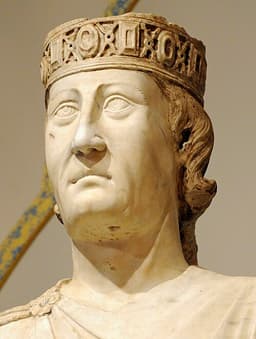
Charles of Anjou
Emperor · Medieval
59.5Total
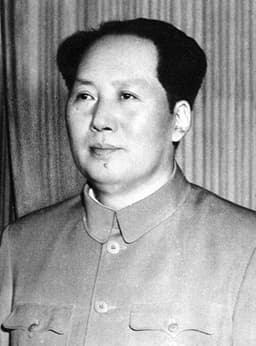
Mao Zedong
Politician · Modern
79.4Total
Basic Information
Born
1227
1893
Died
1285
1976
Era
Medieval
Modern
Nationality
France
China
Occupation
Emperor
Politician
Civilization
Western
Eastern
Score Comparison
Military (10%)
82.0
75.0
Political (20%)
48.5
88.0
Influence (20%)
56.7
85.0
Legacy (20%)
52.0
70.0
Leadership (15%)
68.0
85.0
Strategy (15%)
66.3
72.0
TOTAL
59.5
79.4
Charles of Anjou — Complete Timeline
1266 AD
Battle of BeneventoWar◆ Major
Charles of Anjou defeated Manfred of Hohenstaufen at Benevento. Manfred was killed in the battle, allowing Charles to take control of the Kingdom of Sicily. This victory established the Angevin dynasty in southern Italy.
Angevin ConquestHohenstaufenItaly
Impact: regional
1268 AD
Battle of TagliacozzoWar◆ Major
Charles of Anjou defeated Conradin, the last Hohenstaufen claimant, at Tagliacozzo. Conradin was captured and later executed in Naples. This victory secured Charles's control over Sicily and ended Hohenstaufen claims.
HohenstaufenExecutionItaly
Impact: regionaldestructive
1282 AD
Sicilian VespersWar
A rebellion broke out in Palermo against Angevin rule, leading to the massacre of French officials and soldiers. The revolt spread across Sicily, resulting in the loss of the island to Peter III of Aragon. This event ended Charles's control of Sicily.
RevoltAragonSicily
Impact: regionaldestructive
1284 AD
Crusade against AragonWar
Pope Martin IV declared a crusade against Peter III of Aragon, and Charles of Anjou led the campaign. The French invasion of Aragon failed, and Charles's fleet was defeated. This crusade drained Angevin resources and weakened his position.
CrusadeAragonFailure
Impact: regionaldestructive
Mao Zedong — Complete Timeline
1934 AD
Long MarchWar
Mao Zedong led the Chinese Red Army on a strategic retreat from Nationalist forces, covering approximately 6,000 miles over 370 days. The march solidified Mao's leadership within the Chinese Communist Party and became a foundational myth of the Communist revolution.
Chinese Civil WarCommunist RevolutionRetreat
Impact: national
1949 AD
Proclamation of the People's Republic of ChinaPolitical Action
Mao Zedong declared the founding of the People's Republic of China from Tiananmen Gate in Beijing. This ended the Chinese Civil War and established Communist rule over mainland China, with Mao as Chairman of the Central People's Government.
Founding of PRCCommunist VictoryRevolution
Impact: global
1958 AD
Great Leap ForwardReform◆ Major
Mao launched a campaign to rapidly industrialize China and collectivize agriculture. The policy led to widespread mismanagement, resulting in a famine that caused an estimated 15-45 million deaths between 1959 and 1961.
FamineIndustrializationCollectivization
Impact: nationaldestructive
1960 AD
Sino-Soviet SplitPolitical Action◆ Major
Mao's ideological differences with Soviet leader Nikita Khrushchev led to a breakdown in relations between China and the Soviet Union. The split ended the Sino-Soviet alliance and reshaped global Cold War dynamics, with China pursuing an independent path.
Cold WarIdeological ConflictAlliance Breakdown
Impact: global
1966 AD
Cultural RevolutionPolitical Action
Mao initiated a sociopolitical movement to purge capitalist and traditional elements from Chinese society. The Red Guard youth groups attacked intellectuals and officials, leading to widespread violence, destruction of cultural artifacts, and an estimated 1-2 million deaths.
Political PurgeSocial UpheavalRed Guard
Impact: nationaldestructive
1971 AD
Ping-Pong DiplomacyCultural◆ Major
Mao approved an invitation for the U.S. table tennis team to visit China, initiating a thaw in Sino-American relations. This cultural exchange paved the way for President Nixon's visit to China in 1972 and the eventual normalization of diplomatic ties.
DiplomacyU.S.-China RelationsCultural Exchange
Impact: globalconstructive
Expert Analysis
Mao Zedong vs Charles of Anjou
# The Throne and the Revolution
On a spring morning in 1266, a French prince stood on a battlefield in southern Italy, watching the corpse of his enemy being stripped of its armor. Manfred of Hohenstaufen had fallen at Benevento, and Charles of Anjou—younger brother of King Louis IX of France—had just seized a kingdom. Six hundred years later, on an autumn evening in Beijing, a peasant's son from Hunan would climb the Gate of Heavenly Peace and proclaim a new China, his voice carrying across a nation reborn in fire. Both men built empires on the bones of their rivals. Both believed they were forging a new world order. Yet one created a dynasty that lasted barely a generation; the other remade the largest civilization on earth and left a shadow that still stretches across the Pacific. What separates a conqueror from a revolutionary? The answer lies not in ambition, but in the soil from which ambition grows.
Origins
Charles of Anjou was born into the most powerful family in medieval Europe. His brother was the saint-king Louis IX; his father, Louis VIII, had been king of France. From birth, Charles breathed the air of courts and cathedrals, of feudal obligations and papal politics. He was a prince of the blood, and his path was paved by privilege. Mao Zedong, by contrast, was born in 1893 in the village of Shaoshan, the son of a prosperous peasant farmer. His father beat him; his mother prayed for him. He grew up watching landlords collect rents while peasants starved. The world of medieval chivalry was as distant to Mao as the moon—but he read voraciously, devouring Chinese classics and Western philosophy alike, and he came to believe that the old world could be torn down and rebuilt from scratch.
Their eras shaped them as surely as their bloodlines. Charles lived in a time when kings ruled by divine right and the Church held the keys to salvation. Mao came of age in the twilight of the Qing dynasty, when China was carved up by foreign powers and its ancient order crumbled into dust. One man inherited a system and sought to expand it; the other inherited a wreck and sought to replace it.
Rise to Power
Charles of Anjou entered the historical stage through marriage and papal favor. In 1246, he married Beatrice of Provence, gaining control of a wealthy county. But his true opportunity came when Pope Clement IV sought a champion to destroy the Hohenstaufen dynasty, which threatened papal power in Italy. Charles accepted the crown of Sicily as a papal vassal, then marched south with an army financed by French banks and blessed by the Vatican. At Benevento in 1266, his disciplined cavalry crushed Manfred's forces. Two years later, at Tagliacozzo in 1268, he defeated the sixteen-year-old Conradin, the last Hohenstaufen heir, and had him beheaded in the market square of Naples. Charles had won a kingdom by the sword—but it was a kingdom built on borrowed legitimacy.
Mao's rise was far more arduous. He was not handed a crown; he seized a country. In 1934, after the Nationalists nearly destroyed the Communist Party, Mao led the Red Army on the Long March—6,000 miles of starvation, ambush, and frozen mountain passes. Only one in ten survived. But those who did emerged as the most hardened revolutionary cadre in history. Mao's genius was not in winning battles alone—his military score of 65.0 reflects a competent but not brilliant commander—but in understanding that revolution was not a coup but a process. He turned peasants into soldiers, villages into fortresses, and ideology into a weapon. By 1949, when he stood on Tiananmen Gate, he had not just defeated Chiang Kai-shek; he had transformed the very meaning of power in China.
Leadership & Governance
As rulers, Charles and Mao could not have been more different. Charles governed Sicily as a French colonial project. He imposed heavy taxes to fund his wars, appointed French officials to key posts, and treated the Sicilian nobility as conquered subjects. His leadership score of 85.1 reflects a decisive, ruthless commander—but his political score of 69.3 reveals a man who never learned to govern hearts. He ruled by fear, not consent.
Mao's leadership was more paradoxical. His political score of 82.0 and leadership score of 80.6 suggest a master of mobilization, not administration. He launched the Great Leap Forward in 1958 to industrialize China overnight, ordering peasants to smelt steel in backyard furnaces. The result was catastrophic: mismanagement and famine killed an estimated 15 to 45 million people. Yet Mao survived the disaster politically, purging critics and doubling down on his vision. The Cultural Revolution, begun in 1966, was even more radical—a campaign to destroy the "four olds" that turned children against parents, students against teachers, and China into a theater of ideological terror. Mao was not a builder of institutions; he was a destroyer of them, a revolutionary who needed permanent upheaval to sustain his power.
Triumph & Tragedy
Charles of Anjou's greatest moment was the Battle of Tagliacozzo, where he outmaneuvered Conradin's larger army by hiding a reserve force behind a hill, then striking when the enemy thought they had won. It was a masterstroke of medieval strategy. But his tragedy was the Sicilian Vespers of 1282, when a rebellion in Palermo—sparked by a French soldier harassing a Sicilian woman at Easter—erupted into a massacre of thousands of French officials and soldiers. Charles lost Sicily forever. His dream of a Mediterranean empire crumbled in a single night of rage.
Mao's triumph was the proclamation of the People's Republic in 1949, the moment he unified China after a century of foreign domination and civil war. His tragedy was the cost of that unity. The Great Leap Forward and Cultural Revolution were not defeats by foreign enemies; they were self-inflicted wounds, policies born of ideology that consumed millions of his own people. Where Charles lost his kingdom to rebellion, Mao lost his moral authority—though he never admitted it.
Character & Destiny
Charles of Anjou was cold, calculating, and ambitious. He was a capable administrator but a poor diplomat, a man who could win battles but not loyalty. He believed in the power of the sword and the sanction of the Church, and when both failed him, he had nothing left. Mao was charismatic, ruthless, and intellectually restless. He read Clausewitz and Confucius, wrote poetry about mountains and snow, and believed that "power grows out of the barrel of a gun." But he also believed that revolution must be permanent, that the world must be continually remade—a belief that led him to destroy what he built.
Their personalities shaped their destinies. Charles could not compromise because he saw rule as conquest; Mao could not stop because he saw peace as betrayal. One died in 1285, a king without a kingdom, his crusade against Aragon a failure. The other died in 1976, still Chairman, still worshipped, still feared—but leaving behind a China that was both stronger and scarred.
Legacy
Charles of Anjou left behind a dynasty that faded into the margins of European history. His legacy score of 65.7 reflects a figure remembered mainly by specialists—the French prince who tried to build an empire in Italy and failed. Mao's legacy score of 69.9 is modest by his own standards, but his influence score of 79.7 tells a different story. He reshaped China's language, its economy, its relationship with the world. The Ping-Pong Diplomacy of 1971, which opened the door to Nixon's visit, was a masterstroke of pragmatism. Yet his shadow is deeply ambivalent: he is both the father of modern China and the architect of its greatest tragedies.
Conclusion
Standing at the gates of history, Charles of Anjou and Mao Zedong seem worlds apart—a medieval knight and a modern revolutionary, a French prince and a Chinese peasant. Yet both faced the same fundamental question: how do you hold what you have taken? Charles answered with steel and taxes; Mao answered with ideology and terror. One failed because he could not win hearts; the other succeeded because he could break them. In the end, the difference between a conqueror and a revolutionary is not ambition—it is the willingness to destroy everything, including yourself, to remake the world in your image. Charles wanted a kingdom. Mao wanted a new humanity. One is remembered; the other is still being reckoned with.
Rankings
🥇
Mao ZedongLeader
Mil: 75.0Pol: 88.0Inf: 85.0
79.4
🥈
Charles of Anjou
Mil: 82.0Pol: 48.5Inf: 56.7
59.5
+19.9 behind
How This Comparison Works
Algorithm
Each figure is scored on 6 dimensions (0—100 scale) based on structured historical data: Military (10%), Political (20%), Influence (20%), Legacy (20%), Leadership (15%), Strategy (15%). The weighted total produces the final ranking.
Data Sources
Scores are computed from structured sub-indicators in the database. Scale factors adjust for era (Ancient ×0.85, Modern ×1.0) and civilization size (Eastern ×1.05, Other ×0.80) to account for differences in population and military scale.
Maximum 3 Figures
Comparisons are limited to 2—3 figures to ensure readability and statistical meaningfulness.
Error Margins
±5 points per dimension — Sub-scores are derived from historical records with inherent uncertainty. Two figures within 5 points on a dimension should be considered roughly equivalent in that area.
Total Score Accuracy
±3 points overall — The weighted combination of 6 dimensions produces a total score with approximately ±3 points of uncertainty. Differences of less than 3 points are not statistically significant— the figures are effectively tied.
Known Limitations
- Historical records are incomplete and uneven across civilizations
- Figures from oral-tradition societies may be underrepresented
- Occupation labels can misclassify multi-role figures
- Scores measure capability and impact, not moral character
- Quantitative scoring is a comparison tool, not absolute truth
Capability Radar
Military (10%) — Battles & Warfare
Battles
75
85
Win Rate
70
80
Expansion
80
85
Political (20%) — Governance & Reform
Reform
60
95
Diplomacy
68
80
Economy
65
70
Influence (20%) — Cultural & Global Reach
Cultural
50
90
Global
45
90
Legacy (20%) — Historical Impact
Historical
60
95
Longevity
55
85
Leadership (15%) — Power & Stability
Tenure
70
95
Stability
55
60
Strategy (15%) — Tactics & Innovation
Strategy
78
85
Tactics
72
75
Reform
65
90
Similar Comparisons
Comments & Discussion
Bloody Charles of Anjou6/16/2026
As a military historian, I’ll take Charles any day for tactical brilliance. At Benevento, he outflanked Manfred’s German mercenaries by adapting to the terrain—using his cavalry reserves to break their line when they got bogged down in marshy ground. Mao’s Long March? That was a chaotic retreat disguised as strategy. Charles carved a kingdom with 10,000 men; Mao lost half his army before he even got to Yan’an. Numbers don’t lie.
数据屠夫6/16/2026
别扯什么“伟人光环”,毛用数据说话就是个灾难。大跃进饿死三千万,土改杀了一百万地主,可粮食产量增长全靠浮夸。对比下,查理一世在意大利推行行政改革,帮西西里统一了税法,国库十年盈余翻倍。革命?那叫群众运动式的经济自杀。历史不讲情怀,它算账。
Decadent Emperor6/16/2026
As a classics scholar, I see Charles as a decadent throwback—a medieval thug who aped Roman emperors but lacked their civic vision. He taxed Sicilians to death building a Mediterranean fleet, but his “kingdom” collapsed in rebellion by 1282. Mao, for all his flaws, aimed at something grander: dismantling feudal hierarchies. Charles fought for glory; Mao fought for peasants having rice. One built a pyramid of skulls; the other tried to build a ladder.
糖衣炮弹杀手6/16/2026
我站毛,但得说句实话:查理是个被低估的殖民者先驱。他搞的“安茹帝国”横跨法国、意大利、耶路撒冷,比英国殖民体系早了300年。可毛呢?朝鲜战争里硬顶美国,国内还有余力搞原子弹。查理连两西西里都没管住,毛让中国从殖民地变成两极一极。输赢分明:一个留了历史书里的脚注,一个改了地球仪的颜色。
Chronicler75796/16/2026
As a history buff, I love this contrast because it’s about scale of ambition. Charles wanted a kingdom; Mao wanted a civilizational reset. Charles’s realm lasted 20 years; Mao’s thought persists decades after his death. But let’s not romanticize: Mao’s Cultural Revolution destroyed more historical artifacts than all medieval wars combined. Charles sacked a town; Mao rewrote a nation’s memory. That’s the difference between a bloody general and a true revolutionary—one kills men, the other kills t