Loading...
Charles of Anjou vs Henry the Fowler
Henry the Fowler leads by 1.4 pts · 2 figures compared
…
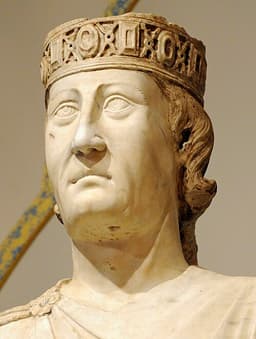
Charles of Anjou
Emperor · Medieval
59.5Total
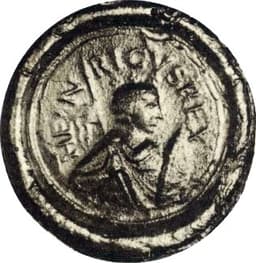
Henry the Fowler
Emperor · Medieval
60.9Total
Basic Information
Born
1227
876
Died
1285
936
Era
Medieval
Medieval
Nationality
France
East Francia
Occupation
Emperor
Emperor
Civilization
Western
Western
Score Comparison
Military (10%)
82.0
70.0
Political (20%)
48.5
59.3
Influence (20%)
56.7
55.0
Legacy (20%)
52.0
52.0
Leadership (15%)
68.0
85.0
Strategy (15%)
66.3
55.0
TOTAL
59.5
60.9
Charles of Anjou — Complete Timeline
1266 AD
Battle of BeneventoWar◆ Major
Charles of Anjou defeated Manfred of Hohenstaufen at Benevento. Manfred was killed in the battle, allowing Charles to take control of the Kingdom of Sicily. This victory established the Angevin dynasty in southern Italy.
Angevin ConquestHohenstaufenItaly
Impact: regional
1268 AD
Battle of TagliacozzoWar◆ Major
Charles of Anjou defeated Conradin, the last Hohenstaufen claimant, at Tagliacozzo. Conradin was captured and later executed in Naples. This victory secured Charles's control over Sicily and ended Hohenstaufen claims.
HohenstaufenExecutionItaly
Impact: regionaldestructive
1282 AD
Sicilian VespersWar
A rebellion broke out in Palermo against Angevin rule, leading to the massacre of French officials and soldiers. The revolt spread across Sicily, resulting in the loss of the island to Peter III of Aragon. This event ended Charles's control of Sicily.
RevoltAragonSicily
Impact: regionaldestructive
1284 AD
Crusade against AragonWar
Pope Martin IV declared a crusade against Peter III of Aragon, and Charles of Anjou led the campaign. The French invasion of Aragon failed, and Charles's fleet was defeated. This crusade drained Angevin resources and weakened his position.
CrusadeAragonFailure
Impact: regionaldestructive
Henry the Fowler — Complete Timeline
919 AD
Election as King of East FranciaPolitical Action
Henry the Fowler was elected King of East Francia by the Saxon and Frankish nobles at Fritzlar on May 6, 919. He was the first Saxon king, marking the transition from Carolingian to Ottonian rule. His election was contested by other dukes but he prevailed.
ElectionAccessionOttonian Dynasty
Impact: regionalconstructive
921 AD
Treaty of Bonn (921)Political Action◆ Major
Henry the Fowler signed the Treaty of Bonn with Charles the Simple of West Francia, recognizing each other's royal titles and establishing peaceful relations. This treaty ended Carolingian claims over East Francia and solidified Henry's legitimacy as an independent king.
TreatyRecognitionDiplomacy
Impact: regionalconstructive
924 AD
Nine-Year Truce with the MagyarsPolitical Action◆ Major
Henry the Fowler negotiated a nine-year truce with the Magyars, agreeing to pay tribute in exchange for a halt to their raids. He used this period to fortify towns, reorganize the army, and train cavalry. This strategic pause was crucial for his later military reforms.
TruceMagyarsMilitary Reform
Impact: regionalconstructive
929 AD
Battle of Lenzen (929)War◆ Major
Henry the Fowler's forces defeated a Slavic army at the Battle of Lenzen, securing the eastern frontier of East Francia. This victory allowed Henry to consolidate control over the Elbe region and establish the March of Brandenburg, a key step in German eastward expansion.
BattleSlavic WarsEastern Expansion
Impact: regionalconstructive
933 AD
Battle of Riade (933)War
After the truce with the Magyars expired, Henry the Fowler led a German army to victory at the Battle of Riade (near Merseburg). The defeat of the Magyar cavalry ended their raids into East Francia for a generation and established Henry's reputation as a defender of Christendom.
BattleMagyarsVictory
Impact: regionalconstructive
936 AD
Death of Henry the FowlerOther◆ Major
Henry the Fowler died on July 2, 936, at Memleben. He was succeeded by his son, Otto I, who would become Holy Roman Emperor. Henry's reign laid the foundations for the Ottonian dynasty and the medieval German kingdom.
DeathSuccessionOttonian
Impact: regional
Expert Analysis
Henry the Fowler vs Charles of Anjou
# The Conqueror and the Builder: Charles of Anjou and Henry the Fowler
On a sweltering July morning in 1268, Charles of Anjou stood on the blood-soaked field of Tagliacozzo, watching as his soldiers dragged a terrified sixteen-year-old boy before him. The boy was Conradin, the last Hohenstaufen claimant to Sicily, and within hours he would be beheaded in Naples’ market square. Charles had won—but at what cost? Less than two decades earlier, across the Alps in Saxony, another medieval ruler had faced his own moment of decision. In 933, Henry the Fowler had broken a nine-year truce with the Magyars, leading his German army to victory at Riade. Yet Henry did not execute his enemies. He integrated them. Why did one king build an empire on fear, the other on trust? The answer lies in two very different men, shaped by two very different worlds.
Origins
Charles of Anjou was born in 1227, the youngest son of King Louis VIII of France. He inherited nothing but ambition. The medieval world of the thirteenth century was a brutal arena of dynastic warfare, where a younger son could only rise through conquest. Charles grew up in the shadow of his saintly brother, Louis IX, but he possessed none of Louis’s piety. He was cold, calculating, and ruthless—a man who saw power as something to be seized, not earned.
Henry the Fowler, born in 876, came from an even more precarious world. The Carolingian Empire had crumbled, and East Francia was a patchwork of warring duchies threatened by Magyar raiders from the east and Viking pirates from the north. Henry was the son of Duke Otto of Saxony, a man who had learned that survival meant negotiation, not annihilation. When Henry was elected King of East Francia in 919 at Fritzlar, he did not arrive with a sword drawn. He came with a treaty in hand, recognizing the autonomy of the powerful dukes who had elected him.
Rise to Power
Charles’s path to power was paved with blood. In 1266, at the Battle of Benevento, he crushed Manfred of Hohenstaufen, killing the king in combat. Two years later, at Tagliacozzo, he eliminated Conradin, the last Hohenstaufen heir. These were not battles of liberation; they were surgical strikes against rivals. Charles understood that in the fractured politics of Italy, legitimacy came from the sword, not the ballot.
Henry’s rise was quieter but more durable. He did not conquer his kingdom; he negotiated it. The Treaty of Bonn in 921 with Charles the Simple of West Francia recognized both kings as equals—a diplomatic masterstroke that stabilized the western frontier. When the Magyars threatened, Henry did not immediately fight. He paid tribute. In 924, he signed a nine-year truce, using the peace to fortify towns, train cavalry, and build a standing army. While Charles of Anjou spent his early years planning battles, Henry spent his planning institutions.
Leadership & Governance
As ruler of Sicily and Naples, Charles of Anjou governed like a French overlord in a foreign land. He imposed heavy taxes to fund his endless wars, replaced local officials with Frenchmen, and treated the Sicilian nobility as conquered subjects. His leadership score of 85.1 reflects his iron will, but his political score of 69.3 reveals a fatal flaw: he never learned to rule with consent. The Sicilian Vespers of 1282—a spontaneous rebellion that began when a French soldier insulted a Palermo woman at Easter—was the inevitable explosion of a people pushed too far.
Henry the Fowler governed differently. His political score of 74.5 speaks to a leader who understood that power required partnership. He did not abolish the powerful duchies of Saxony, Bavaria, Swabia, and Franconia; he worked with their dukes, granting them autonomy in exchange for loyalty. At the Battle of Lenzen in 929, his forces defeated the Slavic tribes not through overwhelming force but through coordinated action with allied lords. Henry built a kingdom, not a conquest. His military score of 60.1 is modest, but his leadership score of 75.7 reflects a ruler who inspired loyalty through trust, not terror.
Triumph & Tragedy
Charles’s greatest moment was his victory at Benevento, which made him King of Sicily. His greatest tragedy was the Sicilian Vespers, which shattered his dream of a Mediterranean empire. The rebellion spread like wildfire, and within months, Peter III of Aragon had invaded Sicily, igniting a war that would outlive Charles himself. He died in 1285, his kingdom in flames, his legacy stained by the blood of a people he never understood.
Henry’s greatest triumph came at the Battle of Riade in 933. After nine years of preparation, he refused to renew the Magyar tribute, leading his army to a decisive victory that ended the Magyar threat for a generation. His tragedy was less dramatic: he died in 936 at Memleben, just as his son Otto was poised to inherit a stable, unified kingdom. Henry never wore the imperial crown, but he built the foundation on which Otto would become Holy Roman Emperor.
Character & Destiny
Charles of Anjou was a man of the thirteenth century—an age of crusades, papal politics, and dynastic ambition. He believed that power was a zero-sum game: every enemy destroyed was a step toward glory. His personality was rigid, unforgiving, and ultimately self-destructive. The Sicilian Vespers was not a random event; it was the logical outcome of a ruler who saw his subjects as resources, not partners.
Henry the Fowler was a man of the tenth century—an age of survival, negotiation, and state-building. He understood that a kingdom was not a possession but a relationship. His personality was pragmatic, patient, and generous. He did not destroy the Magyars; he outlasted them. He did not abolish the duchies; he co-opted them. His greatest legacy was not a battle won but a system built.
Legacy
Charles of Anjou is remembered today as a brilliant soldier who failed as a statesman. His Angevin dynasty in Italy collapsed within a generation, and his name is synonymous with tyranny and rebellion. The Sicilian Vespers remains a symbol of resistance against foreign oppression.
Henry the Fowler is remembered as the founder of the Ottonian dynasty, which would produce Otto the Great and the Holy Roman Empire. His legacy is not a single victory but a model of governance that balanced central authority with regional autonomy. He is the quiet architect of medieval Germany.
Conclusion
Two kings, two worlds. Charles of Anjou built an empire on fear and watched it crumble. Henry the Fowler built a kingdom on trust and watched it endure. In the end, the difference between them is not a matter of military genius or political cunning—it is a matter of character. Charles believed that power was something you take. Henry understood that power is something you earn. And history, in its quiet way, has rendered its verdict.
Rankings
🥇
Henry the FowlerLeader
Mil: 70.0Pol: 59.3Inf: 55.0
60.9
🥈
Charles of Anjou
Mil: 82.0Pol: 48.5Inf: 56.7
59.5
+1.4 behind
How This Comparison Works
Algorithm
Each figure is scored on 6 dimensions (0—100 scale) based on structured historical data: Military (10%), Political (20%), Influence (20%), Legacy (20%), Leadership (15%), Strategy (15%). The weighted total produces the final ranking.
Data Sources
Scores are computed from structured sub-indicators in the database. Scale factors adjust for era (Ancient ×0.85, Modern ×1.0) and civilization size (Eastern ×1.05, Other ×0.80) to account for differences in population and military scale.
Maximum 3 Figures
Comparisons are limited to 2—3 figures to ensure readability and statistical meaningfulness.
Error Margins
±5 points per dimension — Sub-scores are derived from historical records with inherent uncertainty. Two figures within 5 points on a dimension should be considered roughly equivalent in that area.
Total Score Accuracy
±3 points overall — The weighted combination of 6 dimensions produces a total score with approximately ±3 points of uncertainty. Differences of less than 3 points are not statistically significant— the figures are effectively tied.
Known Limitations
- Historical records are incomplete and uneven across civilizations
- Figures from oral-tradition societies may be underrepresented
- Occupation labels can misclassify multi-role figures
- Scores measure capability and impact, not moral character
- Quantitative scoring is a comparison tool, not absolute truth
Capability Radar
Military (10%) — Battles & Warfare
Battles
75
55
Win Rate
70
60
Expansion
80
60
Political (20%) — Governance & Reform
Reform
60
75
Diplomacy
68
70
Economy
65
65
Influence (20%) — Cultural & Global Reach
Cultural
50
55
Global
45
40
Legacy (20%) — Historical Impact
Historical
60
65
Longevity
55
60
Leadership (15%) — Power & Stability
Tenure
70
70
Stability
55
70
Strategy (15%) — Tactics & Innovation
Strategy
78
65
Tactics
72
50
Reform
65
70
Similar Comparisons
Comments & Discussion
东方史官6/16/2026
历史总爱给暴君贴金,说什么查理是“伟大征服者”。放屁。他征服个屁?西西里晚祷事件里,他横征暴敛逼反了全岛,一把火烧了他的统治。亨利呢?925年就搞定了洛林,靠联姻和协议,不是刀剑。查理把盟友当敌人,亨利把敌人变盟友。谁是真正的政治家,一目了然。
IronLanceHistorian6/16/2026
These rulers aren't in the same league. Charles of Anjou was a butcher who won Tagliacozzo through tactical trickery—his feigned retreat turned the battle. Henry the Fowler, however, built a lasting kingdom by integrating the Magyars, not slaughtering them. Charles executed a teenager; Henry created the Ottonian system that stabilized Germany. One left a trail of blood, the other a blueprint for rule. Easy choice: Henry all the way.
城堡守护者6/16/2026
拿亨利和查理比,简直是对亨利的侮辱。查理这家伙就是个雇佣兵头子,靠教皇的施舍和法国贵族的钱袋子打仗;亨利可是从无到有建起了德意志王国。还记得933年的里亚德战役吗?亨利用九年时间整军备战,打赢后还给马扎尔人留了活路。查理呢?在贝内文托把康拉丁的脑袋砍了,手段太脏。
DataSkeptic426/16/2026
Numbers don't lie: Henry's reign lasted 32 years versus Charles's 17. Henry founded the Ottonian dynasty, which ruled for over a century; Charles's Angevin line collapsed in Sicily within a generation. Charles bankrupted his kingdom funding endless wars, while Henry minted coins across the Harz silver mines. Efficiency wins. Henry built a state; Charles just burned money and heads.
ClassicsChronicler6/16/2026
Context is everything. Charles was a 13th-century French prince thrust into Mediterranean power games—think Frederick II's legacy and papal ambition. Henry was a 10th-century Saxon duke defining a nascent Germany against Magyar raiders. Different worlds, different rules. Charles's cruelty fit the Italian wars; Henry's integration fit the tribal East Frankish realm. Neither is "better"—both responded to their crises effectively.